





Making the Right Choice: Economics of Vans vs. Pickups
Ford Maverick: What Can a Compact Pickup Do for Fleets?
You could say the all-new Maverick’s hybrid engine, unibody frame, and 4.5-foot bed make it a niche truck. But in the post-pandemic era of efficiencies and economics, fleets must apply a Swiss Army knife-like approach to job applications.
June 8, 2021
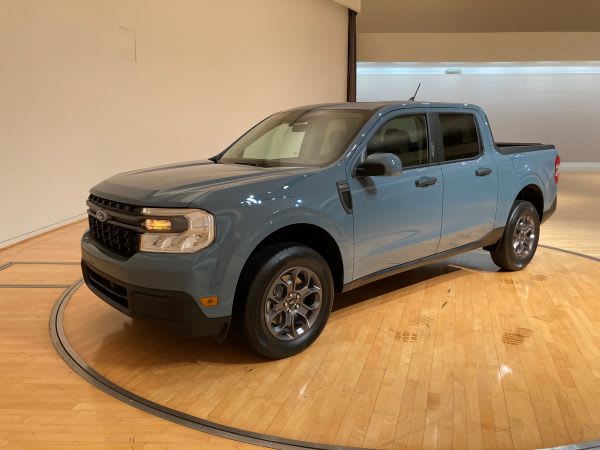
Ford brought a display model to its Irvine, California offices to allow journalists to photograph, crawl through, and ask questions. Driving impressions will have to wait until the fall.
Photo by Chris Brown.
5 min to read
How many work vehicles are over spec’d simply because there are no models that match their applications? Ford is essentially reinventing a new vehicle segment to answer this question. The all-new Ford Maverick compact pickup debuts this fall.
With Maverick, Ford is looking to reengage those buyers lost when it abandoned passenger cars. It’s also getting in front of the pack of new models that will include the new Hyundai Santa Cruz and the reimagined Subaru Baja compact pickups. But unlike those lifestyle marques, Maverick is also a work vehicle.
Hybrid Option, Small Frame on the Ford Maverick
You could say Maverick’s hybrid standard engine, unibody frame, and 4.5-foot bed — the smallest on the market — make it a niche truck. But post-pandemic, that’s the point. In this new era of efficiencies and economics, work truck fleets must apply a Swiss Army knife-like approach to job applications. Overkill is dead. Contractor supervisors don’t need to visit job sites in empty 1/2-ton pickups.
“In my opinion, the first priority of most fleets is to move their human capital (one or two people) from location to location,” said James McKinley, director of operations at City Rent A Truck serving Kansas City. “The truck is just a convenience and generally overkill for what it's used 70% of the time. Moving small tools and equipment are the secondary priority, and this truck would fit that need.”
In addition to the obvious small business and tradesman segments — locksmiths, residential HVAC, electrical, urban gardeners, for instance — McKinley believes Maverick will find a place in government fleets, utilities, renewable energy, and large general contractors. “The larger the fleet, the more applicable this vehicle would be,” he said. “They have more flexibility to own specialized vehicles for specific tasks.”
Maverick starts with an eye-popping base price that won’t be touched by other work trucks. No, you won’t be able to spec Maverick for $19,999 and achieve all its superlatives: haul a 1,500-lb. max payload, tow a 4,000-lb. trailer, and achieve 40 mpg. Beyond the starting price, Ford isn’t yet pricing trim levels and accessories, saying only that the premium Lariat trim, fully contented, would top out at about $35,000.
Yet even after configuring to a variety of fleet applications, Maverick is still poised to be the least expensive work truck in the U.S. market. It’s nearest companions at Ford — Transit Connect van and Ranger — pickup both start at about $25,000.
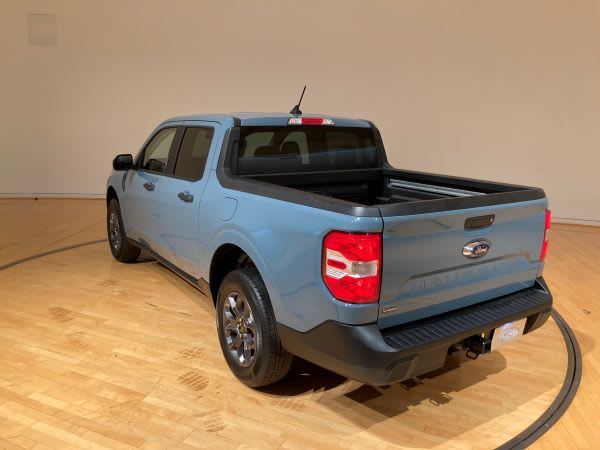
Maverick slots below Ford Ranger in length (199.7 in. to 210.8 in. for Ranger) and height (68.7 in. to 71.1 in.). However, Maverick still offers about the same clearance as the 2WD Ranger (8.3 in. to 8.4 in.).
Photo by Chris Brown.
Configuring a Compact Ford Maverick
Maverick will be built on Ford’s C2 platform for compact vehicle applications, which also includes Escape, Bronco Sport, and Lincoln Corsair. So Maverick shouldn’t be put into uses more befitting of Ford’s body-on-frame trucks. But if you’re not using your fleet trucks to rock hop in the Moab, Maverick’s 8.3 inches of ground clearance (2WD) should satisfy most types of off-road journeys that fleets would make.
For comparison, ground clearance on Ranger — Ford’s incumbent entry-level pickup — is 8.4 inches on rear-wheel drive models.
To achieve that 4,000-lb. towing, you’ll need to upgrade to the 2.0L EcoBoost gas engine — if maxing out on towing is even advisable for a compact pickup. The EcoBoost may be the better choice for substantial payloads, resulting in a more down-to-earth fuel economy too. But there are still plenty of fleet applications in which only small loads are required, and many trips are unladen. For those, fleets will appreciate the ability to achieve the same fuel economy as a Honda Civic hybrid.
To understand the price chasm between $19,999 and $35,000, a rough comparison to Ranger offers some structure. Judging from 21-MY Ranger’s price differentials of the three same trim levels, Maverick would go from $19,999 for the XL base, step up to roughly $24,000 for the XLT base, and then $28,000 for the Lariat base.
The Ranger’s 4x4 costs an extra $3,855. On its car platform, Maverick upgrades from two-wheel to all-wheel drive — not full 4x4 — so the premium should be lower. In terms of pricing the upgrade to the EcoBoost gas engine, both Ranger and Transit Connect only come with one engine, making a comparison difficult.
But Maverick comes with advantages out of the gate: The roomier SuperCrew cab is standard, while on Ranger, the base model comes with the smaller SuperCab — SuperCrew is a $2,400 option. The SuperCrew’s backseat dimensions are roughly the same as a Ford Fusion.
Maverick also comes with new technology advantages: Buyers have the benefit of a standard 8-inch touch screen, automatic headlamps, Wi-Fi readiness, and Pre-Collision Assist with Automatic Emergency Braking. Upgrading to the XLT trim will net extra storage cubbies in the bed, a power tailgate lock, power exterior mirrors, keyless entry keypad, and cruise control. The Lariat trim only adds luxury accents.
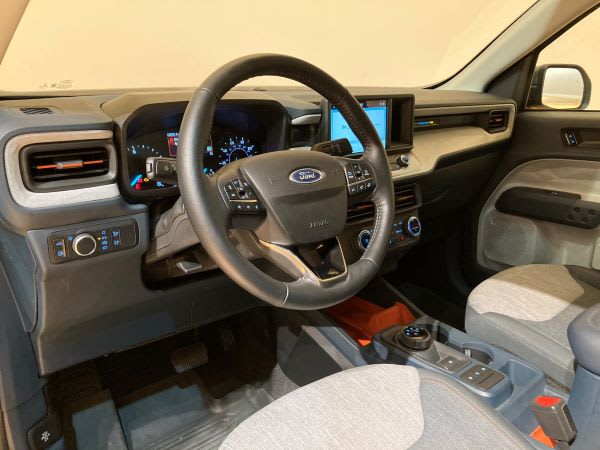
Maverick comes with new standard technology such as a standard 8-inch touch screen, automatic headlamps, Wi-Fi readiness, and Pre-Collision Assist with Automatic Emergency Braking.
Photo by Chris Brown.
Fleets should be able to comfortably spec Maverick in the mid-$20,000s. Combined with a low fuel bill and Ford’s tradition of truck value retention, Maverick presents a fantastic starting point for total cost of ownership — at least on paper.
Ford brought a display model to its Irvine, California offices to allow journalists to photograph, crawl through, and ask questions. Driving impressions will have to wait until the fall. And where the Maverick finds its niche in fleet will be answered by the customer.
McKinley is interested to see what types of service bodies would work for Maverick, though Ford has yet to announce partnerships with aftermarket upfitters and bodybuilders. The upfitters and bodybuilders will get to work in the following months on the truck caps, ladder racks, rack-and-bin packages, tool drawers, and slide outs.
If Maverick is a niche vehicle, there will be many fleet niches it could fill.
Subscribe to Our Newsletter
More Vehicle Research
2026 Ram 1500 Tradesman Put to a Real-World Fleet Test
A few days behind the wheel of a 2026 Ram 1500 Tradesman turned into a test of visibility, parking, work-ready features, and even severe-weather driving.
Read More →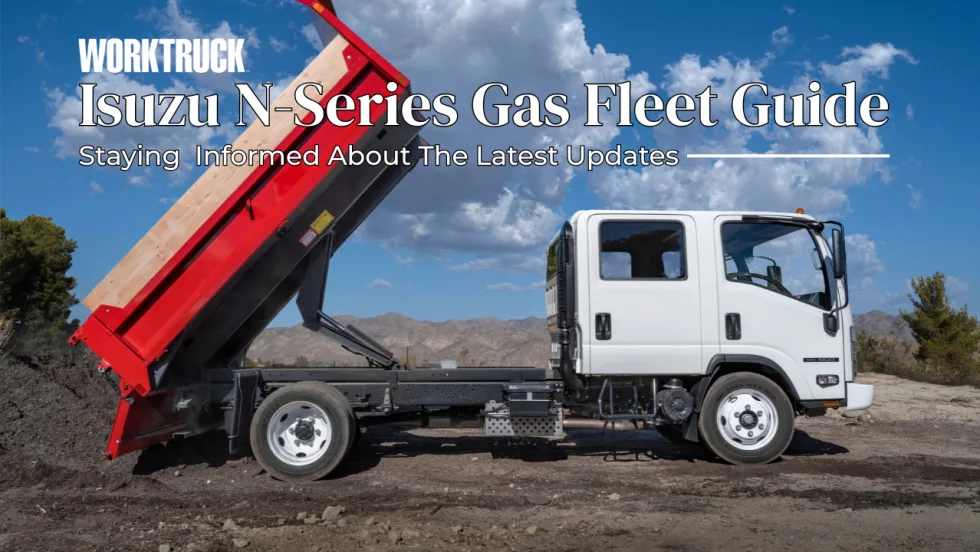
Isuzu N-Series Gas Fleet Guide: Specs, Capability and 2027 Model-Year Updates
Explore Isuzu Truck North America’s N-Series Gas fleet specs, engine performance, GVWR and payload capability, configurations, chassis dimensions, work-focused features, and 2027 model-year information.
Read More →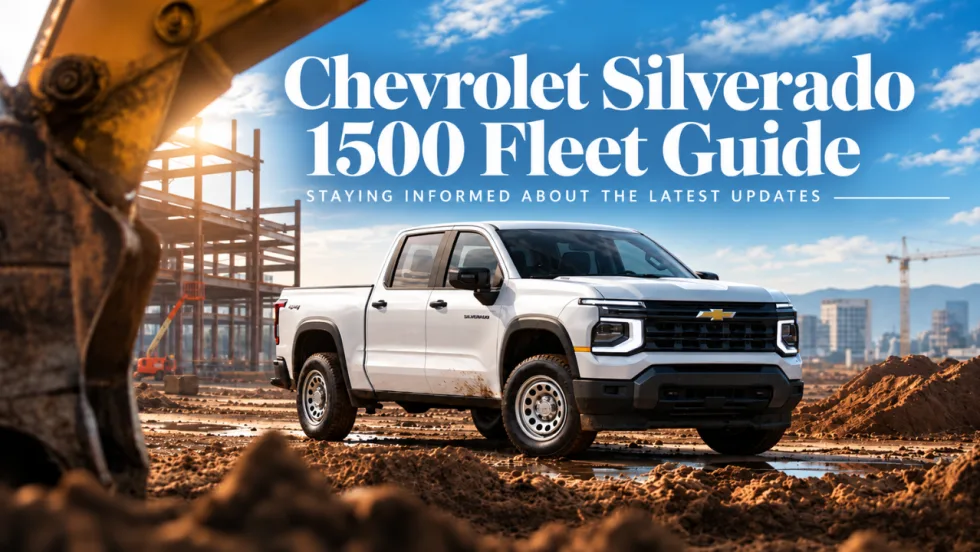
Chevrolet Silverado 1500 Fleet Guide Specs Capability and 2027 Model-Year Updates
The next-generation 2027 Chevrolet Silverado 1500 brings new V-8 engines, updated technology, expanded safety features, and a fleet-focused Work Truck. Here’s what commercial fleets need to know so far.
Read More →
Ram ProMaster City Fleet Guide Specs Cargo Capacity and 2027 Updates
Work Truck’s Ram ProMaster City Fleet Guide tracks the latest specifications, cargo capability, configurations, fleet technology, pricing, and model-year updates for Ram’s mid-size commercial van.
Read More →
Ford F-150 Fleet Guide Specs Capability and 2026 Model-Year Updates
Explore 2026 Ford F-150 fleet specs, engines, towing and payload capability, configurations, work features, technology, and model-year updates.
Read More →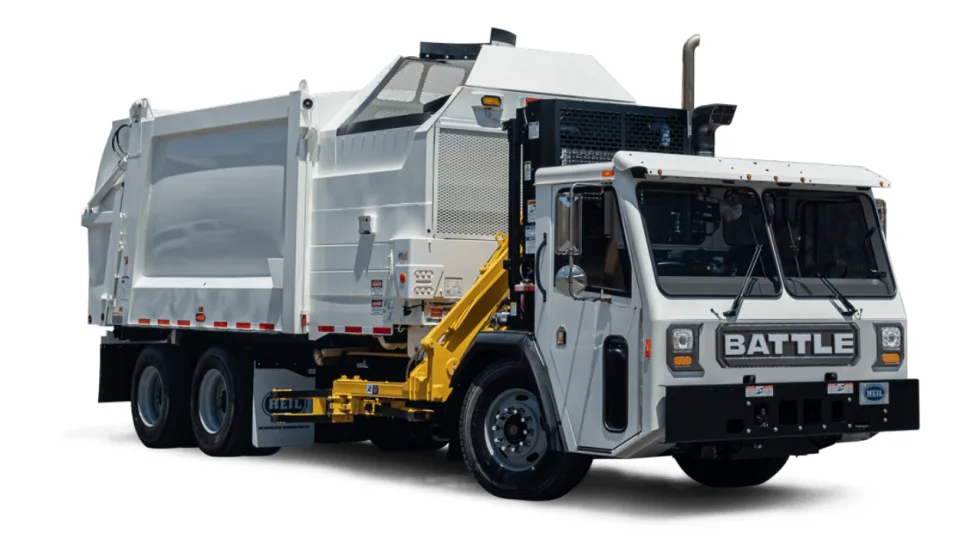
TCI Now Sells & Supports Battle Motors’ Vocational Trucks
Midwest truck dealer Truck Centers, Inc. (TCI) has expanded its transportation solutions with sales and service support for Battle Motors’ heavy-duty vocational trucks at locations in locations in Indiana, Illinois, and Missouri
Read More →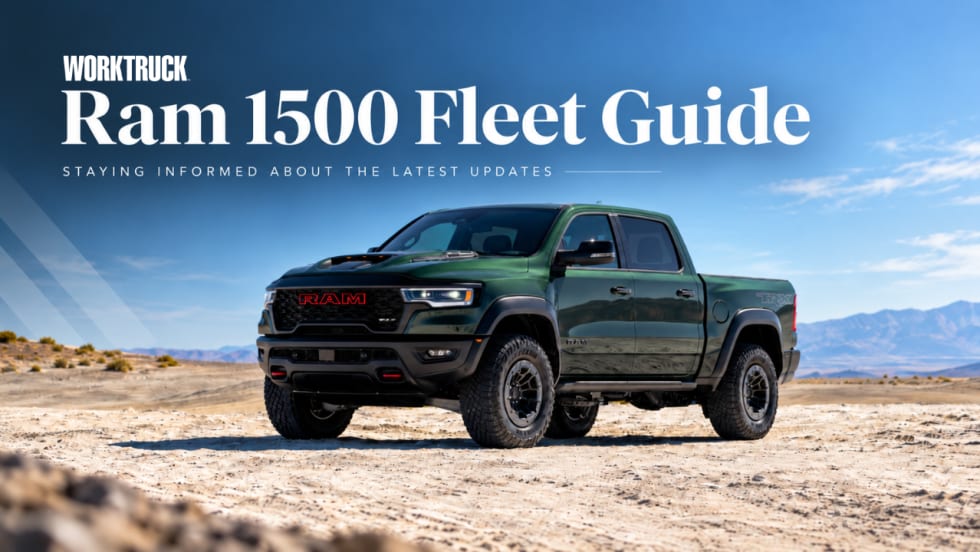
Ram 1500 Fleet Guide Specs, Capability and 2027 Model-Year Updates
Explore always up-to-date Ram 1500 fleet specs, engines, towing and payload capability, configurations, technology, pricing updates, and model-year changes.
Read More →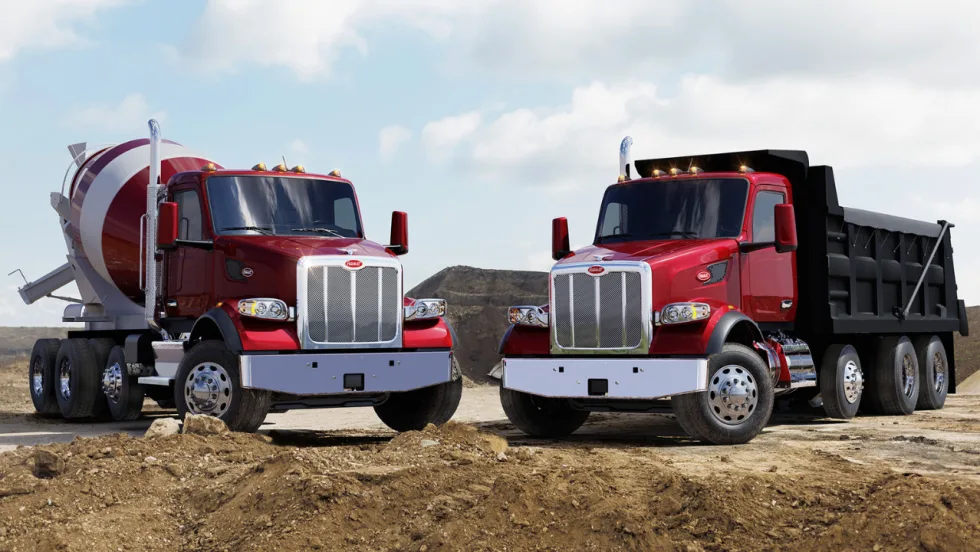
Peterbilt Trucks Equipped with Paccar TX-18 Pro Boost Efficiency for Maryland Fleet
Patuxent Companies is replacing aging trucks with the Peterbilt Model 567 and Model 589, specified with the Paccar TX-18 Pro 18-speed automated transmissions, and is reporting an 8% to 10% improvement in fuel economy.
Read More →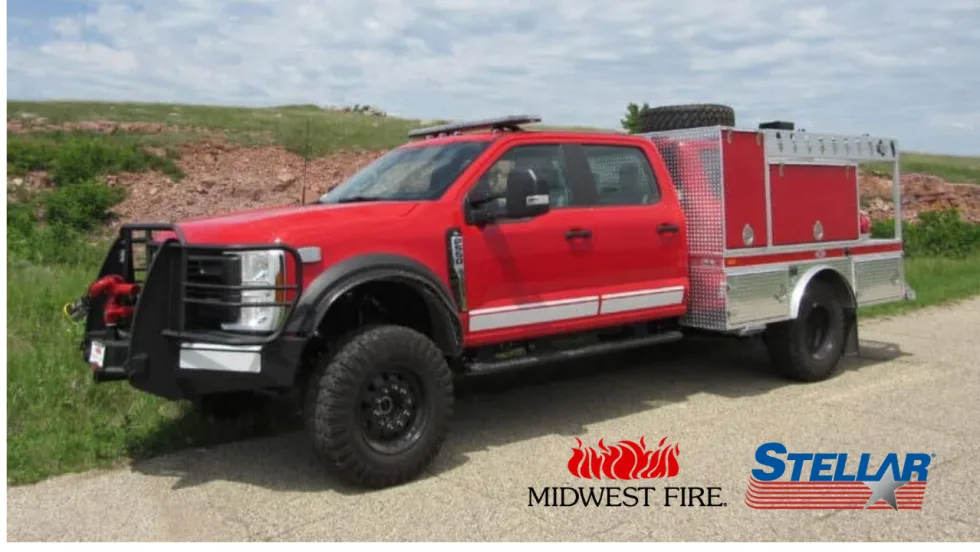
Stellar Expands into Fire Apparatus Market with Acquisition of Midwest Fire
Stellar Industries has acquired Midwest Fire, a custom fire apparatus manufacturer headquartered in Luverne, Minnesota, with nearly four decades of specialized apparatus experience.
Read More →
Recalls You Need to Know About in August 2026
If you have Altec, Chrysler, Ford, Heil, General Motors, International, Mack Trucks, Paccar, Rivian, Royal Truck, Toyota, US Truck Body, or Volvo Trucks vehicles in your fleet, you should check these important recalls issued by the National Highway Safety Administration.
Read More →