




Fleet Tech in 2026 Will Stop Being a Stack and Start Being a System
In 2026, AI and embedded telematics will reshape fleet operations. Integration, trust, and responsible AI will separate winners from noise.
January 16, 2026

When disconnected fleet systems hit a wall, progress stops. The 2026 forecast points to integrated platforms that eliminate tech dead ends and keep operations moving.
Credit: Work Truck
13 min to read
For years, fleets have been living in what I lovingly call the “too many tabs” era.
A camera platform over here. A telematics tool over there. A safety dashboard. A maintenance system. A separate portal for fuel. Another for compliance. Another for routing. And if you’re lucky, two of them require the same login… but still don’t talk to each other.
In 2026, that fragmented approach starts to break. Not because fleets suddenly love change, but because the pressure is mounting to run leaner, safer, and more efficiently, and nobody has time to babysit disconnected tools.
The big disruptor is not just “more AI.” It’s that fleet technology begins to operate like an ecosystem, and AI becomes the layer that ties everything together.
Rajesh Rudraradhya, Chief Technology Officer at Lytx, sees artificial intelligence moving into a much bigger job description.
“AI will move beyond isolated safety features to serve as the core decision-making engine, automating processes that optimize safety, uptime, and cost across fleet operations,” Rudraradhya said.
That shift changes what fleets expect from technology. Instead of separate solutions with separate goals, fleets are looking for connected platforms that help them run the business day to day, with less friction, less manual work, and clearer proof of ROI.
AI Will Stop Being a Feature and Start Being the Control Layer
Fleet AI has already shown up in pockets, usually as an “assist” function: a safety alert, an exception report, a coaching trigger. Useful, but not transformational.
In 2026, multiple forecast contributors are pointing to the next evolution: AI that runs processes, not just reports on them.
Abby Griffith, Senior Product Manager at Trimble, expects fleets and carriers to trust AI to do more than recommend.
“In 2026, we expect to see more companies shifting from ‘human in the loop’ types of workflows to trusting AI agents to automatically execute these processes,” Griffith said. “They are getting better at training these agents to think like their most valuable, trusted employees and are feeling more confident in relying on AI to complete tasks on their own.”
Griffith notes that carriers are already using AI agents for basic processes, including scheduling appointments with shippers, consignees, and maintenance facilities, as well as data entry and prioritization recommendations for what to tackle next.
That matters because once fleets start trusting AI with real operational tasks, tech becomes more than just a tool. It becomes infrastructure.
And that’s why 2026 is shaping up as a make-or-break year for vendors who still behave like their solution exists in isolation.
Fleet Leaders Are Done with Tools That Do Not Talk to Each Other
One of the clearest and most practical predictions for 2026 came from Ori Gilboa, CEO of SaverOne, and it has nothing to do with buzzwords. It has everything to do with how fleets feel in real life.
“In 2026, we’ll see distracted-driving prevention become a native part of telematics ecosystems, not an add-on,” Gilboa said. “Fleets are tired of managing fragmented tools that don’t talk to each other.”
Gilboa sees the future as consolidation and integration, with prevention systems directly connecting to existing telematics, safety platforms, and fleet management software.
“When prevention data flows into the same dashboard as routing, compliance, and vehicle health, safety stops being a standalone initiative and becomes part of everyday operations,” he said.
He also calls out the big payoff: “one platform, one workflow,” and the ability to measure risk reduction without requiring someone to manually stitch the story together.
And fleets are not just asking for integration because it sounds nice. They’re asking for it because their teams are stretched thin, and every system they add becomes another piece of overhead unless it reduces effort somewhere else.
“Fleet managers realize they need these solutions but are fatigued by the multiple apps, vendors, and logins they must maintain,” said Kevin Dunbar, General Manager of Ford Pro Intelligence. "Disjointed manual systems that provide a fragmented view of fleet operations will continue to impede quick decision-making and increase the risk of infractions, accidents, downtime, and theft.”
Embedded Telematics Will Keep Eating the Market
Another shift that quietly changes everything is the continued migration to OEM and device-free telematics.
Kevin Chan, Director of Product Marketing at Fleetio, expects embedded telematics to accelerate as fleets seek lower operational complexity and broader coverage.
“The most immediate disruption will be continued migration to OEM/device-free telematics,” Chan said. “As embedded feeds grow richer, fleets will favor the lower operational complexity and broader coverage they enable.”
But Chan also points out the operational reality: OEM data is only helpful if you can actually digest it and standardize it across the mix of vehicles and systems that fleets operate.
“It will be important to be able to digest OEM data and standardize it along the rest of your fleet’s telematics mix,” he said.
For example, although Ford began embedding modems in its commercial vehicles in 2020, Ford Pro has expanded that foundation through multi-vendor partnerships and plug-in support for non-Ford vehicles. This open approach enables approved vendors to share data seamlessly, giving fleet managers a unified view of insights across multi-make fleets, regardless of vehicle brand or software provider.
That’s a key storyline for 2026: fleets won’t just choose tools based on features. They’ll choose based on how well systems connect, and whether the data can be normalized, trusted, and put into action quickly.
Integration Will Redefine Fleet Management
This is also where OEMs are positioning themselves, because the opportunity is not just about selling a vehicle; it’s about supporting the entire operational ecosystem around that vehicle.
According to Ford Pro, fleet management is being redefined by integrated platforms. The company points to the friction fleets face when they must coordinate vehicles, charging, telematics, service, and financing across separate providers, and says integrated solutions reduce that operational drag.
Ford Pro also expects predictive maintenance and integrated telematics to become foundational, with connected vehicle intelligence supporting proactive service and maximizing uptime, eventually turning data into action.
And that’s a key theme across multiple responses: integration is no longer just about convenience. It’s increasingly tied to performance, uptime, and costs.
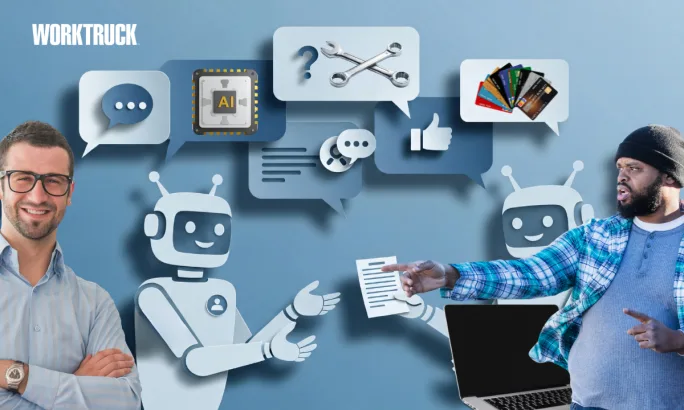
Fleet tech is leaving the “too many tabs” era behind as AI becomes the control layer that connects safety, telematics, maintenance, and compliance into one integrated ecosystem for 2026.
Credit: Work Truck
Responsible AI Will Become a Procurement Requirement
Here’s the part where the conversation gets more serious in 2026.
As AI takes on more decision-making, fleets and procurement teams will demand transparency and governance, especially when AI impacts driver coaching, safety scoring, or operational decisions.
Rudraradhya expects “responsible AI” to become a requirement, not a bonus feature.
“Procurement will demand transparency, audit trails, bias checks, and human override features,” he said. “Vendors must provide clear governance documentation to be considered.”
That’s a major shift in the vendor-fleet relationship. It means the future won’t just belong to the companies with the flashiest AI. It will belong to the companies that can explain how it works, prove that it’s fair, show what data it uses, and demonstrate how humans can intervene when needed.
This is also where trust becomes the differentiator.
“Trust is the ultimate differentiator,” Rudraradhya said.
And fleets aren’t wrong for being cautious. If AI is recommending a repair, scoring a driver, or deciding what gets prioritized, fleets need to trust that the decision is accurate, defensible, and aligned with what they value.
Connectivity Brings Opportunity and a New Fraud Reality
The more connected fleets become, the more they can automate, streamline, and stop babysitting systems that don’t talk to each other. But that same connectivity also expands the threat surface, and fraud is still very much on the 2026 radar.
“The mobility and fleet sectors are becoming even more connected, and that connectivity brings both opportunity and risk,” said Brian Fournier, Americas senior vice president and general manager of fleet and mobility at WEX. “Fraud tends to rise in times of economic uncertainty, and with AI advancing at record speed, the threat landscape has evolved even faster.”
He pointed to the scale of the issue: “In 2024 alone, the FTC reported $12.5 billion in fraud losses, with $5.7 billion tied to investment scams.”
The hopeful part of this forecast is that fleets are not stuck playing defense with one hand tied behind their back.
“The good news is that AI can work for us, not against us,” Fournier said. “Since embedding AI and machine learning into our systems, we saw a 32% increase in fraudulent transactions stopped in one recent 60-day period.”
And this is where integration becomes more than a buzzword. Tools that connect systems can stop fraud in real time, rather than flagging it after the money’s already gone.
“Tools like WEX’s SecureFuel, which links fuel cards with telematics to stop pump fraud in real time, and our new AI insights platform, are helping fleets stay secure, efficient, and resilient in 2026 and beyond,” Fournier added.
Edge AI Will Rise Because Fleets Want Speed and Privacy
Alongside responsible AI, Rudraradhya points to another shift that hits multiple operational pain points at once: edge AI.
“To reduce latency, cloud costs, and privacy risks, fleets will rely on devices that process data locally, sending only summaries to the cloud,” he said. “This builds trust and drives cost efficiency.”
That’s a big deal for fleets for a few reasons.
First, it means faster decision-making, especially for safety and inspections. Second, it reduces the cost of sending and storing massive amounts of raw video and sensor data. And third, it helps address privacy concerns by limiting what’s transmitted and stored.
This is a more mature approach to data in general. Fleets want the insights, but they don’t want unnecessary exposure.
Shared Maintenance Intelligence Will Start Changing Maintenance Strategy
AI is also set to reshape maintenance in a way that goes beyond predictive alerts.
Chan expects “AI and shared maintenance intelligence” to change the maintenance market, especially as more fleets share anonymized patterns, service trends, and repair insights across platforms.
“Predictive or automation-based maintenance, AI service advisors, and cross-fleet maintenance insights will move many fleets from reactive fixes to prescriptive repair and parts strategies, lowering per-service cost and improving uptime for fleets that pilot these capabilities,” Chan added.
That’s a huge opportunity for fleets, especially those that have historically depended on reactive repairs or rigid PM intervals.
Early proof points are already emerging: Ford Pro reports that over the past year, its connected vehicle solutions have reduced repair time by 20% for customers by helping them get ahead of needs, delivering a measurable improvement in vehicle uptime.
And it’s not just Fleetio and Ford Pro predicting it. Rudraradhya sees connected inspections and enhanced data enabling predictive maintenance, risk-based insurance pricing, and even faster claims processing.
“Enhanced data from connected inspections and video evidence will enable predictive maintenance and risk-based insurance pricing,” Rudraradhya said, “directly impacting claim speed and cost reduction.”
Computer Vision and Automated Inspections Will Get Serious
If AI becomes the control layer, computer vision becomes the frontline worker.
Rudraradhya predicts computer vision will play a bigger role in inspections and defect detection, reducing the gap between “something’s wrong” and “someone actually fixed it.”
“Automated camera-based inspections will catch defects early, attaching visual evidence to work orders and compliance records,” he said, “improving safety and operational rigor.”
That visual evidence piece matters because it strengthens accountability and speeds up action. Fleets don’t just want to know something is off. They want proof, context, and a path to resolution that doesn’t rely on someone manually chasing details.
It also sets the stage for “insurable uptime,” a concept Rudraradhya believes will grow.
“Uptime and maintenance become insurable,” he said, pointing to predictive maintenance, video evidence, and connected inspections supporting risk-based pricing and faster claims.
Fleets Will Still Need Humans in the Loop for Coaching
Even as AI grows, coaching and driver trust still matter, and fleets have learned the hard way that technology doesn’t work if drivers don’t buy in.
Rudraradhya doesn’t see fleets abandoning human involvement. He sees fleets getting smarter about how and when humans stay involved.
“Human-in-the-loop coaching is essential,” he said. “AI-powered coaching will combine real-time feedback with context-sensitive insights, maintaining driver trust and privacy. Coaching effectiveness will be measured by quality, not just frequency.”
This is a more realistic view of what behavior change looks like. Fleets don’t need endless alerts. They need coaching that’s fair, accurate, and actionable.
Data Sharing and Visibility Will Expand
As more fleets move to the cloud and as integrations improve, data sharing becomes more feasible and more valuable.
Griffith expects more data sharing in 2026.
“With more carriers and vendors making the move to the cloud, it’s easier than ever to access the data we need to truly enable a connected supply chain,” she said.
This isn’t just a logistics trend. It affects fleet operations across the board. Better visibility makes it easier to optimize routes, plan maintenance, make smarter replacement decisions, and reduce avoidable downtime.
It also sets the stage for a bigger operational pivot Griffith expects: moving from static planning to dynamic decision-making.
Transportation Planning Will Start Shifting from Static to Dynamic
Griffith believes transportation planning needs to evolve beyond how it’s typically done today.
“Today, we are still statically planning each segment of the journey in advance and thus aren’t able to pivot based on real-time factors,” she said.
Instead, she points to dynamic routing powered by AI and machine learning that can choose the right mode of transport for each part of goods movement based on real-time conditions.
Griffith also points to a practical shift that supports that future: moving from reliance on Electronic Data Interchange (EDI) to Application Programming Interface (API) connectivity.
“It’s a quick pivot to changing the reliance on EDI for status updates to API connectivity,” she said, adding that Trimble is pushing an “API-first strategy” and working to connect transportation management system (TMS) platforms directly.
For fleets and transportation leaders, the takeaway isn’t that EDI disappears overnight. It’s that the industry is pushing toward real-time decision-making and fewer manual handoffs.
Economic Uncertainty Will Keep Accelerating AI Adoption
It’s also worth noting that a big driver behind these changes is not just innovation. It’s uncertainty.
Griffith points directly to tariffs and the economy as forces pushing fleets to do more with AI.
“With the tariff situation creating such uncertainty in this industry, doing more with AI is becoming necessary for survival,” she said.
That aligns with other forecasts for 2026: fleets are being forced into efficiency mode. Anything that reduces manual work, avoids downtime, or supports faster decision-making becomes a competitive advantage.
And that’s why fleets are shifting from “nice to have” technology to “must have” systems.
Fleet Tech in 2026 Will Be Judged by What it Delivers
The clearest conclusion from these forecasts is that fleet technology in 2026 won’t be evaluated based on how many features it has. It will be evaluated based on how well it performs under pressure.
Does it reduce downtime? Does it improve safety outcomes? Does it streamline operations? Does it cut administrative burden? Does it support cost control? Does it earn driver trust? Does it stand up to procurement scrutiny?
And maybe most importantly, does it connect to everything else the fleet uses?
As Gilboa put it, fleets are tired of managing fragmented tools. They want integration that brings safety and operations into a single workflow, not separate initiatives competing for attention.
As Rudraradhya put it, AI will become the engine behind decision-making, but responsible AI and trust will determine who wins.
And as Chan put it, embedded telematics will keep accelerating, but fleets will only benefit if they can standardize the data and turn it into intelligence.
That’s the 2026 forecast in a nutshell: fleets aren’t just adopting technology anymore. They’re building systems.
And in a year where budgets are tighter and expectations are higher, systems beat stacks every time.
A Forecast Series Built for Fleet Planning, Not Guesswork
The forces shaping 2026 won’t hit fleets one at a time. They’ll hit all at once. Read the full Work Truck forecast series for more insights on how fleets can plan smarter and stay ahead.
The Cost Squeeze is Not Letting Up, and Fleets Are Planning Like It
In 2026, Safety Stops Being a Program and Becomes How Fleets Operate
The 2026 Powertrain Playbook Is Less About Picking a Winner and More About Building Resilience
In 2026, Yard Operations Stops Being a “Site Thing” And Starts Becoming a Strategy
Subscribe to Our Newsletter
More Technology
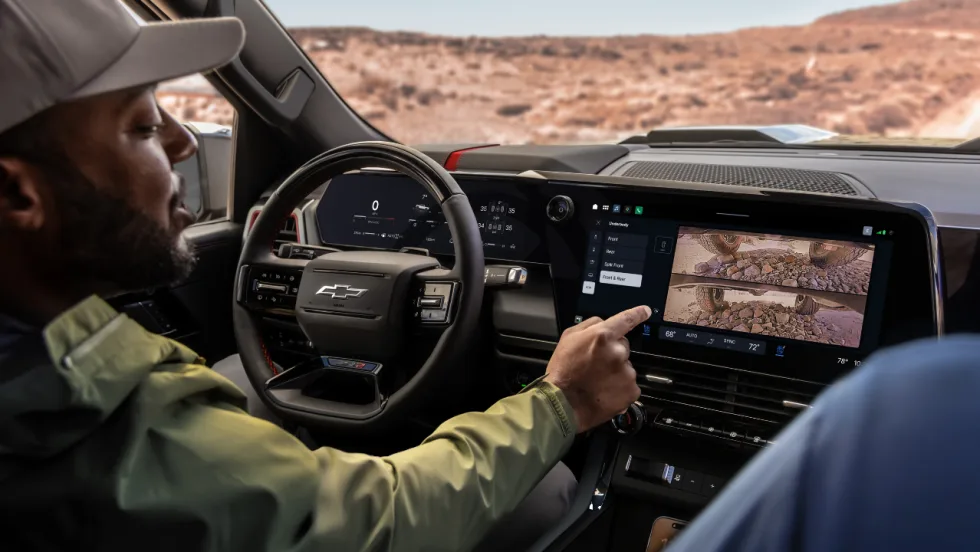
GM Brings New Truck Focused Interface to 2027 Silverado and Sierra
GM's new pickup interface puts trailering data, camera views, vehicle controls, and smartphone integration closer to the driver in the 2027 Silverado and Sierra.
Read More →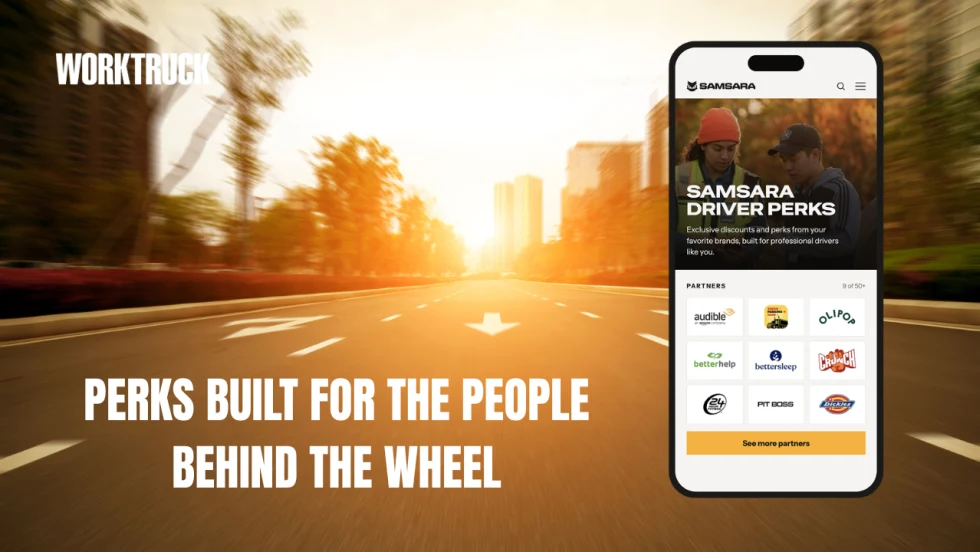
Samsara Driver Perks Expands Rewards Beyond the Long Haul Driver
Samsara’s new driver rewards program was built with a broader professional driver in mind, including employees who split their day between driving, job sites, service calls, and other work.
Read More →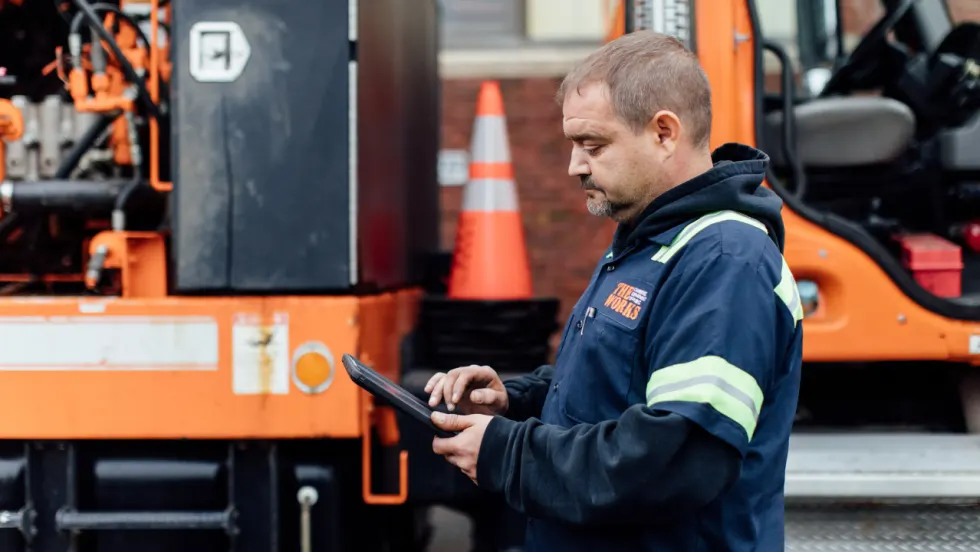
AI Service Advisor Aims to Cut Fleet Repair Downtime
Fleetio said its AI Service Advisor can help fleets cut repair downtime by an average of 2.5 hours per repair while reducing manual maintenance work.
Read More →
Verra Mobility Launches AI-Driven Title & Registration Solution
Verra Mobility has launched a new AI-driven Title & Registration platform to help fleets move vehicles from acquisition to the road the same day while reducing compliance risk.
Read More →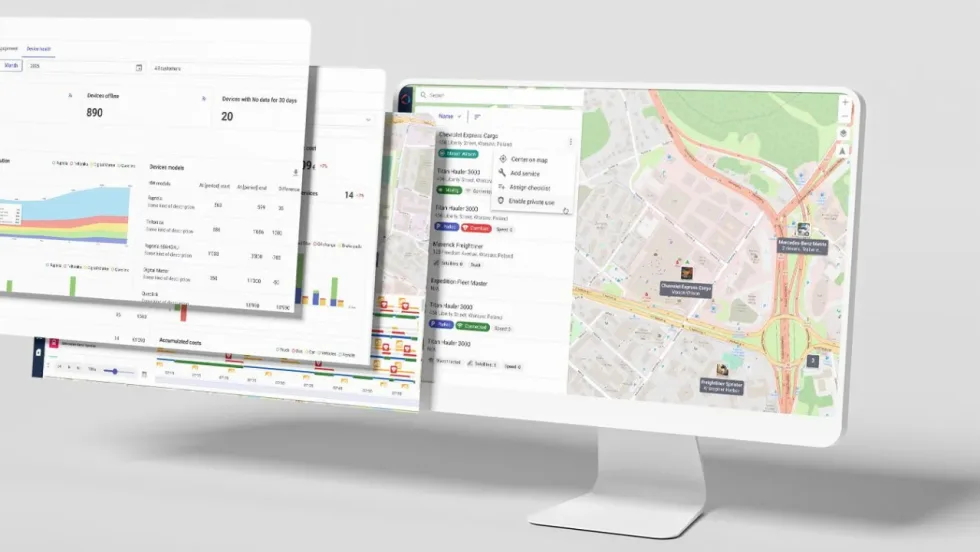
Wialon Unlocks OEM Data to Give Fleet Owners Data Ownership & Operational Clarity
Wialon has introduced hardware-free OEM integration as the EU Data Act accelerates the shift in vehicle data access across the fleet industry in many countries.
Read More →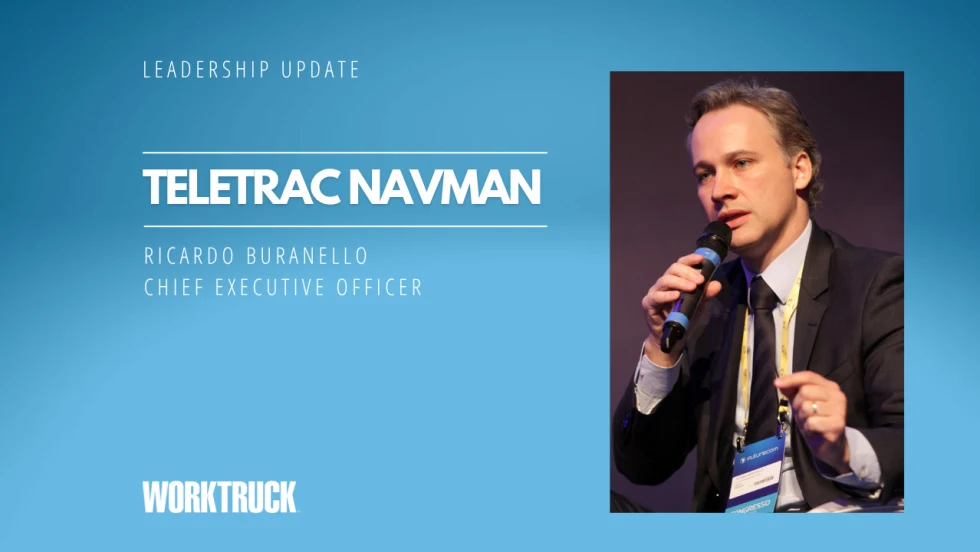
Teletrac Navman Promotes New CEO from Within
Teletrac Navman’s next CEO, Ricardo Buranello, has served as the company’s chief financial and operating officer. He brings deep financial and operational expertise, a strong strategic orientation, and an intimate knowledge of the business to his new role.
Read More →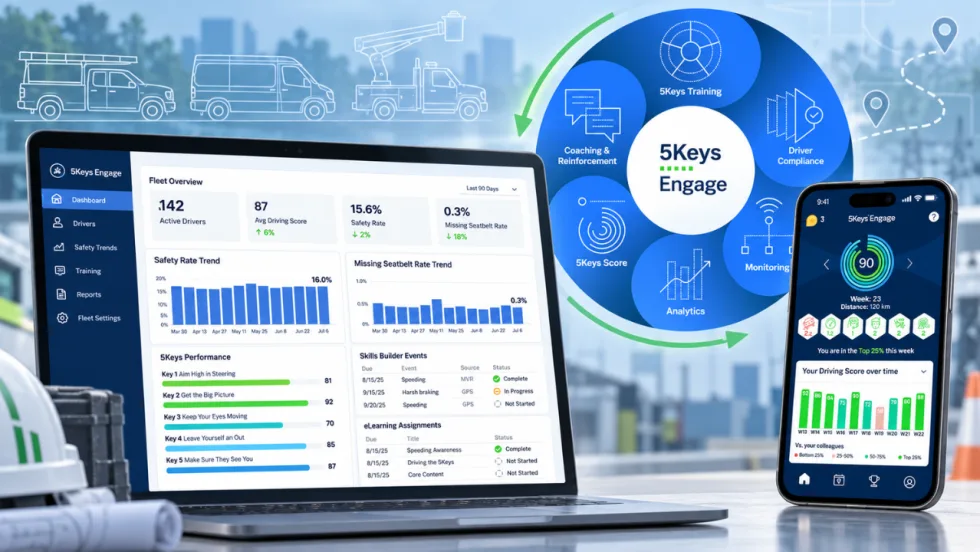
Smith System Wants Work Truck Fleets to Look Beyond the Driver Alert
Smith System’s new Driver Risk Management program is built to help mixed work truck fleets turn telematics alerts and observations into specific behaviors, coaching actions, and measurable follow-up.
Read More →
Ford Pro Software Updates: August 26
Check out the latest Ford Pro software updates, including Google Maps integration, Remote Vehicle Alarm integration, Motor Pool for easier management of shared pool vehicles, and more.
Read More →
Where AI Is Actually Saving Fleet Managers Time
AI is moving past the buzzword stage and into the daily fleet workflow. Fleetio’s Brianna Perry Lang breaks down where fleets are seeing real time savings, from maintenance and data entry to repair decisions, safety, and compliance
Read More →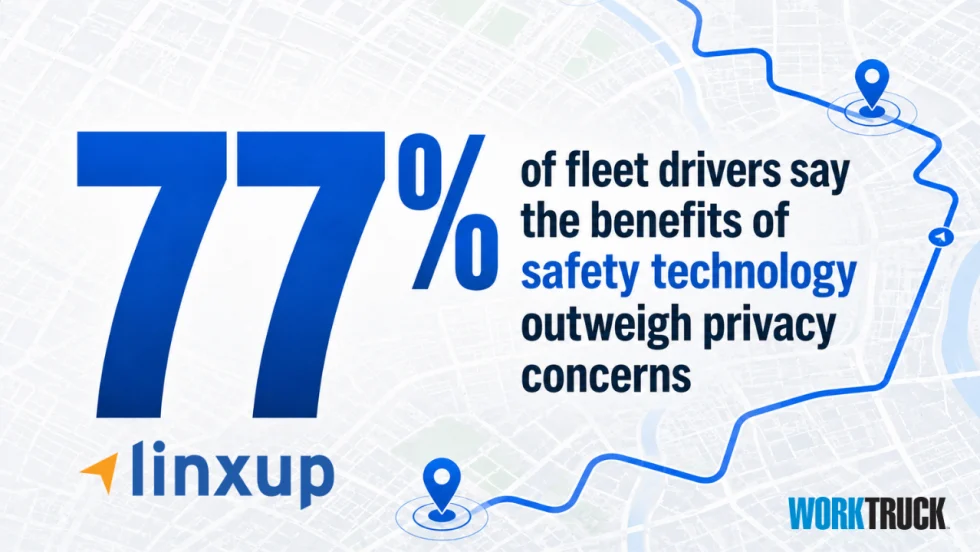
Are Work Truck Drivers Warming Up to Dash Cams and GPS Tracking?
A new survey finds field-service drivers may be more comfortable with dash cams and GPS tracking than fleet managers think, especially when the technology helps protect them after a crash.
Read More →