




Fleet 101: Transfer Cases in Work Trucks
Fleet 101: What You Need to Know About Torque
Fleet professionals see the word frequently, but do they have a firm grasp of the concepts behind it? Here’s a refresher.

Lexi Tucker・Former Senior Editor
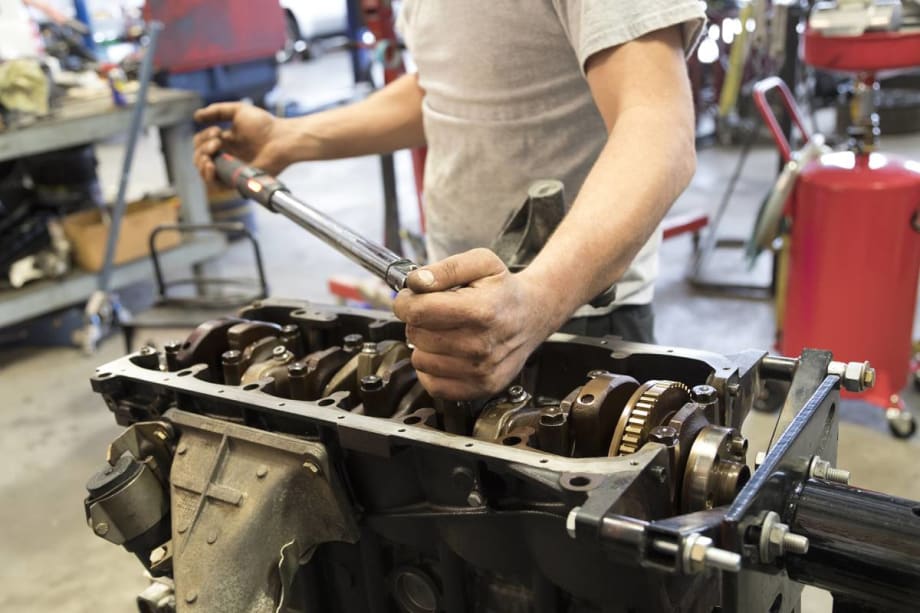
Torque is described as “a rotating force produced by an engine’s crankshaft.”
Photo: Getty Images
5 min to read
When you’re in the middle of doing vehicle research for your vocational fleet, there’s no doubt you’ve come across the term “torque” a vast majority of the time. Have you developed a deep understanding of its meaning?
This guide in Work Truck’s Fleet 101 series will have you speaking about the concept like a pro in no time.
What is Torque?
First off, we need to set the record straight: although related to one another, horsepower and torque are two different things. While both are an indicator of power, torque will likely be of more interest to those in the world of vocational fleet. Simply put, torque is an indicator of towing power, while horsepower is the maximum power available to a vehicle and has more to do with speed and the rate at which an engine accomplishes work.
For a basic comparison, you’ll likely see many sportscars with higher levels of horsepower than a truck meant for heavy lifting and vice versa.
How is it Measured?
You’ve likely gotten lb.-ft. and ft.-lb. mixed up and weren’t even aware there was a difference!
According to Engine Labs, a lb.-ft. (also referred to as a newton-meter in the metric system) is a unit of torque and a vector measurement created by one pound of force acting on a one-foot lever. On the other hand, a ft.-lb. is a measurement of work. Work is the measurement of force over a given distance. It measures the energy required to move a one-pound object one foot of linear distance.
In simpler terms, lb.-ft. is the official measurement of torque, the force that helps the truck start moving from a stop and pulls it up steep hills.
BMW states that the formula for torque is as follows:
Torque = force (N) x lever arm (m)
Newton (or pound) stands for the acting force, while meters (or feet) stand for the length of the lever arm being used to enact the twisting force.
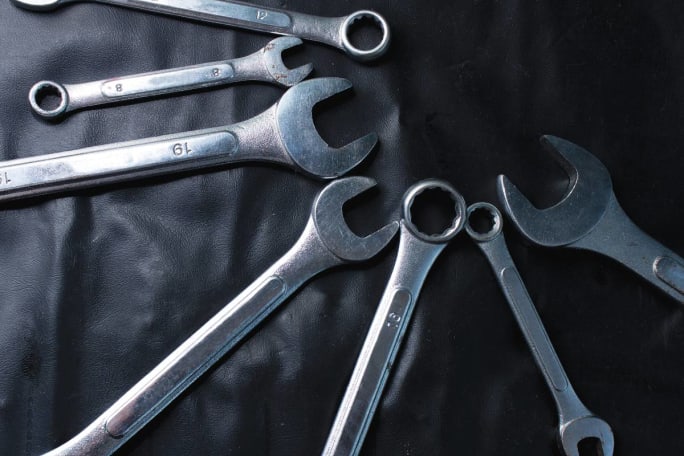
For an even simpler visual of torque, think turning a wrench to tighten a bolt, twisting a jar open with your hand, or even opening a door by rotating a doorknob.
Photo: Getty Images
Where Does it Come From?
Essentially, torque is the rotational force of an engine that measures how much of that force is available when an engine exerts itself, according to Toyota. As the pistons in an engine move up and down on an engine’s crankshaft, torque is the force that keeps it constantly rotating at a certain speed. From there, torque is shifted to the vehicle’s wheels through the transmission and drivetrain.
For an even simpler visual, think about twisting a jar open with your hand, turning a wrench to tighten a bolt, or even opening a door by rotating a doorknob.
In a piece for Work Truck sister publication Heavy Duty Trucking, writer Rolf Lockwood stated, “In an engine, torque is generated by the pressure load of the expanding gases on the top of the piston times the stroke, meaning how far the piston moves. Two basic principles apply: torque is stronger at the lower end of an engine’s operating range, while horsepower is higher at the upper end; and a bigger displacement engine will produce more power than a smaller one, simply because there’s more area for combustion to force down those pistons.”
What Causes Differences in Torque?
All trucks are not created equal when in comes to torque, and that’s because the level of torque produced is impacted by the amount of air flowing through the engine. Larger engines produce more torque because they pump more air.
Piston length will also cause differences in torque. Diesel engines, for example, will create greater torque because the piston moves relatively farther, resulting in longer strokes.
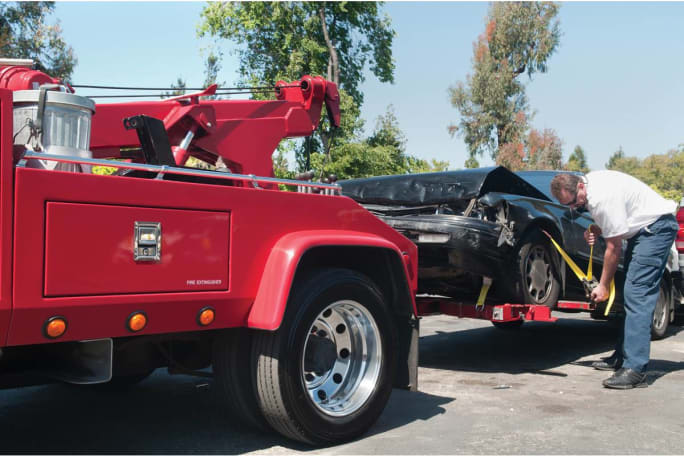
Torque is an indicator of towing power, while horsepower is the maximum power available to a vehicle and has more to do with speed and the rate at which work is accomplished by an engine.
Photo: Getty Images
Why Does it Matter?
With all the technical information out of the way, now it’s time to discuss the benefits of torque for vocational fleet drivers. The low-end revolutions per minute (rpm) generated by higher levels of torque is what allows the engine of a truck to easily carry heavy loads and move quickly after coming to a stop. For example, trucks will move slowly when moving up a hill with a trailer or heavy load. Therefore, the engine rpm will be low, enabling the vehicle to operate smoothly for the task at hand.
“In simple terms, torque is the twisting power of the engine to get and keep your vehicle moving. A fleet customer might benefit from a truck with more torque if they have heavy payload or towing needs, as higher torque combined with low engine rpms often leads to better performance when starting from a stop. Diesel engines naturally have high torque at low rpms, which is one reason they are often preferred for heavy-duty applications. Selecting the right powertrain will vary across fleet customers based on need, which is why GM offers a range of engines, both gas and diesel, across our line-up,” said Dan Tigges, commercial product and sales support manager for GM.
Dave Sowers, head of Ram Commercial Marketing, said, “Businesses expect their vehicles to do it all, so power and torque are important. Delivery services require ample power and torque, whether they are an expediter or a final-mile service, to cover miles of interstate, city streets, and all the rolling topography in between. Whether it’s a landscaping company towing a trailer, a plumber hauling heavy pipes, or a contractor carrying marble countertops, power and torque are necessary to get in and out of the job site. There isn’t a ‘one-size-fits-all’ solution, but Ram offers light- and heavy-duty trucks and vans for all, no matter their line of work.”
Something important to note is torque isn’t the only factor that affects a vehicle’s towing capacity. Components such as wheels, tires, suspension, and transmission also play a part in the overall equation.
Subscribe to Our Newsletter
More Operations
Family Ties Inside the Fleet Families Building Careers Across Generations
Three fleet families share what it really takes to work together, learn across generations, and keep business from following them home.
Read More →
Shades of Fleet Call for Voices: Fleet's Hidden Heroes
Fleet’s hidden heroes are often the ones keeping everything moving behind the scenes. September’s Shades of Fleet is looking for dispatchers, coordinators, parts specialists, and other support pros to share their stories.
Read More →
Truck Centers, Inc. Celebrates National Truck Driver Appreciation Week with $1,000 Fuel Card Giveaways
During National Truck Driver Appreciation Week, Truck Centers, Inc. is offering customers a chance to fuel up for free. Customers at all Truck Centers locations can enter to win one of four $1,000 fuel cards from Sept. 14 - 18.
Read More →
Fleet Guides, AI Time-Savers, Truck Tariffs & Fuel Strategy Lead the News
This week’s Truck Chat Cheat Sheet covers new fleet vehicle guides, practical AI use cases, U.S.-Canada truck production, mixed-energy strategy, and more.
Read More →
What Fleet Employers Are Missing When Hiring Veterans
What if some of the strongest candidates for fleet are already out there, but their experience is written in a language our industry does not always recognize?
Read More →
Automotive Fleet Opens 2026 Personal Use Survey for Commercial Fleet Managers
Less than two weeks left! Commercial and corporate fleet managers are invited to share how their organizations handle company vehicle personal-use policies, charges, and driver eligibility.
Read More →
What Resilient Fleets Do Differently When Conditions Change
Fleet resilience is about more than reacting to disruption. Lauren Fletcher talks with AP Fleet’s Alex Coveney about flexibility, planning, scaling, and what helps fleets adapt when business conditions shift.
Read More →
If We Want the Next Generation in Automotive, We Have to Give Them a Reason to Care
The automotive industry talks constantly about its workforce shortage. But before we can recruit the next generation, we may need to do a better job giving kids a reason to care about automotive in the first place.
Read More →
Ram ProMaster City Under $40K, Truck Tariffs, and AI Maintenance Lead the News
A sub-$40K commercial van, tariff questions, AI-powered maintenance, and a new EV production strategy headline this week’s Truck Chat Cheat Sheet.
Read More →
Bob Adamsky Shares the Fleet Lessons You Usually Learn the Hard Way
After more than 30 years in fleet, Arrow International’s Bob Adamsky has learned that the job is about far more than vehicles. He shares the lessons he wishes every fleet manager could learn a little earlier.
Read More →