




Related: Propane Education & Research Council Updates Fleet Info Online
Exploring Propane as a Fleet Fuel Source
Propane may be a viable option for certain fleets looking for an alternative fuel source. While converting a vehicle to a propane system comes with a high initial cost, the system may come with reduced lifecycle costs over the course of that vehicle's life.
by Eric Gandarilla
June 11, 2019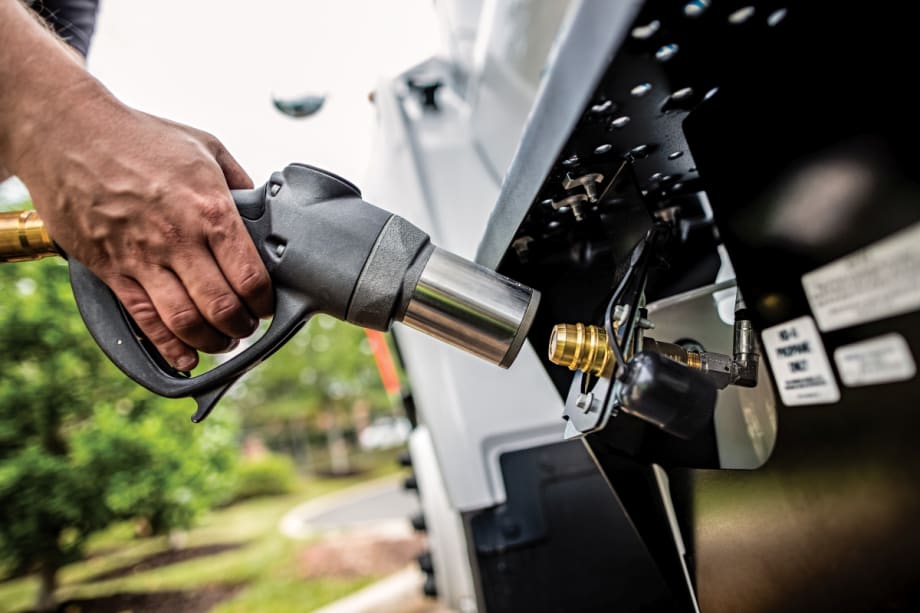
In the first week of May 2019, the national average price per gallon of propane autogas was $1.45. The national average cost of regular grade gasoline was $2.86.
Photo courtesy of PERC.
3 min to read
In an environment with rising gasoline prices, propane could offer a viable option for fleet managers looking for an alternative-fuel source.
There’s a misconception that propane autogas is more expensive than traditional fuels, noted Michael Taylor, former director of autogas development for the Propane Education & Research Council. Taylor ended his nearly eight years as the director of autogas development in 2020.
But, the actual cost of wholesale propane typically falls between the price of oil and natural gas — the two sources of propane, he added.
According to the U.S. Department of Energy, between July 1, 2023 and July 15, 2023, the national average price of gasoline was $3.59 a gallon while propane was $3.25 a gallon.
“There is a small segment of the fleet industry who may have tried propane autogas years ago and wasn’t pleased with the performance,” said Taylor. “Over the past decade [there have been] dramatic improvements in propane engine and fuel system technologies.”
Total Cost of Ownership for a Propane Vehicle
Fleets with light- or medium-duty trucks, delivery vans, sedans, shuttle busses, and school busses are all viable candidates for propane autogas, noted Taylor.
In order to use propane as a fuel source, fleets need to first modify their vehicles’ engines through the use of an EPA or CARB-certified conversion kit.
This presents the biggest hurdle in terms of total cost of ownership for a fleet considering a conversion to propane. The cost to convert a vehicle to accept propane autogas ranges between $6,000 and $12,000, according to the U.S. Department of Energy’s Office of Energy Efficiency & Renewable Energy.
This initial cost is eventually offset through a fuel source that can cost between 30% and 50% less than gasoline, Taylor noted.
However, fuel economy for a propane-powered vehicle does tend to be lower than gasoline vehicles, according to the U.S. Department of Energy. On average, propane-powered vehicles see 5-10% lower miles per gallon than their gasoline alternatives, Taylor noted.
This hit to fuel economy, however; is offset by the considerably lower fueling costs.
Propane’s high octane rating — around 106 compared to gasoline’s 87-93 — along with its low-carbon and low-oil contamination characteristics leads to improved engine life compared to gasoline engines, according to the U.S. Department of Energy. The comparatively cleaner fuel typically leads to lower maintenance costs as well.
When it comes time to retire the vehicle from a company’s fleet, fleet owners have several options in terms of how they can remarket their propane vehicles.
A fleet manager can remarket their propane vehicles as-is, as there are buyers who are looking for vehicles already equipped with propane conversion kits.
“Dependent upon the vehicle’s age and mileage, some buyers will choose to deploy the propane autogas vehicles into their operation while other buyers may choose to remove the high-value components which can be remanufactured and sold as aftermarket parts,” said Taylor.
The inventory of propane trucks in the wholesale market is increasing and the number of buyers for used propane autogas trucks is increasing with it, according to Taylor.
Fleet managers remarketing their propane-converted vehicles can also choose to remove the propane autogas fuel system, reinstall the OEM gasoline fuel system, and remarket the vehicle as a gasoline truck, Taylor added.
Editor's Note: This article was origianlly published in June 2019 and was been updated as of Oct. 2023 to reflect changes.
Originally posted on Automotive Fleet
Subscribe to Our Newsletter
More Green Fleet

Fleet Forward Conference Introduces One-Day Passes for 2026
New one-day registration gives fleet professionals the flexibility to attend Tuesday, Wednesday, or Thursday, with passes available for $199 through Sept. 18.
Read More →
CALSTART Rebrands as Catalyst Mobility, Will Combine with Forth in 2027
CALSTART has rebranded as Catalyst Mobility and will combine with Forth at the start of 2027. The new organization said it is poised to become one of the world's largest, strongest, and most impactful clean transportation nonprofits.
Read More →
Electric Truck and Charging Programs to Boost Sustainability at NY & NJ Ports
Together, the Port Authority of New York and New Jersey and CALSTART will electrify drayage and terminal operations serving the East Coast’s busiest container port. A pair of incentive programs totaling $45 million has launched to accelerate adoption of zero-emission drayage trucks and terminal tractors.
Read More →
Xos Hub Surpasses One Gigawatt-Hour of Energy Delivered in the Field
A single Xos Hub has surpassed one gigawatt-hour of energy across more than 33,600 charging sessions in the field, demonstrating performance that supports Xos' expansion across new products and markets.
Read More →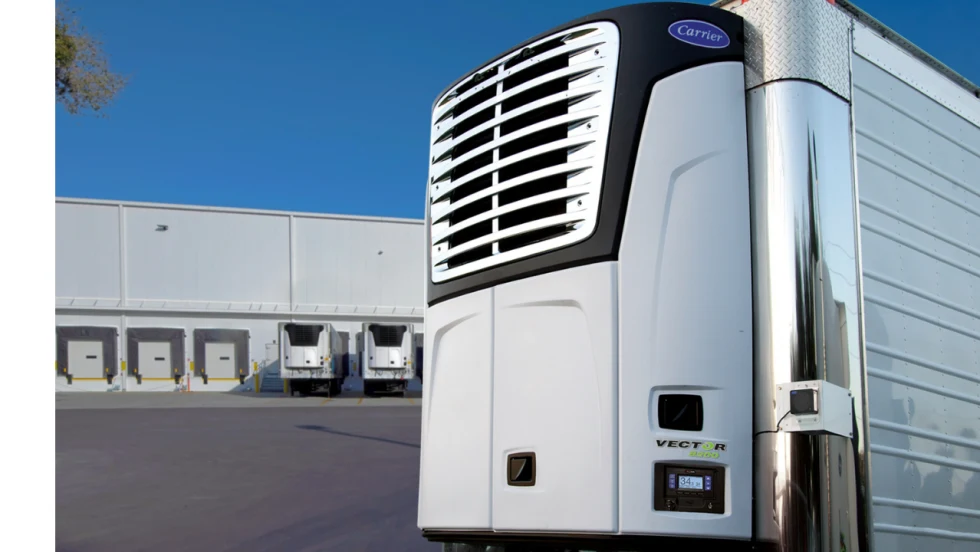
Carrier Transicold Launches All-Electric Vector 8200 TRU for Diesel-Free On-Site Cold Storage
Carrier Transicold’s first engineless multi-temperature TRU helps fresh- and frozen-food fleets add supplemental cold storage capacity during seasonal peaks.
Read More →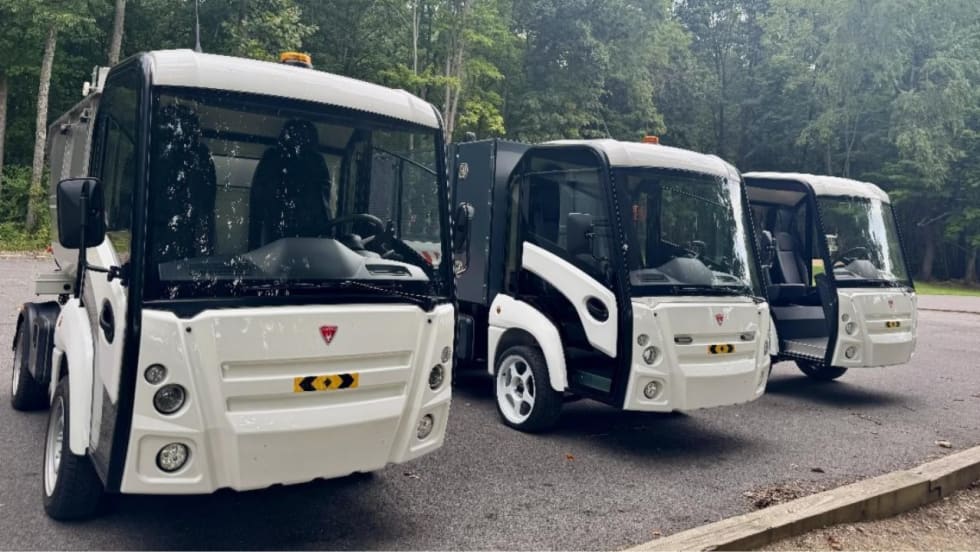
Narro Trucks Introduces Electric Utility Vehicle
Narro Trucks officially launched its operations on Aug. 20 and hosted a ride and drive to showcase its electric truck, which will be produced in Virginia.
Read More →
Samsung SDI Takes Full Control of GM Battery JV as Indiana Plant Pivots to Energy Storage
Samsung SDI is taking full control of its Indiana battery plant with GM, marking a major shift from the EV-focused joint venture Charged Fleet first covered in 2023.
Read More →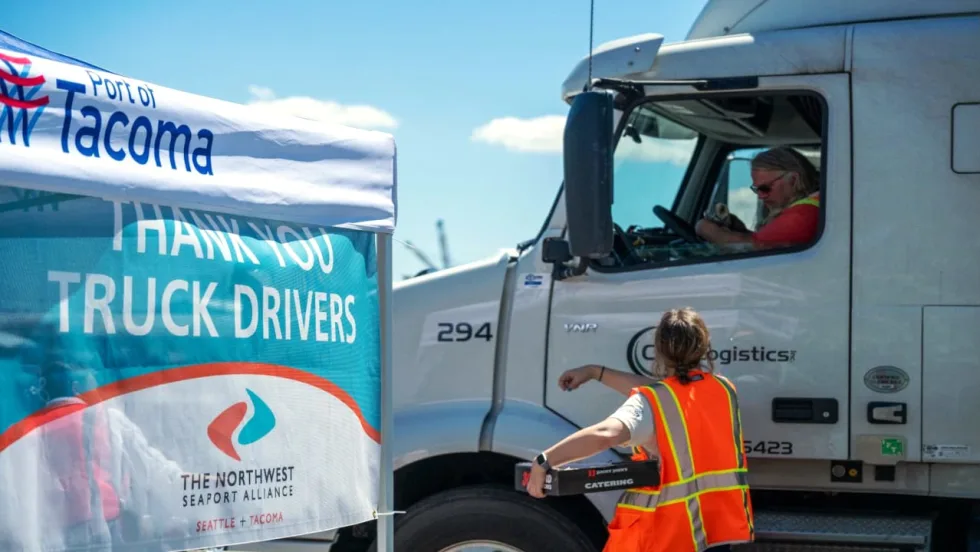
NWSA Taps CALSTART to Administer Zero-Emission Drayage Assistance Program
CALSTART will provide free technical assistance services to drayage fleets serving the Ports of Seattle and Tacoma and looking to transition to cleaner technologies and help decarbonize freight hubs.
Read More →
EV Fleet Reality Check: What Operators Wish They Knew Before Electrifying Their Work Vans
Electric work truck upfits bring new compatibility questions. Learn how parts availability, OEM guidance, power demands, and route planning can affect fleet performance.
Read More →
Peterbilt Expands Sourcewell Partnership with Electric Vehicle Lineup
Peterbilt Motors Company’s cooperative purchasing agreement with Sourcewell and its Canadian partner, Canoe Procurement Group, now includes including Peterbilt's battery-electric vehicle lineup.
Read More →