




Establishing Amortization Rates by Vehicle Class
The open-end, TRAC lease allows fleet managers a great deal of flexibility in managing depreciation. One manifestation of that flexibility is allowing fleet managers to amortize vehicles based on vehicle class and usage.

Since it was originally developed, the open-end, terminal rental adjustment clause (TRAC) lease has been a boon to fleet managers throughout the industry. The basics call for the establishment of an amortization rate, which is the rate the capitalized cost of the vehicle is reduced each month via the lease payment. This, ideally, will result in an unamortized value at termination equivalent to the actual market value upon sale.
Over the years, “conventional fleet wisdom” has set that rate at 50 months, or 2 percent per month. At such a rate, the typical fleet automobile, replaced after roughly 30 months with 65,000 miles, would reflect the 40-percent retained value the fleet manager could expect to see.
However, setting a “standard” amortization rate defeats the purpose of the lease, as not all fleet vehicles are mid- or full-sized sedans. Fleets use a number of different types of vehicles, from subcompact cars to 1-ton pickups, and everything in between. Savvy fleet managers will adjust amortization rates based upon vehicle class and usage, and gain the even cash flows that the TRAC lease allows.
Exploring the Complexity of Fleet Cars
Unlike the early days of fleet, when vehicles were primarily full-size, four-door sedans, a broad range of cars are now used, from stripped down subcompacts up to and including luxury cars for executives — and, amortization rates for each should be different.
First, fleet managers need to determine the replacement criteria for each car class. For example, an executive’s luxury car might be replaced sooner than a subcompact used strictly for delivery. Due to limited space, these two examples will be illustrated: a subcompact, lightly spec’d delivery car, and a high-line executive luxury car.
For the subcompact, assume a replacement cycle of 36 months or 75,000 miles, whichever comes first. The sample car is used for local deliveries all day long, but doesn’t accumulate many miles, since the deliveries are always within only a few miles or even less from home base. Thus, it is expected that the 36-month limit will hit before the mileage does.
The fleet manager can then expect to sell a three-year-old car, with perhaps 50,000 miles on it, and only basic equipment. Mileage will be relatively low, but otherwise, value retention won’t be strong. Assuming a cap cost of $13,000 and a retained value of 30 percent, amortization would look like this:
Capitalized Cost: $13,000
Resale Value: $3,900
Depreciation: $9,100
Months in Service: 36
Monthly Depreciation: $252.78
Percent per Month:
$252.78 ÷ 13,000 = 1.94%
Here, the actual depreciation of 1.94 percent per month can be fairly represented by the aforementioned 50 month or 2-percent-per-month rate. At that rate, the car would be amortized $260 per month; the result, after 36 months, would be an unamortized value of 28 percent or $3,640.
Selling the car for $3,900 would result in a TRAC adjustment of a $260 credit back to the lessee, an acceptable result as a fair representation of the actual depreciation of the car.
For the executive’s luxury car, the circumstances and assumptions are very different. First, the car is a luxury sedan, fully equipped, with a cap cost of $75,000. The replacement cycle, because the vehicle is a perk (part of the executive’s compensation plan), is more frequent than the delivery subcompact, perhaps two years or 40,000 miles. The executive drives the car a lot, on business trips and for personal use for him or her and spouse and licensed children over 21, per the fleet’s policy.
The car hits 40,000 miles at 20 months. The retained value, though mileage is fairly high for a car less than two-years old, will be strong; assume 70 percent. Let’s look at the numbers:
Capitalized Cost: $75,000
Resale Value: $52,500
Depreciation: $22,500
Months in Service: 20
Monthly Depreciation: $1,125
Percent per Month:
$1,125 ÷ 75,000 = 1.5%
Now, even though the depreciation numbers are much greater for the executive car ($1,125 per month vs. $252.78 per month), the monthly percentage is lower — 1.5 percent per month for the executive vehicle.
Thus, rather than using a 50-month (2-percent-per-month) rate, the amortization rate can be stretched out to 60 months or even more. If the lessor can accommodate a rate of, for example, 65 months (1.54 percent per month), the reserve for depreciation will be $23,100 vs. the actual depreciation of $22,500, resulting in a credit back to the lessee of $600, again, a good result.
Truck Spec’ing Requires Additional Considerations
As with cars, fleets use a wide variety of trucks, from compact pickup trucks to big jobsite pickups, to trucks with specialty upfits such as utility trucks, van bodies, and stake bodies. Each truck class requires different amortization rates that consider replacement criteria, mileage accumulation, and equipment. Also, as with cars, we’ll take two examples and look at both the theory and the calculations.
Construction trucks are spec’d for tough, jobsite usage. Heavy-duty suspensions and big, eight-cylinder engines for hauling construction waste and heavy equipment, and upgraded towing packages are the norm. Despite this rough usage, mileage is usually relatively low, and such trucks often have a strong resale market.
Our sample truck is a 1-ton pickup truck, four-wheel drive, spec’d for heavy use with heavy-duty suspension and shocks and a V-8 engine. Replacement criteria are 48 months or 100,000 miles. Since mileage isn’t accumulated rapidly, the truck remains in service for the full 48 months, and comes out of service with 80,000 miles on the odometer. Because work trucks tend to be in high demand, the retained value, even with this use and after four years in service, is a solid 40 percent; cap cost is $27,000. Here are the numbers:
Capitalized Cost: $27,000
Resale Value: $10,800
Depreciation: $16,200
Months in Service: 48
Monthly Depreciation: $337.50
Percent per Month:
$337.50 ÷ 27,000 = 1.25%
Because mileage is relatively low, and work trucks usually enjoy a strong resale market, actual depreciation for the sample truck remains low, and the fleet manager can apply a representative amortization rate.
Working against this is the fact that fleet lessors are loathe to extend amortization rates much beyond six years (72 months). Considering this and pegging amortization at 72 months results in a credit back to the lessee a bit higher than the ideal. An amortization rate of 1.39 percent per month would reserve a total of $18,014 for anticipated depreciation vs. actual depreciation of $16,200, and result in a $1,814.40 credit.
Clearly, if a lessor is willing, an amortization rate of 80 months would be ideal (matching exactly the 1.25 percent in the example above). If a fleet manager can show an extensive history of this level of actual depreciation, a lessor might be willing to work with him or her, and set the rate that is preferable.
Fleets that use trucks with custom upfits won’t realize the kind of depreciation benefits the work truck sample does. Such fleets will often adjust for this by removing the original upfit and having it installed on the replacement unit, thus buying only a cab/chassis until the upfit is fully depreciated.
Whether this is the case, or the fleet sells the unit with the upfit in place, the specialty nature of the upfit will reduce the market for resale, and sometimes result in substantially more depreciation than the sample work truck experienced.
For this example, take a 1-ton cab/chassis, 4x2, with standard equipment. The truck is upfit with a utility body, which will be removed before sale. Replacement criteria are the same, 48 months or 100,000 miles, but this is a service truck, not a jobsite unit, and mileage accumulates quickly. Original cost is $29,000, and it reaches 100,000 miles in 27 months. Resale value is $13,500. The calculations are as follows:
Capitalized Cost: $29,000
Resale Value: $13,500
Depreciation: $15,500
Months in Service: 27
Monthly Depreciation: $574.07
Percent per Month:
$574.07 ÷ 29,000 = 1.98%
Here, although the vehicle has higher mileage and is replaced after only 27 months, depreciation isn’t too far out of the norm at 1.98 percent per month.
The primary reason for this is that, unlike the four-year-old truck in our first sample, this truck is less than three-model-years old, and depreciation isn’t unusually high. We can apply that “standard” amortization rate of 50 months (2 percent per month), and hit the target nearly perfectly. Reserve for depreciation will be $15,660 at this rate, and when resale proceeds of $13,500 are applied, actual depreciation will be $15,500, with a resulting credit back of only $160.
Even more so than with cars, fleets use a wide variety of light trucks, from compact or mid-sized pickups to ½- to 1-ton jobsite vehicles to cab/chassis with various upfit configurations. Each of these will experience equally diverse use, mileage accumulation, and replacement, and the flexibility of the TRAC lease enables a fleet manager to adjust amortization rates accordingly.
Crossovers & SUVs Growing in Popularity
One vehicle class that only became popular for fleet usage in the past 15 years is SUVs and their more recent cousins, crossovers. Considered either a luxury or for only very specific applications (territories where four-wheel drive was needed), crossovers and SUVs have become more and more popular, replacing some minivan and large car selections. Both vehicle types, when properly equipped, tend to retain value well, and the introduction of crossovers provided better fuel efficiency than earlier SUV models did.
For this example, a “classic” SUV application will be presented, which is a unit used in a mountainous territory, where snow in the winter and mud in the summer thaw make four-wheel drive a necessity.
The SUV is moderately equipped, and runs high mileage as its destinations are a long way apart. Replacement criteria are the same as the fleet’s cars, 36 months or 75,000 miles, as mileage accumulates quickly, 75,000 miles is reached after only 24 months in service. Originally, it cost $41,500, and the market will bring a fairly robust $27,000. Once again we’ll run the numbers:
Capitalized Cost: $41,500
Resale Value: $27,000
Depreciation: $14,500
Months in Service: 24
Monthly Depreciation: $604.17
Percent per Month:
$604.17 ÷ 41,500 = 1.45%
Not at all bad; because the SUV is used in a specific application, where 4WD is essential, when the vehicle is sold in that same geography it’s value retention is strong, even though average annual mileage is extremely high even for fleet usage. Additionally, the fleet is well within the usual fleet lessor amortization limits, so a 1.5-percent-per-month amortization rate (not at all uncommon) would work well.
At that rate, depreciation reserve will be $622.50 per month or $14,940 at resale. Applying the proceeds of $14,500 will result in a manageable $440 credit back to the lessee. Lessors have used a 1.5 percent per month depreciation rate for many years, and a fleet customer should experience no resistance to such a request.
Now, review a newer entry into the fleet marketplace, the crossover.
The sample vehicle is a sales unit, carrying people, product, and point-of-sale materials. A mid-sized crossover, it is well equipped, features four-wheel drive with navigation and other amenities the typical sales rep needs.
Replacement occurs at 36 months or 75,000 miles, same as the full-size SUV, but the territory is suburban, and mileage is not accumulated nearly as rapidly. Original cost runs $25,600, the unit hits 75,000 miles at 33 months in service, and resale brings $13,500. The calculations are as follows:
Capitalized Cost: $25,600
Resale Value: $13,500
Depreciation: $12,100
Months in Service: 33
Monthly Depreciation: $366.67
Percent per Month:
$366.67 ÷ $25,600 = 1.43%
Not much of a difference from the SUV — both units are four-wheel drive, one in a territory that needs it, one where it may not; however, buyers of this vehicle class tend to be looking for four-wheel drive and value retention reflects it. The SUV is more moderately equipped; however, value retention is good as it is being sold in an area where four-wheel drive is important. The crossover may not really need that four-wheel drive in the suburbs, but it is better equipped with the tech options a suburban buyer wants (e.g., Bluetooth and navigation). No need to use anything else but that same 1.5-percent-per-month amortization rate as was used for the full-sized SUV. The resulting reserve would be $384 per month, or a total of $12,672 over the 33-month service life. Pulling $13,500 at resale provides a depreciation cost of $12,100, and the result would be a TRAC credit back to the lessee of $572. Once again what we get is a very manageable number.
Van Amortization Ranging by Usage
The final class of fleet vehicle we’ll test is the van. Vans are used for two primary purposes: to carry people or to carry things. The former requires large passenger capacity, some up to 15, while the latter are basic work vans, or those for service applications where customer upfits to the interior are common. Then there are also minivans, which more often are for sales-type applications where both people as well as things (point of sale materials, samples, etc.) are carried.
Let’s look at two examples. The first is a service van, no upfit, which is filled with product, parts, and equipment. The specs are fairly basic, with navigation added as the service technician will be driving from one call to the next and needs to know the quickest route. The van is “wrapped,” that is, the company logo and contact information is decaled on the sides.
Originally costing $26,450, replacement occurs at 48 months or 100,000 miles. Our sample unit runs very high mileage, and usage is fairly rough; a lot of stops and starts, heavy loads, and mostly local driving; 100,000 miles is hit at 31 months, at which time it is sold for only $8,600. The numbers:
Capitalized Cost: $26,450
Resale Value: $8,600
Depreciation: $17,850
Months in Service: 31
Monthly Depreciation: $575.81
Percent per Month:
$575.81 ÷ $26,450 = 2.17%
This represents the highest monthly depreciation rate yet. This is because mileage is accumulated very quickly, more than 30,000 miles per year. The van is strictly a utility vehicle used to bring a service tech to a job with the tools and equipment needed, and it’s wrapped, an additional expense for the buyer after the vehicle’s purchase.
That said, 2.17 percent per month isn’t near any outrageous depreciation rate, only slightly over the long-time amortization standard of 2 percent. But, amortizing at 2 percent will result in a very large TRAC charge back to the lessee, almost $1,400. Unless the lessor is agreeable to a slightly higher amortization rate that better matches the actual, it’ll be a “pay-me-later” scenario.
The second van example is a ½-ton, 10-passenger van. It is used for carpooling with various pickup points for participants and a single drop-off point. Usage is one regular daily round trip, with some local and some highway travel. Mileage runs about 25,000 per year, with a 100-mile daily round trip average. The original cost was $29,500 and the replacement criteria of 48 months/100,000 miles shows the van reaching replacement mileage almost at term, or 46 months. At resale, the van brings $12,200. Here are the calculations:
Capitalized Cost: $29,500
Resale Value: $12,200
Depreciation: $11,650
Months in Service: 46
Monthly Depreciation: $253.26
Percent per Month:
$253.26 ÷ $29,500 = 0.85%
This example is the best performer yet, with less than 1-percent-per-month depreciation. It is quite unlikely that a lessor will agree to an amortization rate of, say, 100 months (1 percent per month) or more, but it could be possible. As 72 months is about as long as most fleet lessors will go (for Class 1-3 vehicles), this actually comes out to 1.39 percent per month.
Clearly, however, this still results in a large credit back to the lessee upon sale of more than $7,000. This is unacceptable, certainly to accounting, who like an expense taken fully in the period in which it is incurred. At this point, it would be smart for a fleet manager to revise replacement for this type of van, provided of course condition warrants it. Keeping it longer will both “pay down” that cap cost as well as selling it in a lower-price market.
Originally posted on Automotive Fleet
More Vehicle Research
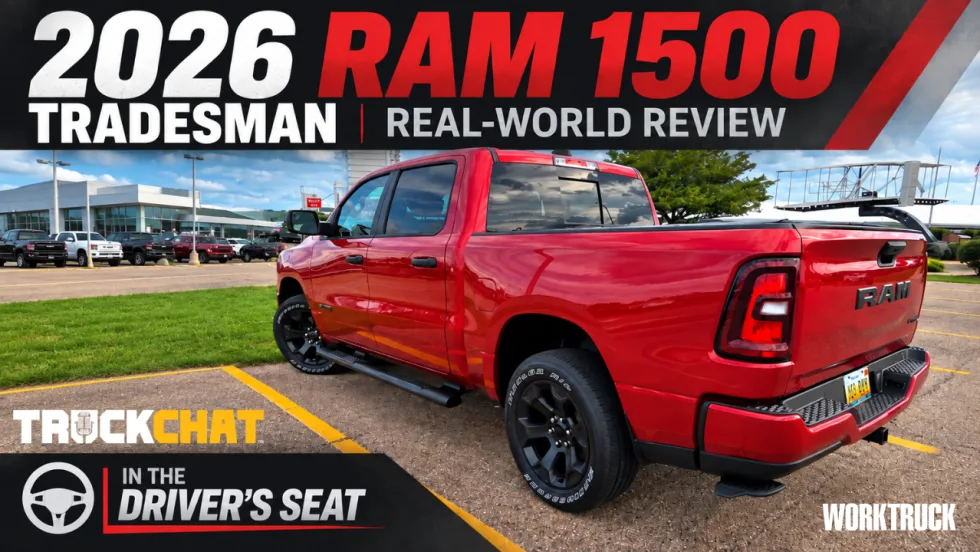
2026 Ram 1500 Tradesman Put to a Real-World Fleet Test
A few days behind the wheel of a 2026 Ram 1500 Tradesman turned into a test of visibility, parking, work-ready features, and even severe-weather driving.
Read More →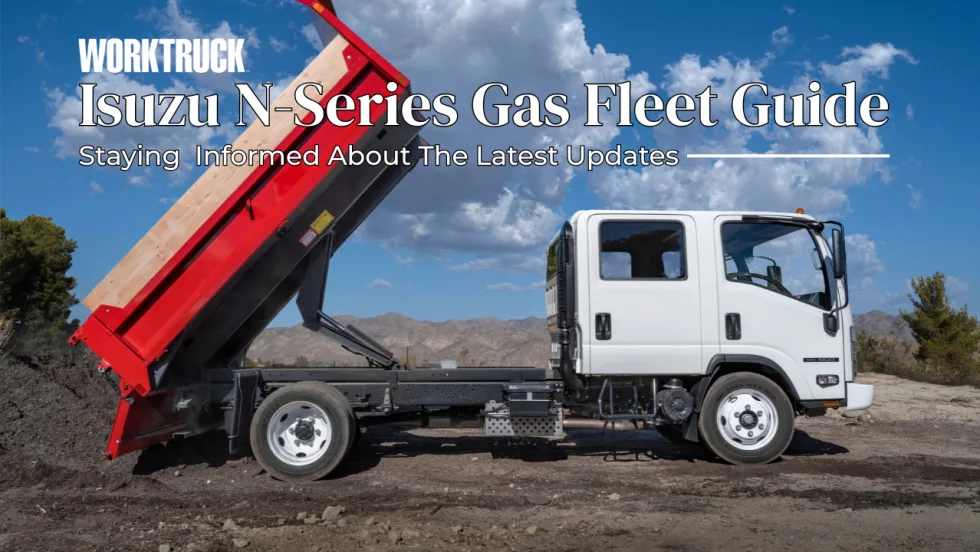
Isuzu N-Series Gas Fleet Guide: Specs, Capability and 2027 Model-Year Updates
Explore Isuzu Truck North America’s N-Series Gas fleet specs, engine performance, GVWR and payload capability, configurations, chassis dimensions, work-focused features, and 2027 model-year information.
Read More →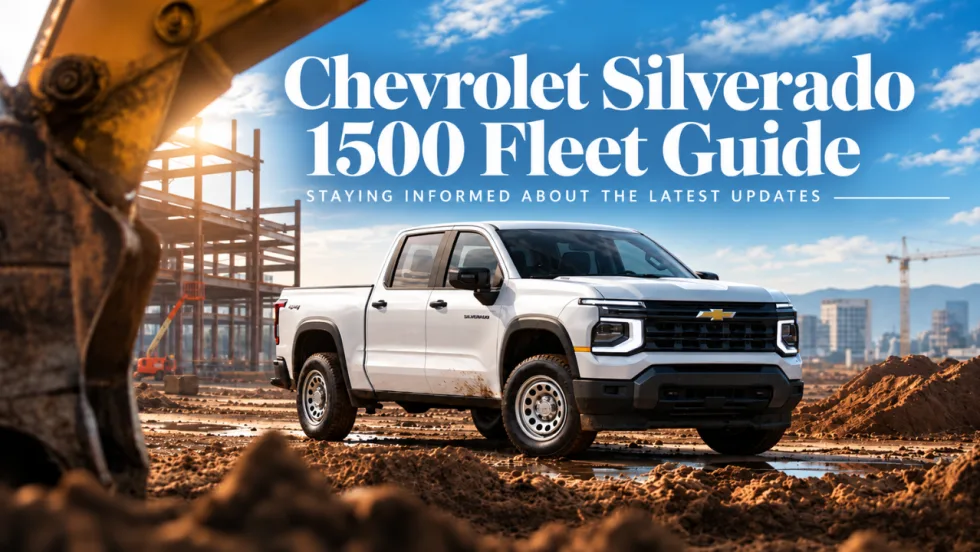
Chevrolet Silverado 1500 Fleet Guide Specs Capability and 2027 Model-Year Updates
The next-generation 2027 Chevrolet Silverado 1500 brings new V-8 engines, updated technology, expanded safety features, and a fleet-focused Work Truck. Here’s what commercial fleets need to know so far.
Read More →
Ram ProMaster City Fleet Guide Specs Cargo Capacity and 2027 Updates
Work Truck’s Ram ProMaster City Fleet Guide tracks the latest specifications, cargo capability, configurations, fleet technology, pricing, and model-year updates for Ram’s mid-size commercial van.
Read More →
Ford F-150 Fleet Guide Specs Capability and 2026 Model-Year Updates
Explore 2026 Ford F-150 fleet specs, engines, towing and payload capability, configurations, work features, technology, and model-year updates.
Read More →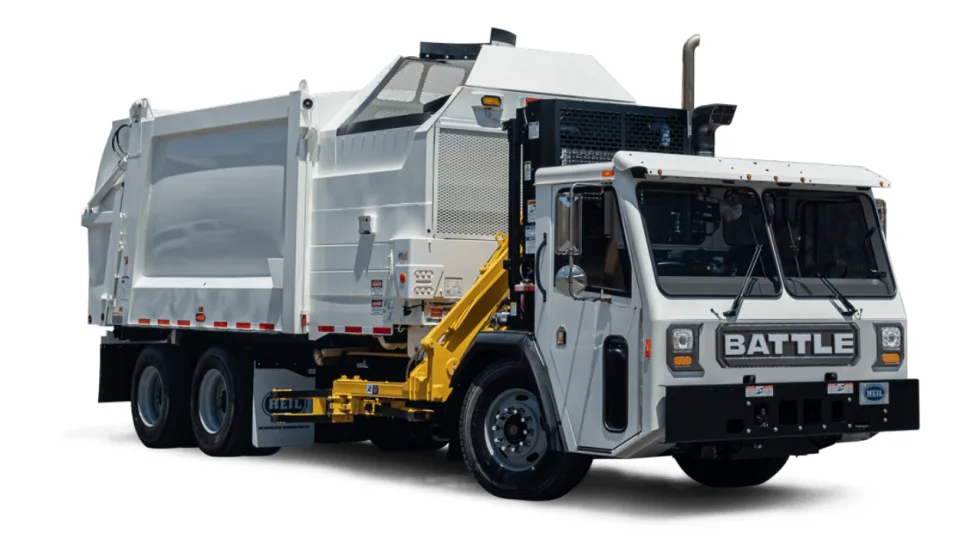
TCI Now Sells & Supports Battle Motors’ Vocational Trucks
Midwest truck dealer Truck Centers, Inc. (TCI) has expanded its transportation solutions with sales and service support for Battle Motors’ heavy-duty vocational trucks at locations in locations in Indiana, Illinois, and Missouri
Read More →
Ram 1500 Fleet Guide Specs, Capability and 2027 Model-Year Updates
Explore always up-to-date Ram 1500 fleet specs, engines, towing and payload capability, configurations, technology, pricing updates, and model-year changes.
Read More →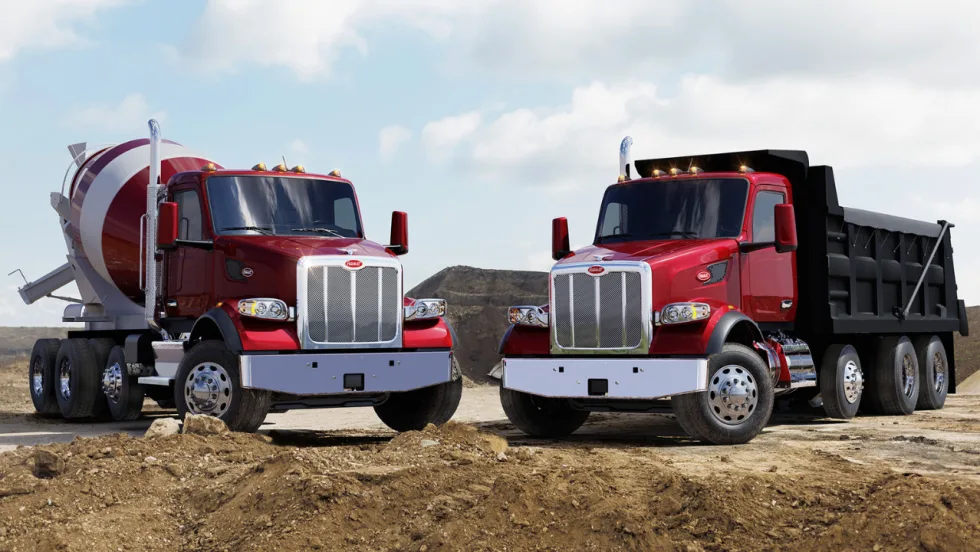
Peterbilt Trucks Equipped with Paccar TX-18 Pro Boost Efficiency for Maryland Fleet
Patuxent Companies is replacing aging trucks with the Peterbilt Model 567 and Model 589, specified with the Paccar TX-18 Pro 18-speed automated transmissions, and is reporting an 8% to 10% improvement in fuel economy.
Read More →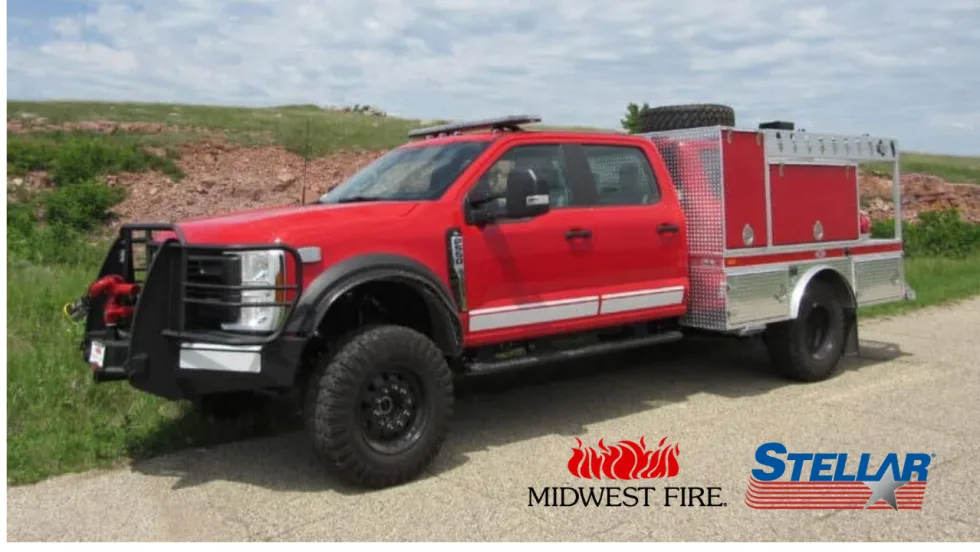
Stellar Expands into Fire Apparatus Market with Acquisition of Midwest Fire
Stellar Industries has acquired Midwest Fire, a custom fire apparatus manufacturer headquartered in Luverne, Minnesota, with nearly four decades of specialized apparatus experience.
Read More →
Recalls You Need to Know About in August 2026
If you have Altec, Chrysler, Ford, Heil, General Motors, International, Mack Trucks, Paccar, Rivian, Royal Truck, Toyota, US Truck Body, or Volvo Trucks vehicles in your fleet, you should check these important recalls issued by the National Highway Safety Administration.
Read More →