




Want More? 9 Tips for Spec'ing, Maintaining & Inspecting Truck Brakes
Electrification & Grease Options in Trucks
While the EV market is still developing, greases used in these vehicles will have long-term effects on their range.
by Dr. Gareth Fish, PhD, Lubrizol
October 28, 2021
This article will examine what roles greases play today in ICE vehicles and how the shift to hybrid EVs (HEVs) and EVs will change the way greases are manufactured and used in the future.
Photo: Cottonbro from Pexels
4 min to read
The long-standing fight against air pollution, which goes back centuries, continues today. In the modern world, one of the methods for battling against air pollution is to continue to optimize the internal combustion engine (ICE) while also furthering the development of electric vehicles (EVs).
As a result, the lubricant manufacturers must rethink how greases are used in these EVs.
Not All Grease Created Equal
The basic property needed for lubricating grease is its ability to separate the moving surfaces. This reduces friction and energy consumption, prevents wear from occurring, and should give the components excellent durability. All greases should offer this basic protection, provided they have the correct base oil viscosity. Other necessary properties are oxidation resistance, rust and corrosion protection, and good structural stability.
A grease that breaks down will not offer long-term protection, requiring shorter intervals between regreasing and resulting in increased operating costs.
This article will examine what roles greases play today in ICE vehicles and how the shift to hybrid EVs (HEVs) and EVs will change the way greases are manufactured and used in the future.
Today’s Automotive Greases
In 2019, 208,000 metric tons of grease were sold in the United States (no final numbers exist yet for 2020). Current fleets of ICE-powered Class 1-8 trucks, vans and SUVs contain approximately 26 of the more than 50 parts that require grease lubrication. For most vehicles, these greases serve one of four purposes:
Corrosion-protection.
Lubrication.
Water-resistance.
Anti squeak.
Light trucks may contain as many as 50 greases, including light-duty greases inside the passenger compartment that serve functions like reducing noise. In those applications, the greases must be plastic-compatible and are applied for the life of the components. When used outside the vehicle, greases are designed to exhibit antiwear, anti corrosion, and antioxidant properties.
Among the primary uses for greases are steering racks, suspension joints, door hinges, locks and handles, brake mechanisms, shock absorbers, and wheel bearings, in addition to other applications.
Lower volumes of specialty greases are also used for electrical contact switches, pedal mechanisms, accessory drive bearings, seat adjusters, window winders, and other applications.
Understanding HEV Greases
Though HEVs differ in many ways from traditional ICE vehicles, most of the greases will look the same.
One major difference, however, is that the greases in the starter motor will no longer need to have high shock load resistance, in part because the starter motor is permanently engaged on stop-start vehicles. This allows it to be a generator when it’s not restarting the engine. In the transmission, electric motor bearings will either be grease- or oil-lubricated, depending on whether or not they are incorporated in the gearbox.
EV Grease Requirements
In EVs, all greases will need to maximize energy efficiency so batteries don’t drain as quickly. Electric motor greases need to have the following four characteristics:
Long life.
Low noise.
Conducting or insulating.
Energy-efficient.
Energy-Efficient Greases
Though there are more than 50 grease applications on an ICE vehicle, only four affect energy efficiency:
Drivetrain joints and bearings.
Front-end accessory drive bearings.
Wheel bearings.
Steering mechanisms.
Determining Energy Efficiency
In most light-duty vehicles, the duty cycle is the single most important determinant of energy efficiency. Good lubrication films aren’t generated at low speeds, creating boundary lubrication issues and significant energy losses. And while moving to a thicker base oil will improve film thicknesses at lower speeds, it will cause churning losses at higher speeds.
At higher speeds, the lubrication films generated are thicker. Therefore, using a lower-viscosity oil will lead to thinner films being formed, which reduces churning losses. But if the film is too thin, component durability may be compromised.
Future of EV Greases
In the foreseeable future, most lubricant manufacturers are predicting little change in most automotive grease applications. After all, HEVs will likely have the same grease applications as current ICE vehicles, except starter-motor greases and in the greases for electric motor bearings.
While the EV market is still developing, greases used in these vehicles will have long-term effects on their range. As a result, EV greases will have to perform at higher levels in energy efficiency, durability, and long life. Lastly, there are the vehicle-hardware-specific issues of conductivity/resistivity, which are currently understood to be a potential problem on the horizon.
About the Author: Dr. Gareth Fish is a lubricants industry professional with more than 37 years of experience who joined Lubrizol in 2007. He has authored more than 60 technical papers on grease and tribology and been awarded three U.S. patents. This article was authored and edited according to WT editorial standards and style to provide helpful information to our readers. Opinions expressed may not reflect that of WT.
Subscribe to Our Newsletter
More Maintenance
Les Schwab Expands Commercial Tire Footprint Into Arizona
Les Schwab Tires has expanded into Arizona with two commercial tire locations in Phoenix and Tucson, strengthening its fleet service footprint in the Southwest.
Read More →
Volvo Trucks’ 'Lock and Leave' Software Updates Go Live Across North America
Unattended over-the-air software updates are now available in Volvo trucks across the U.S. and Canada. The new capability lets trucks stay current with the latest software without interrupting operations or requiring a dealership visit.
Read More →
Why Technician Appreciation Can’t Be a Once-a-Year Thought
For fleets trying to keep skilled technicians, recognition cannot begin and end with Technician Appreciation Week. Learn what year-round appreciation really looks like and why the everyday technician experience matters just as much as pay when fleets are trying to keep good people.
Read More →
How Faster Driver Reporting Can Keep Small Truck Problems Small
When minor damage, warning lights, or equipment issues are reported late, small problems can quickly become bigger maintenance headaches. Conversational AI can help shorten the path from what a driver notices in the field to the person who can act on it.
Read More →
BendPak’s Ranger Wheel Service Equipment Achieves North American Safety Certification
BendPak’s full line of Ranger tire changers and wheel balancers has been ETL certified to UL and CSA standards to improve operator safety.
Read More →
Isuzu & U.S. Department of Labor Celebrate Milestone for Veterans Apprenticeship Program
The Isuzu Veterans Apprenticeship Program (IVAP) signing ceremony highlighted Isuzu’s long-term commitment to veterans, Isuzu dealers, and the skilled workforce supporting its customers and the commercial transportation industry.
Read More →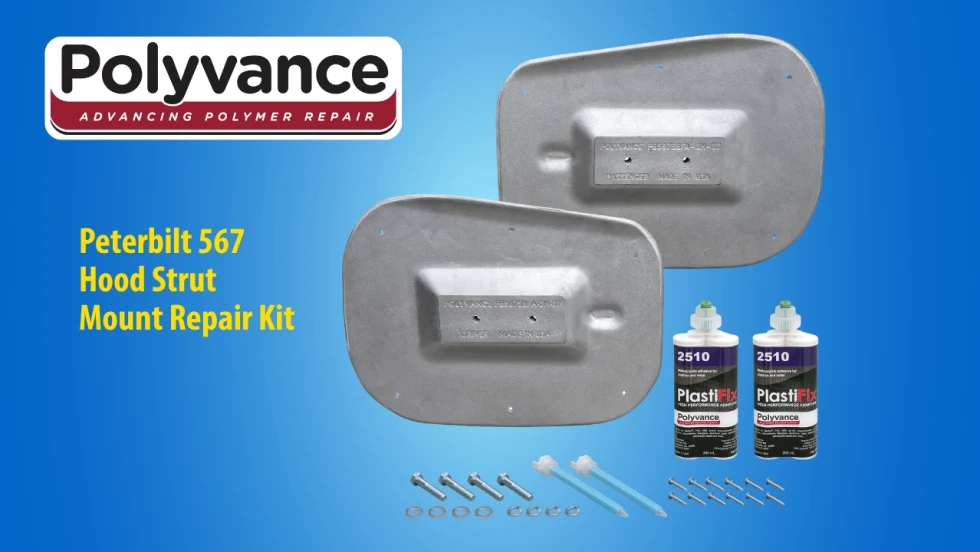
Polyvance Introduces New Peterbilt 567 Hood Strut Mount Repair Kit
Polyvance has launched a repair solution for Peterbilt 567 hood struts, helping truck owners and repair facilities avoid costly hood replacements.
Read More →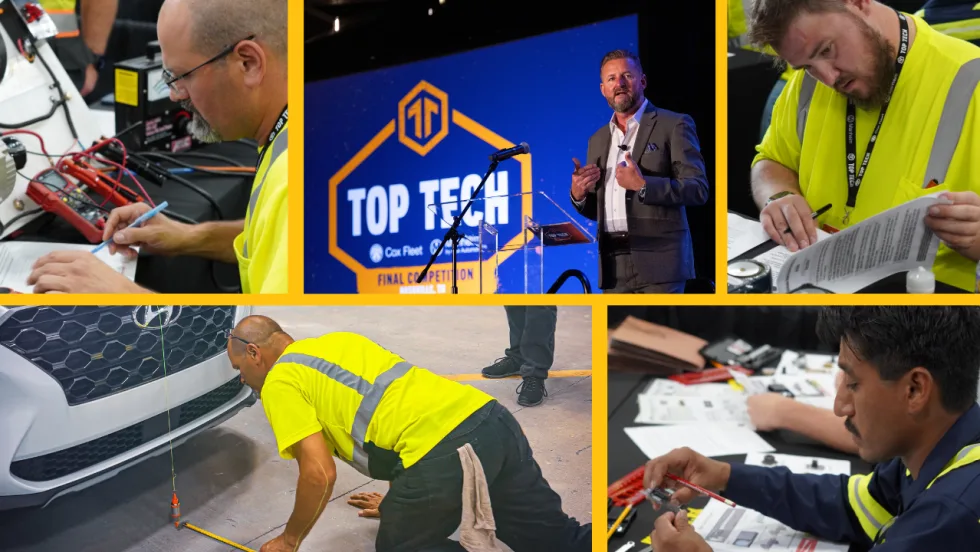
Cox Automotive Celebrates Technical Excellence at 2026 Top Tech Finals
The top technicians from Cox Fleet and Manheim tested their skills in Nashville, Tennessee, at Cox Automotive’s 2026 Top Tech Finals. The overall winners will advance to compete at the American Trucking Association’s TMC SuperTech competition.
Read More →
Grote Industries Appoints Vice President of North American Operations
Grote Industries has appointed Patrick Smith as vice president of North American operations as it celebrates 125 years of innovation and manufacturing excellence. He has more than 20 years of manufacturing leadership experience.
Read More →
Winter Fleet Prep: Expert Tips to Keep Vehicles Running Smoothly
Cold weather can expose weak batteries, tires, fuel systems, and maintenance gaps fast. Use this winter fleet checklist to prepare trucks and drivers before temperatures drop.
Read More →