Drones are popping up everywhere, including in package delivery fleets. Workhorse Group is currently in the testing phase with its drones for use with the company’s electric delivery trucks.
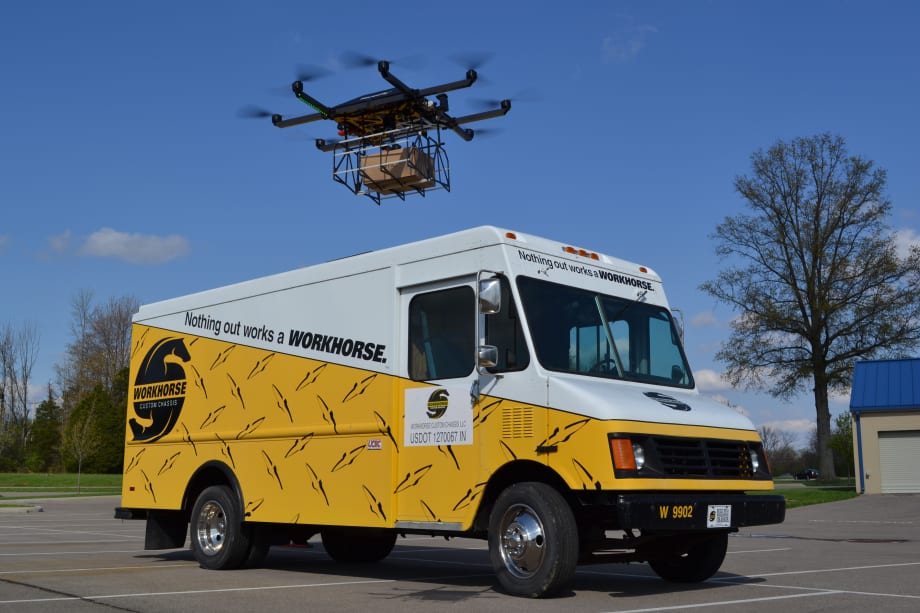
Once approved by the FAA, Workhorse will release a version of the E-GEN hybrid-electric truck that has been specifically designed to incorporate HorseFly. (PHOTO: WORKHORSE)
3 min to read
Once approved by the FAA, Workhorse will release a version of the E-GEN hybrid-electric truck that has been specifically designed to incorporate HorseFly. (PHOTO: WORKHORSE)
Delivery fleets are on the verge of a shift in how some packages are going to be delivered. The future of package delivery is going electric and incorporating drones.
Ad Loading...
Steve Burns, CEO of Workhorse Group, is on a mission to be the first to get an electric truck with a drone to deliver packages on the road, while meeting the “line of sight” requirement set by the Federal Aviation Administration (FAA).
Ad Loading...
Currently, the drones are still in the testing phase, but Workhorse’s electric vehicles are on the road. Also, drivers can rest assured, according to Burns, “Our drone is designed not to replace a driver but rather make a driver more productive.”
Going Electric
Workhorse’s hybrid-electric delivery trucks (Workhorse E-GEN) are currently deployed by UPS. Once approved by the FAA, Workhorse will release a version of the E-GEN truck specifically designed to incorporate the HorseFly delivery drone.
The E-GEN Drive uses a combination of battery power and a small internal combustion engine to more than four times the miles per gallon attained by a typical fleet vehicle. In addition to dramatically increasing the fuel economy, the E-GEN trucks are designed to virtually eliminate the heavy maintenance usually associated with heavy, stop-and-go vehicles.
The E-GEN drivetrain is propelled by a 200 kW Sumo electric motor/generator with a 60 kWh pack built with Panasonic 18650 Li-Ion cells.
According to Workhorse, it’s powerful enough to eliminate the need for a transmission and, if the battery state of charge falls below a predetermined level, and the vehicle is in PARK, a small internal combustion engine (ICE) automatically turns on and powers a generator to recharge the battery to its required level, thereby eliminating range anxiety.
Ad Loading...
Steve Burns, CEO of Workhorse Group, is on a mission to be the first to get an electric truck with a drone to deliver packages on the road, while meeting the “line of sight” requirement set by the FAA.
Flying Delivery
Workhorse’s drone — an “octocopter” called HorseFly — has a 10-pound payload capacity. Given a package and a delivery destination, it lifts off from the vehicle roof, navigates to an address using GPS and is guided down safely by a human pilot in a remote location; it then returns to the truck roof for recharging.
In December 2015, the FAA granted Workhorse Exemption No. 13564 (Regulatory Docket No. FAA-2015-3055) following the company’s petition requesting Section 333 exemption to test its HorseFly unmanned aerial system (UAS), stating, in part “in consideration of the size, weight, speed, and limited operating area associated with the aircraft and its operation, the Secretary of Transportation has determined that this aircraft meets the conditions of Section 333.... [T]he UAS operation enabled by this exemption is in the public interest.”
Two of the main hurdles in delivering packages via drone are technology and regulation.
“After several years of effort and great help from the University of Cincinnati Aerospace, we feel we have solved the technological hurdles. But, all commercial use of drones is prohibited by the FAA in the United States,” Burns said.
Ad Loading...
Currently, Workhorse is testing HorseFly in U.S. airspace while the company collects data.
“This exemption has been invaluable to us as we continue to refine our system under real-life delivery of packages to homes and businesses,” Burns continued.
Benefits of drone delivery include a reduction in delivery expense.
“Drone delivery can be up to 50 times less expensive compared to conventional methods of delivery, such as a person in a large diesel truck delivering the same package. A drone also has the benefits of zero emissions and virtually zero maintenance,” Burns said.
When might delivery by drone become a reality?
Ad Loading...
“We are hoping the FAA will come out with the definitive set of rules/laws toward the end of this year. But, as with any government agency, timing is difficult to predict,” Burns said. “I think delivery drones are as significant an invention toward the delivery of goods as the invention of the internal combustion engine more than 100 years ago.”
The HorseFly Drone
Workhorse Group is developing HorseFly, an eight-rotor “octocopter,” designed to be used in tandem with its EPA-approved electric truck.
HorseFly is given a package and a delivery destination by a delivery driver, using a touchscreen interface in the delivery truck. It launches itself from the delivery vehicle and ascends to a safe cruising altitude, then navigates to the desired delivery point autonomously using GPS navigation.
When HorseFly reaches the GPS delivery destination, a human pilot in a remote location monitors the descent with a multi-camera video feed and executes the package drop-off. HorseFly then ascends back to a safe cruising altitude. It then navigates to the new location of the delivery truck, and uses infrared (IR) tracking to land and dock with the truck.
HorseFly then recharges its battery using the onboard battery of the electric vehicle.
Volvo Trucks has launched the VNX, a new vocational truck designed for on- and off-road use, and available in three variants. It is powered by the D13 platform, which delivers up to 540 horsepower and 1,950 pound-feet of torque and is EPA 2027 compliant.
Truckers’ strike rumors, Republic Services’ electric fleet lessons, GM’s new 8.3L Duramax, van upfitting, Ford Pro used trucks, and more headline this week’s Truck Chat Cheat Sheet.
Morgan Olson has launched North America’s Longest Working Step Van Challenge, a new customer campaign to find the longest-working qualifying Morgan Olson or Grumman step van actively delivering packages for an independent service provider contracted by FedEx.
Explore 2027 Ford Transit fleet specs, engines, payload and towing capability, cargo configurations, work features, technology, and model-year updates.
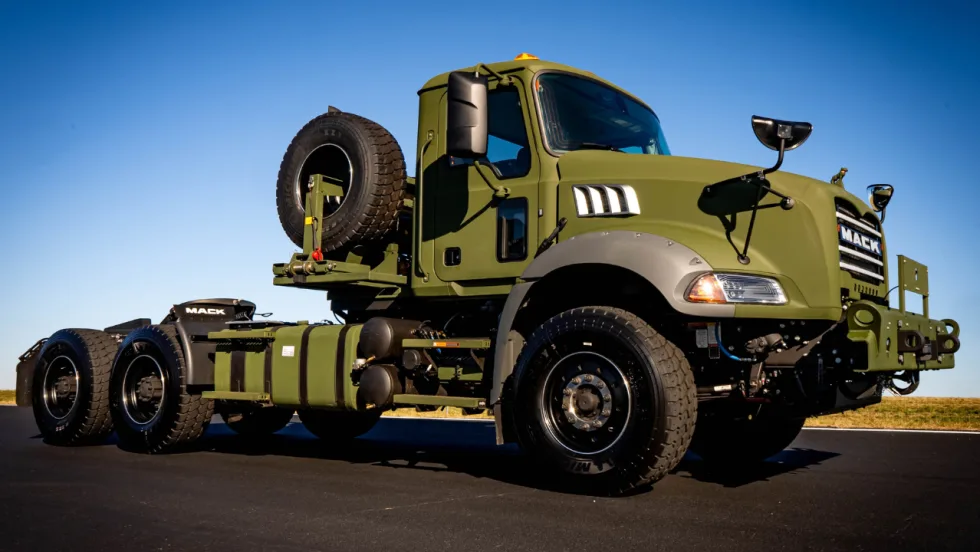
Mack Defense was awarded a contract to design, build, and deliver prototype vehicles for the U.S. Army’s Common Tactical Truck (CTT) program. It will show off its line-haul hybrid tractor prototype, based on the Mack Granite, at the 2026 United States Army (AUSA) Annual Meeting and Exposition.
Advance celebrated the production of its 20,000th front-discharge mixer, a Commander Series FD4000 mixer. Jack Willard first developed the original Rite-Way Truck in 1964, and then Advance was established in 1972.
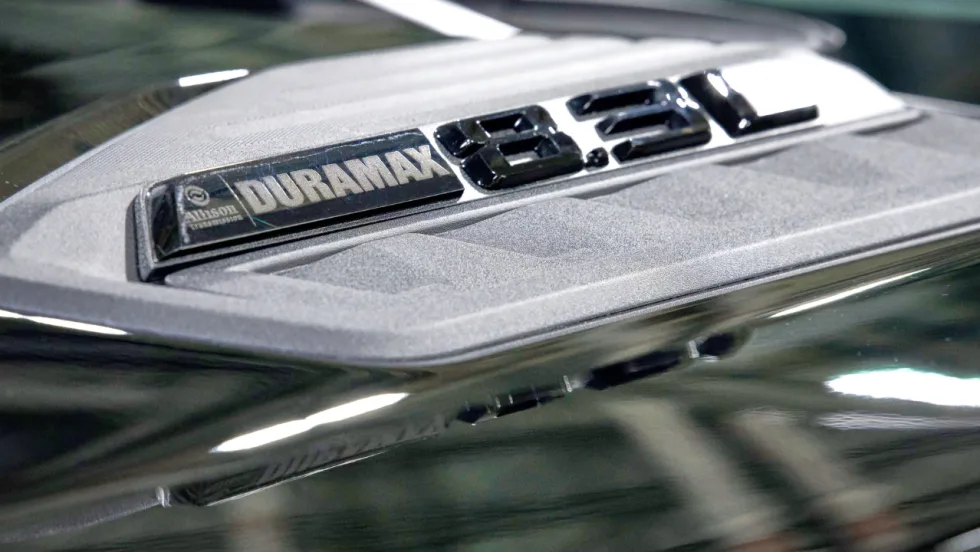
General Motors previewed key updates for its 2027 HD pickup lineup, which will now include a new Duramax 8.3L Turbo-Diesel, electric power steering, and electronic brake boost.
The next-generation 2027 GMC Sierra 1500 brings new V-8 engines, more standard safety technology, updated trailering tools, and a work-focused Pro trim. Here’s what fleets need to know.
After an assessment conducted by an authorized Certified Third-Party Assessment Organization (C3PAO), Mack Defense has achieved Cybersecurity Maturity Model Certification (CMMC) Level 2.
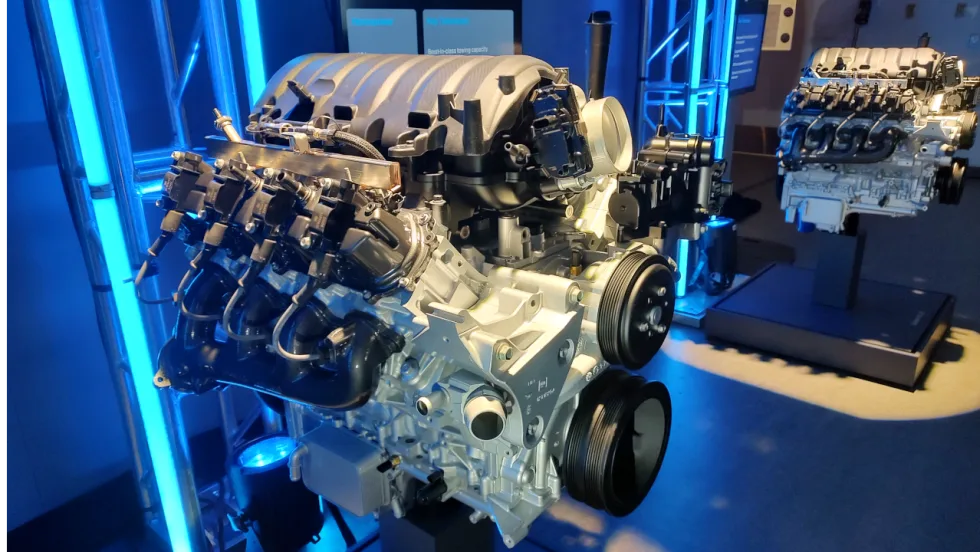
General Motors unveiled two new small-block engines, backed by extensive real-world validation and more than 70 years of small-block V8 manufacturing experience, as part of the engine portfolio for the 2027 Chevrolet Silverado 1500 and GMC Sierra 1500.