




Driver Safety 101: Braking, Steering and Scanning the Road
A former police officer and crash reconstruction specialist shares his top driving tips to help fleets maintain safer driving techniques — hopefully leading to fewer collisions on the road.

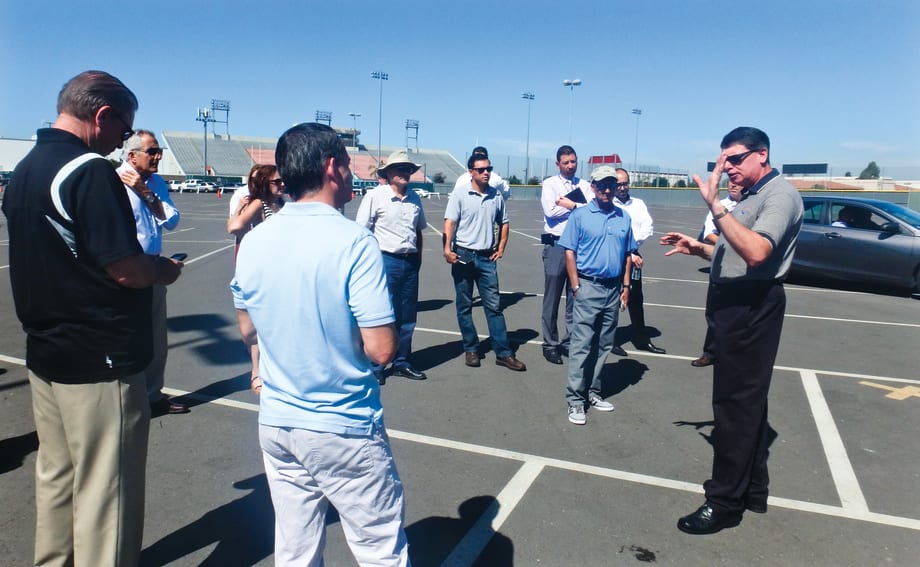
At a recent NAFA fleet management association meeting for the Pacific Southwest Chapter, Phil Moser and the ADTS team demonstrated three safe driving courses that covered backing up and driving around cones, steering around an obstacle and threshold braking. Each attendee had a chance to practice his or her driving skills on the courses.
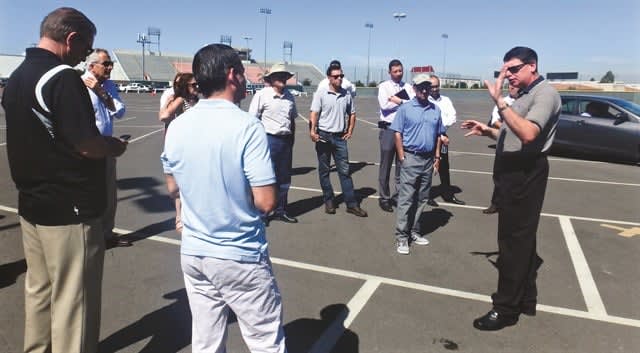
At a recent NAFA fleet management association meeting for the Pacific Southwest Chapter, Phil Moser and the ADTS team demonstrated three safe driving courses that covered backing up and driving around cones, steering around an obstacle and threshold braking. Each attendee had a chance to practice his or her driving skills on the courses.
During his time on the police force, Phil Moser investigated more than 3,500 collision incidents as a crash reconstruction specialist. All too often, a split second of extra time could have helped a driver avoid a collision.
“When I broke down car accidents, I broke them into quarter-second intervals,” says Moser. “If people could get a quarter of a second back, the vehicles usually would have avoided a collision. It doesn’t matter if you miss a vehicle by a centimeter or a mile; a miss is a miss.”
Now as vice president of Advanced Driver Training Services (ADTS), Moser teaches fleets the importance of driver safety. “Safety needs to be kept in the forefront for fleets,” he says.
To help break bad driving habits, Moser highlights these 10 driving tips.
Safe Driving Tips
1. Perform a 360-degree scan. This scan includes looking behind as well as to the left and right. Scanning helps to establish an escape route if needed.
“If you know what’s going on around you, then you know where you can go in case something happens,” says Moser. “You will know your escape route to the left, to the right, etc.”
When driving down a residential street, use peripheral vision to scan door to door. A child or pet could suddenly run out into the street.
2. Check mirrors every 5 to 6 seconds. When going 65 miles per hour on a highway, you travel one football field every three seconds.
“We want that split second of extra time to avoid a collision,” says Moser.
Checking the mirrors can also help avoid back-up collisions, the most common collisions in the United States. A common back-up collision occurs when drivers sideswipe something while backing up. This happens often in parking lots.
3. Don’t depend on the back-up camera. A vehicle’s back-up camera should be used as a supplement when driving, especially since the camera can give a bit of a distorted view.
“The best method is to look over your right shoulder and leave your left hand on the steering wheel,” says Moser.
If drivers can’t look through a vehicle’s back window, they need to depend on their side mirrors rather than just relying on the back-up camera.
4. Hands need to be at 9 and 3 on the steering wheel. The “10 and 2” steering wheel rule has changed to “9 and 3.” Holding hands at a 9 and 3 position provides a better steering radius. Additionally, “it gives more room for the airbag to deploy,” says Moser.
When turning, avoid reaching inside the wheel using an underhand grip. A driver’s arm or hand could break if he or she gets into a collision and the airbag deploys.
5. When steering around something, coast. Don’t hit the gas or brake when steering around an object. The last thing a driver wants to do is increase speed, Moser says. Let the vehicle coast through the steering action.
“You are five times more likely to avoid a collision with something by steering around it rather than trying to stop,” says Moser. This means a driver can turn to avoid an object five times faster than trying to stop before hitting it.
6. After going around an obstacle, get steering back to zero. Many drivers get into trouble when they keep the steering wheel turned after steering to avoid an obstacle.
“To help recover your steering, it’s important to get your steering back to zero as soon as possible,” says Moser. “You want your vehicle’s tires flat on the road surface.”
7. Don’t pump an anti-lock brake. A driver should avoid pumping an anti-lock brake (ABS); the system is designed to do the braking for you.
Moser and the ADTS team advise drivers to utilize “threshold braking,” in which the driver eases the brake pedal slightly to avoid turning on ABS while maximizing stopping ability. “It’s the quickest way you can stop.”
8. Avoid two-foot braking. Drivers need to keep their left foot on the floor board.
“If you have both feet up, all of your body weight will be thrown forward onto the pedals,” says Moser. “Then you can’t control the brake pressure.”
9. Look at what’s ahead. Instead of looking at a turn, concentrate on what’s ahead after the turn. Your hands will follow your eyes.
“When a driver looks toward an object on the road such as a guard rail, he or she will start to steer toward the object,” says Moser. “Look where you want to go and your hands will follow.”
10. Continue driver training courses on a regular basis. To keep safety at the forefront, fleets need to consistently demonstrate the importance of safe driving. It doesn’t have to be an expensive effort to reinforce safe driver techniques.
“We have had clients that train their fleet drivers but then don’t do anything to follow up,” says Moser. “Crashes initially go down but will start to slowly creep back up again when a company isn’t reinforcing safe driving techniques.”
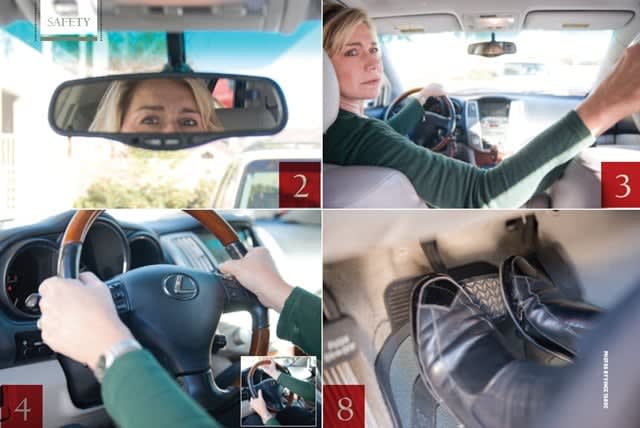
Driving Do’s (Left to right): Check your mirrors every 5 to 6 seconds while driving (tip #2). Instead of relying only on a back-up camera, look over your right shoulder and leave your left hand on the steering wheel when backing up (tip #3). Driving Don’ts (left to right): Avoid curling your fingers inside the wheel when turning (tip #4). Don’t use both feet when braking; keep your left foot on the floor board (tip #8).
More Small Fleet


Developing Budget-Friendly Driver Safety Programs
From driver training and safety meetings to one-on-one coaching and incentive programs, several small fleets share how they have developed a safety culture with their drivers using low- to no-cost resources.
Read More →
Boosting Last-Mile Fleet Uptime, Safety, and Value with AI Vehicle Inspections
AI-powered inspections are transforming last-mile fleets by replacing manual checks with highly accurate automated scans that detect defects in seconds. By giving fleet operations visibility into the daily condition of their vehicles, you can identify trends over the vehicle’s lifecycle that enable improved procurement decisions, route management, driver training and accountability.
Read More →
Five Ways Seat Belts Help Prevent Injuries
There are five ways seat belts protect occupants from injuries, according to the Tennessee Department of Safety and Homeland Security.
Read More →
It’s here: The 2026 Fleet Technology Trends Report
What does AI mean for fleets? Get the answer — and learn other top tech trends.
Read More →
Small Fleets, Big Impact: How Independent Drivers Power Wreaths Across America
Check out how small fleets and independent drivers power Wreaths Across America each December and why their impact matters more than ever.
Read More →
VMS Survey Finds 65% of Small Fleet Managers Run Operations Alone
A new VMS survey shows small fleet managers are stretched thin, with most handling operations solo and eager to adopt digital tools for relief.
Read More →
Tips for Driving Safely on Halloween Night
This video features a reminder from the Connecticut Department of Transportation (DOT) and the Connecticut Police Chiefs Association, urging drivers to prioritize safety this Halloween.
Read More →
AI, Access, and Uptime: VMS’s Next Chapter with David Prusinski
VMS’s new Co-CEO, David Prusinski, shares how an AI-first approach will give small fleets and repair shops the tools to compete like big players.
Read More →
Fleet Managers Share Winter Prep Tips: It's Never Too Early!
Three fleets share best practices to prep vehicles for winter and prevent downtime when the cold sets in.
Read More →