




Learn More: Understanding Fleet Drivers’ Learning Disabilities
Driven to Distraction: The Downside of High-Tech
Sophisticated in-vehicle technology can increase driver distraction, which kills some 3,522 people every year. An expert offers advice on how to ensure fleet drivers stay focused on the road.
by Judie Nuskey
May 8, 2023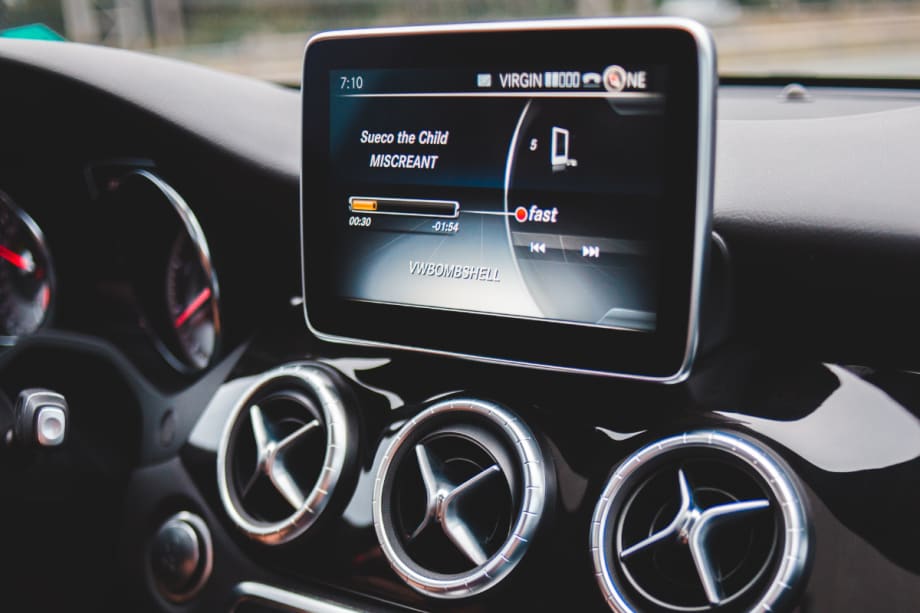
Automotive manufacturers are increasingly developing vehicles with integrated infotainment systems, which can be a major form of distraction for drivers.
Photo: pexels.com/Erik Mclean
8 min to read
Years ago, most vehicles had manual windows and manual steering, no air conditioning and certainly no air bags. Technological advances have transformed the environment of the vehicle in which fleet drivers spend much of their workday. Many advances have helped to make motor vehicles safer than ever. Yet others pull in the opposite direction by potentially distracting drivers from what should be their number one focus behind the wheel: driving safely.
Consider, for example, the potential for in-vehicle connectivity to increase driver distraction. Some of these digital technologies being added to new vehicle models are positioned as a means to reduce driver distraction, but in actuality can become new sources of distraction. With the growing demand for luxurious, safe, and smart vehicles, automotive manufacturers are increasingly developing automobiles with integrated infotainment systems – systems that provide a combination of entertainment and information for an enhanced in-vehicle experience.
A prime example is voice-to-text technology. It’s marketed as a way to text without the manual steps, but the act of composing the message, even verbally, still presents a form of distraction to the driver.
How Technology Distracts
The National Highway Traffic Safety Administration (NHTSA) describes three forms of driver distraction: taking your eyes off the road (visual distraction), taking your mind off the road (cognitive distraction), and taking your hands off the wheel (manual distraction). Some tasks may only involve one form of distraction, which creates enough of a hazard to increase a driver’s risk of a collision. But often technology involves all three forms of distraction, making it especially dangerous. Two factors make technology, as well as other forms of distraction, so dangerous for drivers:
It prevents you from having the awareness you need about your driving environment.
It eliminates or greatly reduces the time and space you need to respond to happening in your driving environment.
Of all the technologies that can potentially distract someone behind the wheel, text messaging is particularly unsafe because it combines physical, mental and visual forms of distraction. According to Virginia Tech Transportation Institute, a driver who texts behind the wheel is 23 times more likely to be involved in a crash or near crash as compared to a driver who isn’t distracted.
Unfortunately, voice-based systems aren’t the answer. While vehicles are now equipped with voice-based interfaces that enable drivers to dial a phone, select music, or enter a destination into a GPS via voice commands, there is evidence these systems may have unintended safety consequences.
The intention may be to improve safety by keeping your hands on the wheel, but interacting with a synthetic voice requires a high level of mental focus, even more than talking to a passenger.
And as reported by AAA Foundation for Traffic Safety, our ability to see and respond to what’s happening on the road may be impaired if our mental focus isn’t on driving. We may literally miss a stop sign or not see a pedestrian crossing the road. With or without in- vehicle connectivity, today’s driving environment is becoming increasingly distracting for motorists.
Technology Drives The Decision
Studies show consumers' growing expectations about in-vehicle technology, which is leading to greater usage and greater risk on the road.
Nine out of 10 consumers who expect to buy a vehicle in the next year have researched or plan to research the latest technologies available as part of the decision process.
More than three-quarters said the ability to buy a vehicle with all the technological features they want is more important than vehicle color.
About two-thirds would switch brands to gain the technology features they want.
Many desire Wi-Fi, streaming music services (like Pandora or Spotify), and USB charging ports in the vehicle.
More than half want auto manufacturers to better integrate smartphones into their vehicles, which some currently do with solutions like Apple Car Play and Android Auto.
Technology ease of use isn’t a deal-breaker, as seven out of 10 are willing to consider a vehicle even if its technology seems difficult to use.
Proven Ways To Avoid Distraction
Share these best practices with your drivers and help keep them from becoming inattentive, whether from a connected vehicle, your electronic devices, or anything else that competes for their focus.
Plan First
Avoiding distraction begins with proper planning before you take to the road. Follow these planning tips to keep distraction at bay.
Allow sufficient time. If you’re rushed or running late, you won’t take time for periodic breaks to check messages, place phone calls, eat, or handle other tasks while safely parked.
Know where you’re going. When taking a new route or traveling to an unfamiliar area, become familiar with the directions in advance. If using a GPS (whether integrated or on a smart- phone), enter the destination before you start to drive.
Groom at home. Leave enough time in your schedule to handle all personal grooming before you depart. Don't do it while behind the wheel.
Take time to eat. When leaving the house in the morning, allow time for coffee and breakfast before you deart for work. Eating while driving keeps your hands and mind otherwise occupied. The 10-15 minutes it will take to eat at home will go a long way to keeping you safer on the road.
Plan for breaks. Develop a driving schedule that includes regular breaks. This ensures your mind and body have a rest from driving — and helps you avoid the temptation to engage in tasks you shouldn’t do behind the wheel.
Pack wisely. Where you store work and personal items in the vehicle greatly impacts whether you’re distracted or focused. Store electronics and other items out of your reach and out of your sight, ideally in the trunk or cargo area. Turn off phone ringers and other audi- ble alerts; those sounds can take your mental attention from the road, as your mind focuses on who is trying to reach you and why.
Set controls first. Adjust your seat and mirrors, set the temperature, and choose a radio station or CD before you leave.
Stay Committed
Once you’re behind the wheel, don’t negate all of your good planning by allowing distraction to take over. Remain committed to focusing your full attention on the driving task by following these safety guidelines:
Don’t answer. Allow phone calls to go to voice mail and leave e-mail and text messages unread until you’re safely stopped. If you’ve planned properly, you’ll have time in your schedule to check and respond to messages during regular driving breaks. Avoid “time outs”. Never use a red light as an opportunity to read or send e-mails or texts.A red light is not a timeout from driving. Maintain your focus at stop lights so that you’re aware if something potentially dangerous is happening around you and can take steps to avoid it. A true stop is when you’re safely parked at a rest area or in a parking lot, not pulled over on the shoulder.
Eat while stopped. Eating while driving is increasingly common in our fast- paced world, and it’s increasingly easy with so many drive-through options. But like technology, eating involves all three forms of distraction: manual (your hands are on the food instead of the wheel); mental (you’re focused on how to eat without spilling); and visual (you may need to look at what you’re picking up or look away from the road if you need to clean a spill). Build food breaks into your schedule, even if you pack food from home. Eating while safely parked doesn’t have to take long but is critical to avoiding collisions.
Adjust as needed. If you run into traffic tie-ups or an appointment takes longer than you expected, don’t try to makeup time by multi-tasking. When you’re behind schedule, it’s best to find a safe place to stop and call ahead to your next appointment to alert them you’re funning late. Never place the call while driving. Calling ahead takes the pressure off you and is a courtesy to your customer.
Stop to regroup. If you’re confused about directions or make a wrong turn, often the best approach is to find a safe place to stop and regroup. Don’t try to change your navigation system or look up new directions on a smartphone while driving. The few minutes it takes to stop safely first is a small price to pay to ensure your safety.
Hands-free Isn’t the Answer
With many U.S. states and Canadian provinces banning hand-held cell phone use while driving, you might assume that means it’s safe to use hands-free cell phones. But research shows that’s not the case.
Whether it’s integrated into the vehicle or done via a wireless headset, hands-free cell phone use is increasingly common. But no matter what type of phone you use, the mental distraction of a cell phone conversation can cause “inattention blind- ness” — failing to notice what is happening around you because you are focused on the call rather than the road.
The Applied Cognition Lab at the University of Utah has been studying driver distraction for over 10 years using sophisticated tools like driving simulators, eye trackers, and devices that measure brain activity. Their current aim is to examine the demand associated with using built-in technologies while driving.
So far, their findings suggest that much of the functionality in these vehicles is too demanding to safely use while driving. Even when their study participants look directly at objects in their driving environment, if they are talking on a cell phone of any type then they are less likely to create a “durable memory” of those objects.
That means even if your cell phone is hands-free, the mental distraction of the phone conversation itself can lead to inattention blindness, which can have significant consequences.
The best solution? Don’t use a cell phone while driving.
About the Author
Judie Nuskey is the director of Operations at Advanced Driver Training Services and assists corporations in creating custom driver training programs to lower (or keep low) their crash rates.
Originally posted on Automotive Fleet
Subscribe to Our Newsletter
More Small Fleet


Developing Budget-Friendly Driver Safety Programs
From driver training and safety meetings to one-on-one coaching and incentive programs, several small fleets share how they have developed a safety culture with their drivers using low- to no-cost resources.
Read More →
Sponsored•March 9, 2026
Boosting Last-Mile Fleet Uptime, Safety, and Value with AI Vehicle Inspections
AI-powered inspections are transforming last-mile fleets by replacing manual checks with highly accurate automated scans that detect defects in seconds. By giving fleet operations visibility into the daily condition of their vehicles, you can identify trends over the vehicle’s lifecycle that enable improved procurement decisions, route management, driver training and accountability.
Read More →
Five Ways Seat Belts Help Prevent Injuries
There are five ways seat belts protect occupants from injuries, according to the Tennessee Department of Safety and Homeland Security.
Read More →
Sponsored•January 14, 2026
It’s here: The 2026 Fleet Technology Trends Report
What does AI mean for fleets? Get the answer — and learn other top tech trends.
Read More →
Small Fleets, Big Impact: How Independent Drivers Power Wreaths Across America
Check out how small fleets and independent drivers power Wreaths Across America each December and why their impact matters more than ever.
Read More →
VMS Survey Finds 65% of Small Fleet Managers Run Operations Alone
A new VMS survey shows small fleet managers are stretched thin, with most handling operations solo and eager to adopt digital tools for relief.
Read More →
Tips for Driving Safely on Halloween Night
This video features a reminder from the Connecticut Department of Transportation (DOT) and the Connecticut Police Chiefs Association, urging drivers to prioritize safety this Halloween.
Read More →
AI, Access, and Uptime: VMS’s Next Chapter with David Prusinski
VMS’s new Co-CEO, David Prusinski, shares how an AI-first approach will give small fleets and repair shops the tools to compete like big players.
Read More →
Fleet Managers Share Winter Prep Tips: It's Never Too Early!
Three fleets share best practices to prep vehicles for winter and prevent downtime when the cold sets in.
Read More →