





Learn More: Electronic Onboard Recorders: It’s Only a Question of Time
Creating an Innovative Driver Log System
Not one to stick with the status quo, AM-Liner East made significant changes to the way it handled driver logs, with impressive results.
September 7, 2012
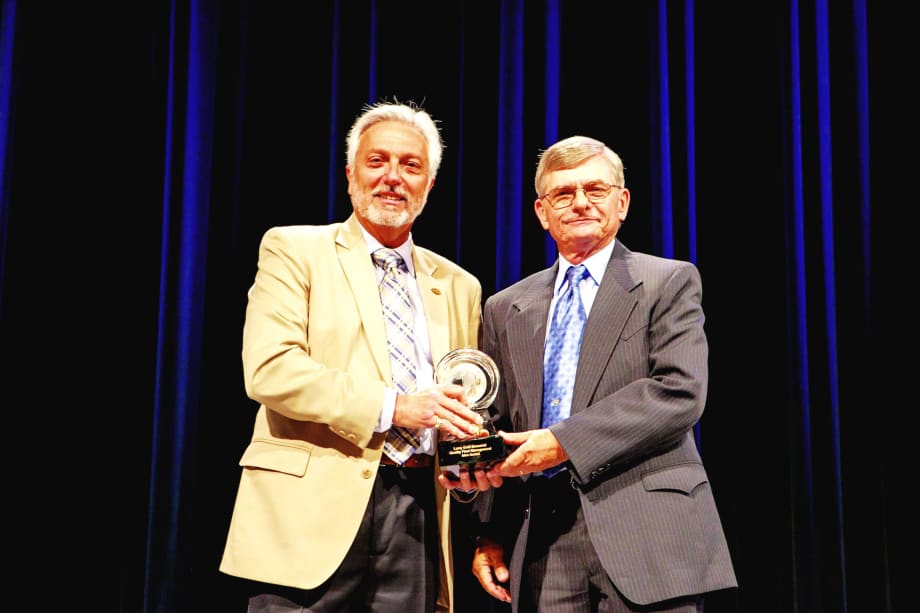
Carl Nelson (right), fleet manager for AM-Liner East accepts his third career Larry Goill award from Mario Gionet, NAFA’s VP for Canada.
PHOTO: Kieffer Photography
3 min to read
The daily hours-of-service (HOS) driver log can be intimidating, time-consuming, and cause many driver and fleet manager headaches; however, proper maintenance of this important document is required under federal law where commercial motor vehicles (CMVs) are concerned.
Carl Nelson, fleet manager for AM-Liner East, Inc., decided that with increasingly tough federal regulations and fines, it was time to change how his company handled this vital business task.
His efforts made fleet history this year when Nelson became the third person to win the NAFA/Bell Canada Larry Goill Memorial Quality Fleet Management Idea Award for the third time.
Nelson received the honor for developing a driver log scoring system that dramatically improved his company’s log reporting process and driver safety while reducing DOT driver log citations.
Reinventing a Way of Thinking
Large truck drivers are well-versed in completing a HOS log. It’s an accepted condition of having a commercial driver’s license (CDL). Unfortunately, according to Nelson, drivers of smaller CMVs are less accepting of this daily task. Typically, this is because they have neither the skills nor the experience to complete these complicated, time-sensitive documents.
This presented a problem for AM-Liner East. All of the company’s crew vehicles are considered CMVs under Federal Motor Carrier Safety Administration (FMCSA) regulations. As such, the vehicles and drivers must comply with the same regulations written for over-the-road truck drivers.
Nelson created a driver log scoring system to ensure that driver logs would not cause issues with the company’s Compliance, Safety, and Accountability (CSA) score.
“I break it down, and teach drivers to look at each section of the log individually, so it’s not as intimidating,” Nelson explained. “If you’ve never filled out a driver log before, you tend to get overwhelmed.”
Using the breakdown from his training techniques, Nelson determined point values for each section of the log. For example, points are assigned if a driver doesn’t sign the log. Once all points for each section are totaled, he is able to identify the problem areas of a particular driver or a specific crew’s logs.
This also allows fleet managers to see a particular area of the log with which many drivers may be having problems. Then, Nelson can zero in on a particular issue and help correct how drivers handle the paperwork.
“I think some of the problems are that drivers just don’t like filling out logs, they don’t like doing paperwork, and they are trying to see how much they can get away with,” Nelson said. “So, totaling up point values gives me a quick overview of who has problems.”
Putting a Process in Place
According to Nelson, having the support of the operations manager and the front office staff adds value to the program.
“They stand behind me and say, ‘Go for it.’ This shows drivers that I’m not just a raving lunatic fleet manager,” Nelson joked. “Support from the front office is imperative to having programs like this work.”
The AM-Liner East fleet of 110 vehicles ranges from compact sedans up to tractor-trailers. Around 90 of these units are CMVs, subject to scrutiny under CSA 2010.
Nelson didn’t change over the entire fleet immediately. He piloted the driver log scoring system for approximately five weeks before implementing it on a wide scale.
“We explained to our drivers what was going to happen. I sent them a notice with the form I would be using, which explained how points would be added up as well as disciplinary action and penalties for non-compliance,” Nelson said.
The program has now been in place for about one year, and Nelson hasn’t had to call a single driver in to complete or correct their logs.
“Drivers didn’t really push back because they understood this needed to be done,” Nelson said. “They knew that I had the support of the company. Plus, pushing back is not an option — what possible reason can a driver give me for not complying with federal law?”
Subscribe to Our Newsletter
More Operations
Family Ties Inside the Fleet Families Building Careers Across Generations
Three fleet families share what it really takes to work together, learn across generations, and keep business from following them home.
Read More →
Shades of Fleet Call for Voices: Fleet's Hidden Heroes
Fleet’s hidden heroes are often the ones keeping everything moving behind the scenes. September’s Shades of Fleet is looking for dispatchers, coordinators, parts specialists, and other support pros to share their stories.
Read More →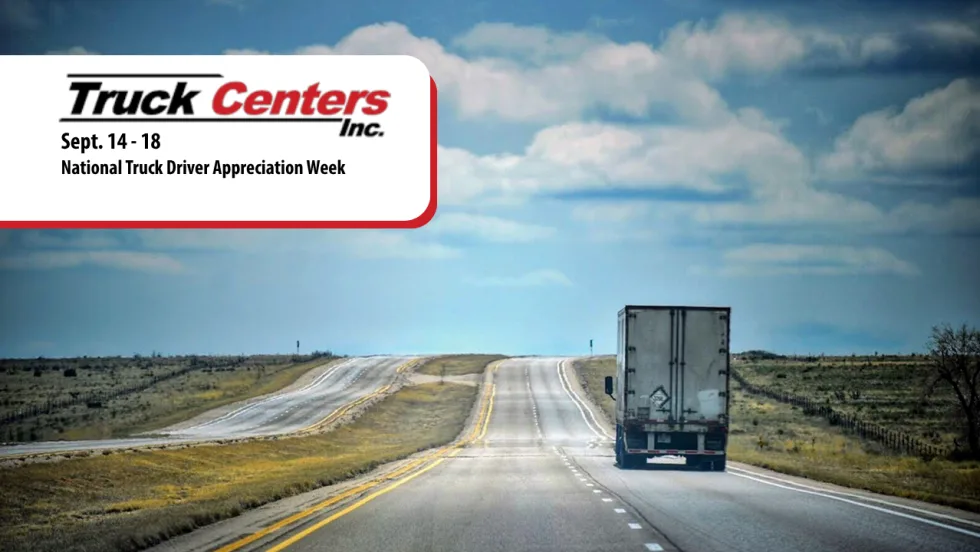
Truck Centers, Inc. Celebrates National Truck Driver Appreciation Week with $1,000 Fuel Card Giveaways
During National Truck Driver Appreciation Week, Truck Centers, Inc. is offering customers a chance to fuel up for free. Customers at all Truck Centers locations can enter to win one of four $1,000 fuel cards from Sept. 14 - 18.
Read More →
Fleet Guides, AI Time-Savers, Truck Tariffs & Fuel Strategy Lead the News
This week’s Truck Chat Cheat Sheet covers new fleet vehicle guides, practical AI use cases, U.S.-Canada truck production, mixed-energy strategy, and more.
Read More →
What Fleet Employers Are Missing When Hiring Veterans
What if some of the strongest candidates for fleet are already out there, but their experience is written in a language our industry does not always recognize?
Read More →
Automotive Fleet Opens 2026 Personal Use Survey for Commercial Fleet Managers
Less than two weeks left! Commercial and corporate fleet managers are invited to share how their organizations handle company vehicle personal-use policies, charges, and driver eligibility.
Read More →
What Resilient Fleets Do Differently When Conditions Change
Fleet resilience is about more than reacting to disruption. Lauren Fletcher talks with AP Fleet’s Alex Coveney about flexibility, planning, scaling, and what helps fleets adapt when business conditions shift.
Read More →
If We Want the Next Generation in Automotive, We Have to Give Them a Reason to Care
The automotive industry talks constantly about its workforce shortage. But before we can recruit the next generation, we may need to do a better job giving kids a reason to care about automotive in the first place.
Read More →
Ram ProMaster City Under $40K, Truck Tariffs, and AI Maintenance Lead the News
A sub-$40K commercial van, tariff questions, AI-powered maintenance, and a new EV production strategy headline this week’s Truck Chat Cheat Sheet.
Read More →
Bob Adamsky Shares the Fleet Lessons You Usually Learn the Hard Way
After more than 30 years in fleet, Arrow International’s Bob Adamsky has learned that the job is about far more than vehicles. He shares the lessons he wishes every fleet manager could learn a little earlier.
Read More →