




Company Vehicle or Reimbursement? Tips on Setting Fleet Policy
A company vehicle is an important and treasured asset. Fleet managers need to use their professional judgment to determine who gets cars and who doesn’t.


Most jobs where either reimbursement or company vehicles can be used, the company-provided vehicle carries the majority of benefits; but any complete fleet policy must contain a reimbursement option, if only for occasional drivers, or those who do not reach the “break-even” mileage level.
Photo: Work Truck
It is a fundamental cornerstone of corporate fleet policy: determining who gets a company car and how the decision is made. Some fleets require company-provided vehicles, such as utilities, service, and delivery fleets. But, a sales fleet, where the job is to visit customers and prospects, make presentations, and sometimes entertain, has the option of either providing a vehicle or reimbursing an employee for the use of a personal car.
Vehicle assignment shouldn’t be arbitrary, and it should keep the company’s best interests in mind. Vehicles are provided for a number of purposes, and it is the fleet manager’s job to recommend a strict vehicle assignment policy, which considers first the economics of the decision, but also non-economic factors.
Part of any fleet policy should provide for reimbursement of employees for the use of a personal car.
Making the Vehicle Assignment
There are a number of reasons that employees need personal transportation to do their jobs, including site visits, entertaining customers, or delivering or servicing a company product. When assigning automobiles, fleet managers must consider two primary factors:
Job function: The job requires regular travel, space enough to carry product or equipment, or transporting people. Such jobs are usually in sales, service, delivery, or livery.
Economics: The travel done is such that it is more cost-effective to provide a vehicle than to reimburse the driver for the use of a personal vehicle.
What does a fleet manager need to best determine who should be assigned a company vehicle, and who shouldn’t? It starts with history.
Collecting Vehicle TCO History
A properly run fleet should have the total cost of ownership (TCO) available for vehicles after they are sold, which will serve as the benchmark for the economic decision on vehicle assignment. The TCO analysis should include all fixed and variable costs incurred over the service life of the vehicle, topped off by actual depreciation.
That said, the components of TCO are often expressed differently, such as maintenance and repair in cents per mile and depreciation in dollars per month. Most companies have some sort of reimbursement policy, not necessarily in fleet, which reimburses employees for occasional use of their personal vehicles on company business. Such policy is usually based on the IRS “safe harbor” number, which is 56.5 cents per mile, as of press time.
Once the TCO data has been collected, the monthly cost of providing a vehicle can fairly be compared to the cost of reimbursing an employee for the use of a personal vehicle. At some point, based on mileage driven, it is more cost-efficient to provide a car than it is to reimburse an employee.
Doing the Reimbursement Math
While there are a number of considerations involved in determining company vehicle availability, the economic decision can be based on some basic arithmetic: If it is cheaper to provide a company car than to reimburse, assign the car.
For example, an employee, as part of his or her job, must drive 1,200 miles per month. Using the IRS safe harbor reimbursement rate of 56.5 cents per mile, the cost to the company would be $678:
1,200 x 0.565 = 678
Let’s assume further that, on average, it costs the company a total of $650 per month to provide an employee with a company vehicle. In this case, it would be more cost efficient to provide the vehicle than to reimburse, $28 less per month.
Now, a fleet manager can use this method to determine the “break-even” point, i.e., the mileage at which the company is better off providing a vehicle than it is reimbursing the employee:
$650 ÷ 0.565 = 1,150 miles
Here, we’ve taken the sample monthly vehicle cost and divided it by the IRS safe harbor reimbursement rate, and the result is the mileage at which it is more economically feasible to provide the vehicle.
This mileage, of course, will vary, sometimes dramatically, as both the company vehicle costs and the reimbursement rates can change. Increases in fuel costs, for example, can push TCO up by a great deal. Used-vehicle markets are similarly volatile, and the IRS revisits its safe harbor reimbursement rate every year, particularly for this reason. The fleet manager must continually change the assignment criteria as vehicle costs change, but that the break-even point may vary during the year. Policy, however, should be established and then revisited annually.
Evaluating Job Functions
In most companies, there are certain job functions which qualify drivers for vehicle assignment:
Sales: Employees whose job it is to visit customers and prospects, present company products and services, provide proposals and contracts, and occasionally entertain. Sales staff carry brochures, “cut” sheets, samples, and other materials related to sales visits, as well as files and reports they need internally.
Service: These employees can either be client relations employees, service existing customers, review client accounts, solve problems, and occasionally entertain. They can also be employees who service product that carry tools, parts, and even replacement products.
Delivery: Employees who deliver product to customers. Delivery vehicles are usually not automobiles, but crossovers/SUVs, minivans, full-sized vans, or van-body trucks.
Livery: These vehicles carry people and include airport rental and other shuttles, van pool vans, and other similar vehicles.
Compensatory: These are vehicles generally unrelated to the job function but are part of a compensation package, usually for executives. Clearly, service and delivery vehicles don’t lend themselves to an employee using a personal vehicle. They often are upfitted with specialized bodies, or internal racks and bins to hold parts, tools, and other equipment. It might also be difficult to find a new hire who has such a vehicle to bring to the job. This particular assignment is usually not subject to the break-even analysis since the vehicle is always provided.
Sales and customer service employees are very much subject to the analysis, but there are other considerations as well. Here, for example, are some situations where a company vehicle might be considered:
Urban territories: An inner city driver won’t run up very high mileage, but if a sales or customer service employee must carry bulky materials, a company vehicle may be a good idea.
Recruitment: Sometimes a particular territory might be a particular challenge for recruiting new hires, such as inner city or very rural locations, where qualified candidates are more difficult to find.
Competition: If competitors in general are offering company vehicles for the same job, reimbursement would be difficult.
Under these and some other circumstances, vehicle assignment policy goes beyond the simple economics of the break-even analysis. When competition or other recruiting challenges present themselves, a company car can be a useful incentive.
Occasional Drivers
Beyond specific job functions, there are usually employees who will sometimes need to drive (or travel) outside the office on an occasional basis. Such occasional travel can be handled in several ways:
Reimbursement: This is the most common, and easiest, way to provide for transportation for employees’ occasional travel.
Pool vehicles: Though the travel may be occasional, it can also be predictable. A bank employee might be required to bring documents from one branch to another once a week. A retail store manager might have to make a bank deposit each afternoon. Some companies will keep pool cars at locations to provide such transportation.
Car sharing: More recently, car share programs have become another solution. The company can rent a vehicle by the hour as needed.
Occasional travel does not equate to driving for the job. The employee doing such travel has a job that does not necessarily include travel and does so only as a matter of convenience; however, policy does need to address it.
Finding Other Reimbursement Options
Some companies will offer employees whose job does require regular travel the option of a company vehicle or some sort of reimbursement program. Usually, optional reimbursement takes the form of a monthly stipend, or a combination of that and a mileage reimbursement.
Fleet managers often have a gag reflex when this idea is proposed, but there is no need for it. First, most employees will opt for the company vehicle; the advantages are compelling:
No need to deal with registrations, maintenance/repair, or fuel, as fleet programs can provide for these needs.
Accidents, when they occur, aren’t nearly as difficult to resolve as they are for a personal car. Fleet programs, again, offer one toll-free call to handle repairs, replacement rentals, and payment.
Insurance is provided by the company.
A new vehicle is provided on a regular cycle, usually every three years.
That said, some employees do prefer reimbursement, primarily because it allows them to drive the vehicle of their choice, rather than what the company chooses. Unfortunately, however, they also do so for less admirable reasons:
They treat the reimbursement as income, and see to it that their vehicle expenses are less than what is provided.
If there is a mileage reimbursement component, they will overstate business mileage to maximize income.
The benefits of a company-provided vehicle remain, even when reimbursement is offered as an option, and there may also be occasions when an outstanding candidate prefers to be reimbursed, and will bring talent to the company if it is offered.
Setting Reimbursement Policies
Fleet policy, therefore, should always consider all aspects of employee transportation, and not only that related directly to company-provided vehicles. This includes providing for occasional drivers.
The fleet manager should keep an open mind, particularly as it pertains to reimbursement. The reimbursement option has a place in every fleet policy.
There are certain job functions, such as product service, delivery, and livery, for which company vehicles should always be provided. It is simply not practical for the company to expect an employee to have a vehicle suited to these missions.
Sales, customer service, and executive positions are where the company-vehicle-or-reimbursement question most often arises. There are both an economic as well as a more circumstantial aspect to the assignment of company vehicles for these jobs.
The economic decision is a simple one: at what mileage level is it less costly to provide a vehicle than it is to reimburse the drivers? This is based on the monthly TCO of a fleet vehicle and the reimbursement rate the company provides.
The circumstantial aspect is more subjective. Considerations for specific territories and competition for top talent are some of the most common issues fleet managers must deal with when considering exceptions to the economic mathematics.
There are several solutions to deal with occasional drivers, only one of which (pool vehicles) involves a company-provided vehicle. The most common — and simplest — is a reimbursement policy.
The bottom line is that most jobs where either reimbursement or company vehicles can be used, the company-provided vehicle carries the majority of benefits; but any complete fleet policy must contain a reimbursement option, if only for occasional drivers, or those who do not reach the “break-even” mileage level.
Originally posted on Automotive Fleet
More Vehicle Research
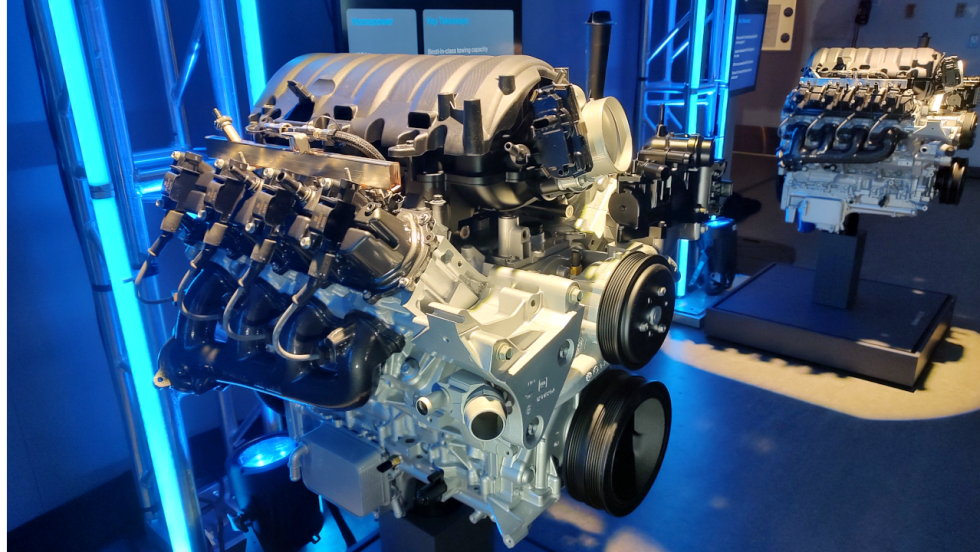
GM Unveils New Sixth-Generation Small Block Engines for 2027 Light-Duty Pickups
General Motors unveiled two new small-block engines, backed by extensive real-world validation and more than 70 years of small-block V8 manufacturing experience, as part of the engine portfolio for the 2027 Chevrolet Silverado 1500 and GMC Sierra 1500.
Read More →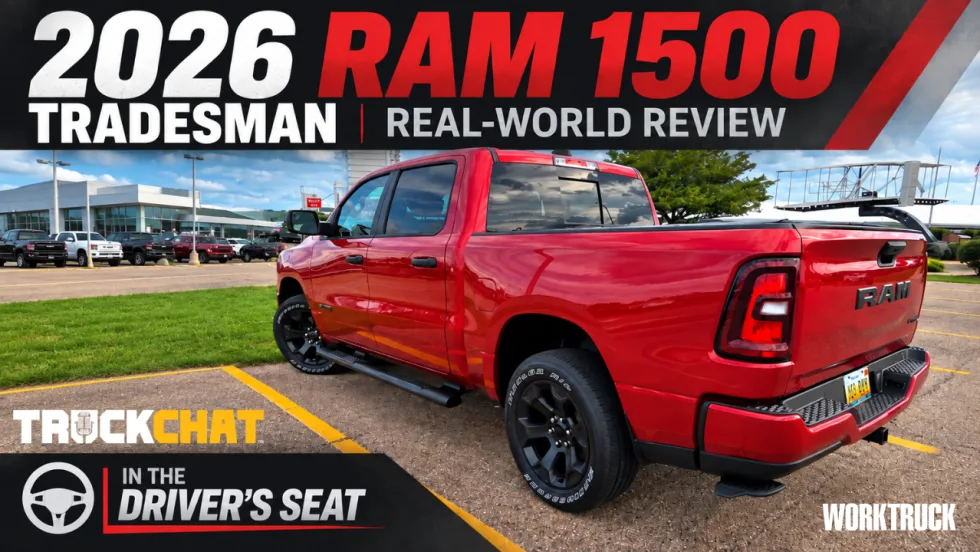
2026 Ram 1500 Tradesman Put to a Real-World Fleet Test
A few days behind the wheel of a 2026 Ram 1500 Tradesman turned into a test of visibility, parking, work-ready features, and even severe-weather driving.
Read More →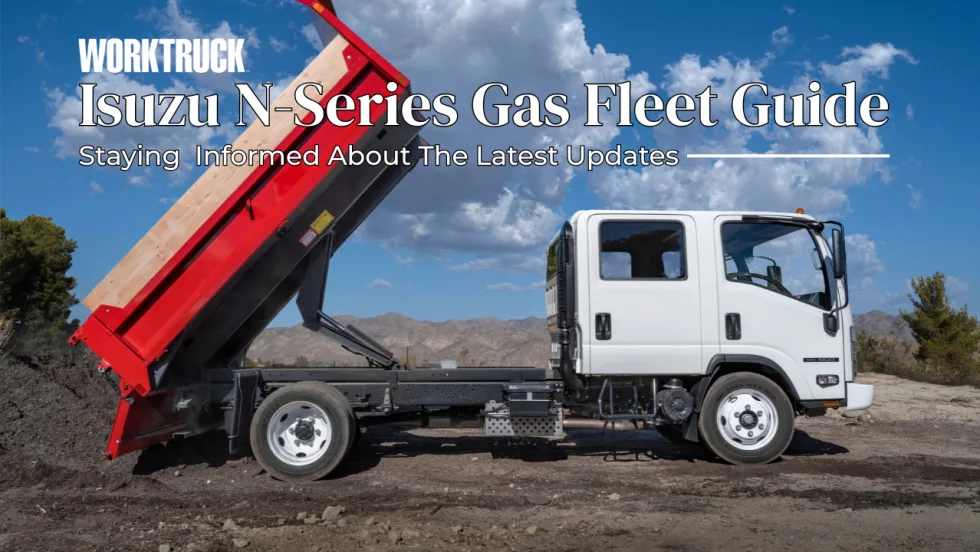
Isuzu N-Series Gas Fleet Guide: Specs, Capability and 2027 Model-Year Updates
Explore Isuzu Truck North America’s N-Series Gas fleet specs, engine performance, GVWR and payload capability, configurations, chassis dimensions, work-focused features, and 2027 model-year information.
Read More →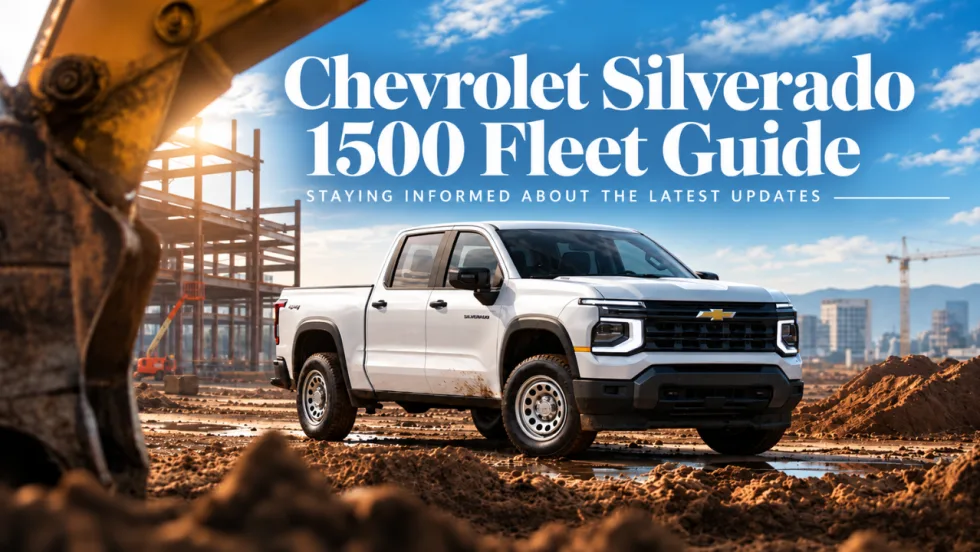
Chevrolet Silverado 1500 Fleet Guide Specs Capability and 2027 Model-Year Updates
The next-generation 2027 Chevrolet Silverado 1500 brings new V-8 engines, updated technology, expanded safety features, and a fleet-focused Work Truck. Here’s what commercial fleets need to know so far.
Read More →
Ram ProMaster City Fleet Guide Specs Cargo Capacity and 2027 Updates
Work Truck’s Ram ProMaster City Fleet Guide tracks the latest specifications, cargo capability, configurations, fleet technology, pricing, and model-year updates for Ram’s mid-size commercial van.
Read More →
Ford F-150 Fleet Guide Specs Capability and 2026 Model-Year Updates
Explore 2026 Ford F-150 fleet specs, engines, towing and payload capability, configurations, work features, technology, and model-year updates.
Read More →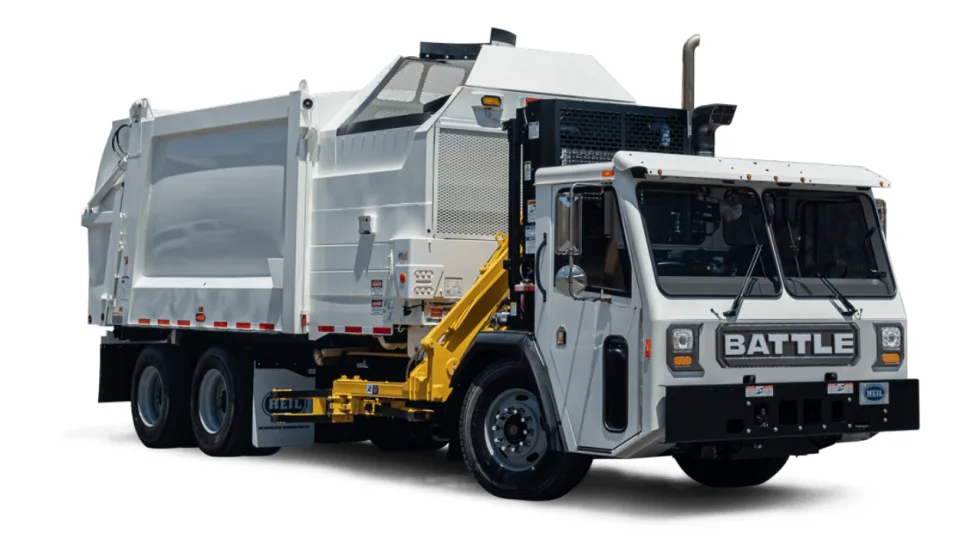
TCI Now Sells & Supports Battle Motors’ Vocational Trucks
Midwest truck dealer Truck Centers, Inc. (TCI) has expanded its transportation solutions with sales and service support for Battle Motors’ heavy-duty vocational trucks at locations in locations in Indiana, Illinois, and Missouri
Read More →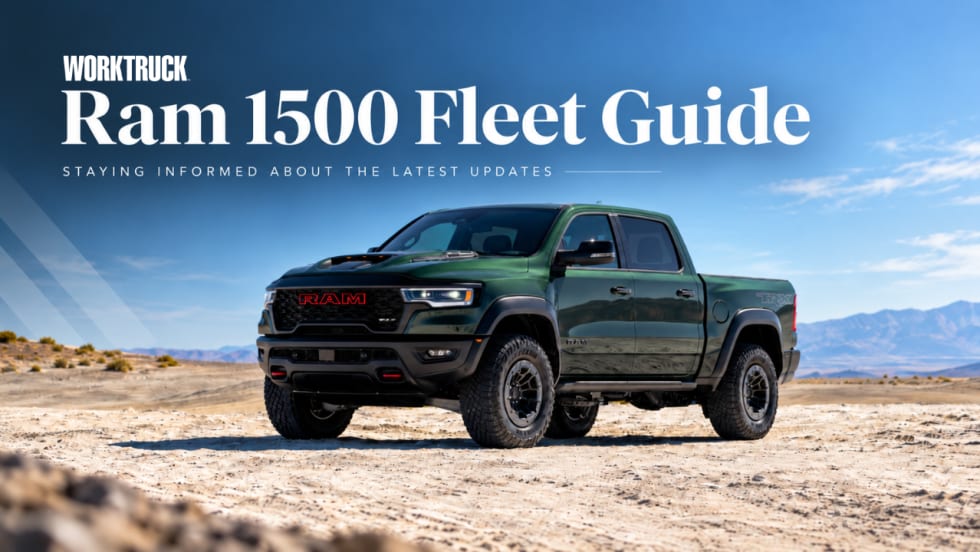
Ram 1500 Fleet Guide Specs, Capability and 2027 Model-Year Updates
Explore always up-to-date Ram 1500 fleet specs, engines, towing and payload capability, configurations, technology, pricing updates, and model-year changes.
Read More →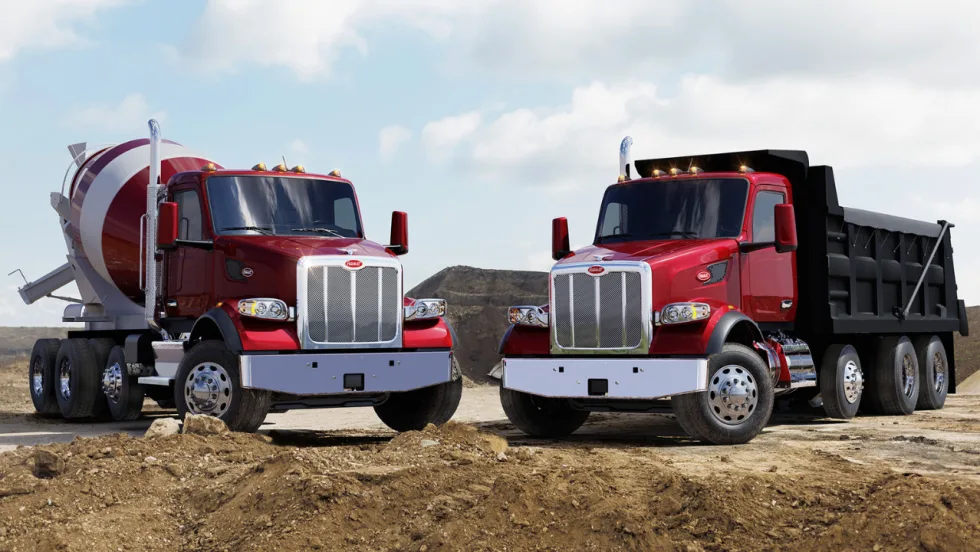
Peterbilt Trucks Equipped with Paccar TX-18 Pro Boost Efficiency for Maryland Fleet
Patuxent Companies is replacing aging trucks with the Peterbilt Model 567 and Model 589, specified with the Paccar TX-18 Pro 18-speed automated transmissions, and is reporting an 8% to 10% improvement in fuel economy.
Read More →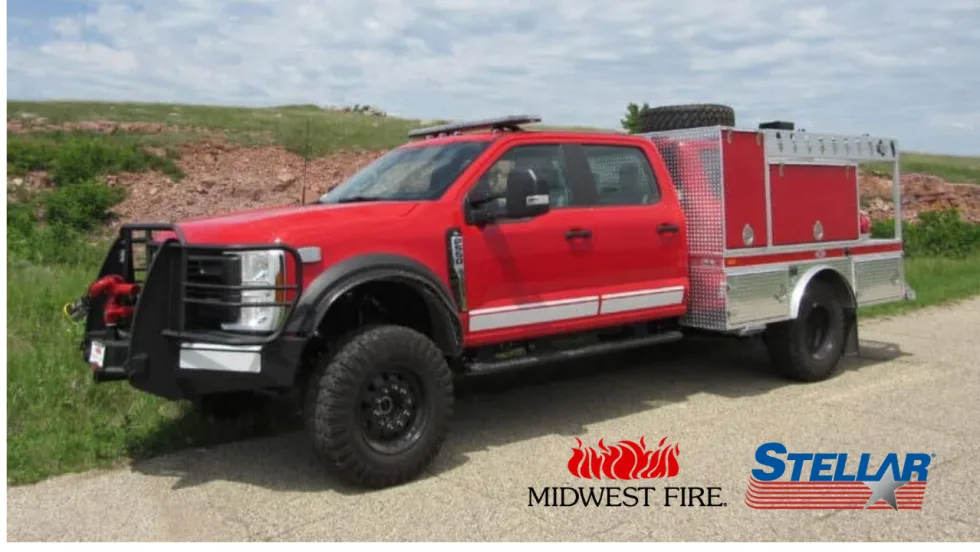
Stellar Expands into Fire Apparatus Market with Acquisition of Midwest Fire
Stellar Industries has acquired Midwest Fire, a custom fire apparatus manufacturer headquartered in Luverne, Minnesota, with nearly four decades of specialized apparatus experience.
Read More →