




Commercial Fleet Buying Intentions for MY-2012
Factors influencing 2012 fleet ordering include the improving national economy, initiatives to acquire more fuel-efficient units, and right-sizing trends. However, these forces are tempered by ongoing pressure to reduce capital expenditures. With approximately 70 percent of corporate fleet managers reporting to sourcing groups, there is increased focus on initial acquisition costs and ways to reduce capital expenditures. Here's our forecast of commercial fleet buying inclinations for MY-2012.



Acquisitions by commercial fleets, in aggregate, are forecast to exceed 2011 model-year volumes, but not appreciably, according to a survey conducted by Automotive Fleet of 400 major corporate fleets.
The national economy, from a commercial fleet perspective, continues to be a paradox of contradictory market forces. For example, one surveyed fleet, which is increasing its fleet buy for MY-2012, reports it is doing so because “business is booming.” However, another comparable-sized fleet reports its 2012 buy will be lower than the preceding model-year because the company is undergoing layoffs.
Despite these contradictory forces, more corporate fleets plan to increase new-model acquisitions in MY-2012 than those decreasing purchasing volume. However, the overwhelming majority of the nation’s corporate fleets plans no significant change to replacement programs for MY-2012 and will acquire approximately the same volume as the prior model-year.
Among the factors influencing MY-2012 purchases are corporate initiatives to acquire vehicles with increased fuel efficiency, right-sizing trends, and capital pressures to reduce ordering volume or decrease the number of selector choices offered to drivers.
It is important to note that several OEMs are running short 2012 model-years as a result of early build-out dates, which doesn’t produce an exact model-year to prior model-year comparison of fleet buying intentions.
Short-Cycling Considerations
One factor causing an uptick in new-vehicle orders is the strong used-vehicle market. “We will probably be ordering more new vehicles in MY-2012 so we can take full advantage of the current used-vehicle market,” said Jim McCarthy, director, vehicle management services for Siemens CSCM (Corporate Supply Chain Management), a division of Siemens Corp.
This sentiment was shared by multiple fleets responding to the AF survey.
“We short-cycled and refinanced some leases to take advantage of the used-vehicle market in 2010. I plan on doing the same for the 2012-MY, while the market lasts,” said another fleet manager who wished to remain anonymous.
Another fleet contemplating a short-cycling strategy for MY-2012 is ADP.
“With the strong remarketing climate, we are anticipating short-cycling as appropriate and acquiring more than the usual number of vehicles,” said Michael Bieger, senior director, global procurement for ADP.
Similarly, another fleet that short-cycled previously is considering doing so again. “We are in the process of deciding whether we are going to do a short-cycle again,” said a fleet manager who wished to remain anonymous.
Since the AF buying intentions survey was conducted during the preparatory planning phase of the 2012 buy, several fleets were still investigating the viability of short-cycling and had not reached a final decision. One such fleet was 3M Corp. “We are seriously looking at an accelerated replacement schedule to take advantage of the strong used-car market,” said David Haslerud, fleet manager, administrative services for 3M in St. Paul, Minn.
This sentiment was echoed by USG Corp. “With the resale market stronger, we are adjusting our replacement parameters,” said Don Schaefer, director, safety and fleet operations for USG Corp.
Currently, there is a shortage of used-vehicle inventory in the wholesale market, which is driving up resale values. The shortage of used vehicles is projected to persist through the next several years. The ongoing robust strength of the wholesale used-vehicle market was best summarized by Mike Butsch, director of global fleet operations for Joy Global in Milwaukee, who commented: “It’s a great time to sell. Residuals continue to be strong.”
Economy to Drive 2012 Fleet Buy
The primary factor influencing 2012 fleet ordering is the overall strengthening of the national economy.
“I expect to buy more 2012-model vehicles compared to 2011. As the economy continues to improve, we will be more willing to replace older vehicles,” said Lance Keith, fleet manager for The Pape Group, Inc., in Eugene, Ore.
A similar view was expressed by Infinity Insurance Company.
“We are in a good place right now and our company is growing. In the coming year, we are looking to add about 50 to 60 new positions that need fleet vehicles. It is our anticipation to turn over the whole 2010-MY fleet for 2012-MY, which is about 450 units,” said Chuck Kukal, supervisor, fleet, mail and administrative services for Infinity Insurance Company in Birmingham, Ala.
Many fleets are continuing to play “catch-up” with their replacement cycle ordering following several prior years of decreased, or in many cases, no ordering of replacement vehicles.
“We had a freeze on vehicle ordering during MY-2009 and MY-2010. We are now playing catch-up with our MY-2011 ordering. However, we did extend the replacement criteria so that orders will be spaced over 2011 and 2012 model-years,” said one fleet manager.
Some fleets that previously extended replacement cycling are now reversing policy due to increased maintenance costs and reverting to their traditional replacement cycle.
“We will be ordering more cars this year. Earlier, we implemented a longer fleet retention due to the volatility in our business and this is starting to raise our maintenance costs. Although this was the right thing for us to do at the time, we are now more confident in business,” said one fleet manager who wished to remain anonymous.
In addition, the short 2012 model-year with early buildouts by some OEMs is influencing the makes and models selected by corporate fleet managers.
“We are more actively perusing multiple vendors to shield our organization from lack of availability and early cutoffs/buildouts,” said one fleet manager who wished anonymity.
Pressure on Capital Expenditures
The work truck segment (Class 3 and larger) of the corporate fleet market is experiencing growth, while at the same time, feeling strong pressure to control capital expenditures due to high unit costs.
Capital expenditure constraints are also causing shifts in classes of vehicles acquired as illustrated by the following comment from a fleet manager not wishing to be identified: “We will be acquiring fewer trucks as capital pressure continues, but will acquire significantly more company cars as we move people away from an allowance program.”
Another ramification of tight-fisted control of capital expenditures is a reduction in the number of vehicle choices offered to drivers on selectors.
“I suspect this year there may be some added interest from our management team regarding 2012 selectors, but I have not yet been advised as to what it will concern. My assumption, however, is that they will want to reduce the number of selector options, perhaps go with an exclusive OEM, to further cost containment efforts,” said one fleet manager.
One fleet reducing its new-vehicle ordering volume for MY-2012 is Merck & Co.
“For the U.S., Merck will be acquiring significantly fewer vehicles this year due to capital requirements and an acceleration of vehicle replacements last year. OEM sourcing is being carried over from the previous model-year with no significant change in models,” said Joe LaRosa, CPA, MBA, director, global fleet services for Merck & Co. Inc., in Whitehouse Station, N.J.
In some cases, the decrease in order volume from the 2011 model-year is misleading since a higher than normal number of units was acquired last model-year. A case in point is Tennant Company.
“I’ll be buying fewer vehicles in MY-2012. In MY-2011, my purchases were up because I was still catching up from the mandate that I couldn’t order vehicles following the economic downturn. Although ordering fewer vehicles, MY-2012 should be back to normal numbers,” said Stuart Olson, fleet manager Americas for Tennant Company.
Another example is American Family Mutual Insurance Co. “We will be ordering fewer vehicles for MY-2012. We ordered a high volume for MY-2011 due to extended replacement cycles for 2010-MY,” said Brett Switzky, fleet services administrator for American Family Mutual Insurance Co.
Some companies have “reset” their order volume to a lower level and are continuing at that level. In other cases, a few fleets will be acquiring no new vehicles in MY-2012.
“We have no plans to acquire for MY-2012 at this time. That might change, but I doubt it,” said Ruth Alfson, CAFM, fleet manager/DOT Compliance, Fleet Center of Excellence for Serco Group, Inc., in Fairborn, Ohio.
However, most fleet managers responding to AF’s buying inclination survey report that the same amount of dollars are being budgeted as last year, which assures a carryover year for these fleets in terms of ordering volume.
Pressure to Sole Source
With approximately 70 percent of all corporate fleet managers reporting to sourcing groups, there is increased focus on initial acquisition costs and ways to reduce capital expenditures. One approach is leveraging the fleet buy by sole sourcing. “I am being challenged by my purchasing department to consider sole sourcing,” said one fleet manager who wished to be anonymous.
This trend was echoed by another fleet manager who also wished not to be identified. “I want to try to stay diverse with OEMs and convince Purchasing that single source is risky and provides no flexibility. More recently, I am given last-minute information, and I am expected to react in a cost-effective manner. I am constantly trying to educate upper management of the volatility in the auto industry and of model-year buildout cutoffs, long lead times, railcar shortages, etc.”
Cost of Fuel Influencing Selectors
The dramatic increase in fuel prices during the first half of 2011 had a big influence on 2012 selector deliberations.
“Needless to say, fuel efficiency will be a major player once again. Fact is, it is always a consideration, but its impact on our decision-making increases in direct proportion to the increase in fuel costs. For MY-2012, fuel efficiency may not just be a major player — it may be a game changer in some segments,” said McCarthy of Siemens Corp.
A growing number of fleets have established fleet-wide average fuel economy goals, which is driving acquisition decisions.[PAGEBREAK]
“We are very focused on mpg as we have fleet-wide fuel efficiency goals we need to meet by 2014,” said one fleet manager who wished to be anonymous.
The fleet initiative to increase overall fleet mpg is a broad-based trend occurring throughout corporate fleet management.
“With our 2012 ordering, all effort will be made to bring up the total mpg of the fleet,” said Phil Schreiber, fleet manager North America for Otis Service Center in Bloomfield, Conn.
Many fleets are reassessing lifecycle cost analyses to reflect current fuel prices. “Fuel prices are driving change again. The latest round of higher fuel prices is driving us to look again at lifecycle cost analysis,” said Gregg Hodgdon CAFM, director of fleet operations for Deli Express/E.A. Sween Co. in Eden Prairie, Minn.
This sentiment was echoed by EMD Serono. “We are looking to improve our average mpgs across all vehicle segments and, as a result, it could require we make changes to the types of vehicles we currently have in our fleet,” said Lisa Derby, senior manager, facilities and logistics for EMD Serono, Inc. in Rockland, Mass.
However, senior management and drivers are notoriously fickle about the desire to acquire (or drive) smaller, more fuel-efficient vehicles.
“The strength of this trend is dependent on how long fuel prices stay high. I am hearing from field managers who want higher-mpg vehicles to replace current vehicles. However, the same thing happened back in 2008 when prices spiked. When prices dropped, nobody wanted the compact SUVs I had just purchased,” said Keith of The Pape Group.
Despite this, vehicle downsizing to improve fuel efficiency is a real trend in corporate fleet management and has the backing of senior management at many companies.
“We will continue to offer the more fuel-efficient vehicles as they become available from the manufacturers,” said Gayle Pratt, global fleet director, global supply chain for Ecolab. “Several of our divisions have focused on reconfiguring the loads carried and upfitting for cargo vans/wagons. In several cases, we will be able to order smaller cargo vans this coming year.”
Other fleets are looking to increase fuel efficiency by changing fleet policy and incentivizing drivers to select the higher fuel-efficiency models on the fleet selector.
“We are offering personal use fee reductions for anyone willing to take the smaller, more fuel-efficient cars,” said Barb Bonanti, fleet manager for STERIS.
Growing Trend to Right-Size
Industry-wide, there is an increasing trend, facilitated by new OEM models, to migrate to smaller classes of vehicles in an effort to right-size fleets to decrease fixed and operating expenditures.
One example illustrating this downsizing trend is EMD Millipore. “We’re in the process of downsizing from large pickup trucks and vans (F-150, F-250, and E-150 vans) to Ford Transit Connects. We’ll also be looking to right-size our vehicles where applicable,” said Gary Polito, GLP, CCTE, global commodity manager, travel, fleet & meetings for EMD Millipore in Billerica, Mass. EMD Millipore is a division of Merck KGaA, based in Darmstadt, Germany.
In addition to downsizing pickups and vans, other fleets are downsizing their passenger sedan vehicles.
“We will take a look at moving down to a compact sedan for some of our drivers. This change is directly driven by the need to increase fuel economy and the fact that the OEMs have some very safe and nicely equipped compact vehicles available now,” said a fleet manager who asked not to be identified.
There are a growing number of corporate fleets looking at incorporating B-class cars into their fleets. One example is Pfizer. “We will try to pilot/incentivize B-class this year,” said Fred Turco, global fleet services senior director for Pfizer.
Other fleet managers, likewise, see this interest in smaller vehicles as part of a larger industry trend. “I foresee a continuation of the effort to downsize/right-size vehicles,” said Schreiber of Otis Service Center.
However, a company’s fleet application limits the degree to which it can downsize its class of vehicles.
“We are always trying to get smaller more fuel-efficient vehicles in our fleet, but the majority of our sales reps are required to tow trailers. This limits us on the type of vehicles we can use. With the tools and parts inventory our service reps are required to carry, smaller vehicles will only work in very limited areas. We will only reduce vehicle size when possible,” said Olson of Tennant Company.
This was echoed by other fleet managers. “We continue to right-size, but only where possible,” added Butsch of Joy Global.
Smaller Displacement Engines
The widespread trend to spec smaller displacement engines has been ongoing for the past four model-years. A growing number of fleets have fully converted all vehicles to four-cylinder engines.
“We will finalize conversion from full-size V-6 sedans to mid-size four-cylinders with the 2012 model-year,” said Gage Wagoner, senior manager, North America Fleet Management for Philips Electronics North America in Bothell, Wash.
Some fleets are considering revising corporate policy to only acquire models equipped with four-cylinder engines.
“We may not offer any 2012 models with six-cylinders,” said one fleet manager. “We only offered six-cylinder in each category for the 2011 models. However, we offered five four-cylinder models in each category for 2011.”
Many work vehicles, in particular trucks and vans, do not lend themselves to downsizing to four-cylinder engines, but even these are being scrutinized for exceptions. “Pickup trucks are still required to do the job for most of our people, but we have started to distinguish between sales and customer-facing roles that drive high miles and long hours (and need more creature comforts) versus the company-site vehicles that can be plainer models and less costly,” said Peg Nicholson, CAFM, fleet manager for Monsanto Company in St. Louis. “We have also moved managers to a choice of sedans and small SUVs. We convinced them that their perception of what they need and what they actually do need to perform their managerial duties allows us to move them out of pickups to smaller, more fuel-efficient vehicles.”
In addition to downsizing engine size, some fleets are downsizing to smaller vehicle sizes. “We will acquire more four-cylinder models and no more six-plus seat vehicles. We are considering more limits on AWD, but with the severity of the weather this past year, we may keep it the same,” said one fleet manager.
However, some fleets continue to get pushback from drivers, and when given a choice, drivers continue to opt for the bigger displacement engine.
“We are reviewing the opportunity to make four-cylinders the standard for most positions requiring a company vehicle,” said Greg Asadoorian, director − global fleet for Invensys in Foxboro, Mass. “We currently offer four-cylinders, but there are limited takers.”
One corollary to the pressure to reduce fuel expenditures is linked with corporate sustainability initiatives. For example, Sprint Nextel Corp. is striving to only acquire SmartWay-certified vehicles when possible. “This means four-cylinder, fuel-efficient engines. We do have some hybrids for evaluation, but so far we have not seen any CO2 improvement, and the cost of the hybrids and EVs outweighs any savings. From a fleet standpoint, our strategy is to pursue SmartWay vehicles,” said Bret Watson, CAFM, national fleet manager for Sprint Nextel Corp.
Several fleets report they will be deploying battery-electric vehicles in the 2012 model-year. One fleet is GE Corp., which has committed to converting half of its fleet to electric vehicles by 2015.
“We will include electric vehicles into the mix,” said Sheryl Grossman, fleet operations manager for GE Healthcare, a business unit of GE Corp.
Another example of a fleet acquiring EVs is Johnson Controls. “We will be deploying fully electric vehicles later in the year,” said Christy Coyte, global fleet manager for Johnson Controls in Plymouth, Mich. One of the business units of Johnson Controls has a goal to be a 100-percent hybrid/EV fleet.
Other Acquisition Considerations
There are a number of additional factors influencing 2012 acquisition decisions, which are more fleet-specific.
For instance, there has been an ongoing trend by OEMs to migrate away from 16-inch wheels to larger 17- and 18-inch tires when introducing new models. This has caused replacement tire costs to increase, prompting some pushback from a few fleets.
“Replacement tires for all vehicles and especially trucks of all sizes may negatively impact tire budgets. Some tires will be prohibitively expensive. Limited availability may be expected for some heavy-duty truck tires,” said J. J. Keig, CAFM, fleet manager for NCH EcoServices.
One fleet has adopted a blanket policy not to acquire vehicles with tire sizes larger than 16 inches.
“Any vehicle with 17-, 18-, or 19-inch tires will not be included in our selector. Why do fleets need 17-, 18-, or 19-inch tires? The replacement tires cost more and in vans and SUVs raise your CO2 emissions levels. Is it style over safety, or is it money over safety?” asked one fleet manager.
Another factor impacting fleet-buying considerations is upcoming model discontinuations, in particular the pending discontinuation of several compact pickup trucks, which are popular with many corporate fleets.
“We are watching the news for small trucks, especially as the impending end of the Ford Ranger and Chevrolet Colorado looms nearer,” said one fleet manager who asked not be identified.
Other fleets are adding ergonomic considerations when deliberating on about 2012 selector decisions.
“We are currently conducting ergonomic studies and the results could result in changing OEMs in 2012,” said another fleet manager who wished not to be identified.
Originally posted on Automotive Fleet
More Vehicle Insights
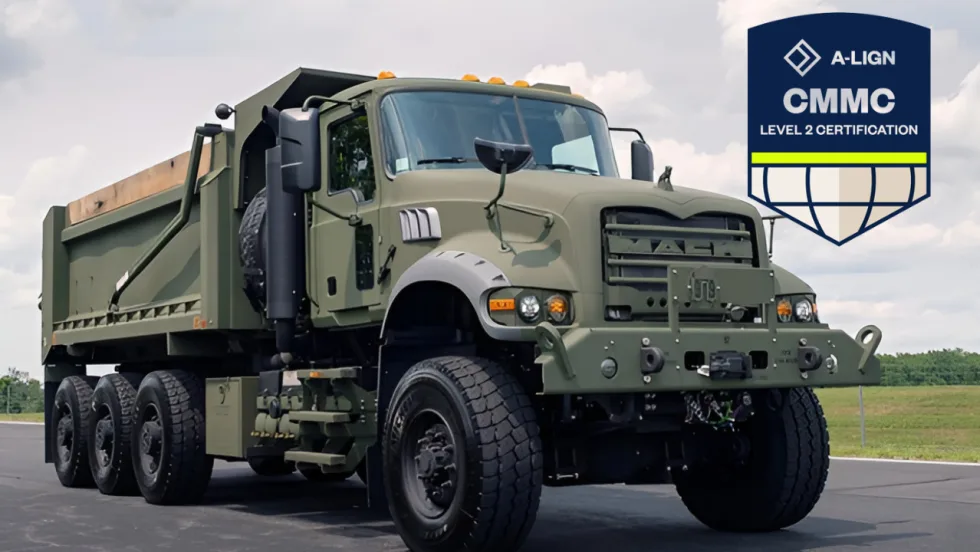
Mack Defense Achieves Cybersecurity Maturity Model Certification Level 2
After an assessment conducted by an authorized Certified Third-Party Assessment Organization (C3PAO), Mack Defense has achieved Cybersecurity Maturity Model Certification (CMMC) Level 2.
Read More →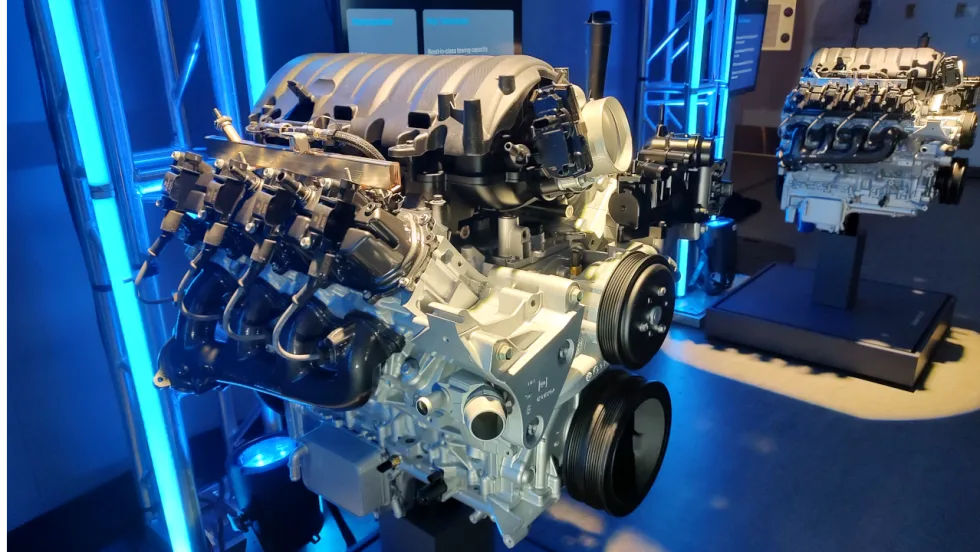
GM Unveils New Sixth-Generation Small Block Engines for 2027 Light-Duty Pickups
General Motors unveiled two new small-block engines, backed by extensive real-world validation and more than 70 years of small-block V8 manufacturing experience, as part of the engine portfolio for the 2027 Chevrolet Silverado 1500 and GMC Sierra 1500.
Read More →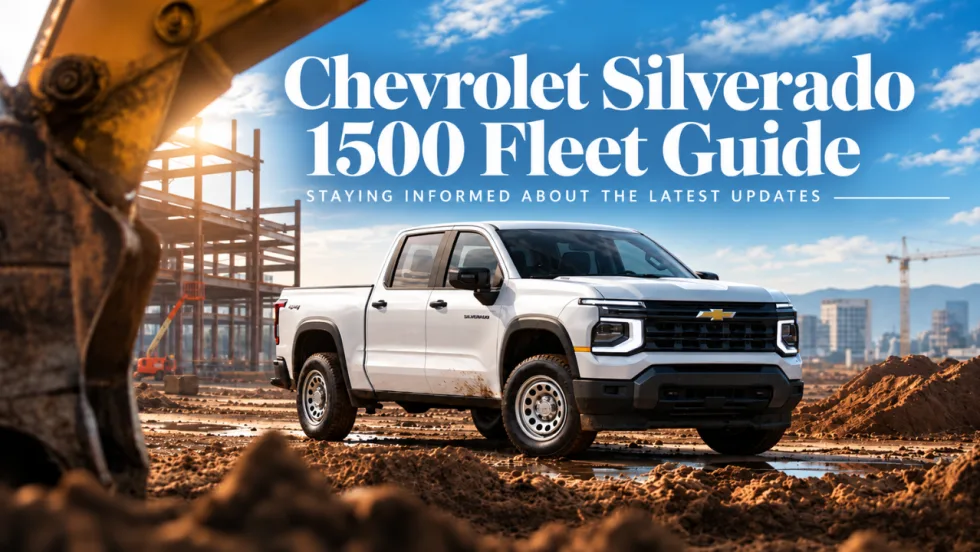
Chevrolet Silverado 1500 Fleet Guide Specs Capability and 2027 Model-Year Updates
The next-generation 2027 Chevrolet Silverado 1500 brings new V-8 engines, updated technology, expanded safety features, and a fleet-focused Work Truck. Here’s what commercial fleets need to know so far.
Read More →
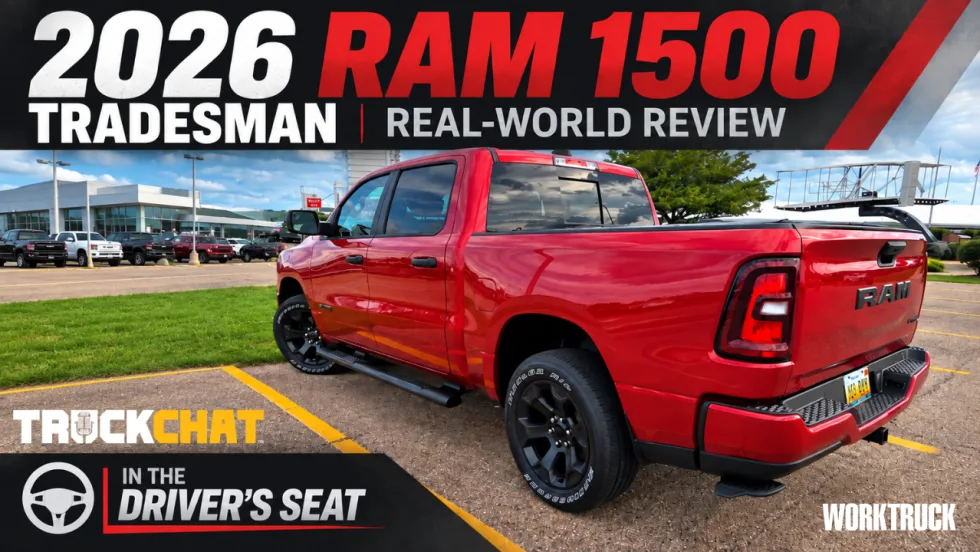
2026 Ram 1500 Tradesman Put to a Real-World Fleet Test
A few days behind the wheel of a 2026 Ram 1500 Tradesman turned into a test of visibility, parking, work-ready features, and even severe-weather driving.
Read More →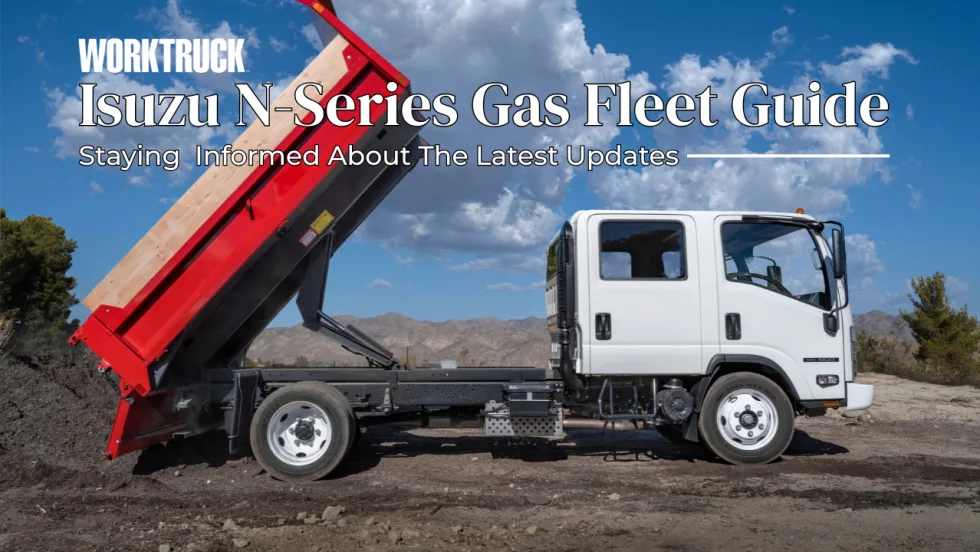
Isuzu N-Series Gas Fleet Guide: Specs, Capability and 2027 Model-Year Updates
Explore Isuzu Truck North America’s N-Series Gas fleet specs, engine performance, GVWR and payload capability, configurations, chassis dimensions, work-focused features, and 2027 model-year information.
Read More →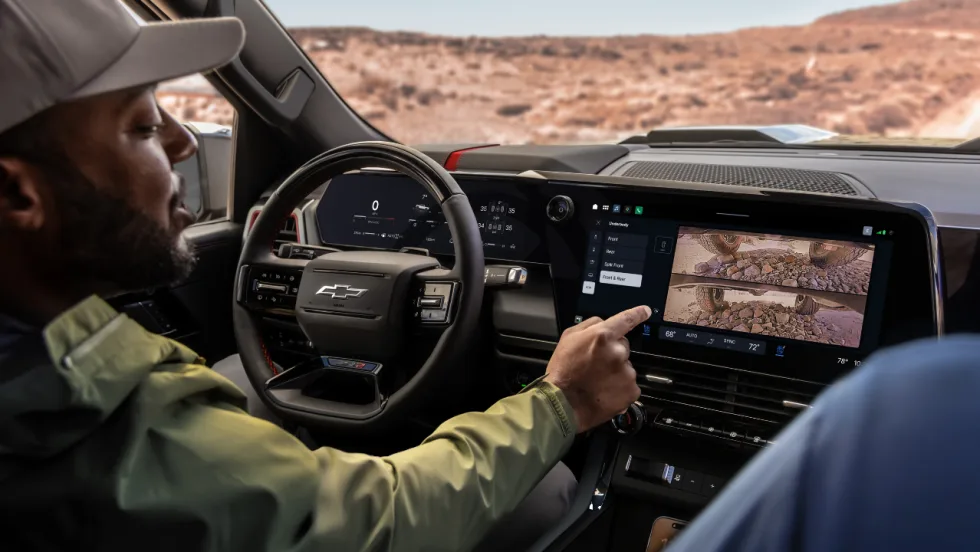
GM Brings New Truck Focused Interface to 2027 Silverado and Sierra
GM's new pickup interface puts trailering data, camera views, vehicle controls, and smartphone integration closer to the driver in the 2027 Silverado and Sierra.
Read More →
Ram ProMaster City Fleet Guide Specs Cargo Capacity and 2027 Updates
Work Truck’s Ram ProMaster City Fleet Guide tracks the latest specifications, cargo capability, configurations, fleet technology, pricing, and model-year updates for Ram’s mid-size commercial van.
Read More →
Ford F-150 Fleet Guide Specs Capability and 2026 Model-Year Updates
Explore 2026 Ford F-150 fleet specs, engines, towing and payload capability, configurations, work features, technology, and model-year updates.
Read More →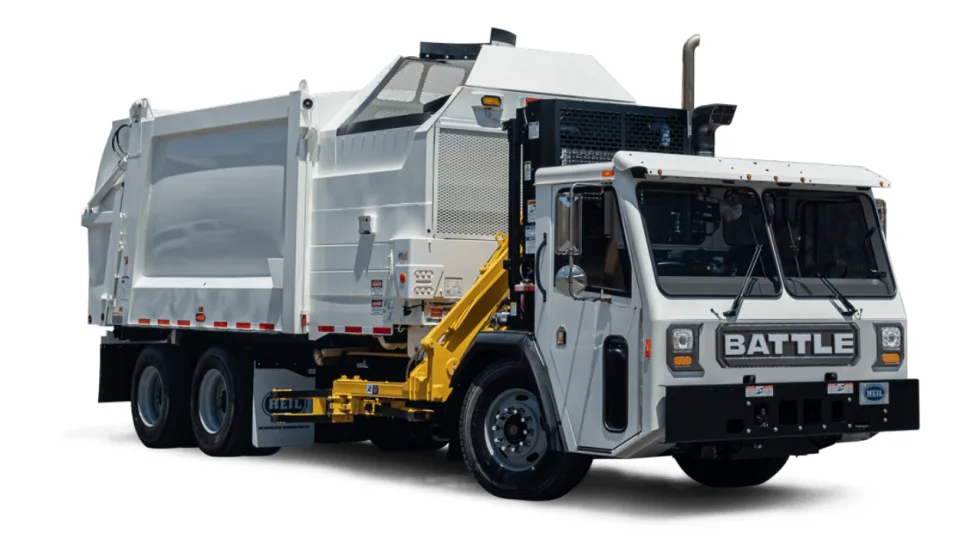
TCI Now Sells & Supports Battle Motors’ Vocational Trucks
Midwest truck dealer Truck Centers, Inc. (TCI) has expanded its transportation solutions with sales and service support for Battle Motors’ heavy-duty vocational trucks at locations in locations in Indiana, Illinois, and Missouri
Read More →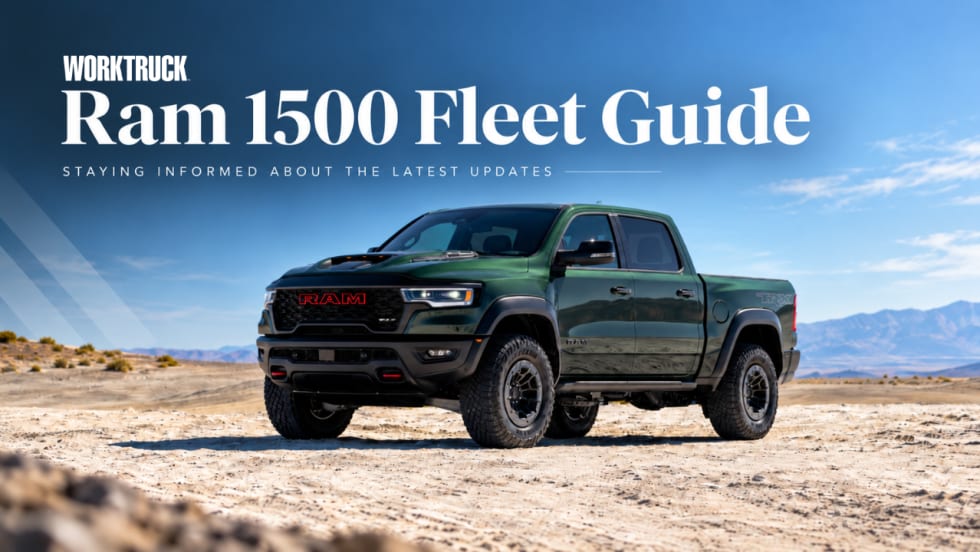
Ram 1500 Fleet Guide Specs, Capability and 2027 Model-Year Updates
Explore always up-to-date Ram 1500 fleet specs, engines, towing and payload capability, configurations, technology, pricing updates, and model-year changes.
Read More →