




Class 3-6 Truck Forecast: Operating Costs Stable in 2015
Although the largest operating cost continues to be fuel, the No. 1 challenge facing medium-duty truck fleets is cost containment. There is always pressure to reduce costs, but management is exerting even more pressure than in recent years.
November 27, 2015

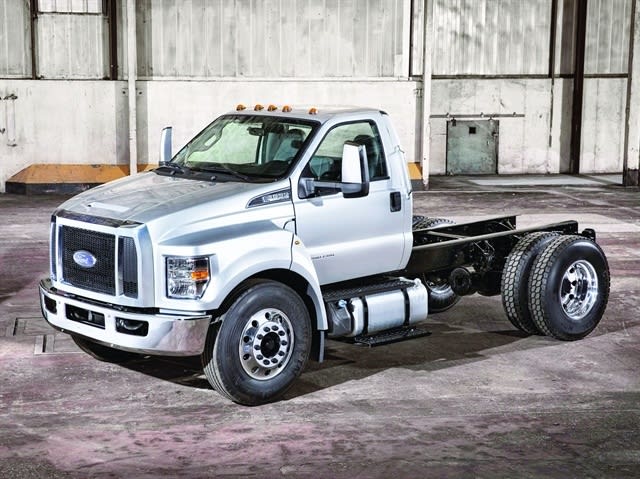
Medium-Duty Trucks, such as the Ford F-650 Chassis Cab, continue to have stable operating costs.
Credit: Ford
12 min to read
Despite the downward pressure on fuel costs and stable maintenance expenses, fleet still represents one of the top five expense line items for companies that operate fleets of Class 3-6 trucks. As such, pressure continues to emanate from senior management for fleet managers to reduce fleet costs. Senior management’s challenge is to keep capital consumption in the fleet to a minimum, which, as all fleet managers will tell you, is the same challenge every year.
The goal is to reduce operating costs and increase profits. Continuing to identify significant cost savings is a struggle, especially when expensive, higher-GVW assets equipped with specialized equipment are needed to handle difficult fleet applications.
What are the operating cost trends for Class 3-6 fleets for the remainder of 2015, and what is the forecast for the 2016 calendar year? To identify the significant operating costs impacting today’s Class 3-6 medium-duty truck fleets, Work Truck reached out to industry subject-matter experts to solicit their feedback. Here’s what they told us:
Trend 1: Fuel Prices Continue to be Flat
Operating costs for medium-duty Class 3-6 trucks have remained stable for the balance of the 2015 calendar year. The key reason for this forecast is that fuel prices, both diesel and gasoline, have remained flat or declined in the 2015 calendar-year.
“Diesel prices dropped significantly during 2015; the lowest they’ve been since 2010, allowing for some relief at the pump for many fleets and lower total operating costs,” said Megan McMillan, truck strategic consultant for Donlen.
The increased worldwide crude oil inventory has kept downward pressure on the price of a barrel of oil for the past several years. It is anticipated that fuel prices — both diesel and gasoline — will remain relatively flat for the remainder of calendar-year 2015 and into the first quarter of 2016.
“As the price of oil has dropped, and the cost of fuel and lubricants has fallen, operating costs for medium-duty trucks (indeed, all vehicles) have dropped substantially in comparison with CY-2014. Recent volatility in the oil market makes future pricing highly unpredictable, so it is prudent to continue selecting fuel-efficient power plants for medium-duty trucks,” said Joe Brightwell, truck operations manager for Wheels Inc.
Another factor influencing fuel costs is that the average age of a medium-duty truck asset has peaked.
“During the recession, companies held back on cycling. But, companies are now replacing these older trucks with newer trucks, which have lower maintenance costs and higher fuel economy,” said McMillan.
Trend 2: Maintenance Costs Remain Stable
The second-largest component of medium-duty truck operating costs is scheduled and unscheduled maintenance, along with retreading and replacement tire expenses.
Most observers do not foresee a significant increase in maintenance expenses for the remainder of 2015 and the beginning of 2016, aside from the normal increase associated with aging fleets.
One unknown variable is the severity of weather conditions next winter, which, in the past, has led to higher fuel prices and increased unscheduled maintenance. Although maintenance and fuel costs are forecast to remain constant into 2016, this is contingent on winter weather conditions. Potentially severe winter forecasts for 2016 could drive up fuel and maintenance costs.
The cost of replacement tires and retreading depends on commodity prices, such as oil and rubber.
However, the best way to lower tire replacement costs is to extend the tread life of existing tires.
“Yard checks of vehicle tires continue to gain momentum. Having the tire vendor perform periodic checks of tire inflation, measurement of tread depths, on-the-spot repairs, and better overall scheduling of tire replacements all result in reduced downtime, reduced roadside expense, and an overall reduction in vehicle cost,” said Chris Foster, manager, truck and equipment for ARI.
One factor putting upward pressure on maintenance costs is the shortage of technicians. It is expected that maintenance costs will remain slightly above inflation as qualified mechanics remain in short supply. This is especially true for diesel mechanics, and as a result, Class 3-6 fleets are becoming more supportive of gasoline engines.
Labor rates at repair shops increased moderately in 2015, with high-cost-of-living markets experiencing the largest increases. The ongoing technician shortage is also putting upward pressure on labor rates. Staffing shortages are creating a backlog of work at many facilities across the country. The technician shortage is especially acute in the oil patch and rural areas.
Another variable impacting truck maintenance costs is the upkeep of selective catalytic reduction (SCR) emission systems. The current diesel emissions standards and related components have adversely affected fleet operating expenses. Repairing these systems is expensive, time-consuming, and requires specialized equipment and training that are not available in every market.
In addition, to the expense of maintaining SCR engines, there is the added expense of diesel exhaust fluid (DEF).
“As DEF becomes the norm across the fleet segment, many fleets have identified a cost-saving opportunity by purchasing DEF in bulk. Rather than drivers purchasing through a P-card, or through their fuel card, fleets can purchase in bulk and distribute at the location level,” said Foster of ARI.
A growing fleet maintenance issue revolves around the “soft costs” of driver and vehicle downtime. Downtime issues have increased, and rental costs have risen. Rental costs have increased in some cases due to delays caused by replacement parts on back order, repair provider workload capacity, repair technician shortages, and oil patch-area challenges with repair provider capacity.
Trend 3: Cost-Reduction Pressures Continue
Cost reduction remains a constant pressure on fleet managers from management, aimed at reducing operating costs and increasing profits.
“Whether it is through telematics, best routing practices, increased fuel mileage, lighter-weight upfits, better work truck configuration for increased work production, driver retention, reduced parts pricing, aggressive reduction in service costs, or a combination of these items, the trend is to drive to the lowest cost of ownership,” said Mark Steffens, medium- and heavy-duty truck consultant for Donlen.
Examples of current cost containment initiatives are:
Spec’ing of Gasoline Engines: “We have seen a trend of fleets re-evaluating utilization of gasoline engines versus diesel counterparts. The increased origination cost for a diesel engine was typically offset quickly by the advantage in mpg at higher diesel price points, and now, with fuel prices easing, fleets are re-evaluating those policies through lifecycle cost modeling activities,” said Brad Jacobs, director of strategic consulting for Merchants Fleet Management. Other FMCs likewise report increased examination by fleets to determine whether a gasoline engine will allow them to continue meeting their fleet application. “We’re seeing more companies perform a detailed review of vehicle duty-cycles to rationalize selecting gasoline versus diesel engines to reduce operating and maintenance costs,” said Rich Zambroski, manager of truck excellence for Element Fleet Management.
Installing More Equipment on Truck Chassis: “A substantial portion of operating costs resides in labor. We’ve seen a trend toward adding more equipment to our medium-duty trucks, making driver activity at the work site easier and saving time. This trend can contribute to the revenue side as well, allowing one or two additional stops per day, with associated increases in billings,” said Brightwell of Wheels Inc.
Outsourcing: “We’ve seen an increase in fleets that are looking to outsource job functions that are not part of their core business, such as maintenance or fleet management,” said McMillan of Donlen.
Consolidation and Optimization of Vendors. “As fleets continue to focus on cost-reduction strategies, limiting the number of overall vendors as well as more directed selection of vendors has been the trend. Reducing the number of vendors used allows fleets to leverage total spend for enhanced pricing and quicker turnaround of repairs,” said Foster of ARI. “As the innovation and technology of vehicles in the medium-duty segment continue to evolve, the focus on the ‘right’ vendors becomes more critical in managing repair cost and downtime. With more enhanced electronics and more complex diesel emissions systems, not all vendors are capable of proper diagnostics and repair.”
Trend 4: Growth in Telematics Implementation
A growing number of fleet managers, who manage Class 3-6 truck assets, have turned to telematics devices to help lower operating costs. “Acceptance of commercial telematics offerings has continued to rise in the trucking industry,” said McMillan of Donlen.
This industry trend was also reported by Merchants Fleet Management.
“With fuel economy continuing to be the No. 1 area of focus, the implementation of telematics systems has increased. Telematics solutions with onboard diagnostics (OBD) and routing capabilities are becoming more common among our client base as an effective tool to lower fuel spend and miles driven, particularly for medium-duty assets, where the impacts of fuel economy improvements carry higher savings potential.
Telematics has become a ‘must have’ in conjunction with downsizing and optimizing the spec,” said Jacobs of Merchants Fleet Management.
Another factor behind this trend is that costs continue to decline relative to telematics installation and management. “Using telematics in this segment continues to grow as fleets take advantage of route optimization and reduced idle times. The value of telematics to operating cost is significant as driver safety, hard braking, speeding, and idling all have a dramatic effect on fuel economy and vehicle maintenance and repair costs,” said Foster of ARI. “Many fleets are also beginning to incorporate telematics to identify and communicate critical vehicle trouble codes, as well as manage downtime.”
The attraction of telematics to truck fleet managers extends beyond cost control and is also viewed as a fleet tool to enhance driver safety and productivity.
“These offerings have provided insight into opportunities for decreased operating costs, such as reductions in idle time and decreased risk of accidents. Dispatch managers are also using telematics in order to optimize the routes of their trucks, thereby decreasing mileage driven for the entire fleet,” said Tom Sloan, director, telematics products for Donlen.
As more data is generated by truck assets, telematics enables the management of this “Big Data” and turns it into actionable cost-cutting initiatives.
“Telematics is a game-changing technology that is driving savings within the fleet industry. Fleets are analyzing Big Data garnered through telematics and using it to keep costs down as well as making vehicles and employees safer and more productive,” said Zambroski of Element Fleet Management.
Trend 5: Return to Traditional Replacement Cycling Parameters
“Given the longer lifecycles for Class 6 and above assets, we are still seeing the effects of the economic downturn in the segment. Fleets that deferred replacements for three to four years starting in 2008 now have a concentration of assets in the eight- to 12-year-old range, driving up variable spend and downtime fleet averages. Others have taken steps to level out pent-up demand,” said Jacobs of Merchants Fleet Management.
Fleet managers are also reviewing fleet funding options as an opportunity to reduce fleet costs.
“Another operating cost trend we witnessed in 2015 was reviewing replacement schedules and performing buy versus lease analysis when preparing to change vehicles. There are many options for fleet managers depending on their corporate financial and tax positions. Leasing options can often yield real cost savings on the balance sheet, including reducing tax liabilities,” said Zambroski of Element Fleet Management.
Trend 6: Increase in Detailed Specification Reviews
“In 2015, many medium-duty truck fleet managers conducted detailed specification reviews to ensure fleet vehicles were matched to job functions. Over- or under-spec’ing vehicles can drive costs higher due to increased maintenance costs or reduced employee productivity,” said Zambroski of Element Fleet Management.
Trend 7: Safety Equipment Decreases Labor Costs & Accident Expenses
“Keeping drivers, passengers, and vehicles safe is the most important part of our work. Using safety equipment, such as back-up cameras and lane alerts, along with ergonomic considerations, helps keep trucks out of accidents and operators from injury. This allows our clients’ ‘first team’ to be on the job more consistently. This translates to improved labor costs and quality levels,” said Brightwell of Wheels Inc.
Trend 8: Increase in Utilization Analyses to Eliminate Under-Used Assets
“In 2015, utilization analysis was used to help ‘right-size’ fleets, particularly in the oil and gas sector. These reviews can result in significant vehicle reductions, leading to substantial cost savings,” said Zambroski.
Others similarly report greater interest among fleet managers in right-sizing their fleets. “Fleet managers are requesting more in-depth utilization studies to determine how to best allocate assets to handle changes in business,” said McMillan of Donlen.
Trend 9: Ongoing Driver Shortages
“Currently, there is a shortage of drivers, and this trend will continue with freight tonnage increasing. The available driver pool is shrinking, because more drivers are approaching retirement age, as an example,” said Steffens of Donlen. “This is a tough industry to make this type of work attractive to young people. As businesses become more creative and aggressive with incentives regarding pay and benefits, this creates increased operating costs, but hopefully this will be offset by a rise in freight rates.”
A corollary to the driver shortage is that companies are paying more attention to the importance of training existing drivers and vehicle inspections.
“More and more fleets are recognizing the role that drivers play in terms of controlling cost and reducing downtime. With the enhanced diesel emissions on newer medium-duty trucks, the need for consistent and timely re-gens can dramatically affect repair cost, as well as downtime,” said Foster of ARI. “In addition to driver training, the importance of proper pre-trip and post-trip inspections can be the difference between scheduled and unscheduled repairs. Many fleets are increasing visibility into the trip inspection process by adding levels of responsibility within the corporate fleet. Some measures include random audits at the location level as well as electronic documentation of driver vehicle inspection reports (DVIRs).”
Trend 10: Rising Driver Hour Costs Due to Electronic DOT Logs
“Offsetting some of the other gains in operating costs are the more effective reporting of driver hours. As electronic DOT logs are coming online, drivers have to be more compliant with laws, which can mean additional operators may be needed and labor costs may be greater,” said Brightwell of Wheels Inc.
Forecast for The 2016 Calendar Year
Operating costs for medium-duty, Class 3-6 trucks are forecast to remain stable in 2016. The key reason for this forecast is that fuel prices, both diesel and gasoline, are expected to remain flat through the first half of the 2016 calendar year, especially if the Chinese economy remains sluggish.
But most observers caution that an increase in geopolitical uncertainty, especially in the Middle East, or an uptick in the Chinese economy, could put unexpected upward pressure on fuel prices, derailing forecasts of flat fuel prices in 2016.
Contributing to the forecast of reduced fuel expenditure is the fact that most fleets are reverting to their traditional cycling parameters. Companies are now replacing older trucks kept in service beyond their traditional replacement parameters with newer trucks that have lower maintenance costs and higher fuel economy.
Today, medium-duty trucks have the best fuel efficiency in the history of this vehicle segment, achieved not only through powertrain efficiencies but also through a host of other engineering improvements.
One dark cloud on the horizon is the possibility of increased fuel taxes, as an expedient remedy to address the shortfall in federal highway funds
In summary, the consensus among industry subject-matter experts is that pressure to contain fleet costs will continue into calendar-year 2016; however, operating costs for medium-duty trucks will remain stable in the next year, contingent upon fuel prices remaining at their current levels.
Subscribe to Our Newsletter
More Operations

Family Ties Inside the Fleet Families Building Careers Across Generations
Three fleet families share what it really takes to work together, learn across generations, and keep business from following them home.
Read More →
Shades of Fleet Call for Voices: Fleet's Hidden Heroes
Fleet’s hidden heroes are often the ones keeping everything moving behind the scenes. September’s Shades of Fleet is looking for dispatchers, coordinators, parts specialists, and other support pros to share their stories.
Read More →
Truck Centers, Inc. Celebrates National Truck Driver Appreciation Week with $1,000 Fuel Card Giveaways
During National Truck Driver Appreciation Week, Truck Centers, Inc. is offering customers a chance to fuel up for free. Customers at all Truck Centers locations can enter to win one of four $1,000 fuel cards from Sept. 14 - 18.
Read More →
Fleet Guides, AI Time-Savers, Truck Tariffs & Fuel Strategy Lead the News
This week’s Truck Chat Cheat Sheet covers new fleet vehicle guides, practical AI use cases, U.S.-Canada truck production, mixed-energy strategy, and more.
Read More →
What Fleet Employers Are Missing When Hiring Veterans
What if some of the strongest candidates for fleet are already out there, but their experience is written in a language our industry does not always recognize?
Read More →
Automotive Fleet Opens 2026 Personal Use Survey for Commercial Fleet Managers
Less than two weeks left! Commercial and corporate fleet managers are invited to share how their organizations handle company vehicle personal-use policies, charges, and driver eligibility.
Read More →
What Resilient Fleets Do Differently When Conditions Change
Fleet resilience is about more than reacting to disruption. Lauren Fletcher talks with AP Fleet’s Alex Coveney about flexibility, planning, scaling, and what helps fleets adapt when business conditions shift.
Read More →
If We Want the Next Generation in Automotive, We Have to Give Them a Reason to Care
The automotive industry talks constantly about its workforce shortage. But before we can recruit the next generation, we may need to do a better job giving kids a reason to care about automotive in the first place.
Read More →
Ram ProMaster City Under $40K, Truck Tariffs, and AI Maintenance Lead the News
A sub-$40K commercial van, tariff questions, AI-powered maintenance, and a new EV production strategy headline this week’s Truck Chat Cheat Sheet.
Read More →
Bob Adamsky Shares the Fleet Lessons You Usually Learn the Hard Way
After more than 30 years in fleet, Arrow International’s Bob Adamsky has learned that the job is about far more than vehicles. He shares the lessons he wishes every fleet manager could learn a little earlier.
Read More →