Be sure to choose the right size: Full, medium, small. Big is not always better or most efficient. Size up equipment, tools, and staff, and how much space they will be occupying. Make careful calculations. What appears to be the right size, may not be fully compatible with a typical workday, routine, or function.
Ad Loading...
Evaluate vehicle upfits: The benefits and costs associated with them —the fleet manager needs to see what vehicle is worth adding into their fleet.
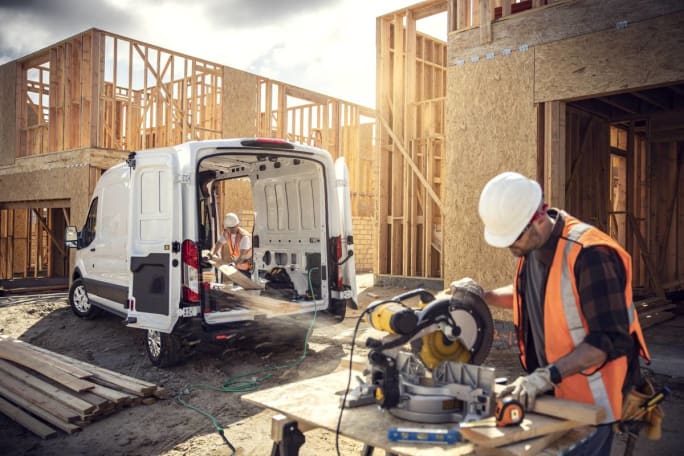
Do you need an inside workstation? The ability to use the van as a workstation can come in handy, particularly during bouts of inclement weather.
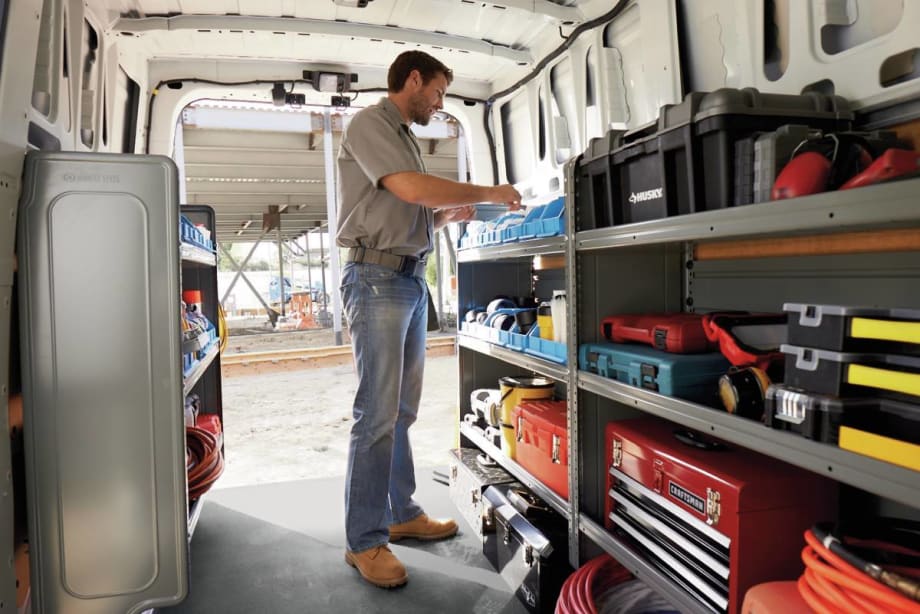
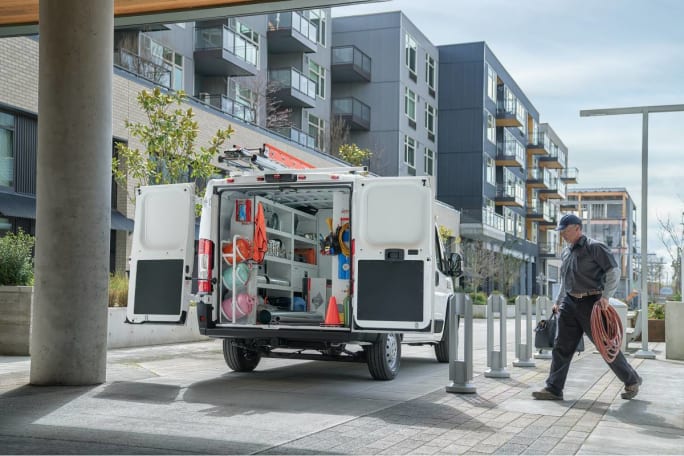
Do you need stand-up room? Interior ladder racks? While the ability to stand up in a van is a benefit, there are downsides to these taller vans. The height of the new vans is often unable to meet urban clearance requirements — parking garages and car washes, for example. Upfitters have adjusted quickly to customer demands for customized interiors that will reduce driver injuries and increase productivity. With increased availability of the drop-down ladder rack, van height is no longer an issue for trades requiring ladders. For those where height needs to be minimized, interior ladder racks are available as well.
Upfitters have adjusted quickly to customer demands for customized interiors that will reduce driver injuries and increase productivity.
Photo: RAM
AWD? Towing? The major challenge in the van market is the lack of all-wheel drive or 4X4 capability, along with towing concerns. With the ability to put a large volume and weight in a van, max towing capability declines quickly.
Ergonomics: What are ergonomic requirements and needs specific to the vocational role of the van? Evaluate product layout and accessibility; safety and comfort for driver and/or workers and passengers. How much room for movement, sitting, standing? What is storage availability, and what storage systems are available for interior upfit?
Ad Loading...
Utility v. Fuel/Energy Type: The utility of the vehicle for the job is more important than fuel type, and you should look for lowest TCO regardless of fuel type. Decision criteria also should include the reliability of the manufacturer, whether OEM or aftermarket.
Size up equipment, tools, and staff, and how much space they will be occupying. Make careful calculations. What appears to be the right size, may not be fully compatible with a typical workday, routine, or function.
Photo: Ford
Many alternative-fuel vehicles have aftermarket components. Choosing companies with reliable and proven technology is important. Some aftermarket manufacturers may only have solutions or relationships with certain OEMs or vehicle types, so that can come into play regarding vehicle choice. There are also plug-in electric hybrid van and battery electric vehicle van models coming into the market that may be ideal for fixed routes and local usage. They also can save money on operations and maintenance.
Evaluate materials, durability, and fuel usage: With lighter materials being used in the construction of the vehicles, the ability to meet expected lifecycles given a fleet’s payload and application are being tightly monitored to understand if the vehicles will weather the desired field usage. Accident costs are rising with the lighter materials and are more difficult to manager. Evaluate lighter vs. stronger materials against fuel usage and safety by checking on mileage results and safety evaluations of vans made from specific materials. Reconcile your choices with your insurance carrier to see how the composition of a van is assessed according to risk management.
From driver training and safety meetings to one-on-one coaching and incentive programs, several small fleets share how they have developed a safety culture with their drivers using low- to no-cost resources.
AI-powered inspections are transforming last-mile fleets by replacing manual checks with highly accurate automated scans that detect defects in seconds. By giving fleet operations visibility into the daily condition of their vehicles, you can identify trends over the vehicle’s lifecycle that enable improved procurement decisions, route management, driver training and accountability.
This video features a reminder from the Connecticut Department of Transportation (DOT) and the Connecticut Police Chiefs Association, urging drivers to prioritize safety this Halloween.