




Bakery Fleet Runs Only Used CNG Vans
For this baker, finding used CNG-powered vehicles is harder in a booming natural gas market, but today's economics make even better sense for natural gas.

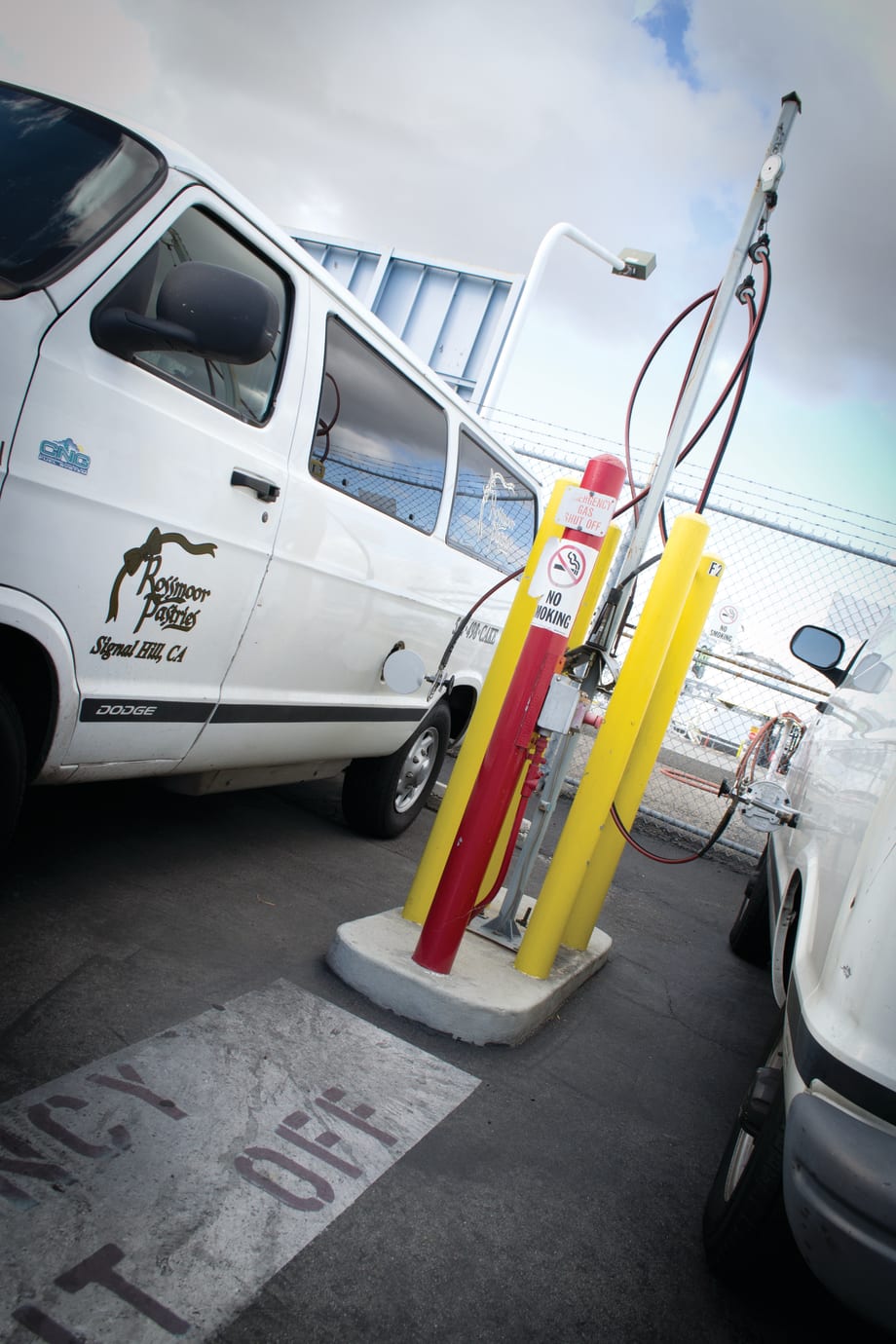
The Rossmoor fleet is fueled primarily from an onsite compressor.
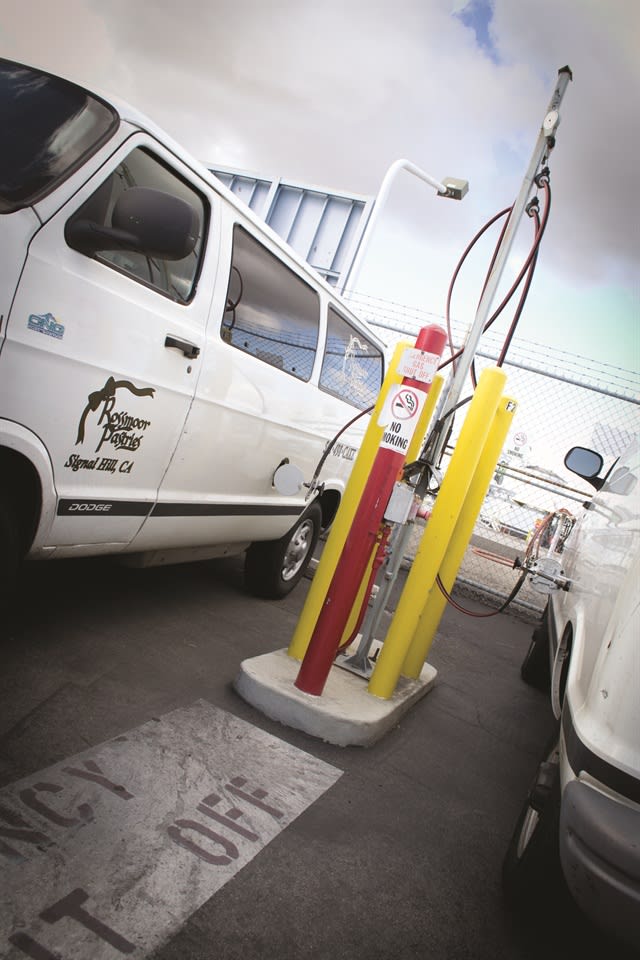
The Rossmoor fleet is fueled primarily from an onsite compressor.
Charles Feder of Rossmoor Pastries in Signal Hill, Calif., was a proponent of natural gas before it was fashionable.
In 2006, Feder went to a local auto auction looking to supplement his small fleet for his full-service bakery and wedding cake business. There he found a CNG (compressed natural gas)-powered Dodge van with only 14,000 miles for $4,300. Though he was unfamiliar with natural gas, for that price — along with substantial savings in the cost of fuel — he quickly got acquainted with the technology.
Feder used a funding grant from the South Coast Air Quality Management District to install his own CNG fueling station, which paid for itself in four months. In subsequent years, he bought more used CNG-powered vans and sedans until his entire fleet of 17 vehicles was running solely on the alternative fuel.
And then everyone else started catching on to CNG. “Since ’08, the opportunity to buy natural gas vehicles has changed,” he says. “It’s a hot market.”
CNG ON A BUDGET
Feder is aware of the plethora of new CNG-powered trucks and vans coming straight from the factory, but it doesn’t make sense to pay an $11,000 premium on top of the sticker shock of a new vehicle. Last year, Feder went back to the auction and found two older CNG vans with very low miles. For one of the vans, he figures he paid more than double what he would have paid pre-CNG boom.
Feder has a lot of life in his vans, though when he needs to cycle fleet he’s prepared to buy a used gasoline-powered van and convert it to CNG with an aftermarket tank for $7,500.
Feder uses Ken Porter Auctions, a local public auction, to buy his fleet vehicles as well as some bakery equipment. He prefers to buy vehicles from municipalities — knowing that he won’t get any bells and whistles but will get a fairly well-maintained unit.
And CNG still makes sense in fuel savings, as gasoline pump prices have gone from about $2.50 a gallon in 2006 to more than $4 recently. Feder pays only 92 cents per gas-gallon equivalent through his pipeline.
[PAGEBREAK]
A CLEANER NATURAL GAS
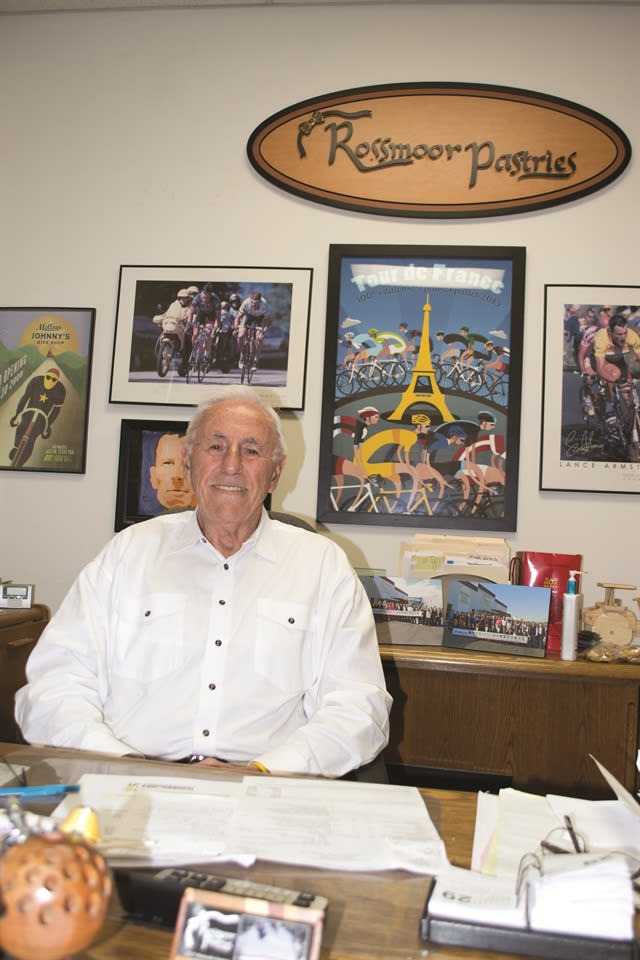
According to owner Charles Feder, the onsite compressor makes 15 gallons of CNG per hour and can fill eight vehicles at once.
The Rossmoor fleet uses 125 gallons per day, while its onsite compressors make 15 gallons per hour. If the demand is greater than current supply, the vans fuel up at retail pumps about 15% to 20% of the time.
When Feder’s fleet drivers fuel up on the road, they use natural gas provider Clean Energy’s retail fueling stations. This allows Feder to take advantage of a new development in CNG — a portion of the natural gas being piped into the Clean Energy stations is made from renewable natural gas (RNG).
Renewable Natural Gas is made from methane that comes from landfills, large farms and other waste streams. According to California Air Resources Board estimates, RNG enables up to a 90% reduction in carbon emissions when displacing diesel or gasoline. In comparison, regular natural gas is around 25% to 28% cleaner, according to Clean Energy.
Clean Energy became the first company to commercially distribute RNG as a vehicle fuel, branded as Redeem. RNG is produced at Clean Energy facilities in Texas and Michigan and injected into Clean Energy’s fueling infrastructure. Currently, Clean Energy is offering Redeem through its more than 35 stations in California and in other parts of the country by contract to its fleet vehicle customers.
At launch, Redeem will be offered at the same price as conventional natural gas, according to spokesperson Patric Rayburn.
“They [Clean Energy] are diminishing the amount of a resource that came out of the earth and trading it for something that came out of a landfill,” Feder says.
More Small Fleet


Developing Budget-Friendly Driver Safety Programs
From driver training and safety meetings to one-on-one coaching and incentive programs, several small fleets share how they have developed a safety culture with their drivers using low- to no-cost resources.
Read More →
Boosting Last-Mile Fleet Uptime, Safety, and Value with AI Vehicle Inspections
AI-powered inspections are transforming last-mile fleets by replacing manual checks with highly accurate automated scans that detect defects in seconds. By giving fleet operations visibility into the daily condition of their vehicles, you can identify trends over the vehicle’s lifecycle that enable improved procurement decisions, route management, driver training and accountability.
Read More →
Five Ways Seat Belts Help Prevent Injuries
There are five ways seat belts protect occupants from injuries, according to the Tennessee Department of Safety and Homeland Security.
Read More →
It’s here: The 2026 Fleet Technology Trends Report
What does AI mean for fleets? Get the answer — and learn other top tech trends.
Read More →
Small Fleets, Big Impact: How Independent Drivers Power Wreaths Across America
Check out how small fleets and independent drivers power Wreaths Across America each December and why their impact matters more than ever.
Read More →
VMS Survey Finds 65% of Small Fleet Managers Run Operations Alone
A new VMS survey shows small fleet managers are stretched thin, with most handling operations solo and eager to adopt digital tools for relief.
Read More →
Tips for Driving Safely on Halloween Night
This video features a reminder from the Connecticut Department of Transportation (DOT) and the Connecticut Police Chiefs Association, urging drivers to prioritize safety this Halloween.
Read More →
AI, Access, and Uptime: VMS’s Next Chapter with David Prusinski
VMS’s new Co-CEO, David Prusinski, shares how an AI-first approach will give small fleets and repair shops the tools to compete like big players.
Read More →
Fleet Managers Share Winter Prep Tips: It's Never Too Early!
Three fleets share best practices to prep vehicles for winter and prevent downtime when the cold sets in.
Read More →