Back to the Future: Commercial Fleet Insights from 2020's Leap Year
While 2024 may be another leap year, we are back on the road in a positive direction and can take the lessons our industry learned from this pandemic and not only survive but continue to thrive.
Armed with the insights gained from the challenges of 2020, fleet managers have come away stronger and more informed than ever before.
Photo: Work Truck
6 min to read
The year 2020 was a leap year that holds a special significance for the commercial fleet industry beyond the extra day added to our calendars every four years. The Chiefs won the big game and talk of a possible new virus was just starting to take hold. But it wasn't certain yet. I had just wrote a blog on "The Benefits of Traveling for Work."
Ad Loading...
Just barely three months into the year we had the beginning of the COVID-19 pandemic and nationwide shutdowns, which posed moer than a few "challenges" to the industry. But, despite the unexpected challenges, the industry demonstrated resilience and the wherewithal that kept the world moving.
Ad Loading...
Never before in the history of commercial fleet management was the value of the delivery truck better understood.
The Ongoing Impact of 2020 on Commercial Fleets
No one can deny that 2020 was a pivotal year for fleets, whether you operate cars, trucks, vans or specialty equipment. The pandemic disrupted supply chains, altered demand patterns, and tested the patience and creativity of commercial fleet managers.
The COVID-19 pandemic prompted a reevaluation of operational strategies, including the increase in remote work and last-mile delivery needs, and emphasized the importance of flexibility and contingency planning.
A few of the major changes that have happened since 2020:
A Disrupted Supply Chain: Work truck fleets experienced supply chain disruptions, affecting the availability of commercial vehicles and essential truck parts. This highlighted the need for diversified (and more) creative sourcing and improved and far more resilient supply chains.
Growth in Remote Fleet Management: The pandemic accelerated the adoption of remote fleet management technologies. Fleet managers embraced digital solutions to monitor vehicle health, track maintenance schedules, and optimize routes from the safety of their homes. Especially for larger commercial fleet operations with regional locations, the ability to work from home has opened the door to new and larger opportunities for many fleet managers.
Shift in Consumer Demand: Changes in consumer behavior influenced the demand for certain fleet services. Last-mile delivery services surged, while traditional sectors, including passenger transportation fleets, event and support service fleets, and executive transportation, faced temporary downturns. This shift prompted a reassessment of fleet compositions and service offerings.
Ongoing Driver and Technician Shortages. The pandemic exacerbated the already existing driver shortage in many regions and caused ongoing challenges as drivers had to be quarantined or stay home due to illnesses. As "essential workers," truck drivers played a role in maintaining the supply chain and health of a nation that was far from expected. And for much longer than anyone ever estimated. In addition, the demand for qualified technicians continues to outpace availability, which impacts vehicle servicing and maintenance and increases downtime.
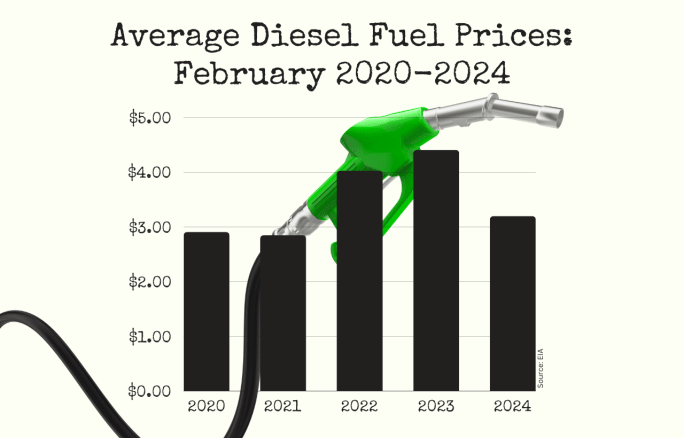
Elevated Diesel Fuel Prices. According to data from the U.S. Energy Information Administration (EIA), the average cost of a gallon of diesel in 2020 was $2.91. After hitting $4.41 in February of 2023, a gallon of diesel fuel costs around $3.20 in February of 2024. This major fluctuation in fuel costs wasn't easy for smaller fleets to handle with fuel costs skyrocketing much higher than anticipated budgets. Larger fleets were more often able to take advantage of bulk fuel discounts or contracted pricing but were still impacted by the elevated rates.
Ad Loading...
The average cost of a gallon of diesel in 2020 was $2.91. In 2024, according to the U.S. Energy Information Administration (EIA), a gallon of diesel fuel costs around $3.20.
Photo: Work Truck
Lessons Learned from the Last Leap Year
Commercial fleet managers faced several challenges in 2020, and valuable lessons emerged from these experiences. These lessons can serve as guiding principles for businesses in the years to come. As George Santayana once said, "Those who cannot remember the past are condemned to repeat it."
The pandemic accelerated the adoption of technology, and commercial fleet managers had to rely more on solutions such as telematics, route optimization, and contactless deliveries. These technologies improved fleet efficiency and enabled managers to maintain safe and healthy working environments for drivers and employees. The pandemic also highlighted the importance of mental health support for commercial fleet drivers.
Agility and adaptability are critical for successful fleet management, especially during a pandemic and its aftermath. Fleet managers realized they needed to build more agile systems that adjust to dynamic and changing market conditions. They looked for new business partners and tried to be more flexible in their operations. Fleets that previously single-sourced solutions started expanding to new suppliers and considering new trucks.
The pandemic accelerated technology adoption in commercial fleets, which is expected to continue in the coming years. Relying on telematics, predictive maintenance tools, and route optimization software enhances efficiency and reduces operational costs. Embracing data analytics provided previously hard-to-attain insights with fewer staff and budget cuts.
The pandemic also highlighted the need for redundancy measures to mitigate the impact of disruptions. Fleet managers realized the importance of collaborative partnerships with reliable suppliers to ensure the continuity of their operations.
Ad Loading...
Today's fleet managers have a much better understanding of what makes a resilient supply chain and how the supply chain impacts so much of the world's operations.
The pandemic accelerated technology adoption in commercial fleets, which is expected to continue in the coming years.
Photo: Work Truck
Commercial Fleet Vehicles and Operations Charge Back in 2024
Fast forward to 2024, and the current state of the work truck and commercial fleet industry is a testament to resilience and continuous improvement.
Armed with the insights gained from the challenges of 2020, fleet managers have come away stronger and more informed than ever before. Just a few of the changes and impacts since 2020 include:
Technological Advancements: The integration of advanced technologies, such as electric vehicles (EVs) and autonomous driving systems, has gained momentum. Fleets are exploring more sustainable options to reduce their environmental footprint and operating costs. This includes the adoption of electric and hybrid vehicle options. The advancement in sustainable fleet vehicles is also driven by regulatory pressures on vehicle manufacturers even further back than in 2020 (such as the Clean Air Act of 1970).
Data-Driven Decision-Making: The reliance on data for decision-making has become more pronounced. Preventive maintenance efforts have moved more toward predictive analytics. In addition, the growing use of artificial intelligence has empowered fleet managers to anticipate maintenance needs, optimize routes, and enhance fleet performance. In November 2022, ChatGPT was launched, further impacting general and fleet use of AI for more everyday needs.
Workforce Training and Development: Recognizing the evolving nature of the industry, fleet managers are investing in continuous training and development for their teams. This ensures that personnel have the skills needed to navigate an ever-changing landscape. It's also shown the value of virtual training options for remote teams, creating a boom in Zoom and Teams for video calls and conferences.
. Let's take the lessons our industry learned from this pandemic and survive and continue to thrive.
Photo: Work Truck
Looking Down the Road to 2028
While 2024 may be another leap year, and the Kansas City Chiefs may have won the big game against the San Francisco 49ers (again), Work Truck is feeling positive that we are back on the road and headed again in a positive direction. Let's take the lessons our industry learned from this pandemic and survive and continue to thrive.
Ad Loading...
Hopefully the leap back to 2020 wasn't too painful and serves as a reminder of the resilience of work truck fleets in the face of unprecedented challenges. The lessons learned during that pivotal year have fortified the industry against future uncertainties and propelled it into a new era of innovation and sustainability.
As work truck fleets charge forward into 2024, the ability to adapt, embrace technology, take risks, and foster resilient operations remains at the forefront of their success.
Fleet’s hidden heroes are often the ones keeping everything moving behind the scenes. September’s Shades of Fleet is looking for dispatchers, coordinators, parts specialists, and other support pros to share their stories.
During National Truck Driver Appreciation Week, Truck Centers, Inc. is offering customers a chance to fuel up for free. Customers at all Truck Centers locations can enter to win one of four $1,000 fuel cards from Sept. 14 - 18.
This week’s Truck Chat Cheat Sheet covers new fleet vehicle guides, practical AI use cases, U.S.-Canada truck production, mixed-energy strategy, and more.
What if some of the strongest candidates for fleet are already out there, but their experience is written in a language our industry does not always recognize?
Less than two weeks left! Commercial and corporate fleet managers are invited to share how their organizations handle company vehicle personal-use policies, charges, and driver eligibility.
Fleet resilience is about more than reacting to disruption. Lauren Fletcher talks with AP Fleet’s Alex Coveney about flexibility, planning, scaling, and what helps fleets adapt when business conditions shift.
The automotive industry talks constantly about its workforce shortage. But before we can recruit the next generation, we may need to do a better job giving kids a reason to care about automotive in the first place.
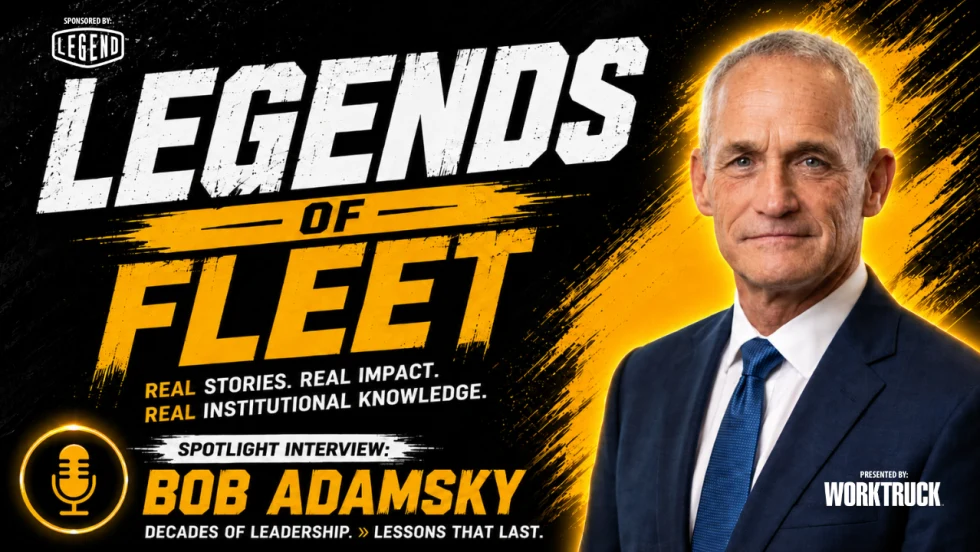
After more than 30 years in fleet, Arrow International’s Bob Adamsky has learned that the job is about far more than vehicles. He shares the lessons he wishes every fleet manager could learn a little earlier.