




6 Tips for Recruiting Millennials in Trucking
Regardless of their age or desired position, showing candidates respect, communicating openly, and being curious about their ideal workplace is always a good place to start.
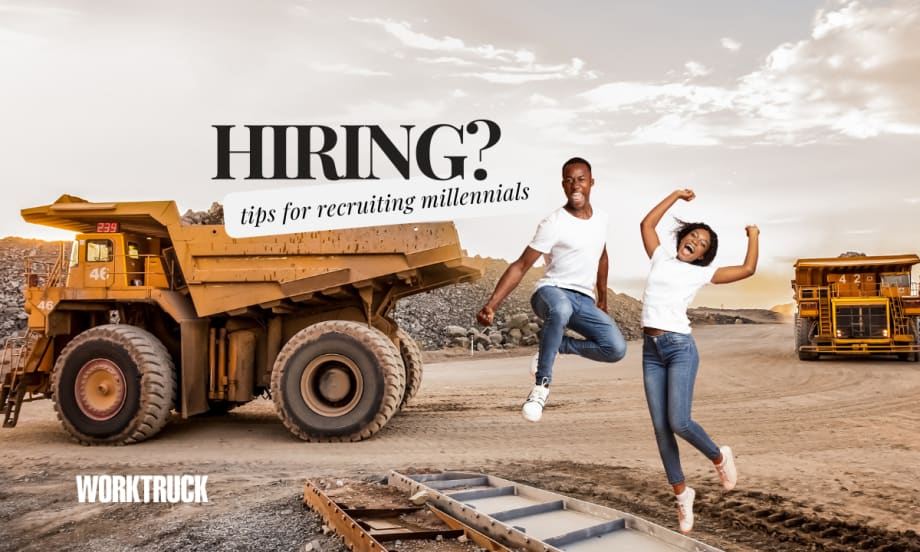
A survey from Payscale and Millennial Branding found that 72% of millennials place value on career advancement opportunities.
Photo: Work Truck
According to recent data, 31% of truck drivers were over 55 in 2021. As older drivers retire, millennials (between ages 28 and 43) and Gen Z (between ages 12 and 27) will need to take over, but trucking companies are struggling to reach this younger demographic.
As Acuity’s trucking consultant, I help businesses identify opportunities and improve operations. Many fleet managers have expressed concerns about finding qualified, dependable truck drivers.
Research into what millennials want from work reveals some common themes. Understanding and addressing these six items can help you successfully recruit younger drivers.
What Do Younger Truck Drivers Want?
1. They want fair compensation. According to Deloitte’s 2024 Gen Z and Millennial Survey, pay was the top reason members cited for leaving their previous organization. Keep in mind that you’re not just competing against other trucking companies; you’re competing against the entire gamut of jobs they can do outside the industry.
Ensuring you’re paying enough to attract talent is the first step, but compensation goes beyond a paycheck. Make sure employees know all the benefits you’re providing. When sending an offer, consider including a compensation packet detailing all the pay and benefits you provide. In a compensation packet, include health insurance costs, retirement savings programs, gym memberships, certification programs, and vacation time.
2. They want work-life balance. Often cited as a top concern, millennials have high expectations for how their work fits in with their life. To be a desired employer, reflect on your company’s approach to employee work-life balance, including these two considerations:
Flexibility: Home time has always been a top concern for truckers. Ask your drivers for a list of dates they want to be home. These could be for birthdays, kids’ recitals, appointments, or anything important to them. Work as hard as you can to get them home on those days. Keeping a spreadsheet of these dates can help you balance your drivers’ wants with meeting your customers’ expectations.
Family life: A decision to change jobs is often made by the whole family, not just the employee. Including employee families in benefits can help tip the scales in your favor. Consider hosting family days and other fun events that get their loved ones involved. These events can give back to your workers and show their families you appreciate their support.
3. They want career growth and advancement. A survey from Payscale and Millennial Branding found that 72% of millennials place value on career advancement opportunities. Understanding your employees’ goals can help keep them connected and engaged with your organization and reduce turnover.
Make sure employees know what advancement opportunities are available. Consider providing training that allows curious employees to learn about other parts of the business, like safety department roles, dispatch, and driver management. This training can offer insight into the day-to-day responsibilities of others in the organization and allow employees to learn about opportunities they may want to pursue.
Also consider internal talent when hiring and promoting. Promoting from within can show existing employees there is room to grow, learn additional skills, and change careers without changing employers.

According to a study by the Harris Poll, 58% of job seekers search for information about potential employers on social media, and almost half of millennials have applied for job opportunities on social media.
Photo: Work Truck
4. They want to do something that matters. Nearly 90% of millennials say having a sense of purpose affects their overall job satisfaction and well-being, according to Deloitte’s 2024 study.
Millennials want to work for organizations that positively impact society and benefit the greater good. In so many ways, trucking helps keep the world going. Without truckers, people don’t get what they need, halting projects and progress. Share this message in recruiting to help underscore the value truckers bring to society. Strengthen this purpose-driven message by sharing philanthropic causes and community organizations you support.
5. They want to work somewhere sustainable. According to Deloitte’s 2024 study, 59% of millennials surveyed say they have felt worried or anxious about climate change in the last month. That number goes up to 62% in Gen Z. Trucking companies can consider this an asset.
Environmental sustainability efforts in trucking have resulted in diesel engines burning cleaner and delivering better fuel economy while hauling more freight than in the past. Sharing sustainability details during the recruiting process can help connect millennial and Gen Z prospects to a career in trucking that they may not have previously considered.
6. They want to connect online. How people look for jobs has changed since the old days. While traditional newspaper ads may still play a role in your recruitment strategy, millennials increasingly rely on technology in their job searches.
According to a study by the Harris Poll, 58% of job seekers search for information about potential employers on social media, and almost half of millennials have applied for job opportunities on social media. Consider how your social media presence represents your company. List job openings on social media and third-party sites and be responsive to all digital inquiries.
While these themes apply to many job seekers, everyone is different. Regardless of their age or desired position, showing candidates respect, communicating openly, and being curious about their ideal workplace is always a good place to start.
About the Author: Cliff Johnson has more than 35 years of experience in the trucking industry as a driver and owner and is now the trucking business segment consultant at Acuity Insurance. This article was authored and edited according to WT editorial standards and style. Opinions expressed may not reflect that of WT.
More Operations
Family Ties Inside the Fleet Families Building Careers Across Generations
Three fleet families share what it really takes to work together, learn across generations, and keep business from following them home.
Read More →
Shades of Fleet Call for Voices: Fleet's Hidden Heroes
Fleet’s hidden heroes are often the ones keeping everything moving behind the scenes. September’s Shades of Fleet is looking for dispatchers, coordinators, parts specialists, and other support pros to share their stories.
Read More →
Truck Centers, Inc. Celebrates National Truck Driver Appreciation Week with $1,000 Fuel Card Giveaways
During National Truck Driver Appreciation Week, Truck Centers, Inc. is offering customers a chance to fuel up for free. Customers at all Truck Centers locations can enter to win one of four $1,000 fuel cards from Sept. 14 - 18.
Read More →
Fleet Guides, AI Time-Savers, Truck Tariffs & Fuel Strategy Lead the News
This week’s Truck Chat Cheat Sheet covers new fleet vehicle guides, practical AI use cases, U.S.-Canada truck production, mixed-energy strategy, and more.
Read More →
What Fleet Employers Are Missing When Hiring Veterans
What if some of the strongest candidates for fleet are already out there, but their experience is written in a language our industry does not always recognize?
Read More →
Automotive Fleet Opens 2026 Personal Use Survey for Commercial Fleet Managers
Less than two weeks left! Commercial and corporate fleet managers are invited to share how their organizations handle company vehicle personal-use policies, charges, and driver eligibility.
Read More →
What Resilient Fleets Do Differently When Conditions Change
Fleet resilience is about more than reacting to disruption. Lauren Fletcher talks with AP Fleet’s Alex Coveney about flexibility, planning, scaling, and what helps fleets adapt when business conditions shift.
Read More →
If We Want the Next Generation in Automotive, We Have to Give Them a Reason to Care
The automotive industry talks constantly about its workforce shortage. But before we can recruit the next generation, we may need to do a better job giving kids a reason to care about automotive in the first place.
Read More →
Ram ProMaster City Under $40K, Truck Tariffs, and AI Maintenance Lead the News
A sub-$40K commercial van, tariff questions, AI-powered maintenance, and a new EV production strategy headline this week’s Truck Chat Cheat Sheet.
Read More →
Bob Adamsky Shares the Fleet Lessons You Usually Learn the Hard Way
After more than 30 years in fleet, Arrow International’s Bob Adamsky has learned that the job is about far more than vehicles. He shares the lessons he wishes every fleet manager could learn a little earlier.
Read More →