




2019-MY Buying Inclinations Driven by Strong Economy
The majority of fleets are reporting that their acquisition strategies are being stimulated by solid organic business growth, with most forecasting an increase or continuation of the same order volume in model-year 2019.


In many respects, the buying dynamics of MY-2019 are very similar to those experienced in MY-2018, but appear stronger due to the more robust economic conditions.
Graphic courtesy of Getty Images.
An AF assessment of the 2019 model-year indicates it will be a strong asset acquisition year for the commercial fleet segment based on a survey of the buying inclinations of corporate fleets. The survey was conducted by Automotive Fleet in late May 2018.
The majority of commercial fleet managers responding to AF’s annual buying inclination survey reported that their new-vehicle ordering volume will be either larger or comparable to the prior model-year. A smaller number of companies report they will decrease the volume of their MY-2019 fleet orders, primarily due to a larger than normal fleet buy in MY-2018 and to a lesser degree corporate reorganizations and downsizing pressures.

Jim Bigelow, senior director, enterprise fleet for Cox Enterprises
The AF forecast is that order volume for model-year 2019 will be similar or slightly greater to what was acquired in the 2018-MY. In many respects, the buying dynamics of the 2019-MY are very similar to those experienced in the 2018-MY, but appear stronger due to the more robust economic conditions. Bullish economic forecasts call for ongoing increased business activity through late calendar-year 2018 and into early 2019, which offers the potential of further order increases later in the second half of the model-year.
The top factors influencing the types of vehicles to be acquired in the 2019 model-year are similar to those that drove 2018 vehicle selections. These include corporate initiatives to acquire the most fuel-efficient models available for the specific fleet application and the incorporation of additional safety features and equipment options into company-provided vehicles.
Selecting models with higher mpg than the predecessor model continues to drive many acquisition strategies. Some fleets have elected to expand on this fleet initiative by acquiring hybrid vehicles, such as Cox Enterprises.

[EMPTY CREDIT]
“All of the business-use sedans that go into service are now hybrids,” said Jim Bigelow, senior director, enterprise fleet for Cox Enterprises. “We have been acquiring 90-plus hybrids per year for the last three years.”
Similarly, most fleet will be spec’ing greater safety options in their 2019-MY fleet buys. The availability and composition of safety packages will have a direct bearing on what will be ordered for 2019-MY.
“We will acquire additional safety features, such as collision avoidance and anti-rollover,” said Gregg Hodgdon CAFM, national fleet manager for Restaurant Technologies.
OEMs are responding to fleet manager concerns by migrating more safety technology that previously was only available on upscale models to vehicles typically ordered by fleets. However, getting advanced safety technology in work trucks and vans continues to be difficult, since they are often ordered with the lowest base trim level package.

David Anderson, senior fleet & travel manager for Alfasigma USA
Another ongoing trend that will continue into MY-2019 is the decrease in sedan sales to commercial fleets as companies increasingly look to different vehicle segments when developing fleet selectors. “We used to offer two sedans and two crossover vehicles on our selector. But we may drop one of the sedans since our employees rarely choose a sedan,” said David Anderson, senior fleet & travel manager for Alfasigma USA.
Fleet Order Volume to Increase
The percentage of companies responding to the AF survey looking to increase fleet orders in the 2019 model-year was comparable to those reporting likewise in MY-2018. The primary reasons cited for the increased order volume are to accommodate business growth and to replace aging fleet inventory.
“As a whole, our plan is to increase vehicle acquisition (leasing and purchase) by 20%,” said Michael Gates, fleet department manager for Nutrien. “There are numerous reasons why Nutrien will be purchasing more vehicles. We are in a continuous expansion mode with 20-30 company acquisitions annually. Plus, we are adding new employees and continually advancing the quality of the fleet.”
All of the surveyed companies forecasting increased order volume cited improved business conditions due to the strong national economy, which is prompting heightened acquisition considerations across many industry segments.
Related: Trends in Vehicle Capital Costs
“The economy is currently strong. My company is doing well and growing. When this happens, my fleet grows too. I expect to buy more MY-2019 vehicles than last year,” said Tom Krause, purchasing and fleet manager at West Bend Mutual Insurance.
This sentiment was similarly expressed by AutoZone. “Our business is continually growing and with that growth we will purchase additional vehicles. We will order more than we did last year,” said Clay Gaudet, fleet manager for AutoZone.

[EMPTY CREDIT]
The fleet segment where this was a recurrent reply was the energy sector. After a long period of depressed fleet purchases, the energy sector continues to ramp up its orders in 2019. “We will be acquiring more vehicles due to increased business,” said Brenda Davis, strategic sourcing category manager, BHGE Products & Technology Supply Chain for Baker Hughes, a GE company.
Other key segments of the economy that are larger purchasers of fleet vehicles are likewise experiencing an increase in business activity. One example is new-construction market in both the commercial and residential sectors. All industry indicators, such as the issuance of building permits and starts for new-home and commercial construction are up, which bodes well for commercial sales of pickups and full-size vans, which are the primary vehicles acquired by the construction companies, independent contractors, and subcontractors.
Another beneficiary of the increase in new commercial construction is the additional demand for elevators, which is positively impacting elevator manufacturers, such as OTIS, thyssenkrupp, Kone, and Schindler, all of which operate large fleets and place sizeable annual vehicle orders.
Likewise, some pharmaceuticals are increasing their fleet buys as a result of corporate acquisitions or to accommodate business growth by providing company vehicles to new hires to market new drug products.

Gregg Hodgdon, CAFM, national fleet manager for Restaurant Technologies
In addition to business growth, another recurring theme by many fleets is to replace aging units that have been kept in service for longer-than-normal mileage guidelines. For instance, one of the key reasons for the forecasted increase in order volume in the oil and energy sector is due to pent-up demand caused by low order volumes in the preceding model-years.
“We will purchase more units and for us this is a direct result of having ordered so few units in the past year as a result of our industry’s downturn. Since business is coming back, we are now having to replace old units. We are hiring again so net additions are slowly coming in as well,” said Kimberly Fisher, global manager travel & fleet at National Oilwell Varco.
Most Purchases will Remain Unchanged at Many Fleets
The strong economic indicators are causing the overwhelming majority of the surveyed companies to keep acquisition volumes at that same level as the prior model-year, which was a strong year for commercial fleet orders.

Kimberly Fisher, global manager travel & fleet at National Oilwell Varco
“We will have the same number of vehicles replaced as we do every year 600 to 800,” said Phil Schreiber, fleet manager North America for OTIS Service Center.
This sentiment was echoed by one surveyed company after another.
For example:
“We should be replacing around the same number,” said Bruce Ottogalli, transportation manager for Suez Water North America.
“We will be ordering around the same amount of vehicles in 2019 as MY-2018,” said Brett Switzky, fleet, trucking & record retention manager for American Family Mutual Insurance Co.
“We will be acquiring about the same number of vehicle for MY-2019. However, we are still getting very good resale value on minivans, so we are looking into short-term leases which would increase our purchases,” said Bob Mossing, senior manager, fleet administration for STERIS Corp.

Brenda Davis, strategic sourcing category manager, BHGE Products & Technology Supply Chain for Baker Hughes, a GE company
While some companies will change OEM sourcing in MY-2019, many companies are in multi-year purchasing agreements with specific OEMs, which precludes shifts in vehicle sourcing.
Related: Top 13 Trends in Commercial Fleet Management
“We are in the last year of a three-year contract with our current OEM and therefore there will not be any change,” said Schreiber of OTIS Service Center.
This was echoed by many other fleets, such as Shire Pharmaceuticals. “We have multi-year deals with our current OEMs and will make no changes this year,” said Paula Antonelli, fleet manager, global procurement for Shire Pharmaceuticals.
Another factor influencing OEM sourcing, from the perspective of smaller-sized fleets, is to aggregate order volume with a single OEM to be eligible for volume discount incentives. “We will remain with only one OEM since we don’t purchase enough vehicles annually to earn CPA/CAP/VIP incentives from the Big Three if we split the business with another OEM,” said a fleet manager who wished to be anonymous.

Phil Schreiber, fleet manager North America for OTIS Service Center
Factors Putting Downward Pressure on 2019-MY Fleet Orders
One reason for AF’s optimistic forecast was a strong decline in the number of fleets reporting that their order volume will be lower in 2019 compared to 2018. For those fleets planning to reduce new-vehicle orders for the 2019 model-year, various reasons were given. For instance, some fleets had larger than normal fleet buys in 2018, such as Sprint. “I anticipate purchasing less vehicles, around 500. Last year was a large purchasing year,” said Bret Watson, CAFM, manager corporate fleet for Sprint.
Corporate reorganizations are another factor exerting downward pressure on 2019 fleet buy at some companies.
Also, initiatives to increase fleet utilization influence new-vehicle purchasing volumes since it often results in fewer vehicles being ordered.

Peter Belloli, CAFM, associate manager, sourcing – fleet for USA and Canada for MilliporeSigma
Another trend is to consolidate management of the company-provided fleet and employees operating their personal vehicles for company business under the FAVR (Fixed and Variable Reimbursement) program. “We successfully integrated our two distinct fleets – one that is leased vehicles and the other that is FAVR vehicles,” said Peter Belloli, CAFM, associate manager, sourcing – fleet for USA and Canada for MilliporeSigma. “We now offer both choices to drivers.”
Factors Influencing Model and Engine Selection
Most fleets do not anticipate changes to vehicle types, as choices of vehicle segment types are driven by business requirements. However, there is a growing number of fleets considering and choosing crossovers instead of mid-size sedans, which is causing a shift in the type of vehicles found on corporate selectors.
Today, there is a growing acceptance of crossovers as a fleet vehicle. Once crossovers were considered an upgrade; however, today, these vehicles are now in fleets in representative ratios as the retail market, which promises to continue with 2019-MY ordering.

Bob Mossing, senior manager, fleet administration for STERIS Corp.
Other factors stimulating fleet acquisition of crossovers are ergonomics, an all-wheel-drive option, and increased cargo-carrying capabilities. More commercial fleets are migrating from sedans to CUVs and SUVs for the same reasons that retail customers have migrated toward utility vehicles. The ingress and egress is easier and there is more cargo room for equipment, products, and samples. The interiors are also roomier for those fleets that transport personnel.
Another very important feature of utilities is all-wheel drive. Fleets in Northern states with significant snowfall select crossovers because of their capability in inclement weather and ground clearance that comes with these vehicles.
However, despite the growth of crossovers in fleets, some companies prefer sedans as their company vehicles. Following the April 2018 announcement from Ford that it will discontinue several sedan models, some fleets said they are investigating dual sourcing to acquire alternative sedans.
“We will probably be forced to look at other OEMs based on Ford’s decision to stop building some sedans. We will need to find a replacement for the Focus sedan,” said one fleet manager who wished to remain anonymous.

Paula Antonelli, fleet manager, global procurement for Shire Pharmaceuticals
Fleet managers are still evaluating the impact of Ford’s announcement “We will evaluate the landscape and see if we should switch to all crossover vehicles or stay with cars as long as they are in production,” said Schreiber of OTIS.
In another vehicle segment, the limited number of minivan models continues to be a concern for fleets, especially those that have Buy American acquisition policies. “There isn’t exactly a plethora of American passenger minivans from which to choose,” said Krause of West Bend Mutual Insurance Co.
The growth in Eurovan popularity with fleets continues to grow. “We will replace the standard-size E-150/E-250 to a mid-roof T-150 for ergonomic reasons,” said Ottogalli of Suez Water North America.
Offering another perspective on minivans is STERIS Corp. “As we need minivans, we will continue with Chrysler. We are considering Ford should the new Transit come in AWD or four-wheel drive for our commercial needs,” said Mossing of STERIS Corp. “We will continue with minivans as our primary vehicle as it meets our personal use, as well as business-use needs.”

Bruce Ottogalli, transportation manager for Suez Water North America
The discontinuation of the Chevrolet City Express is also impacting fleets. “We are forced to change vehicles since the City Express will not be produced for the 2019 model-year,” said one fleet manager who wished to remain anonymous.
In addition, there is a continuation of the trend to downsize to a smaller class of vehicle (or different vehicle segment). The decision to downsize to smaller vehicle is typically determined by TCO and fleet application. In addition, fleets are reducing engine displacement size from V-6 to four-cylinder engines with turbos.
Many downsizing initiatives are connected to attaining corporate sustainability goals as is the case with AGCO, based in Duluth, Ga., which designs, manufactures and distributes agricultural equipment. “We have reduced engines sizes in our vehicle fleet to reduce emissions,” said Ralf Wessel, manager, global security, global fleet and corporate facilities.
Related: 2018-MY Buying Inclinations Point to a Strong Model-Year
Originally posted on Automotive Fleet
More Operations
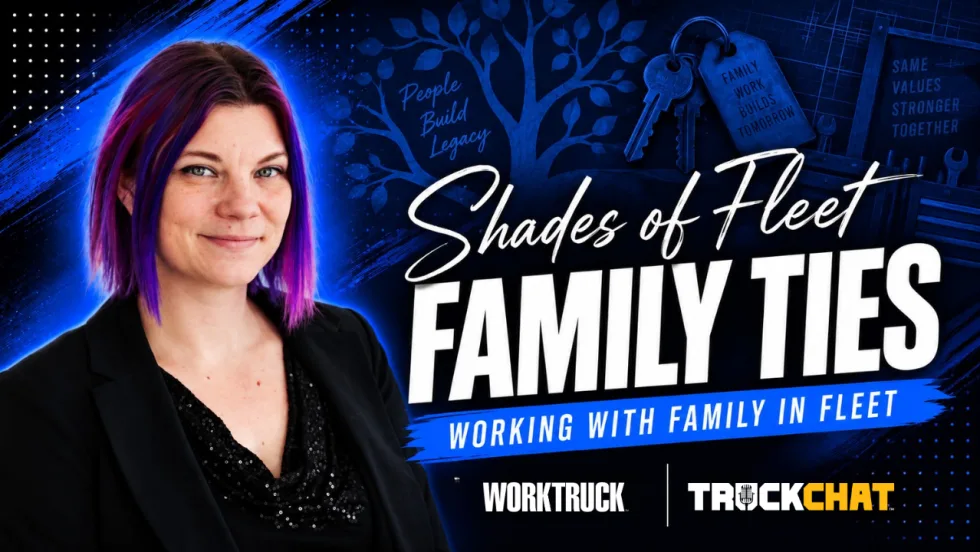
Family Ties Inside the Fleet Families Building Careers Across Generations
Three fleet families share what it really takes to work together, learn across generations, and keep business from following them home.
Read More →
Shades of Fleet Call for Voices: Fleet's Hidden Heroes
Fleet’s hidden heroes are often the ones keeping everything moving behind the scenes. September’s Shades of Fleet is looking for dispatchers, coordinators, parts specialists, and other support pros to share their stories.
Read More →
Truck Centers, Inc. Celebrates National Truck Driver Appreciation Week with $1,000 Fuel Card Giveaways
During National Truck Driver Appreciation Week, Truck Centers, Inc. is offering customers a chance to fuel up for free. Customers at all Truck Centers locations can enter to win one of four $1,000 fuel cards from Sept. 14 - 18.
Read More →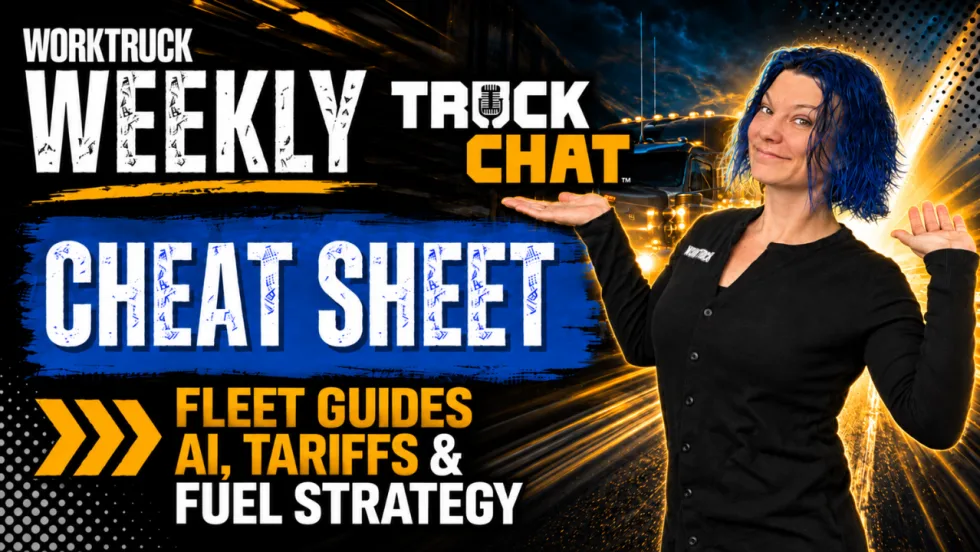
Fleet Guides, AI Time-Savers, Truck Tariffs & Fuel Strategy Lead the News
This week’s Truck Chat Cheat Sheet covers new fleet vehicle guides, practical AI use cases, U.S.-Canada truck production, mixed-energy strategy, and more.
Read More →
What Fleet Employers Are Missing When Hiring Veterans
What if some of the strongest candidates for fleet are already out there, but their experience is written in a language our industry does not always recognize?
Read More →
Automotive Fleet Opens 2026 Personal Use Survey for Commercial Fleet Managers
Less than two weeks left! Commercial and corporate fleet managers are invited to share how their organizations handle company vehicle personal-use policies, charges, and driver eligibility.
Read More →
What Resilient Fleets Do Differently When Conditions Change
Fleet resilience is about more than reacting to disruption. Lauren Fletcher talks with AP Fleet’s Alex Coveney about flexibility, planning, scaling, and what helps fleets adapt when business conditions shift.
Read More →
If We Want the Next Generation in Automotive, We Have to Give Them a Reason to Care
The automotive industry talks constantly about its workforce shortage. But before we can recruit the next generation, we may need to do a better job giving kids a reason to care about automotive in the first place.
Read More →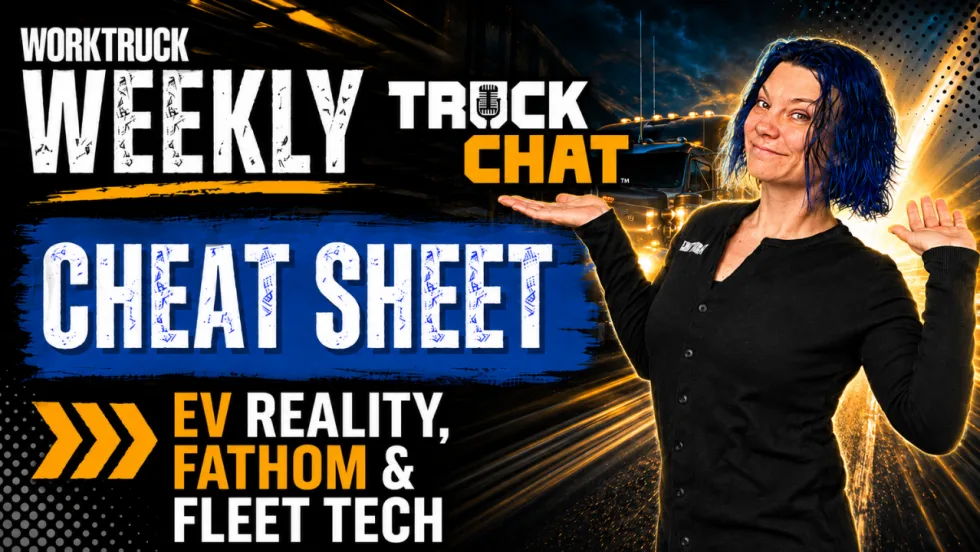
Ram ProMaster City Under $40K, Truck Tariffs, and AI Maintenance Lead the News
A sub-$40K commercial van, tariff questions, AI-powered maintenance, and a new EV production strategy headline this week’s Truck Chat Cheat Sheet.
Read More →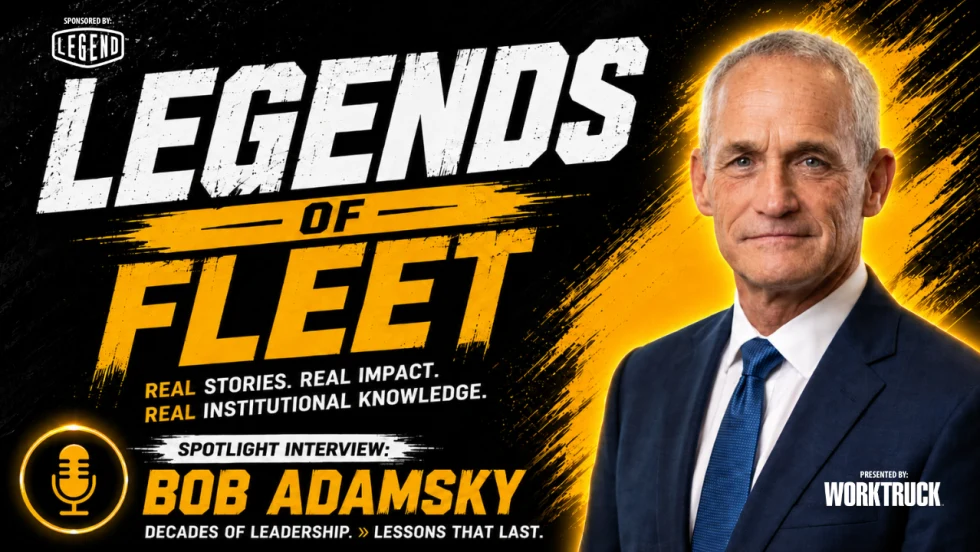
Bob Adamsky Shares the Fleet Lessons You Usually Learn the Hard Way
After more than 30 years in fleet, Arrow International’s Bob Adamsky has learned that the job is about far more than vehicles. He shares the lessons he wishes every fleet manager could learn a little earlier.
Read More →