




Top 5 Questions on Driver Safety Performance Histories
The safety performance history records request (SPHRR) offers a glimpse into an applicant’s possible unsafe behaviors while at another motor carrier. After 15 years, it still generates several questions.


Although FMCSA provides direction in many aspects of the SPHRR, it offers minimal instructions on how to use the information you receive. Only one category of data requires action on your part: DOT drug and alcohol testing.
Photo: Pexels
The safety performance history records request (SPHRR) offers a glimpse into an applicant’s possible unsafe behaviors while at another motor carrier. Although it has been a part of the new hire process for more than 15 years, it still generates several questions from safety professionals.
1. Which Drivers Are Subject to the Inquiry?
The SPHRR applies to drivers operating a commercial motor vehicle (CMV) in interstate commerce that:
Weighs or has a weight rating of 10,001 pounds or more, whichever is greater, including attached trailers;
Is designed to transport more than eight passengers including the driver for compensation;
Is designed to transport more than 16 passengers including the driver, regardless of compensation; or,
Is transporting placardable quantities of hazardous materials.
2. What Questions do we Ask?
The SPHRR tackles three categories of information:
General employment verification. The topics are up to the discretion of the motor carrier, but typically include dates of employment, job description, miles traveled, and vehicles operated. The request also verifies the person’s identity through a driver’s license or social security number.
Department of Transportation (DOT) crashes within the past three years. Events involving the driver that appear on the accident register must be shared with new employers. Former employers may provide minor incidents that do not qualify as DOT accidents but are tracked.
DOT drug and alcohol history. Former employers must answer questions about DOT violations occurring within the past three years and/or completed steps in the return-to-duty process.
The drug and alcohol history questions will be removed as of Jan. 6, 2023, when the Commercial Driver’s License Drug and Alcohol Clearinghouse is the sole means of learning of Part 382 testing violations. The other elements of the SPHRR will remain intact.
3. Who Do We Contact?
The query is sent to all former DOT-regulated employers within the past three years, including any current employer. If the former employer is subject to the Federal Motor Carrier Safety Regulations, it is recommended that you send the investigation regardless of position.
An applicant may have had a different job title (e.g., mechanic, dispatcher) but operated a CMV from time to time, making him or her a driver. The SPHRR is not sent to non-regulated employers. The questions posed are not relevant, nor would they make sense to them.
4. How Soon Must we Request the SPHRR?
Within 30 days of hire, the new employer must have either a returned query or more than one documented attempt to obtain. The SPHRRs or documented attempts are kept for the duration of employment plus three years.
5. What if No One Responds?
A former DOT-regulated employer must respond within 30 days of receiving your request. The former employer or its agent can charge a fee to assemble the information — but cannot withhold it pending payment.
If the former employer fails to respond, the new employer may (but is not required to) report it to the Federal Motor Carrier Safety Administration (FMCSA) through the agency’s complaint website. FMCSA takes it from there if it wishes to investigate.
One Final Thought
Although FMCSA provides direction in many aspects of the SPHRR, it offers minimal instructions on how to use the information you receive. Only one category of data requires action on your part: DOT drug and alcohol testing.
If you learn of an unresolved drug and alcohol violation, you cannot use the driver in a safety-sensitive function until you receive documentation of completed return-to-duty steps. If steps remain, you are required to continue with them.
All other information you learn from the investigation would be compared against your company policy and could be used in the hiring decision.
More Operations
Family Ties Inside the Fleet Families Building Careers Across Generations
Three fleet families share what it really takes to work together, learn across generations, and keep business from following them home.
Read More →
Shades of Fleet Call for Voices: Fleet's Hidden Heroes
Fleet’s hidden heroes are often the ones keeping everything moving behind the scenes. September’s Shades of Fleet is looking for dispatchers, coordinators, parts specialists, and other support pros to share their stories.
Read More →
Truck Centers, Inc. Celebrates National Truck Driver Appreciation Week with $1,000 Fuel Card Giveaways
During National Truck Driver Appreciation Week, Truck Centers, Inc. is offering customers a chance to fuel up for free. Customers at all Truck Centers locations can enter to win one of four $1,000 fuel cards from Sept. 14 - 18.
Read More →
Fleet Guides, AI Time-Savers, Truck Tariffs & Fuel Strategy Lead the News
This week’s Truck Chat Cheat Sheet covers new fleet vehicle guides, practical AI use cases, U.S.-Canada truck production, mixed-energy strategy, and more.
Read More →
What Fleet Employers Are Missing When Hiring Veterans
What if some of the strongest candidates for fleet are already out there, but their experience is written in a language our industry does not always recognize?
Read More →
Automotive Fleet Opens 2026 Personal Use Survey for Commercial Fleet Managers
Less than two weeks left! Commercial and corporate fleet managers are invited to share how their organizations handle company vehicle personal-use policies, charges, and driver eligibility.
Read More →
What Resilient Fleets Do Differently When Conditions Change
Fleet resilience is about more than reacting to disruption. Lauren Fletcher talks with AP Fleet’s Alex Coveney about flexibility, planning, scaling, and what helps fleets adapt when business conditions shift.
Read More →
If We Want the Next Generation in Automotive, We Have to Give Them a Reason to Care
The automotive industry talks constantly about its workforce shortage. But before we can recruit the next generation, we may need to do a better job giving kids a reason to care about automotive in the first place.
Read More →
Ram ProMaster City Under $40K, Truck Tariffs, and AI Maintenance Lead the News
A sub-$40K commercial van, tariff questions, AI-powered maintenance, and a new EV production strategy headline this week’s Truck Chat Cheat Sheet.
Read More →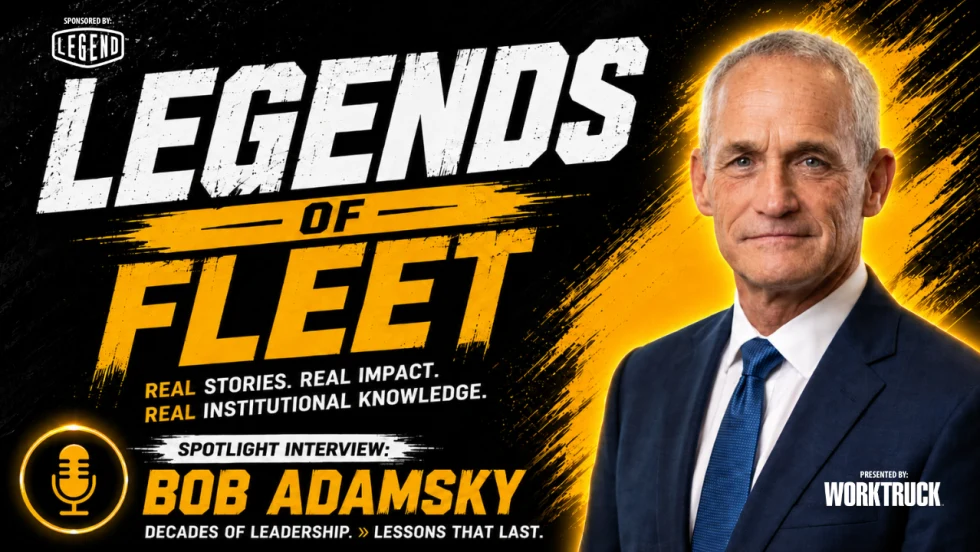
Bob Adamsky Shares the Fleet Lessons You Usually Learn the Hard Way
After more than 30 years in fleet, Arrow International’s Bob Adamsky has learned that the job is about far more than vehicles. He shares the lessons he wishes every fleet manager could learn a little earlier.
Read More →