





Related: 2020 Ford Explorer: 5 Fleet Features
Ford's 2020 Explorer: Enhanced Fleet Capabilities
Redesigned from the ground up, the 2020 Explorer’s RWD architecture offers improved on- and off-road abilities and increased towing capacity. When powered by the 3.0L EcoBoost engine, it is the most powerful Explorer ever.
July 19, 2019

All-new Explorer Hybrid is a no-compromise Ford hybrid SUV designed to offer performance and capability in a fuel-efficient package; 3.3L hybrid powertrain produces 318 combined system horsepower and is projected to return an EPA-estimated range of more than 500 miles between gas station fill-up.
Photo courtesy of Ford.
4 min to read
The all-new 2020 Ford Explorer features lighter, leaner, and stronger construction, its broadest model lineup ever, more powerful and efficient EcoBoost engines, and plenty of new driver-assist technologies.
The base, XLT, Limited, and Hybrid models are available with rear-wheel drive or all-wheel drive. The Explorer ST and Platinum come standard with all-wheel drive.
Redesigned from the ground up, the all-new Explorer’s rear-wheel-drive architecture enables improved on- and off-road capability and 600 pounds more in maximum towing capacity when properly equipped. It is available with a 3.0L EcoBoost engine, which makes it the most powerful Explorer ever.
The new rear-wheel-drive architecture enables bumper-to-bumper improvements that include increased capabilities and the best-ever passenger accommodations for an Explorer model. Also, with the front axle pushed further forward, the 2020 Explorer sits astride a 6.3-inch longer wheelbase although overall length is about the same.
According to Ford, the rear-wheel-drive architecture also enables more towing capability when properly equipped, regardless of engine. Vehicles equipped with a 3.0L EcoBoost can tow up to 5,600 pounds, a 12% increase over outgoing models with 3.5L EcoBoost. New models outfitted with a 2.3L EcoBoost and Class III Trailer Tow Package can tow up to 5,300 pounds, versus the 3,000 pounds by the preceding similarly equipped Explorer.
In addition, the 2020 Explorer lineup includes a first-ever Hybrid model. Powered by a 3.3L hybrid powertrain, it produces 318 combined system horsepower and is projected to return an EPA-estimated range of more than 500 miles between gas station fill-up.
Another all-new feature available on the 2020 Explorer is a Terrain Management System, which consists of a series of drive modes that are driver selectable via a knob on the center console that provides improved off-road capabilities from an intelligent four-wheel drive system. With rear-wheel-drive Explorer models, there are six modes: Normal, Slippery, Trail, Sport, Tow/Haul, and Eco. All-wheel-drive versions add a setting for Deep Snow/Sand. The modes can alter accelerator sensitivity, transmission shifting, steering effort, suspension firmness, traction-control programming, and all-wheel-drive torque management.
Cargo carrying for the 2020 Explorer has also been improved. Available PowerFold third-row seats let drivers create a flat-floor cargo area that stretches out to offer 87.8 cubic feet of cargo space – wide enough to fit standard four-foot building materials, depending on seating configuration.
Powertrain Offerings
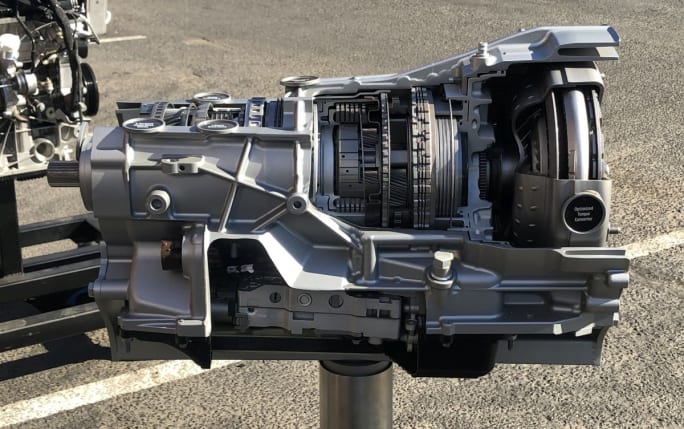
Under the hood, the new Explorer switches from a naturally aspirated V-6 to new 2.3L turbocharged four-cylinder engine as its base engine, offering more power and torque. There’s also a turbocharged V-6, plus a new hybrid powertrain. All three engines use a 10-speed automatic transmission, up from the previous 6-speed.
Photo by Mike Antich.
Under the hood, the new Explorer switches from a naturally aspirated V-6 to new 2.3L turbocharged four-cylinder engine as its base engine, offering more power and torque. There’s also a 3.0L turbocharged V-6, plus a new 3.3L hybrid powertrain. All three engines use a 10-speed automatic transmission, up from the previous 6-speed.
The 3.0L turbocharged EcoBoost V-6 is projected to produce 365 horsepower and 380 lb.-ft. of torque, making this the most powerful Explorer ever.
Driver-Assist Technologies
Building upon Ford’s push to bring more driver-assist technology to market, the all-new Explorer introduces available Active Park Assist 2.0, standard on Explorer Platinum, which allows the driver to park in a parallel or perpendicular spot with a touch of a button without having to work the steering wheel, gear shifter, gas pedal, or brake pedal. Available reverse brake assist, also standard on Platinum, uses radar and ultrasonic sensors to detect an object in the Explorer’s path, and can apply the brakes automatically to avoid an imminent collision when the vehicle is backing up at a low speed.
The Explorer comes standard with Ford Co-Pilot360, a suite of driver-assist technologies including:
Pre-Collision Assist with Automatic Emergency Braking, which includes Pedestrian Detection, Forward Collision Warning and Dynamic Brake Support
Blind Spot Information System with Cross-Traffic Alert
Lane-Keeping System
Rearview camera with built-in lens cleaner
Auto headlamps with auto high-beams
Other available Ford Co-Pilot360 technologies include Evasive Steering Assist, which provides steering support to help avoid a collision; and Post-Impact Braking provides braking after a collision to lessen injury and damage caused by a secondary crash event.
The Explorer also is available with Ford’s all-new Intelligent Adaptive Cruise Control with Speed Sign Recognition. In addition to automatically slowing when traffic ahead slows and helping keep the vehicle centered in its lane, the system uses cameras to read speed signs and, combined with the available navigation system, adjusts cruise control settings accordingly.
Passengers in all three rows can access FordPass Connect, a standard feature that serves up 4G LTE Wi-Fi for up to 10 mobile devices with a compatible wireless subscription service. FordPass Connect gives drivers remote access to their Explorer, allowing them to use their smartphone to lock, unlock, locate and start the vehicle, as well as monitor key vehicle diagnostics.
Also, the Explorer features an available 10.1-inch touch screen mounted in portrait configuration on the center stack. Navigation maps can fill the entire screen for easy viewing, or split the space with audio information.
A wireless charging pad is available that allows customers to recharge compatible mobile devices, and up to four USB ports, including new type-C outlets, charge next-generation mobile devices. Up to three 12-volt outlets and a 110-volt outlet are also available. Drivers also can use their smartphone to unlock and start the car, using the FordPass Connect app.
Subscribe to Our Newsletter
More Vehicle Research
2026 Ram 1500 Tradesman Put to a Real-World Fleet Test
A few days behind the wheel of a 2026 Ram 1500 Tradesman turned into a test of visibility, parking, work-ready features, and even severe-weather driving.
Read More →
Isuzu N-Series Gas Fleet Guide: Specs, Capability and 2027 Model-Year Updates
Explore Isuzu Truck North America’s N-Series Gas fleet specs, engine performance, GVWR and payload capability, configurations, chassis dimensions, work-focused features, and 2027 model-year information.
Read More →
Chevrolet Silverado 1500 Fleet Guide Specs Capability and 2027 Model-Year Updates
The next-generation 2027 Chevrolet Silverado 1500 brings new V-8 engines, updated technology, expanded safety features, and a fleet-focused Work Truck. Here’s what commercial fleets need to know so far.
Read More →
Ram ProMaster City Fleet Guide Specs Cargo Capacity and 2027 Updates
Work Truck’s Ram ProMaster City Fleet Guide tracks the latest specifications, cargo capability, configurations, fleet technology, pricing, and model-year updates for Ram’s mid-size commercial van.
Read More →
Ford F-150 Fleet Guide Specs Capability and 2026 Model-Year Updates
Explore 2026 Ford F-150 fleet specs, engines, towing and payload capability, configurations, work features, technology, and model-year updates.
Read More →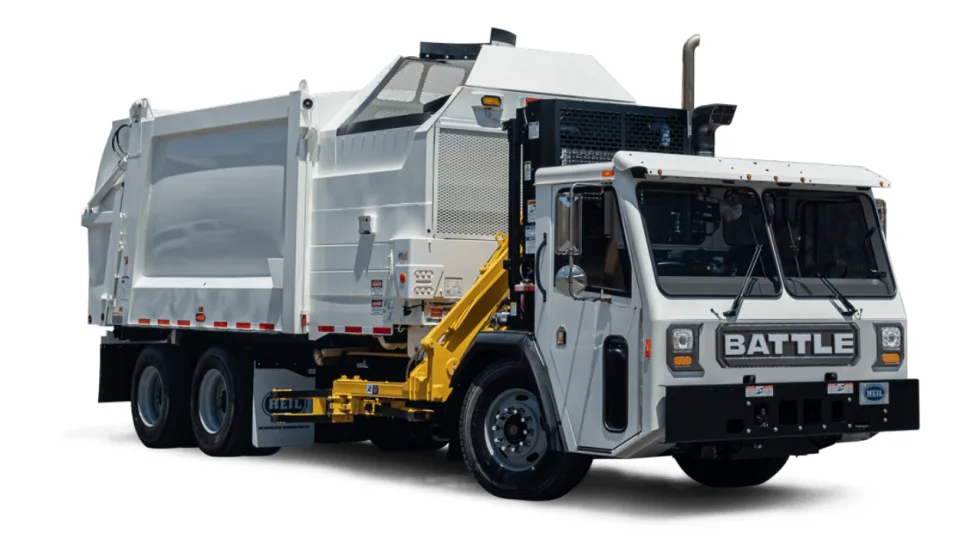
TCI Now Sells & Supports Battle Motors’ Vocational Trucks
Midwest truck dealer Truck Centers, Inc. (TCI) has expanded its transportation solutions with sales and service support for Battle Motors’ heavy-duty vocational trucks at locations in locations in Indiana, Illinois, and Missouri
Read More →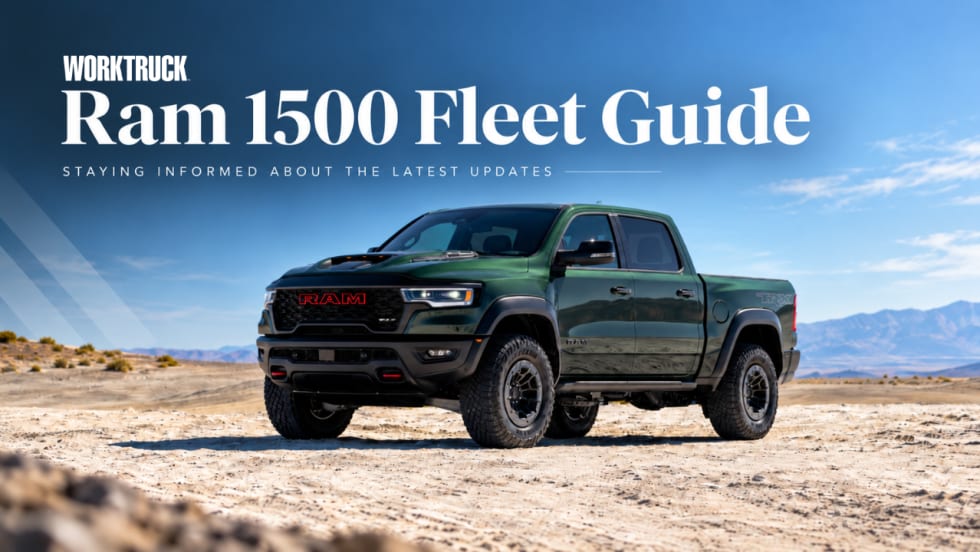
Ram 1500 Fleet Guide Specs, Capability and 2027 Model-Year Updates
Explore always up-to-date Ram 1500 fleet specs, engines, towing and payload capability, configurations, technology, pricing updates, and model-year changes.
Read More →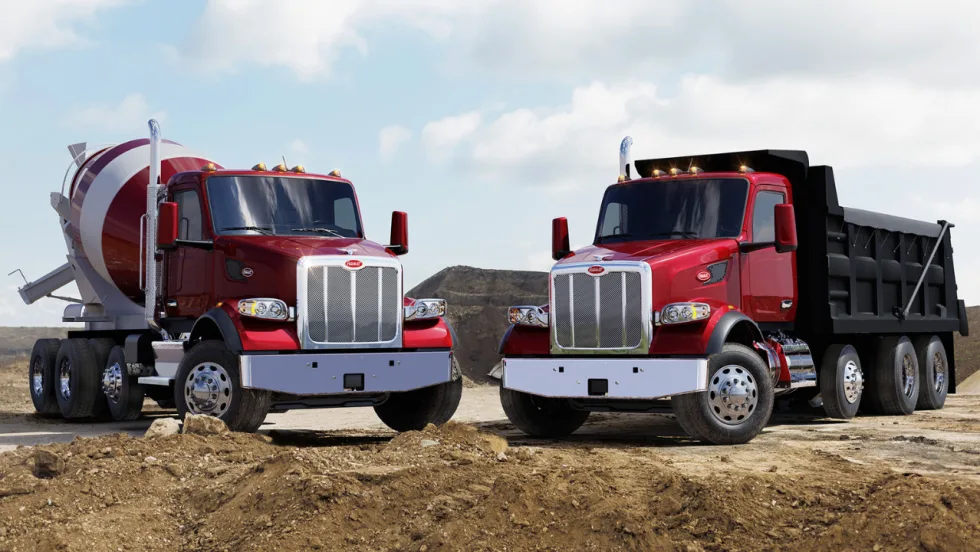
Peterbilt Trucks Equipped with Paccar TX-18 Pro Boost Efficiency for Maryland Fleet
Patuxent Companies is replacing aging trucks with the Peterbilt Model 567 and Model 589, specified with the Paccar TX-18 Pro 18-speed automated transmissions, and is reporting an 8% to 10% improvement in fuel economy.
Read More →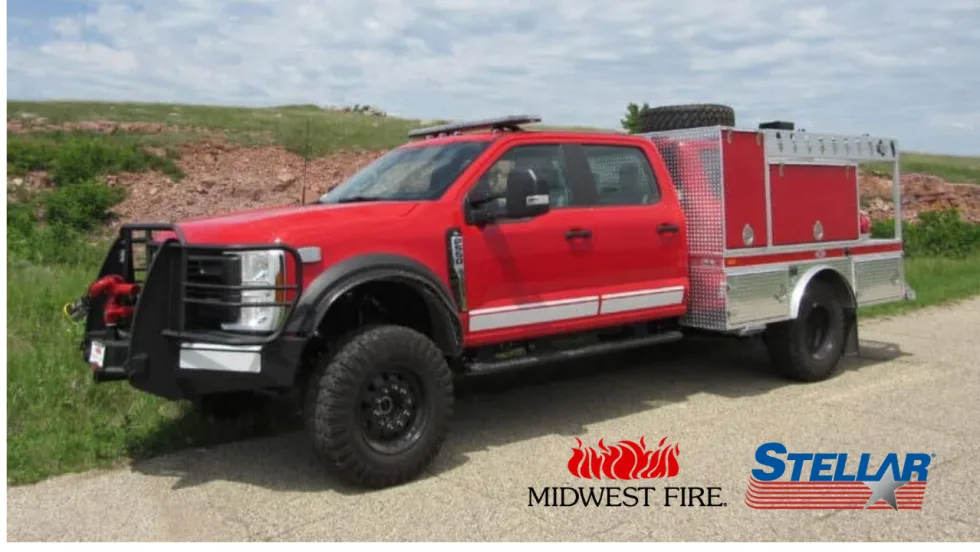
Stellar Expands into Fire Apparatus Market with Acquisition of Midwest Fire
Stellar Industries has acquired Midwest Fire, a custom fire apparatus manufacturer headquartered in Luverne, Minnesota, with nearly four decades of specialized apparatus experience.
Read More →
Recalls You Need to Know About in August 2026
If you have Altec, Chrysler, Ford, Heil, General Motors, International, Mack Trucks, Paccar, Rivian, Royal Truck, Toyota, US Truck Body, or Volvo Trucks vehicles in your fleet, you should check these important recalls issued by the National Highway Safety Administration.
Read More →