




What's New In DOT Compliance for Work Truck Fleets
The past decade has seen several new and updated federal regulations pertaining to commercial trucks and vans, but rules that affect drivers outpace vehicle standards by a mile.

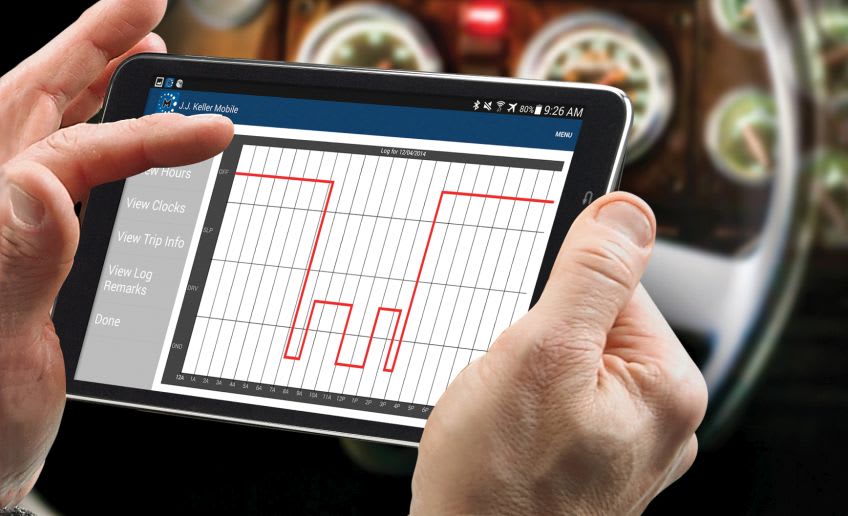
Fleets are finding operational advantages to adopting ELDs that come with telematics capabilities
Photo courtesy of J.J. Keller
In an industry that endures a constant stream of regulatory changes, more revisions are always brewing. When commercial driver’s licenses first became federally required in the 1980s, the industry survived. When more changes rolled out in the decades after — annual vehicle inspections, drug testing, changes to hours-of-service and medical-certificate, and now electronic logging devices — the industry survived.
So said Thomas Bray, a veteran industry consultant and lead editor for J.J. Keller & Associates, who sat down with Work Truck to fill us in on changes affecting vocational fleets that have taken place at the U.S. Department of Transportation since we published “DOT Compliance: Have You Reviewed Your Program Lately?” in the November 2007 issue.
The key word, Bray said, is “safety” — pertaining partly to vehicles but mostly to drivers.
“Most regulations on the economic side just don’t exist anymore,” he said, citing the fever of deregulation that occurred in the ’80s. “The economic side of the equation — competition, permitting, licensing — has actually gotten easier. The emphasis since the late ’80s and into the ’90s has been on safety,” he said.
HOS & Time-on-Task
One pound. That’s the difference in vehicle weight that puts a driver under hours-of-service regulations. This has been the pain point for many vocational fleets that had to change operations drastically when this rule was implemented.
The cutoff weight for a truck or a truck-and-trailer gross combination weight rating (GCWR) is 10,001 pounds. That could be a Ford F-450 with a trailer — not necessarily what most fleet operators might think of as a heavy commercial vehicle. And that’s where it gets tricky, because between 10,001 and 26,000 pounds, your drivers don’t have to have a CDL, but they do have to comply with driver-qualification (DQ) and hours-of-service (HOS) requirements.
While there are exemptions, there aren’t many.
“After the 30-minute break requirement came into being, industry after industry started writing in for exemptions. Some won and some didn’t, while more and more groups continue to write in,” Bray said. “The idea behind the rule is to give the driver relief. They call it time-on-task fatigue. Doing nothing but driving, sure, you’re going to be fatigued. Drivers need to stop and recharge.”
Considering time-on-task fatigue is the target, service fleets may seem an obvious target for exemption. After all, workers whose primary proficiency is technical are likely to be in and out of their vehicles throughout the day. Some pertinent exemptions do exist, including short-haul and oversized-load runs, but there is no blanket exemption for vocational trucks and vans.
The ELD Mandate
It can’t be stated enough that for fleets required to comply with HOS and keep records of duty status (RODS), these fleet in most cases are also required to comply with the federal Electronic Logging Mandate. Owners and operators of vocational fleets are advised to review ELD exceptions carefully. Among them are drivers who have to complete a driver’s log more than eight days in a 30-day period.
Bray said that for vocational fleets that only need to keep RODS occasionally, this is certainly a perk. “They’re still under HOS, but it can be easier to use a paper log in the work truck environment.”
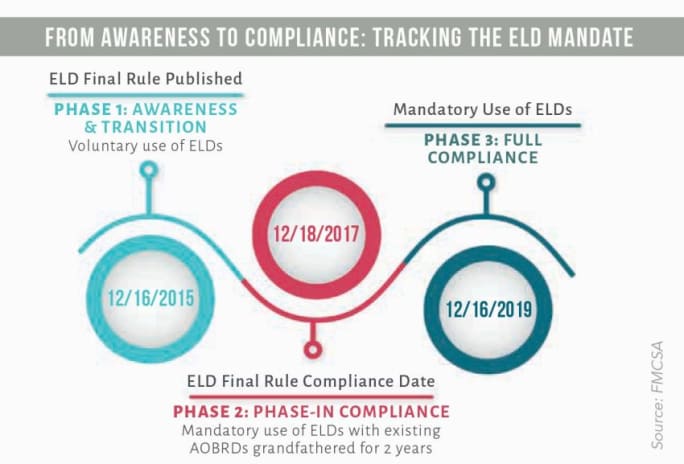
Chart courtesy of the FMCSA
Other exceptions include driveaway/towaway vehicles, motorhomes, and vehicles older than 2000-MY. Bray said further changes could include extending the definition of “short haul” from 12 hours away from home to 14, meaning some drivers will not have to complete logs and fewer will use ELDs.
All in all, fleets that are using ELDs are mastering them one function at a time. “We’re on the back side of the learning curve,” Bray said. “Companies using them are getting it figured out. They know their limitations and they know what they need to do to make ELDs work with their operations.”
Fleets are also finding operational advantages to adopting ELDs that come with telematics capabilities, such as route optimization, time-on-site tracking, and alerts for undue idling or geofence boundary crossings. A telematics ELD solution also means not having to rely solely on what drivers remember to write down.
“It drives more efficiency into the system,” Bray said. “Before, operators knew what problems they had, but these were more like vague ideas of what was causing the heartburn. Now you can see exactly what’s killing your employees’ time and your fuel mileage.”
Semi-Synthetic Opioids
Drug testing became a required part of getting a CDL in the early ’90s. The drugs that appear on the DOT’s list now number in the thousands. They are organized into five major categories: marijuana, cocaine, opioids, amphetamines and methamphetamines, and phencyclidine (PCP). One of the most recent changes to commercial driver laws reflects a larger issue happening across the nation: heavy use and abuse of opioids. In January, several semi-synthetic opioids were added to the drug test list, including hydrocodone, oxycodone, and hydromorphone.
Of course, many of the newly listed drugs are used to treat valid medical conditions, including chronic pain. If a driver tests positive and provides a valid prescription and their doctor’s name, the DOT medical review officer can void the result. However, if a prescription is being used to help mend a disqualifying medical issue, then the medical review officer could take issue with the underlying health problem.
This means the employer must have the driver take another physical exam that they could fail. The new rules are likely to make fleets more cautious about the health of their drivers, particularly those who are managing pain. For fleets who operate in the middle line with no CDL requirements, the issue comes into play only if the driver gets caught by law enforcement. While they don’t have the same drug-testing requirements, if the driver is under the influence of a controlled substance, this can still put a fleet into a legal tailspin.
Medical & Recreational Marijuana
Have a prescription for medical marijuana or live in one of the 10 states that allows for recreational use? Whether you’re a CDL driver or not, the DOT doesn’t care. It’s still illegal as far as the federal government is concerned.
However, there is no provision for drug-testing non-CDL drivers, and not enough court cases have been decided for a true precedent to be set. A company can still technically prohibit the use of marijuana as a requirement of the job in most states, but in recent case in Connecticut, an applicant to a nursing home was denied a position after failing a drug test despite citing her use of medical marijuana in off-work hours. A federal judge ruled against the employer, citing that it violated state law. Connecticut is one of nine states that includes anti-discrimination statutes in its medical marijuana laws.
In Montana, a court ruled the opposite for a major telecommunications company employee who had been using medical marijuana to treat back pain and was involved in a work-related motor vehicle collision. The company terminated the employee, who then sued. The fired employee lost in a court ruling, despite having limited their marijuana use to off-work hours.
The bottom line for fleets operating vehicles of any class with non-CDL drivers is to know the DOT regs and your state’s marijuana laws — including whether or not they include provisions for off-work use.
Registered Medical Examiners
In 2014, the DOT instituted a change that affected all commercial drivers, including non-CDLs: For their personal physician to complete a DOT physical, they must be listed with the National Registry of Certified Medical Examiners, which requires the physician to go through specific training. This meant that drivers were getting checked for things they weren’t before — not because it wasn’t part of the law but because the examiner didn’t know to check for neurological issues or sleep apnea, for example.
Today, if a driver’s personal physician is unwilling or unable to complete DOT training, they have to find a certified examiner to conduct their physical.
“The exam didn’t change, the examiners did,” Bray said.
ESC and Advanced Safety Tech
Electronic stability control followed antilock brakes as required safety technology on all vehicles sold in the U.S. as of 2012. Both components represent a bottom-line increase in the price of new vehicles, as does advanced, semiautonomous safety systems such as forward-collision and lane-departure avoidance.
Once limited to highline passenger cars, these systems are not yet required by the DOT but could soon be ubiquitous — including in service vehicles — and the economies of scale should reduce their financial impact. In addition to protecting drivers and the civilians with whom they share the road, Bray said fleets will benefit from the reduced risk of collisions.
“The benefit for a service fleet is that, if you can keep that truck out of one serious crash, look at how much that safety feature costs compared to the cost of a crash,” he said. “There are two ways to spend $100,000 in claims: one claim at $100,000 or 10 at $10,000. Start by eliminating the big ones.”
New Requirements for New CDLs
The next new regulation hitting? As of February 2020, new, entry-level drivers will have to get a training certification prior to taking the CDL test. The new process has been dubbed “classroom, range, and road,” and it’s a new speedbump along the path to hiring qualified drivers. But Bray noted that any fleet can start its own school by documenting their curriculum and results and submitting their application to the FMCSA online.
“Anyone can set themselves up to do the training,” he said. “They provide the outline and you fill in the blanks. It’s not incredibly difficult, but it can be time-consuming to get all the boxes checked, so we urge fleets to look at that now.”
The years ahead will see a number of new DOT regulations that apply to work truck fleets, Bray added, but if history tells us anything, the industry will survive. “We’re resilient,” he said. “We’ve always had a lot of rules, but we figure out how to do the job.”
More Safety & Compliance
Tips for Driving Safely on Halloween Night
This video features a reminder from the Connecticut Department of Transportation (DOT) and the Connecticut Police Chiefs Association, urging drivers to prioritize safety this Halloween.
Read More →
Re-rating Gross Vehicle Weight Ratings (GVWR): Why and How it's Done
Sometimes, it is not in a fleet’s best interests to have a vehicle at a given GVWR. Changing the GVWR to a special value can be done, but the process is complicated.
Read More →
When a Work Truck Gets Stolen, the Real Loss Is Time
A stolen work truck can take more than a vehicle off the road. From tools and access cards to crew downtime, here’s how fleets can prepare for theft before it disrupts the entire workday.
Read More →From Our Partners


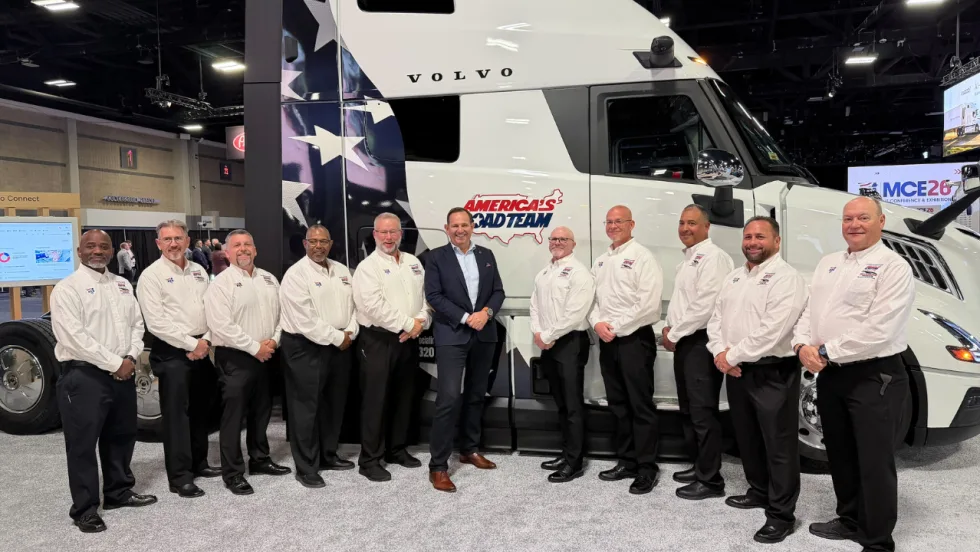
Volvo Trucks Marks 25 Years as Exclusive Sponsor of America's Road Team
Volvo Trucks North America will serve as the exclusive sponsor of the American Trucking Associations' America's Road Team, marking 25 years of Volvo sponsorship. The group of professional drivers promotes safety and the industry as they travel the country.
Read More →
Streamlight’s High-Output Scene Light Recognized with Occupational Safety Award
Streamlight’s Portable Scene Light III (PSL III) won the 2026 Occupational Health & Safety (OH&S) New Product of the Year Award in the Lighting category.
Read More →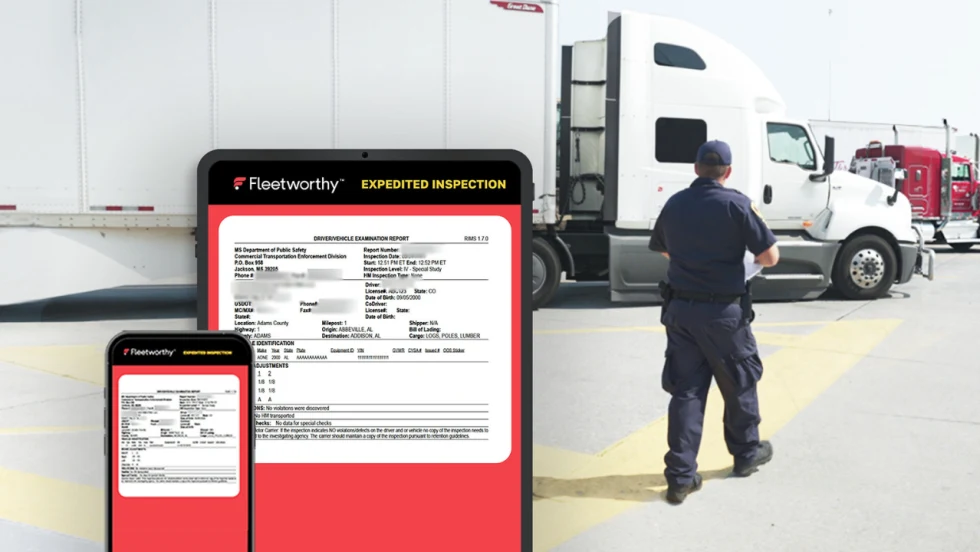
Fleetworthy Expands Expedited Inspection to 5 States
Following its industry-first launch in Nevada, Fleetworthy’s automated inspection technology is now live in California, Michigan, Vermont, and Maine.
Read More →
Crossing State Lines in a Light-Duty Work Truck? Check These Rules First
Crossing state lines in a lighter work truck? J.J. Keller's Kathy Close explains when IRP registration, trip permits, and towing rules come into play.
Read More →
GeoFencing Adds to Your Truck Security Arsenal
Geofencing is a familiar fleet tool today, but its early adoption marked a major shift in vehicle tracking, route monitoring, and the debate over employee privacy.
Read More →
Recalls You Need to Know About in October 2026
In October 2026, what recalls might impact your fleet? Work Truck has the answers in this comprehensive overview of recent NHTSA recalls.
Read More →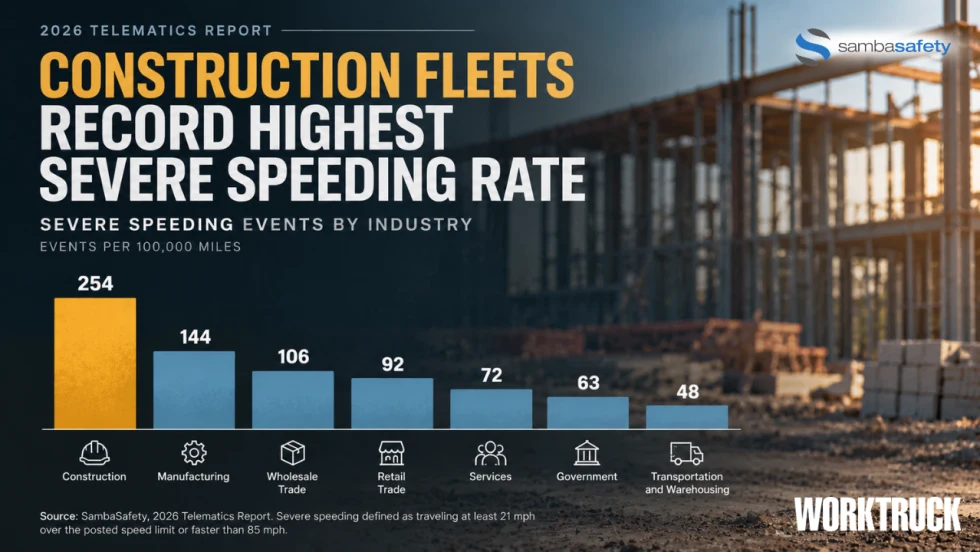
Construction Fleets Show Telematics Adoption Alone May Not Reduce Driving Risk
SambaSafety found construction fleets monitor roughly 92% of their vehicles but recorded the highest severe speeding rate among industries studied.
Read More →