




How to Develop an Effective Selector Template
One of the “fleet management basics” is determining vehicle selection: what type, make, model, and equipment are best suited to the company fleet mission.

Photo via istockphoto.com
There are certain basic responsibilities fleet managers have no matter the fleet or industry they serve and support, such as authoring policies, determining replacement cycles, and setting maintenance schedules. One of these “fleet management basics” is determining vehicle selection: what type, make, model, and equipment are best suited to the company fleet mission.
Vehicle selection is the basis for most of what follows in fleet management: managing maintenance, accident repairs, registration and titling, and even insurance. The process is, therefore, far more than simply spec’ing vehicles and choosing the lowest cap cost.
Create a Budget
From a practical standpoint, the first step is to determine what the fleet’s budget will be. For companies that choose to own fleet vehicles, this translates to a capital budget — that is, the total cost of purchasing vehicles to replace those scheduled to be removed from service. For leased fleets, the budget is an expense budget, or the sum total of the anticipated lease payments of new vehicles.
In either case, fleet managers need to first run a schedule of those vehicles, which, based on the company replacement policy, will come up for replacement during the budget period. In the past, this was a relatively easy process, as most new model-year introductions occurred at around the same time, with ordering in late August or in September, for fall delivery. But, for the past decade (or more), new model-year introductions have often been scattered throughout the calendar year.
If you have a leased fleet, your fleet management company (FMC) can assist in running the replacement ordering report. Based on time and mileage parameters, the report will contain those vehicles which will reach replacement policy during the period requested. If owned, most fleets have the capability, either in-house or via an FMC, to run such a report.
This report will show how many vehicles need to be replaced; however, the budget should “net out” gain/loss on the sale of vehicles leased under an open-end terminal rate adjustment clause (TRAC) lease, as well as any differences in estimated lease payments.
Similarly, owned fleets must net out gains/losses against whatever asset value remains on the books when replaced vehicles are sold. This will be the starting point for the selector process.
Know the Mission
Different fleet vehicles have different missions. A key factor in developing the selector is to know what that mission is, and analyze vehicles that are suited for the job. The best way for a fleet manager to get to know the mission, and what their drivers must do each day, is the ride-along.
Whether the fleet is centrally garaged or geographically spread, smart fleet managers will arrange to ride with a driver — or drivers if there are more than one vehicle type in the fleet — for at least a full day as they go about their assigned duties. A ride-along will allow the fleet manager to see what the vehicle must carry, such as products, samples, marketing materials (brochures, sell sheets, etc.), and paperwork (files, reports, etc.).
Some sales and marketing drivers entertain customers and prospects for lunch, dinner, and other events. Important specs, such as passenger space (both front and rear) and cargo area (trunk for sedans, with seats up and down for crossovers and SUVs), should all be considered when deciding what vehicles to include in the analysis.
There are a number of items important for work vehicles as well, such as jobsite trucks and delivery vans/trucks.
Here are some questions to ask during a ride-along:
Does the driver do any towing relative to the job?
What kind of cargo is carried? Are there specialty tools, parts (large and small), and/or products for delivery to customers?
How often must the driver access a ladder, if needed?
Will an upfitter have a template ready if a new truck is introduced into the fleet?
Another important step is to meet, or at least communicate with, more senior driver function managers, such as a VP of sales or operations manager. Seeing what the driver does is important; however, so, too, is learning what management would rather a driver do, or do better than the vehicle enables them to do now.
Senior stakeholders can also provide an overview of the company’s general goals, e.g., cost reduction or revenue enhancement. Is there a new focus on sales, or increasing market share, which may require larger or better-equipped vehicles? Or, is the company in a serious cost-reduction mode, where, if possible, the new selector will include smaller vehicles, lower trim levels, or both?
Lastly, in many fleets there is an issue of what image the company wishes to project. This is particularly true for sales and marketing fleet vehicles, which are regularly customer-facing, including entertainment.
A pharmaceutical rep driving a compact car, which requires a doctor to cram into a backseat, may not be projecting the image the company wants. By the same token, an insurance company adjuster who shows up at the insured’s home to write a sheet on a damaged family car in a luxury sedan or crossover could well cause an image problem.
All of these considerations come into play when fleet managers engage the vehicle selection process.
Understand the Financials
Once the mission, the corporate image, and drivers’ needs are considered, the next step is to determine what vehicles fit into the selector best. This will include whatever vehicles are already on it.
Spec’ing vehicles today is a far more efficient process than it has ever been; however, it is no less important to the selector analysis. Vehicles in 2014 have far more standard equipment than they did 20 years ago or more. There is no more deciding whether to upgrade that AM radio to AM/FM, or add a tape deck, or opt for tilt wheel and cruise control. But, there are a number of items that fleet managers (depending on the considerations covered earlier) must consider:
Four or six cylinders? The four-cylinder engine might get better mileage, but not if the car will be carrying too much weight.
Are there alternative-fuel options, such as hybrids or even diesel powertrains available for the same model? Right now, diesel costs more, but the mileage can be as much as 50 percent better than the same car with a gasoline engine.
Is upgraded suspension for that work truck really needed?
What about current options, such as a sunroof, six-CD player or satellite radio, trim upgrades, etc., that a particular model is expected to have when the vehicle ultimately hits the resale markets?
Are navigation, Bluetooth, and/or telematics devices needed? Can they be distractions?
Yes, new vehicles today are generally well equipped, but these and other options can be important, and fleet managers must make decisions before specs are chosen.
Once the specs are selected, the vehicle can then be priced, which technology has also made simpler. Now, vehicles have been chosen for analysis, specs, and pricing completed.
Evaluate Total Cost of Ownership
FMCs provide customers with access to sophisticated systems, which, using fleet-specific input, will show that the anticipated total cost of ownership (TCO) will be for the selected vehicles. When a vehicle is new, TCO contains certain assumptions that may, or may not, come to fruition, such as:
Fuel cost. The big number in variable costs, estimated fuel costs are often based on U.S. Environmental Protection Agency (EPA) fuel-efficiency estimates for city and highway driving. However, there is no guarantee that those numbers will come about, and the actual end result can be either higher or lower. If the analysis is being done on a vehicle that has already been used in the fleet, actual numbers (provided the powertrain is the same or similar) can be used.
Depreciation. The corresponding big number on the fixed cost side, depreciation is most impacted by estimated resale at termination (cap cost can only be negotiated so far). Find out if the numbers provided by the FMC are from actual experience. If the vehicle is one that is already used, substitute actual numbers (percent of retained value, not actual dollars). If not, keep in mind that OEMs do discuss and negotiate the numbers that the FMCs use in their TCO models. The more accurate the better, since depreciation is the bulk of the TCO fixed cost projection.
The other components of TCO — tires, maintenance/repair, oil, insurance, and accident costs/recoveries — should certainly be included; however, getting fuel and depreciation right is critical to an informed decision.
The fleet manager now has the numbers needed to include into the analysis. Obviously, one or more of the vehicles will stand out above the others, with a TCO that is lower. But, there are other important considerations to keep in mind before finally making the decision.
Review Safety Requirements
The core mission of fleet management is the same today as it was 50 years ago, and at the top of the list of responsibilities is safety.
What has changed over the years is that, while both then and now it is the driver that is the most important element in safe driving, cars and trucks today include safety features and ratings that help provide a “safety net” when drivers don’t drive as safely as they should.
Here are some of the features that should be considered when developing a selector:
Air bags. Does the vehicle have side-curtain air bags?
Forward collision avoidance. While known by other names, this is a recent feature on many new models; it stops the car automatically if the driver is distracted and doesn’t brake in time to avoid a collision.
Side-view assist. A piece of new technology with several names, side-view assist will detect a vehicle coming into a blind spot and set off an alarm in the side-view mirror, alerting the driver.
Back-up cameras. Though proper use of rear- and side-view mirrors, and the driver’s head on a swivel, can contribute to safe backing, a back-up camera takes the guesswork out of what the driver sees, without having to constantly look left and right behind the vehicle.
These and other new technologies help make vehicles safer today than ever before. Some safety features that were optional or new in the past, such as anti-lock brakes, shoulder harness seat belts, and even air bags, are now either mandated or standard equipment.
As these technologies become available, a fleet manager should review them and determine whether they should be included in models being considered (or even available).
Next, many fleet managers have established minimum crash test ratings for the vehicles they use in the fleet. The Insurance Institute for Highway Safety (IIHS) runs crash tests on any and all vehicles as requested by the OEMs that make them. These tests include:
Moderate overlap front
Small overlap front
Side
Roof strength
Head restraints
These five tests are rated at four levels: good, acceptable, marginal, or poor. The National Highway Traffic Safety Administration (NHTSA) also rates vehicles for safety on a numerical scale of 1-5.
Whatever ratings are used, most fleet managers who consider these ratings will require at least an “acceptable” IIHS or four-star NHTSA rating for any vehicle to be considered for the selector.
Go for Test Drives
Once the field of candidates for selector inclusion is narrowed, the next important step is for fleet managers to drive the vehicles themselves, and, if possible, for someone from the driver function to do so as well. There are a number of ways this can be accomplished, including:
OEM ride and drives. These events are conducted by manufacturers several times prior to the new model-year introduction. Most conduct a fleet preview sometime in the late spring or early summer, where customers can drive new models over a preset course, and inspect the vehicles for space and cargo considerations.
Association meetings and industry conferences. Many fleet-related associations and local chapters hold conferences and ride-and-drive events, where OEMs are invited to bring vehicles and marketing material.
Demos. Most OEMs who participate in the fleet market will provide a customer with a demo vehicle the fleet can use for an extended period of time.
However it’s done, nothing can substitute for the process of actually “kicking the tires” of vehicles under consideration. Is passenger leg room sufficient? How much will the trunk hold? Can the back seat really seat three adults comfortably? How easy is it to access the bed of that pickup truck? These are questions that can only be answered from inside the vehicle, so test drives are another important step in the selection process.
Weigh Other Considerations
There are other miscellaneous considerations that can help finalize the decision:
How many dealers are in the manufacturer’s network? Are they sufficient for your fleet needs? Do they at least have coverage in major metro areas? If you have vehicles in remote or rural areas, how does the OEM suggest you handle warranty service?
How many of those dealers are willing to do courtesy deliveries? How many of them are in major areas where the fleet has vehicles? Do they conduct deliveries well, or do they do the proverbial key toss?
Can the OEM confirm that, for the model(s) being considered, it allocates sufficient production to fleet to meet its needs? Few things in fleet management are more frustrating than learning late in the model-year that you’ve got 50 orders that are being pushed out to the next model-year due to lack of fleet allocation.
Can the fleet request consideration for component failures beyond the warranty period? What is the process, and does the fleet’s FMC have it automated? What are the parameters for consideration?
These are all important considerations for fleet managers when making their decision. Fleet vehicles, and the circumstances and processes under which they operate (courtesy deliveries, factory ordering, and warranty work), can make or break a selection. It isn’t necessary for an OEM to have thousands of dealers, but their coverage should be sufficient for fleet vehicles at least in major metro areas.
Make the Decision
You’ve gone through the process. You know what the mission is. You’ve ridden with your driver, and seen what the vehicle must be able to do. The vehicles have been spec’d and priced, safety has been covered, and the OEM’s fleet allocation and dealer network are sufficient. The final step is negotiation.
Most, if not all, OEMs in the fleet market offer published fleet incentives; higher for less popular vehicles, lower for more commonly used models. They can range from a few hundred to thousands of dollars per unit. These incentives are, of course, part of the consideration.
But, beyond the published incentives is what is known as CAP or competitive assistance programs. These programs are often offered to larger fleets in return for a commitment to a certain number of orders during the model-year. Fleet managers need to contact the OEMs for those vehicles under final consideration and request a CAP proposal. Be ready, though, to provide a formal, written commitment to those orders, or face “clawback” of paid CAP monies, or other penalties.
These negotiations are the last step in finalizing the numbers; incentives, published or CAP, will reduce the cap cost of the vehicles, and thus increase the percentage of retained value used in the TCO model.
At this point, for companies who use a selector with multiple choices for the driver, the “winners” will be clear. It may be that last year’s models will prove themselves again, or perhaps one or more of them will fall to a new selection. Some drivers will complain — like most any other product, people prefer certain makes and models of vehicles, and unless the selector has sufficient choices (an almost impossible, and inefficient, task), not everyone will be happy. But, having completed what is an important and thorough analysis, the fleet manager can be sure that the decision is the right one.
Until next model-year, when it all begins again.
Related:
Originally posted on Automotive Fleet
More Vehicle Research
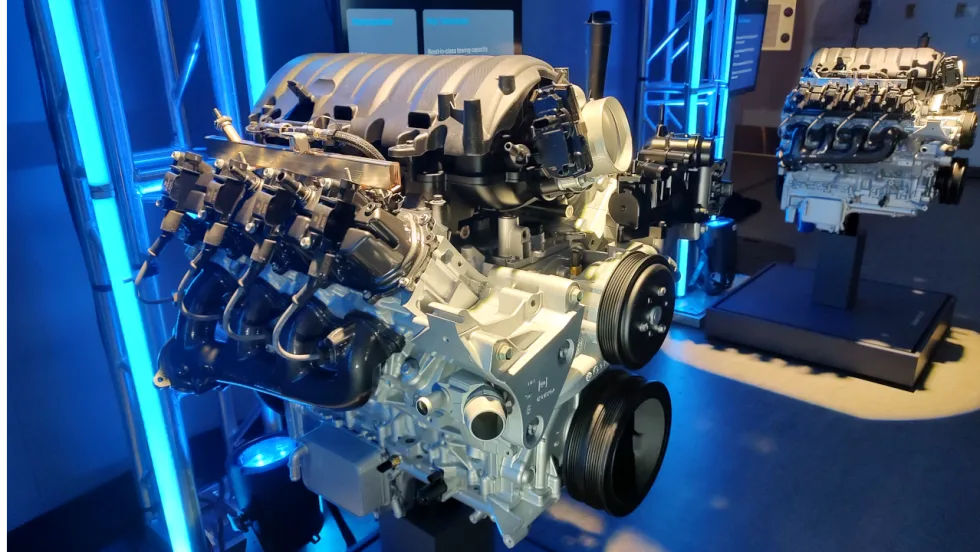
GM Unveils New Sixth-Generation Small Block Engines for 2027 Light-Duty Pickups
General Motors unveiled two new small-block engines, backed by extensive real-world validation and more than 70 years of small-block V8 manufacturing experience, as part of the engine portfolio for the 2027 Chevrolet Silverado 1500 and GMC Sierra 1500.
Read More →
Chevrolet Silverado 1500 Fleet Guide Specs Capability and 2027 Model-Year Updates
The next-generation 2027 Chevrolet Silverado 1500 brings new V-8 engines, updated technology, expanded safety features, and a fleet-focused Work Truck. Here’s what commercial fleets need to know so far.
Read More →
2026 Ram 1500 Tradesman Put to a Real-World Fleet Test
A few days behind the wheel of a 2026 Ram 1500 Tradesman turned into a test of visibility, parking, work-ready features, and even severe-weather driving.
Read More →
Isuzu N-Series Gas Fleet Guide: Specs, Capability and 2027 Model-Year Updates
Explore Isuzu Truck North America’s N-Series Gas fleet specs, engine performance, GVWR and payload capability, configurations, chassis dimensions, work-focused features, and 2027 model-year information.
Read More →
Ram ProMaster City Fleet Guide Specs Cargo Capacity and 2027 Updates
Work Truck’s Ram ProMaster City Fleet Guide tracks the latest specifications, cargo capability, configurations, fleet technology, pricing, and model-year updates for Ram’s mid-size commercial van.
Read More →
Ford F-150 Fleet Guide Specs Capability and 2026 Model-Year Updates
Explore 2026 Ford F-150 fleet specs, engines, towing and payload capability, configurations, work features, technology, and model-year updates.
Read More →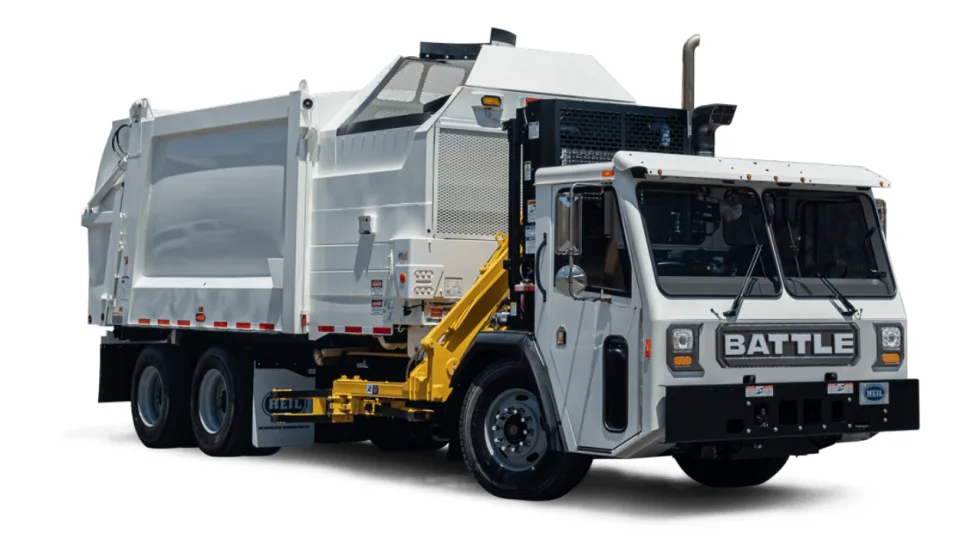
TCI Now Sells & Supports Battle Motors’ Vocational Trucks
Midwest truck dealer Truck Centers, Inc. (TCI) has expanded its transportation solutions with sales and service support for Battle Motors’ heavy-duty vocational trucks at locations in locations in Indiana, Illinois, and Missouri
Read More →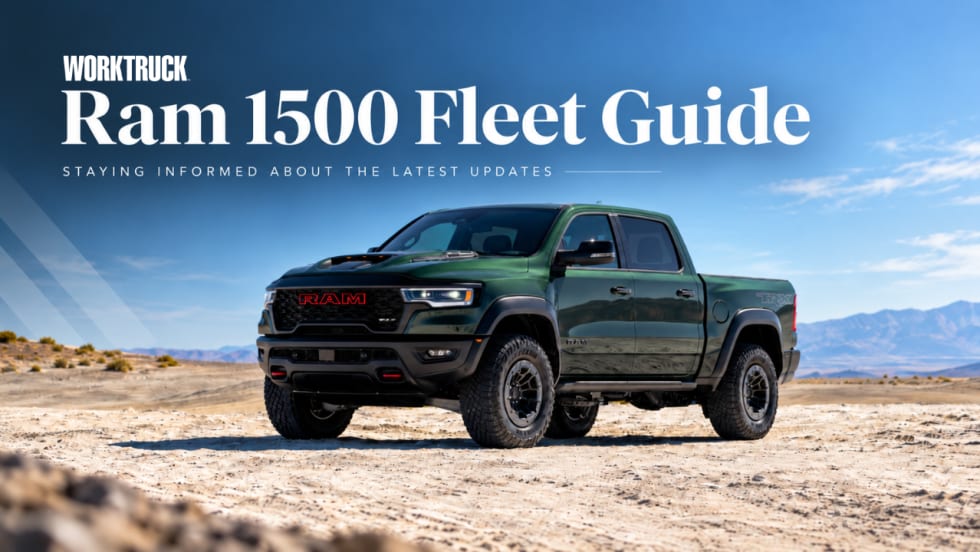
Ram 1500 Fleet Guide Specs, Capability and 2027 Model-Year Updates
Explore always up-to-date Ram 1500 fleet specs, engines, towing and payload capability, configurations, technology, pricing updates, and model-year changes.
Read More →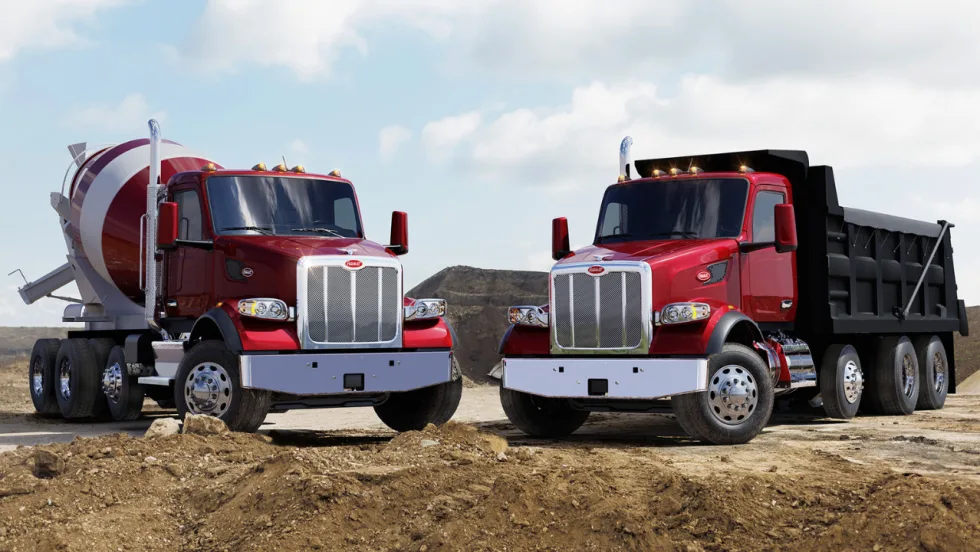
Peterbilt Trucks Equipped with Paccar TX-18 Pro Boost Efficiency for Maryland Fleet
Patuxent Companies is replacing aging trucks with the Peterbilt Model 567 and Model 589, specified with the Paccar TX-18 Pro 18-speed automated transmissions, and is reporting an 8% to 10% improvement in fuel economy.
Read More →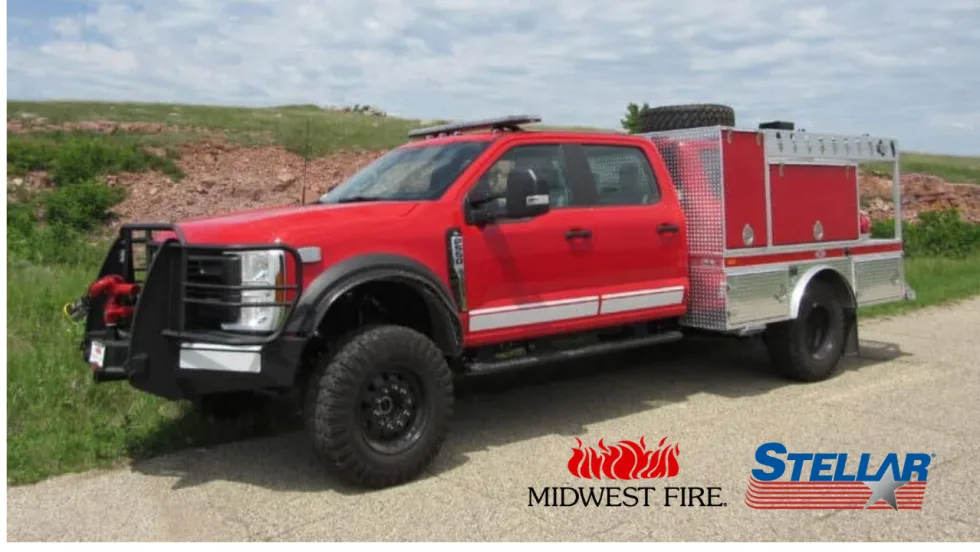
Stellar Expands into Fire Apparatus Market with Acquisition of Midwest Fire
Stellar Industries has acquired Midwest Fire, a custom fire apparatus manufacturer headquartered in Luverne, Minnesota, with nearly four decades of specialized apparatus experience.
Read More →