10 Common Errors: Complying with Drug and Alcohol Testing Mandates
Mistakes in complying with federal testing regulations may result in both fines and penalties issued by the Federal Motor Carrier Safety Administration (FMCSA). Every year, thousands of motor carriers are cited during FMCSA audits.
by Kathy Close
April 22, 2009
A motor carrier is subject to DOT drug and alcohol testing requirements if it operates commercial motor vehicles (CMV) that require commercial driver's licenses (CDL).
Photo courtesy of Nick Youngson CC BY-SA 3.0 Alpha Stock Images
10 min to read
The drug and alcohol testing rules under the U.S. Department of Transportation (DOT), especiall CDL-related drug testing requirements, are often misunderstood and misapplied by fleet management.
Error on the part of a motor carrier may result in both fines and penalties issued by the Federal Motor Carrier Safety Administration (FMCSA). Every year, thousands of motor carriers are cited during FMCSA audits (compliance reviews) for failing to follow the rules in 49 CFR Part 382. In addition, not clearly understanding the regulations may have legal implications if a driver's rights are violated or someone is injured in an accident involving a driver not tested according to the rules.
Ad Loading...
Mistake 1: Failure to Implement a Drug/Alcohol Test Program
In 2007, the No. 1 overall acute violation (the most severe in the DOT's view) was failure to implement an alcohol and/or drug testing program. In simple terms, this means operational motor carriers subject to Part 382 did not - for whatever reason - set up a program.
A motor carrier is subject to DOT drug and alcohol testing requirements if it operates commercial motor vehicles (CMV) that require commercial driver's licenses (CDL). Unlike other areas of the Federal Motor Carrier Safety Regulations (FMCSR), DOT drug and alcohol testing applies to motor carriers that never leave their home state.
The requirements also encompass a variety of operations, including:
For-hire carriers that transport goods on behalf of shippers.
Passenger-carrying vehicles regardless of whether a fee is charged.
Private carriers that haul their own products or equipment.
Mistake 2: Testing the Wrong People
In addition to failing to see they are subject to the rules, carriers often err in deciding who must be tested.
Ad Loading...
Any employee who operates or is expected to operate, even occasionally, a vehicle that requires a CDL is defined as a driver for purposes of DOT drug and alcohol testing. This group might include dispatchers, supervisors, mechanics, fill-in drivers, and anyone else who operates a CMV despite his or her job title.
In addition, DOT testing programs must include drivers from staffing services or owner-operators who drive vehicles under the carrier's U.S. DOT number. Even if the carrier does not sign their paychecks, it is still responsible for their safety compliance.
Keep in mind Part 382 does not apply to everyone who holds a CDL. Licensing is not the deciding factor. If an employee holds a CDL, but will never be called upon to operate a CDL vehicle, he or she should not be subjected to testing. This includes CDL-holders who operate smaller CMVs (i.e., less than 26,001 lbs., transport no hazardous materials, or carry fewer than 16 passengers). Even though they are "drivers" for purposes of qualification files and hours of service, they are not subject to the drug and alcohol program requirements.
Mistake 3: 'Managing' Random Selection
Each year during compliance reviews, the FMCSA discovers motor carriers that neglect to establish or maintain a random selection process.
Some are cited for complete failure to randomly select, while others do not meet minimum annual percentage rates. The latter offense could occur for a variety of reasons, including:
Ad Loading...
Neglecting to send selected drivers.
Drawing at inappropriate rates.
Failing to compensate for missed tests (e.g., terminations, layoffs, leaves of absence) in a later or supplemental draw.
Failing to adjust the draw to accommodate fluctuations in driver numbers.
When a motor carrier uses a consortium or third-party administrator to generate the random selection, the motor carrier is still held responsible for the service provider's actions. Employers must furnish the service provider an accurate list of current drivers prior to each selection so testing is done at the appropriate rate. Even if a driver was selected earlier in the year or seems to be drawn frequently, he or she must remain in the pool of eligible names. The carrier cannot take it upon itself to "give the guy a break this time."
Timeliness is also a component of compliance. All selected drivers must be sent within the testing cycle (i.e., before the next draw). An excuse that "we couldn't spare him" is a violation of the rules. A driver terminated, on a leave of absence, or laid-off are legitimate reasons for not completing the test during the testing cycle.
But, fleet managers are not allowed to send a driver for testing when he or she returns to work in the next testing cycle. The reason the test was not performed must be documented. Compensate for the missed test by selecting at a higher rate later in the year if necessary to meet your percentage.
Mistake 4: Putting Drivers on the Road Too Soon
Using a driver before receiving the results of a DOT pre-employment drug screen is consistently among the top citations each year. The violation occurs when:
Ad Loading...
The test was not performed or was conducted after the fact.
The driver was used in a safety-sensitive function before receipt of the verified result.
A driver may be taken for a road test prior to receiving the results of a DOT pre-employment drug screen, but the driver cannot be used in a safety-sensitive function in any other capacity. During a compliance review, auditors cross-reference daily logs and supporting documents against the date a pre-employment drug screen result was received.
If a driver has been removed from a DOT testing program for more than 30 days, a test is required and must be marked as "pre-employment" even if the driver was employed during the absence. It is not a return-to-duty test as some have mistakenly thought, even in instances when the driver's doctor indicates the driver can "return to work." A return-to-duty test is tied to a violation and is a part of the return-to-duty process after a substance abuse professional's (SAP) evaluation and treatment.
Note that applicants who test positive and are not hired must be given a list of SAPs, and the chain of custody and signed result must be kept for at least five years. All cancelled or negative pre-employment test results on nonhired applicants are kept for at least one year.
Mistake 5: Ignoring Drug & Alcohol Violations
Using a driver who tested positive for drugs on a DOT-required test is yet another acute violation topping the FMCSA list.
Ad Loading...
Employers cannot ignore violations occurring under their programs or information received from previous employers. A violation does not go away with the passage of time. It follows the driver through the course of his or her career until the DOT return-to-duty process (i.e., SAP program) is completed. If you discover a violation under another company's program, documentation of the return-to-duty process is required. To use the driver, you must begin or continue with an uncompleted program.
If you do not ask current or former employers about the driver's DOT drug and alcohol history, you may find yourself using a driver who violated the rules and either quit or was terminated from the job.
Photo courtesy of Getty Images
A related violation is failure to complete a background investigation. If you do not ask current or former employers about the driver's DOT drug and alcohol history, you may find yourself using a driver who violated the rules and either quit or was terminated from the job.
A "no-comment" policy on the release of DOT drug and alcohol testing information is prohibited. If the driver signs a specific written consent in accordance with §40.321, DOT-regulated former employers must release the specified information to the identified party. This practice does not violate confidentiality rules. To refuse based on company policy is a violation under both §40.25 and §391.23 (Safety Performance History). New or prospective employers are encouraged - not mandated - to report noncompliance to the FMCSA.
Mistake 6: Not Testing Soon Enough After an Incident
Questions frequently surface regarding whether DOT post-accident tests are required. Unfortunately, this inquiry typically occurs as the clock is ticking during the respective eight- and 32-hour deadlines for alcohol and drug testing.
During a compliance review, an auditor can easily refer to the state-reported accidents and citations to determine if the tests were required. To test "just in case," however, is just as much of a violation as not testing when required to do so.
Ad Loading...
Testing is required as soon as practicable if a fatality occurs, even if your driver was not cited. This requirement even includes a fatality that occurs afterwards, but still within the timeframes for testing (i.e., eight hours for alcohol and 32 hours for drugs).
If the accident resulted in damage requiring towing or immediate medical treatment away from the scene, alcohol testing is required if the driver was cited within eight hours of the accident, and drug testing if cited within 32 hours of the accident. The driver must remain available for testing or it is considered a refusal to be tested.
Mistake 7: Not Retaining Records
Claiming compliance is very different than proving it. Documentation is vital in demonstrating a program meets minimum requirements. Forms must be kept in accordance with §40.333 and §382.401.
Records must be treated as confidential information and maintained in a secured location (i.e., under lock and key) with controlled access (i.e., only a select few). If you accidently purge forms prior to a minimum retention period, it may result in a recordkeeping violation.
Mistake 8: Medical Examination Testing
Many carriers - and medical examiners - automatically request a DOT drug screen when a driver renews his or her medical certification. "Other," "annual," or "recertification" is not a required DOT test type. Testing under this circumstance is actually a violation of §382.113 (misrepresentation) and could result in potential liability, especially if the results are positive.
Ad Loading...
In states with reporting requirements, it may prove difficult for the employer and/or driver to clear his or her record. Most medical review officers do not downgrade the test to non-DOT if done as a DOT test in error.
If you have a policy of conducting tests during a medical exam, they must be non-DOT. A non-DOT chain of custody form must be used, and the lab must have a separate non-DOT account for the lab summary. Non-DOT results hold no DOT ramifications and cannot be used to justify a DOT reasonable suspicion test. Non-DOT tests also cannot be reported to future employers as a DOT violation.
Note that DOT pre-employment tests may be conducted as a matter of convenience at the same time as a medical exam, but they are not connected.
Mistake 9: Notifying Drivers of Required Testing
Drivers and supervisors often quote the common urban legend that a driver has an hour or two to show up for a random test once notified. Nothing can be further from the truth. To accommodate the element of surprise (unannounced), the driver must have no inkling he or she has been selected and must "immediately" proceed to the collection site once notified.
The employee and collection site take into account reasonable travel time to the facility. Advance notice negates the intention of the rules (to catch drivers engaging in prohibited activity). Drivers given warning of a test may refrain from taking drugs or consuming alcohol or have time to consume drug-masking agents or obtain a substitution. The effects of alcohol may also wear off.
Ad Loading...
Mistake 10: Handling DUI Convictions
Driving under the influence of drugs or alcohol in a personal vehicle affects the CDL based on §383.51, but has no bearing on a driver's participation in a DOT drug and alcohol testing program. A driver cannot be forced to undergo an SAP program since it is not mandated by the FMCSA. However, a conviction resulting from operating a CDL vehicle is "actual knowledge" and is a violation under Part 382.
What's Next?
If you are found to be in violation during a compliance review or errors are discovered during a self-audit, the best approach going forward is to show a "good faith effort." This effort entails correcting immediately possible issues (e.g., driver or supervisor training, creation of policies and procedures). Processes must be in place going forward for items that cannot be fixed. For example, demonstrate that applicants are sent for DOT pre-employment tests and aren't used until the results are received. Implement a random program, select at appropriate rates, and send drivers during the testing cycle.
If documents are missing from your records, acknowledge the recordkeeping error and retain in accordance with the rules going forward. Hiding or altering documents is considered falsification (i.e., fraud).
About the Author
Kathy Close is a subject-matter expert on transport issues at J.J. Keller & Associates, Inc. She can be reached at kclose@jjkeller.com.
Pro-Vision has acquired Convoy Technologies in a deal it said will broaden customer relationships and add specialized vehicle video capabilities for commercial fleets.
Five Domino's franchises and more than 1,000 vehicles are now running on Netradyne's AI-powered fleet safety and performance platform. Designed for fleets that use personal or non-owned vehicles, FlexMount allows drivers to quickly install and remove Driver-i.
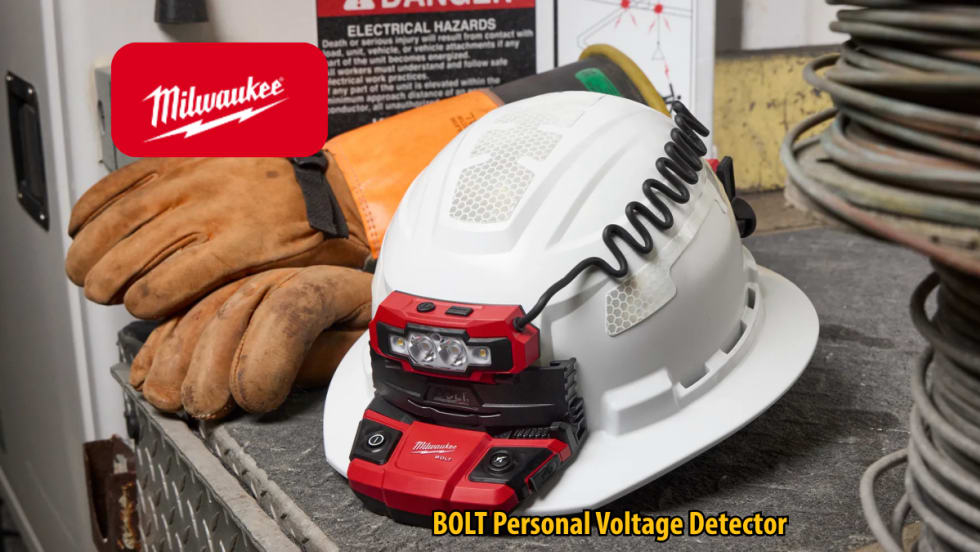
Milwaukee Tool’s new BOLT Personal Voltage Detector features a wide detection field and clearer voltage alerts to help users quickly identify the presence of voltage.
Detroit Assurance with Active Break Assist 6 (ABA6) will be standard on Freightliner Cascadias built starting in December 2026 and will feature Cross Traffic Assist and Active Side Guard Assist 2 with left turn protection.
LightMetrics has launched ΦFP, a new cloud AI layer that filters every driver safety alert before it reaches a fleet manager, eliminating the false alarms.
Mike Young, of Daimler Truck North America, will walk us through how Detroit Assurance safety systems can adapt to work around upfits that could block the radar or cameras.