





Warranty Help: Amerit Fleet Supports Lordstown Motors & Mullen Automotive
Truck Warranties: Benefit or Expense?
No, it’s not a spam call: extended vehicle warranties are an essential component in vehicle lifecycle and cost management.
June 7, 2022

Work trucks are complicated, and each component ages and wears differently in these tough environments.
Photo: Gettyimages.com/tornpaper
6 min to read
While hearing the word warranty or extended warranty likely brings up nightmare visions of hundreds of spam phone calls, it’s an essential consideration for work truck fleets.
A warranty is a written guarantee provided to the purchaser of an item by its manufacturer that promises to replace or repair an item, if necessary, within a specified period.
Work truck fleets aren’t gentle with their equipment. They don’t deal in luxury and relaxation but dirt and hard work.
At the bare bones, “A warranty assists in offsetting the massive financial risk of a catastrophic breakdown for the trucks in your fleet,” Lindsey Grammel, VP of global brand development for TruNorth, said.
Why Consider a Vehicle Warranty for Vocational Trucks?
Work trucks are complicated, and each component ages and wears differently in these tough environments.
“Typically, the life of the body lasts three times longer than the life of the chassis. Extended warranties are one of the ways to help keep vehicles operating efficiently. Costs are covered for parts outlined within the warranty. Uptime is key for vocational trucks, and warranties are a way to help ensure uptime while keeping costs steady,” Mark Santschi, Kenworth director of after sales, in Kirkland, Washington, said.
There is no doubt commercial trucks are the investment that allows a vocational truck fleet to have a business.
“A semi-truck can last upwards of 1-million miles and 10-plus years. During the life of that truck, breakdowns are inevitable. Costs for repairs, especially catastrophic failure to such major equipment as the engine, can be a huge financial burden to a single truck or small fleet owner. Some repairs can cost tens of thousands of dollars,” Tim Ronan, chief marketing officer for National Truck Protection Co. Inc., said.
If an owner-operator doesn’t have a maintenance and repair fund set aside, a hefty repair bill could cost them their business.
“They could have more than one major failure with an older truck,” Ronan added.
Top Benefits of a Factory/OEM Warranty for Vocational Fleets
The warranty you choose and where you get it from matters.
“Having the backing of an OEM warranty/extended warranty or used-truck warranty vs. an outside company or third-party is much better for a fleet. The fleet manager knows they can reach out to that OEM to get support with the warranty and the vehicle in the same call, versus being transferred back and forth,” Brian Tabel, executive director of marketing for Isuzu Commercial Truck of America (ICTA), said.
There are several benefits of choosing a warranty from the OEM itself.
“There is comfort in having an OEM back the warranty. It provides the ease of one-stop or one phone call to resolve any concerns. The OEM warranties are also typically longer and more inclusive of parts and services. OEM warranties also have towing coverage included,” Tabel added.
Additional benefits, according to Santschi of Kenworth, include improved uptime and reduced operating costs (while the warranty is still active).
According to Ronan of National Truck Protection, all new semi-trucks come with an OEM warranty covering major equipment and components.
‘These warranties vary in coverage length but typically have coverage until about 200,000 miles. New buyers count on that warranty, so the manufacturer will take care of any early equipment failures,” Ronan added.
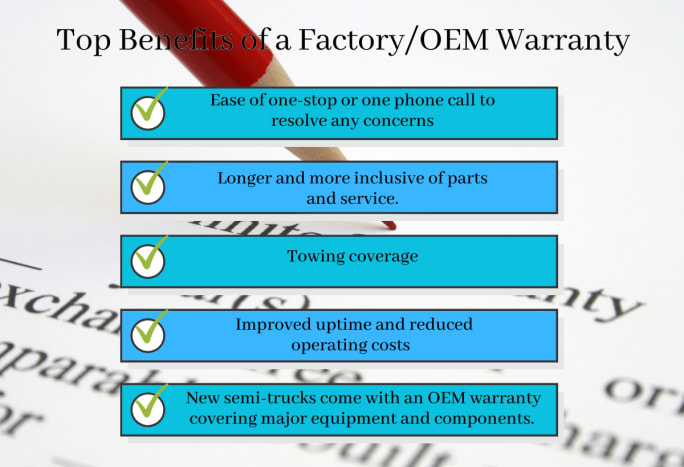
Top benefits of a factory/OEM warranty for vocational fleets.
Photo: Work Truck
When Does an Extended Warranty Make Sense?
So, when does a warranty make sense?
“All the time! A warranty makes sense for vehicles new to the fleet or currently in the fleet that meets the qualifications,” Grammel of TruNorth said.
It was unanimous. The subject-matter experts all agreed that, for work truck fleets, it’s always a good idea also to consider an extended warranty.
“Extended warranties make much sense for customers that drive longer than the standard warranty coverage to give that comfort of the truck in a higher mileage situation. It also makes sense for customers who do not drive many miles but would like the extra time to cover any repairs needed,” Tabel of ICTA said.
Once a factory/OEM warranty expires, truck fleets should protect their trucks with an extended warranty.
“Used trucks are more likely to have equipment failures. For example, if the lifetime of a Class 8 semi is 1-million miles, 80% of the truck’s life is not covered for failures that will more likely occur as the truck ages. An extended warranty extends the peace of mind the fleet had when a factory/OEM warranty covered them. Once a factory/OEM warranty expires, having an extended warranty is critical, especially because the truck is what allows them to be in business. If their truck is down and they don’t have the funds to pay for the repair quickly, they won’t work and won’t be making any money,” Ronan of National Truck Protection said. Santschi of Kenworth added an extended warranty “always makes sense since vocational customers tend to keep the truck for its whole life.”
But, as is typical in the work truck industry, there is not always a one-size-fits-all solution, and there are a few times an extended warranty may not make sense.
“It can depend on the truck application; for example, if the truck is not used on the road and is unable to travel to an authorized dealer. Or, a truck that may drive in high excess of miles per year,” Tabel of ICTA said.
Additionally, extended warranties may not be the best option for a new truck purchase.
“An extended warranty does not make sense if the trucks are new - the factory/OEM warranty should cover them. It also does not make sense if the fleet is big enough to have repair facilities in-house,” Tim Ronan, chief marketing officer for National Truck Protection Co. Inc., said.
Paying for extra coverage may not be logical for businesses with large cash reserves, which many small fleets do not.
“I can’t think of a time unless the fleet has a massive load of cash reserves specifically laid back for repairs,” Grammel of TruNorth said.
Top Questions to Ask to Determine Warranty Needs
To better understand your warranty needs, it is recommended to ask the following questions:
“How long will you keep the vehicle, and what does your service network look like?” asked Santschi of Kenworth.
“What are your current costs for maintenance and repairs?” asked Grammel of TruNorth.
“Do they have adequate maintenance facilities/mechanics to properly care for their trucks and make major equipment repairs? Do they have adequate cash reserves to pay for truck equipment repairs, especially major repairs? How long will they operate each truck (before selling it/taking it off the street)?” asked Ronan of National Truck Protection Co.
“Fleets should really discuss the different applications and miles or time driven for the salesperson to recommend the best extended warranty for each truck purchased,” said Tabel of ICTA.
Subscribe to Our Newsletter
More Maintenance & Uptime

Building a Better Vehicle Replacement Model
Meter readings still matter, but engine hours, idle time, maintenance trends, and utilization can help fleets spot costly vehicles before the odometer does.
Read More →
Sponsored•September 21, 2026
How JASPER Keeps Fleets Moving and Profitable
Every business decision within fleet management ultimately comes down to financial performance. Investing in dependable replacement powertrain components and responsive support can measurably impact the bottom line.
Read More →
Ryder Honors 2026 Top Technician at 25th Anniversary Skills Competition
Hosted in Nashville, Ryder’s 25th annual Top Technician Skills Competition honored the best technicians across the U.S. and Canada. Top Tech celebrates technician expertise while promoting growth, recognition, and camaraderie. Here are the winners.
Read More →From Our Partners
How JASPER Keeps Fleets Moving and Profitable
Sponsored by Jasper Engines & Transmissions
Basic Tracking vs Next Generation Fleet Technology
Sponsored by AT&T Business
5 Facts Every Fleet Manager Should Know About Embedded Telematics
Sponsored by Stellantis/Mobilisights
How AI Video Telematics Boosts Driver Safety and Helps to Avoid Unnecessary Costs
Sponsored by Verizon Connect

Charting the 8 Bottom-Line Benefits of Workforce Optimization
Sponsored by Verizon Connect

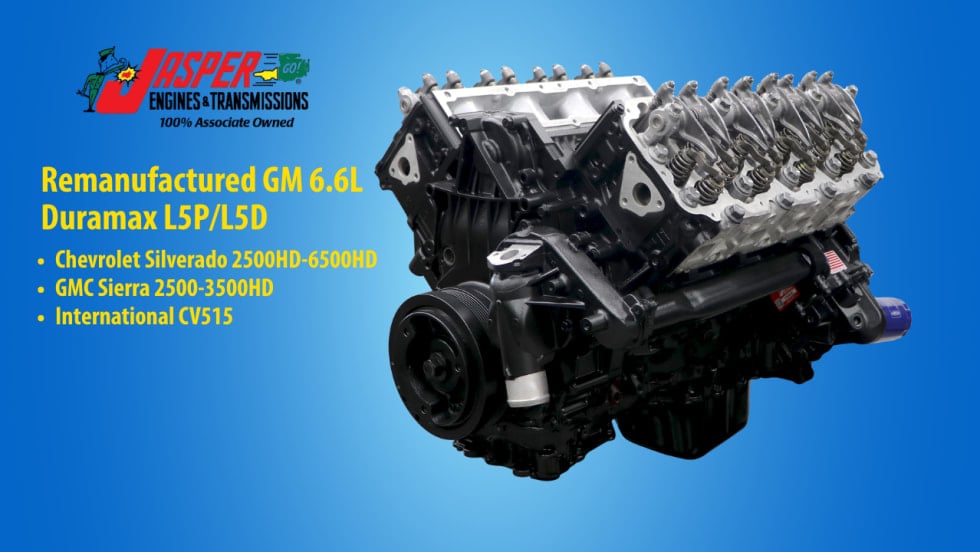
Jasper Offers GM 6.6L Duramax L5P/L5D Complete Format Diesel Engines
Jasper Engines & Transmissions now offers the remanufactured GM Duramax 6.6L L5P/L5D as a complete format engine for several General Motors and International 2017-2023 HD pickup trucks.
Read More →
Armor Equipment Strengthens Minnesota Service Capabilities with Acquisition of Dakota Truck
Armor Equipment has acquired Dakota Truck, a medium- and heavy-duty truck and trailer repair business based in Lakeville, Minnesota. The acquisition adds truck and trailer repair expertise, building on Armor’s expansion into the Upper Midwest.
Read More →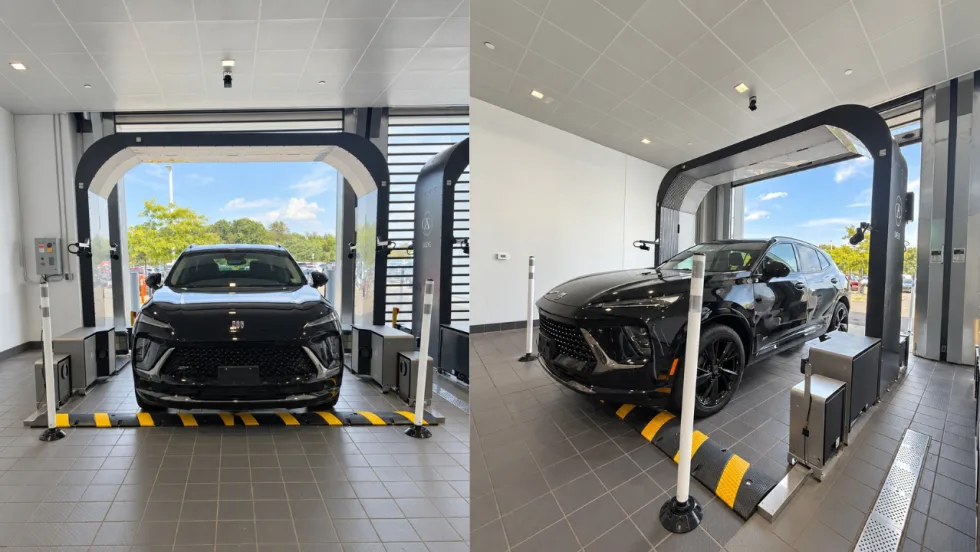
LaFontaine Partners With UVeye to Expand AI Vehicle Inspections in Michigan
LaFontaine is expanding UVeye AI vehicle inspections across Michigan, while UVeye tells Work Truck how the technology can support fleet maintenance and heavy-duty vehicle inspections.
Read More →
Les Schwab Expands Commercial Tire Footprint Into Arizona
Les Schwab Tires has expanded into Arizona with two commercial tire locations in Phoenix and Tucson, strengthening its fleet service footprint in the Southwest.
Read More →
Volvo Trucks’ 'Lock and Leave' Software Updates Go Live Across North America
Unattended over-the-air software updates are now available in Volvo trucks across the U.S. and Canada. The new capability lets trucks stay current with the latest software without interrupting operations or requiring a dealership visit.
Read More →
Why Technician Appreciation Can’t Be a Once-a-Year Thought
For fleets trying to keep skilled technicians, recognition cannot begin and end with Technician Appreciation Week. Learn what year-round appreciation really looks like and why the everyday technician experience matters just as much as pay when fleets are trying to keep good people.
Read More →
How Faster Driver Reporting Can Keep Small Truck Problems Small
When minor damage, warning lights, or equipment issues are reported late, small problems can quickly become bigger maintenance headaches. Conversational AI can help shorten the path from what a driver notices in the field to the person who can act on it.
Read More →