





Learn More: Lion Electric, Geotab Develop Electric-Vehicle Telematics
Lion Electric Announces U.S. Manufacturing Facility
Lion Electric's new facility in Illinois will represent the largest dedicated production site for zero-emission medium- and heavy-duty vehicles in the U.S., according to the company.
May 7, 2021
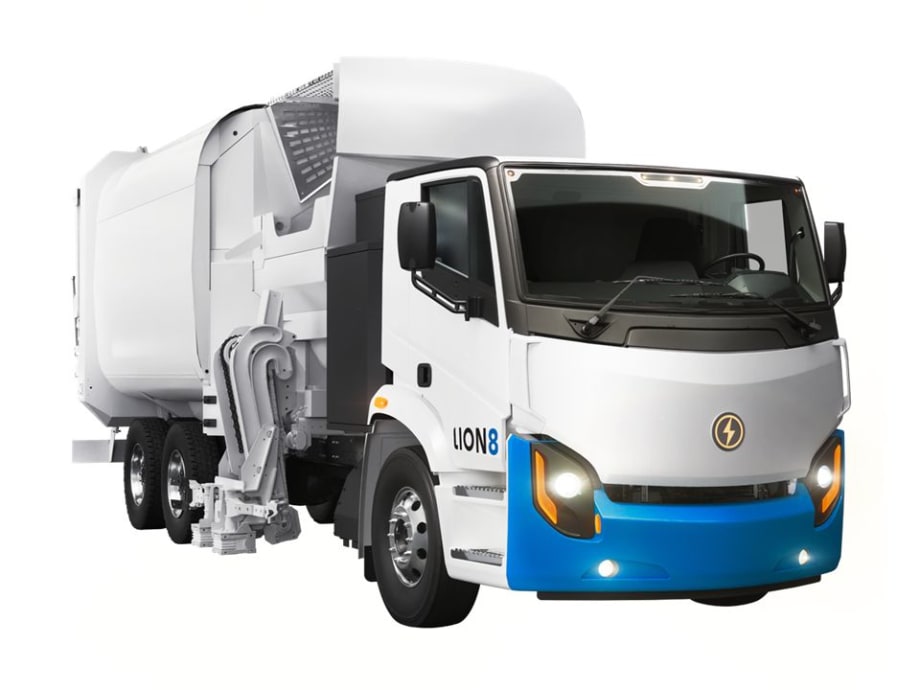
The Lion8 Refuse truck is one of the electric heavy-duty vehicles produced by Lion Electric.
Photo: Lion Electric
3 min to read
The Lion Electric Company, a Canadian-based manufacturer of all-electric medium- and heavy-duty urban vehicles, has selected Joliet, Illinois, for the construction of its U.S. manufacturing facility.
The new facility will represent the largest dedicated production site for zero-emission medium- and heavy-duty vehicles in the U.S., according to the company, and Lion’s biggest footprint in the market. As part of its agreement with the government of Illinois, Lion has committed to an initial investment of at least $70 million over a three-year period.
The 900,000 sq.-ft. facility, for which building ramp up is anticipated in the second half of 2021, is expected to have an annual production capacity of up to 20,000 all-electric buses and trucks.
This additional production capacity will aid Lion in scaling electric bus production as the U.S. market moves to electrify a large portion of its school bus fleet, as well as to produce a larger number of heavy-duty zero-emission trucks as governments and operators throughout the U.S. look to decarbonize freight and transportation fleets. Lion anticipates that the first vehicles will roll off the production line in the second half of 2022.
“Lion is the leader in electric school buses and has always been dedicated to the U.S. market, and our commitment to be close to our customers is one of the core values we have as a company," said Marc Bedard, CEO and founder of Lion, in a news release. "This significant expansion into the U.S. market will not only allow us to drastically increase our overall manufacturing capacity of electric trucks and buses but to also better serve our customers, while adding critical clean manufacturing jobs that will form the backbone of the green economy."
In a press conference on May 7, the same day Lion traded as a public company on the New York Stock Exchange for the first time, Illinois Gov. J.B. Pritzker called the move an important part of the state's commitment to the electric vehicle industry. Illinois has a goal of 1 million EVs operating in the state by 2030.
“We’re thinking big when it comes to building our EV industry, and Lion Electric is an important new partner in that," Pritzker said.
While Lion's Bedard was not able to be there in person due to COVID-19 travel restrictions, he participated virtually, saying the move will help Lion meet demand for made-in-America products and also bring its manufacturing closer to its customer base.
"We have been manufacturing electric buses since 2016 and have the tarck record and the resources to drive the electrification process in Illinois and everywhere across North America," he said.
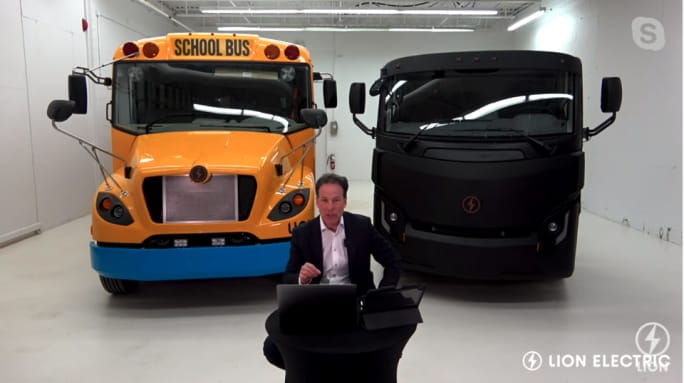
Marc Bedard, CEO and founder of Lion, participating virtually in a press conference announcing the new Illinois manufacturing facility.
Photo: Screen shot from press conference live stream
The facility will be manufacturing a full lineup of Class 5 to 8 vehicles, designed for urban operations with ranges of less than 250 miles. This includes school and transit buses, delivery trucks, refuse trucks, bucket trucks, moving trucks, etc.
"We have seven different models that we are selling right now, and the Joliet facility will produce up to 15 models over the next two years," he said – four bus models and 11 truck models.
Over the past decade, Lion has delivered more than 390 all-electric heavy-duty vehicles in North America, with more than 7 million miles driven since 2016. All of Lion’s vehicles are purpose-built for electric propulsion from the ground up, assembled in North America and are distributed and serviced through the company’s network of Experience Centers, including locations in California, New York, Washington, Florida, and Arizona.
More Green Fleet

Fleet Forward Conference Introduces One-Day Passes for 2026
New one-day registration gives fleet professionals the flexibility to attend Tuesday, Wednesday, or Thursday, with passes available for $199 through Sept. 18.
Read More →
CALSTART Rebrands as Catalyst Mobility, Will Combine with Forth in 2027
CALSTART has rebranded as Catalyst Mobility and will combine with Forth at the start of 2027. The new organization said it is poised to become one of the world's largest, strongest, and most impactful clean transportation nonprofits.
Read More →
Electric Truck and Charging Programs to Boost Sustainability at NY & NJ Ports
Together, the Port Authority of New York and New Jersey and CALSTART will electrify drayage and terminal operations serving the East Coast’s busiest container port. A pair of incentive programs totaling $45 million has launched to accelerate adoption of zero-emission drayage trucks and terminal tractors.
Read More →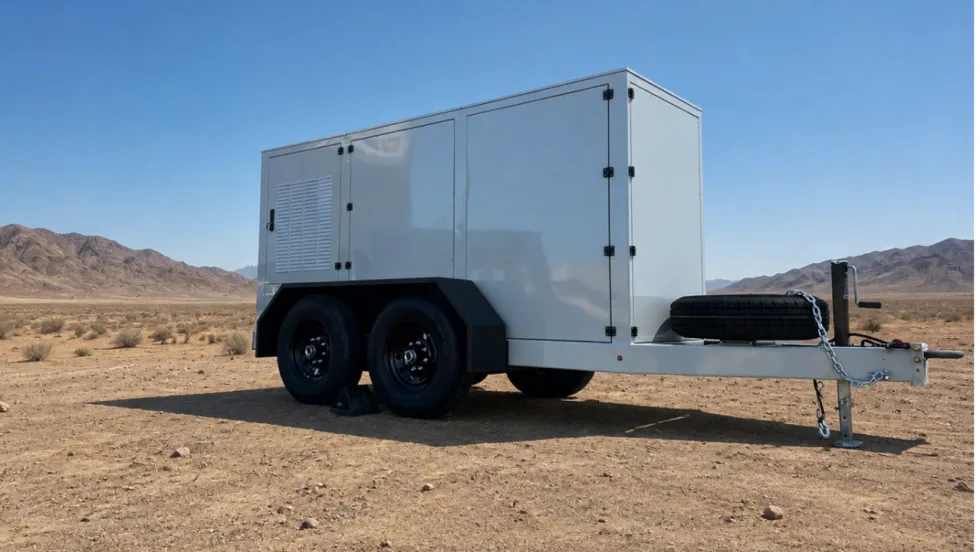
Xos Hub Surpasses One Gigawatt-Hour of Energy Delivered in the Field
A single Xos Hub has surpassed one gigawatt-hour of energy across more than 33,600 charging sessions in the field, demonstrating performance that supports Xos' expansion across new products and markets.
Read More →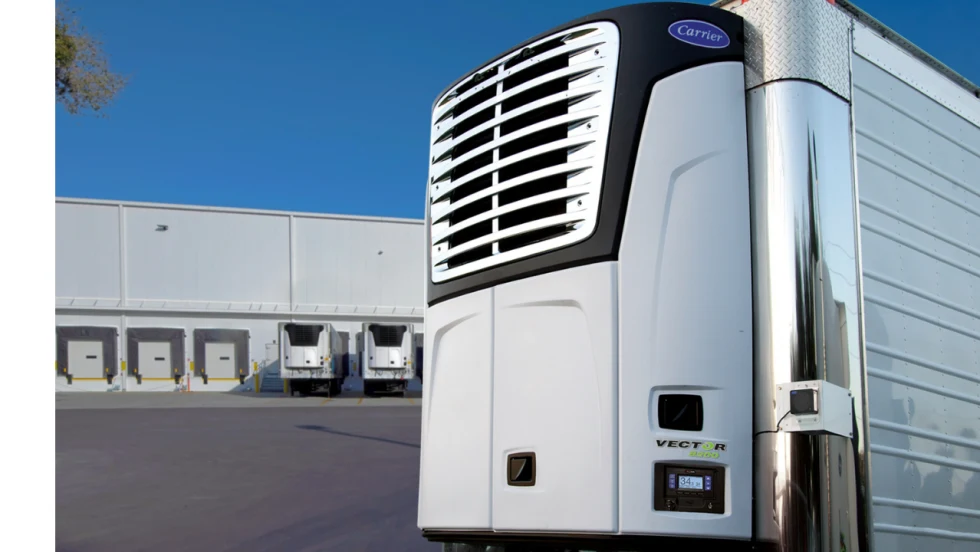
Carrier Transicold Launches All-Electric Vector 8200 TRU for Diesel-Free On-Site Cold Storage
Carrier Transicold’s first engineless multi-temperature TRU helps fresh- and frozen-food fleets add supplemental cold storage capacity during seasonal peaks.
Read More →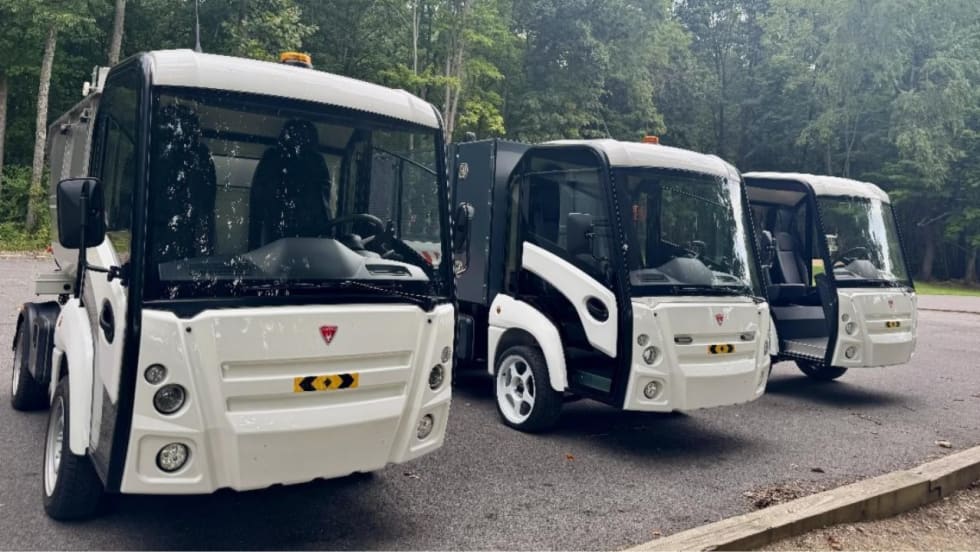
Narro Trucks Introduces Electric Utility Vehicle
Narro Trucks officially launched its operations on Aug. 20 and hosted a ride and drive to showcase its electric truck, which will be produced in Virginia.
Read More →
Samsung SDI Takes Full Control of GM Battery JV as Indiana Plant Pivots to Energy Storage
Samsung SDI is taking full control of its Indiana battery plant with GM, marking a major shift from the EV-focused joint venture Charged Fleet first covered in 2023.
Read More →
NWSA Taps CALSTART to Administer Zero-Emission Drayage Assistance Program
CALSTART will provide free technical assistance services to drayage fleets serving the Ports of Seattle and Tacoma and looking to transition to cleaner technologies and help decarbonize freight hubs.
Read More →
EV Fleet Reality Check: What Operators Wish They Knew Before Electrifying Their Work Vans
Electric work truck upfits bring new compatibility questions. Learn how parts availability, OEM guidance, power demands, and route planning can affect fleet performance.
Read More →
Peterbilt Expands Sourcewell Partnership with Electric Vehicle Lineup
Peterbilt Motors Company’s cooperative purchasing agreement with Sourcewell and its Canadian partner, Canoe Procurement Group, now includes including Peterbilt's battery-electric vehicle lineup.
Read More →