




VW Apologizes, Promises Imminent Diesel Fix
The CEO of Volkswagen's North American automotive business offered a rare public apology at the Los Angeles Auto Show on a press day that's usually filled with glossy vehicle reveals, and said the company is on the verge of revealing its plan to fix the nearly 500,000 diesel vehicles sold in the U.S. with an emissions software cheat.

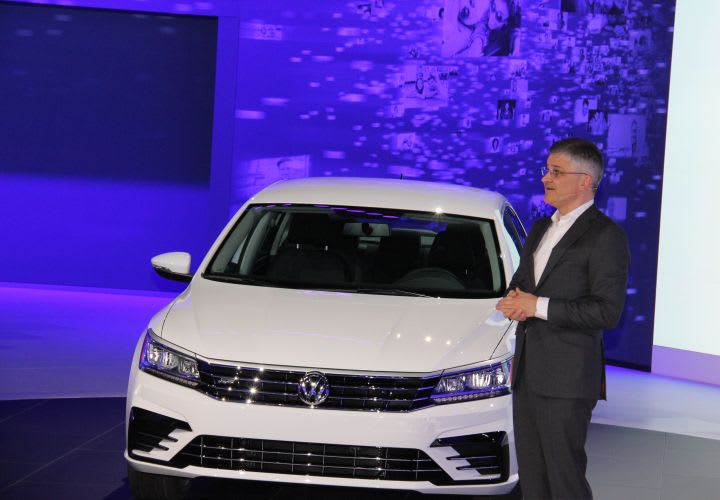
Photo of Michael Horn speaking at the L.A. Auto Show by Paul Clinton.
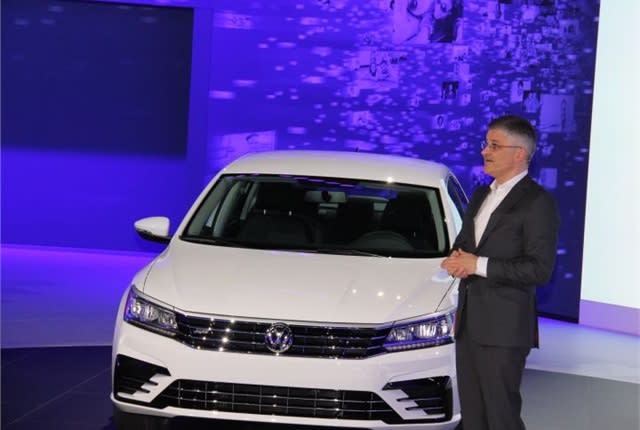
Photo of Michael Horn speaking at the L.A. Auto Show by Paul Clinton.
The CEO of Volkswagen's North American automotive business offered a rare public apology at the Los Angeles Auto Show on a press day that's usually filled with glossy vehicle reveals, and said the company is on the verge of revealing its plan to fix the nearly 500,000 diesel vehicles sold in the U.S. with an emissions software cheat.
During the Volkswagen press conference, Michael Horn said the company would "announce something soon," as it works to retain goodwill with its dealers and customers. Volkswagen must submit a plan to the California Air Resources Board by Friday about how it plans to fix diesel vehicles with four-cylinder engines that release as much as 40 times the permitted amount of nitrogen oxide.
"Nothing is more important to me than the satisfaction of our customers and to make things right," Horn said. "We understand that apologies are not enough."
Horn said about 120,000 retail customers have taken advantage of a goodwill package that included two $500 gift cards and 24-hour roadside assistance for three years. The company is working separately with its commercial fleet customers.
The EPA has claimed its 3.0L six-cylinder engines included the software cheat. Horn said that issue needs "to be clarified" between the automaker and regulators.
Horn said the company remains committed to the North American market and showed the redesigned 2016 Passat mid-size sedan and the Golf GTE plug-in hybrid concept. Volkswagen AG has indicated earlier that it plans to shift toward electrified powertrains to meet national fuel economy standards.
Audi executives also addressed the diesel emissions scandal that has affected less than 20,000 Audi vehicles in the U.S. It's "a challenge we intent to meet," said Scott Keogh, president of Audi of America.
"Trust is what cements us to our dealers, and we are going to work to restore that trust," Keogh added.
Keogh alluded to a possible shift from diesel to electrified powertrains. The company sees an opportunity and "now is the time to mainstream it." Keogh expects electrified powertrains to make up 25% of Audi sales in the U.S. in 2025.
Originally posted on Automotive Fleet
More Small Fleet


Developing Budget-Friendly Driver Safety Programs
From driver training and safety meetings to one-on-one coaching and incentive programs, several small fleets share how they have developed a safety culture with their drivers using low- to no-cost resources.
Read More →
Boosting Last-Mile Fleet Uptime, Safety, and Value with AI Vehicle Inspections
AI-powered inspections are transforming last-mile fleets by replacing manual checks with highly accurate automated scans that detect defects in seconds. By giving fleet operations visibility into the daily condition of their vehicles, you can identify trends over the vehicle’s lifecycle that enable improved procurement decisions, route management, driver training and accountability.
Read More →
Five Ways Seat Belts Help Prevent Injuries
There are five ways seat belts protect occupants from injuries, according to the Tennessee Department of Safety and Homeland Security.
Read More →
It’s here: The 2026 Fleet Technology Trends Report
What does AI mean for fleets? Get the answer — and learn other top tech trends.
Read More →
Small Fleets, Big Impact: How Independent Drivers Power Wreaths Across America
Check out how small fleets and independent drivers power Wreaths Across America each December and why their impact matters more than ever.
Read More →
VMS Survey Finds 65% of Small Fleet Managers Run Operations Alone
A new VMS survey shows small fleet managers are stretched thin, with most handling operations solo and eager to adopt digital tools for relief.
Read More →
Tips for Driving Safely on Halloween Night
This video features a reminder from the Connecticut Department of Transportation (DOT) and the Connecticut Police Chiefs Association, urging drivers to prioritize safety this Halloween.
Read More →
AI, Access, and Uptime: VMS’s Next Chapter with David Prusinski
VMS’s new Co-CEO, David Prusinski, shares how an AI-first approach will give small fleets and repair shops the tools to compete like big players.
Read More →
Fleet Managers Share Winter Prep Tips: It's Never Too Early!
Three fleets share best practices to prep vehicles for winter and prevent downtime when the cold sets in.
Read More →