




Volvo Dashboard Sensors Take Aim at Drowsy Driving
A dashboard-mounted sensor monitors the driver’s state of attentiveness and focus, and then activates safety support systems accordingly.
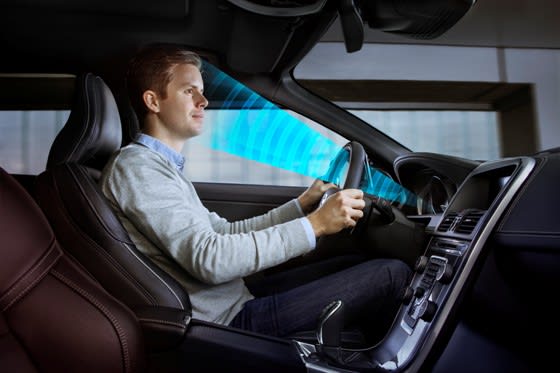
A sensor that can detect where the driver is looking is part of Volvo Cars’ work to develop cars that can recognize if the driver is tired or inattentive. Photo courtesy of Volvo Cars.
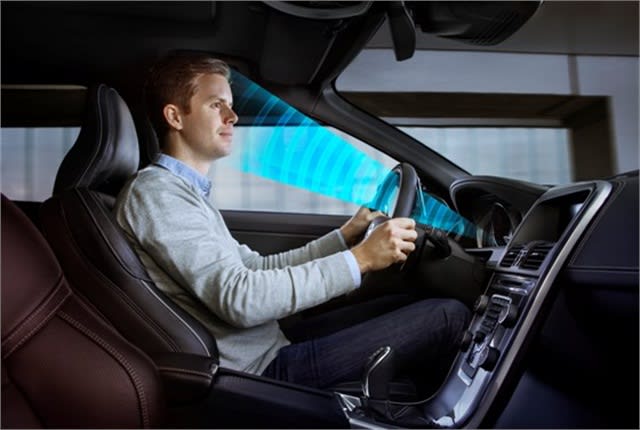
A sensor that can detect where the driver is looking is part of Volvo Cars’ work to develop cars that can recognize if the driver is tired or inattentive. Photo courtesy of Volvo Cars.
Volvo Cars is researching the use of sensors that can recognize whether a driver is tired or inattentive. When necessary, the car could activate safety support systems such as Lane Keeping Aid and even take measures to awaken the driver.
“This will enable the driver to be able to rely a bit more on their car, and know that it will help them when needed,” said Per Landfors, Volvo Cars engineer and project leader for driver support functions.
A sensor placed on the dashboard could monitor conditions such as the direction of the driver’s gaze, how open the driver’s eyes are, as well as head position and angle. As a result, the safety system could detect the driver’s state and adjust the car’s safety support systems accordingly.
These systems will ensure that the vehicle doesn’t stray out of its lane or get too close to the car in front when the driver is not paying attention. The car will also be capable of awakening a driver who is falling asleep, Volvo said.
“Since the car is able to detect if a driver is not paying attention, safety systems can be adapted more effectively,” Landfors explained. “For example, the car's support systems can be activated later on if the driver is focused, and earlier if the driver’s attention is directed elsewhere.”
Some of the current systems that can be included are Lane Keeping Aid, Collision Warning with full auto brake and Adaptive Cruise Control with Queue Assist.
The technology is based on a sensor mounted on the dashboard in front of the driver. Small LEDs illuminate the driver with infrared light, which is then monitored by the sensor. Infrared light is just outside the wavelengths that the human eye can see, which means that the person behind the wheel doesn’t notice it at all.
Driver sensors are also opening up other possibilities. By monitoring eye movements, the car could adjust both interior and exterior lighting to follow the direction in which the driver is looking. The car could also adjust seat settings, for instance, simply by recognizing the person sitting behind the wheel.
“This could be done by the sensor measuring between different points on the face to identify the driver, for example,” Landfors said. “At the same time, however, it is essential to remember that the car doesn’t save any pictures nor does it have a driver surveillance function.”
The technology is already installed in test vehicles. Volvo Cars is also conducting research with such partners as Chalmers University of Technology and Volvo AB to identify methods for detecting driver fatigue and inattention.
The analysis of the driver’s state, known as “driver state estimation,” is a field that may be key to self-driving cars in the future. The car will need to independently determine whether the driver is capable of taking control when the conditions for driving autonomously are no longer present. A driver sensor could be of assistance in this, Volvo said.
The company said this technology is one of many initiatives bringing Volvo Cars closer to its goal for 2020 – that no one shall be killed or seriously injured in a new Volvo.
Originally posted on Automotive Fleet
More Small Fleet


Developing Budget-Friendly Driver Safety Programs
From driver training and safety meetings to one-on-one coaching and incentive programs, several small fleets share how they have developed a safety culture with their drivers using low- to no-cost resources.
Read More →
Boosting Last-Mile Fleet Uptime, Safety, and Value with AI Vehicle Inspections
AI-powered inspections are transforming last-mile fleets by replacing manual checks with highly accurate automated scans that detect defects in seconds. By giving fleet operations visibility into the daily condition of their vehicles, you can identify trends over the vehicle’s lifecycle that enable improved procurement decisions, route management, driver training and accountability.
Read More →
Five Ways Seat Belts Help Prevent Injuries
There are five ways seat belts protect occupants from injuries, according to the Tennessee Department of Safety and Homeland Security.
Read More →
It’s here: The 2026 Fleet Technology Trends Report
What does AI mean for fleets? Get the answer — and learn other top tech trends.
Read More →
Small Fleets, Big Impact: How Independent Drivers Power Wreaths Across America
Check out how small fleets and independent drivers power Wreaths Across America each December and why their impact matters more than ever.
Read More →
VMS Survey Finds 65% of Small Fleet Managers Run Operations Alone
A new VMS survey shows small fleet managers are stretched thin, with most handling operations solo and eager to adopt digital tools for relief.
Read More →
Tips for Driving Safely on Halloween Night
This video features a reminder from the Connecticut Department of Transportation (DOT) and the Connecticut Police Chiefs Association, urging drivers to prioritize safety this Halloween.
Read More →
AI, Access, and Uptime: VMS’s Next Chapter with David Prusinski
VMS’s new Co-CEO, David Prusinski, shares how an AI-first approach will give small fleets and repair shops the tools to compete like big players.
Read More →
Fleet Managers Share Winter Prep Tips: It's Never Too Early!
Three fleets share best practices to prep vehicles for winter and prevent downtime when the cold sets in.
Read More →