




Video: Safety Advocates Seek to Toughen Florida Texting Ban
The current law, which went into effect Oct. 1, is categorized as a secondary offense. As such, critics argue, the ban has failed to curtail texting while driving on Florida roads.
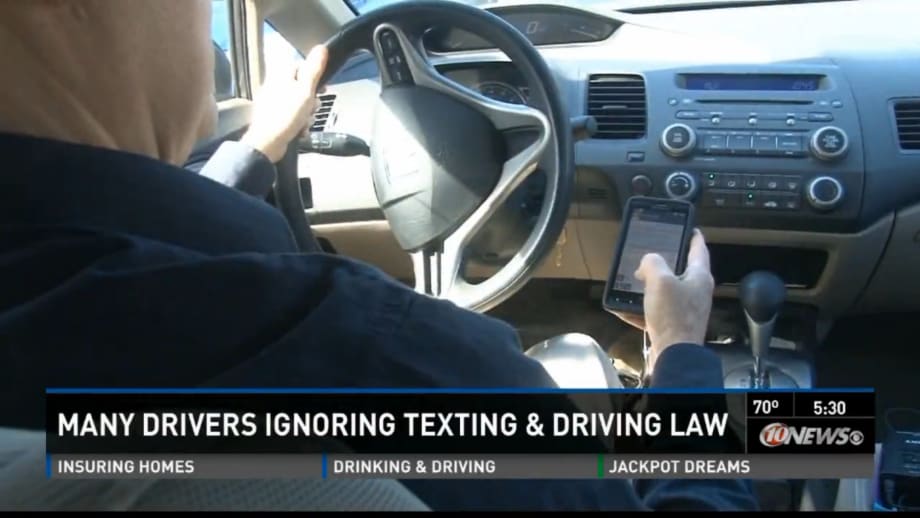
Florida’s ban on texting while driving took effect Oct. 1, but some safety advocates including AAA continue to push for legislative reforms that will categorize the law as a primary offense rather than a secondary one.
As the law currently stands, police cannot pull over and ticket a driver for a texting offense alone. Officers can issue a texting citation only if the driver was pulled over for a different infraction. The current law also allows drivers to send and receive text messages while the vehicle is motionless at a stop signal. As a result, this law has resulted in few citations and hasn’t had much impact, some safety advocates argue.
State Senator Maria Sachs (D-Delray Beach) has introduced a bill that would make texting while driving a primary offense. Moreover, Representative Richard Stark (D-Weston) has introduced a measure that would double fines for texting while driving in school zones or designated school crossings.
Legislators are expected to consider these bills in March, but opposition is expected to be formidable. Opponents can point to some research suggesting that texting bans in general are ineffective as a deterrent.
Below is a video report from CBS Channel 10 News in Tampa Bay:
Originally posted on Automotive Fleet
More Small Fleet


Developing Budget-Friendly Driver Safety Programs
From driver training and safety meetings to one-on-one coaching and incentive programs, several small fleets share how they have developed a safety culture with their drivers using low- to no-cost resources.
Read More →
Boosting Last-Mile Fleet Uptime, Safety, and Value with AI Vehicle Inspections
AI-powered inspections are transforming last-mile fleets by replacing manual checks with highly accurate automated scans that detect defects in seconds. By giving fleet operations visibility into the daily condition of their vehicles, you can identify trends over the vehicle’s lifecycle that enable improved procurement decisions, route management, driver training and accountability.
Read More →
Five Ways Seat Belts Help Prevent Injuries
There are five ways seat belts protect occupants from injuries, according to the Tennessee Department of Safety and Homeland Security.
Read More →
It’s here: The 2026 Fleet Technology Trends Report
What does AI mean for fleets? Get the answer — and learn other top tech trends.
Read More →
Small Fleets, Big Impact: How Independent Drivers Power Wreaths Across America
Check out how small fleets and independent drivers power Wreaths Across America each December and why their impact matters more than ever.
Read More →
VMS Survey Finds 65% of Small Fleet Managers Run Operations Alone
A new VMS survey shows small fleet managers are stretched thin, with most handling operations solo and eager to adopt digital tools for relief.
Read More →
Tips for Driving Safely on Halloween Night
This video features a reminder from the Connecticut Department of Transportation (DOT) and the Connecticut Police Chiefs Association, urging drivers to prioritize safety this Halloween.
Read More →
AI, Access, and Uptime: VMS’s Next Chapter with David Prusinski
VMS’s new Co-CEO, David Prusinski, shares how an AI-first approach will give small fleets and repair shops the tools to compete like big players.
Read More →
Fleet Managers Share Winter Prep Tips: It's Never Too Early!
Three fleets share best practices to prep vehicles for winter and prevent downtime when the cold sets in.
Read More →