




Video: Keeping the Right Following Distance
Maintaining a safe driving space around the vehicle is largely something that drivers can control. While many of us have been taught to focus on space — keeping several car lengths between one's vehicle and the car ahead — a better formula concerns time.
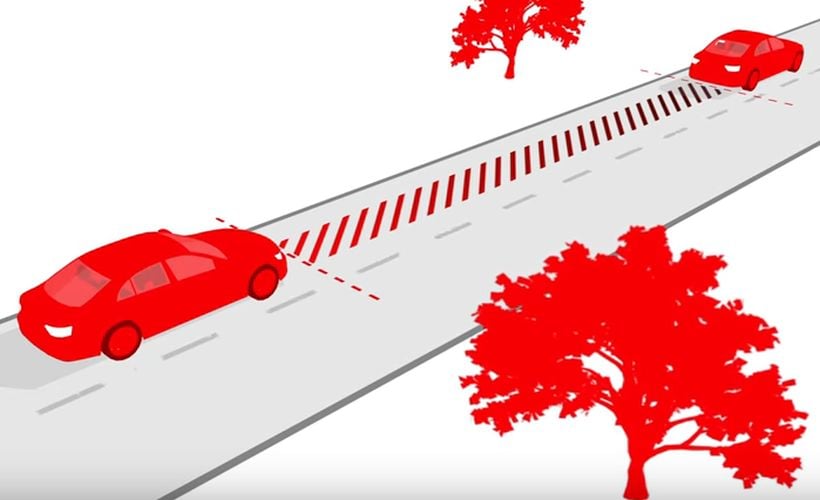
Following distance can vary depending on the vehicle you're driving.
Screenshot via The Traverlers.
Maintaining a safe driving space around the front, side, and rear of your vehicle so it will be less vulnerable to collisions is largely something that drivers can control.
Consider, for example, following distance. Drivers can be in command of proper following distance. Yet, even the most seasoned professional drivers can use a reminder about best practices.
While many of us have been taught to focus on space — keeping several car lengths between one's vehicle and the car ahead — a better formula concerns time.
For drivers, it takes 1.5 seconds to notice a potential risk in front of their vehicle and another 1.5 seconds to react, hit the brakes and slow down.
That's why the "three-second rule" was born. The idea is to make sure that there is always at least three seconds of time between your vehicle and the vehicle just ahead.
The way to do so is easy. Drivers should wait for the vehicle ahead to pass a set object such as a tree, lamppost, or large rock. Once that vehicle passes it, start counting. If your vehicle reaches the object before you get to three, your following distance is too close and you need to adjust it by dropping back a bit.
What's more, there are times you need to add more seconds to the formula. For example, in bad weather add one second; if driving an SUV, add one second; and large commercial vehicles should add three seconds.
In addition, some experts recommend that following distance should be two times bigger in the winter versus the summer.
Always bear in mind that the faster you drive, the more time and space it takes to stop or maneuver your vehicle, notes AAA.
AAA also points out that in addition to speed, there are three other factors that can impact on your safe driving space. These include:
Visibility: If you can't see at least 12 seconds ahead, you need more following space.
Road conditions: It's always smart to leave more following space when driving around tight curves, over hills, or when obstacles are in the road.
Traffic: Bear in mind that other motorists may make erratic moves in traffic jams, so a longer following distance is wise.
Originally posted on Automotive Fleet
More Small Fleet


Developing Budget-Friendly Driver Safety Programs
From driver training and safety meetings to one-on-one coaching and incentive programs, several small fleets share how they have developed a safety culture with their drivers using low- to no-cost resources.
Read More →
Boosting Last-Mile Fleet Uptime, Safety, and Value with AI Vehicle Inspections
AI-powered inspections are transforming last-mile fleets by replacing manual checks with highly accurate automated scans that detect defects in seconds. By giving fleet operations visibility into the daily condition of their vehicles, you can identify trends over the vehicle’s lifecycle that enable improved procurement decisions, route management, driver training and accountability.
Read More →
Five Ways Seat Belts Help Prevent Injuries
There are five ways seat belts protect occupants from injuries, according to the Tennessee Department of Safety and Homeland Security.
Read More →
It’s here: The 2026 Fleet Technology Trends Report
What does AI mean for fleets? Get the answer — and learn other top tech trends.
Read More →
Small Fleets, Big Impact: How Independent Drivers Power Wreaths Across America
Check out how small fleets and independent drivers power Wreaths Across America each December and why their impact matters more than ever.
Read More →
VMS Survey Finds 65% of Small Fleet Managers Run Operations Alone
A new VMS survey shows small fleet managers are stretched thin, with most handling operations solo and eager to adopt digital tools for relief.
Read More →
Tips for Driving Safely on Halloween Night
This video features a reminder from the Connecticut Department of Transportation (DOT) and the Connecticut Police Chiefs Association, urging drivers to prioritize safety this Halloween.
Read More →
AI, Access, and Uptime: VMS’s Next Chapter with David Prusinski
VMS’s new Co-CEO, David Prusinski, shares how an AI-first approach will give small fleets and repair shops the tools to compete like big players.
Read More →
Fleet Managers Share Winter Prep Tips: It's Never Too Early!
Three fleets share best practices to prep vehicles for winter and prevent downtime when the cold sets in.
Read More →