




U.S. Vehicle Quality Improving; Still Behind Japan: Consumer Reports
New cars and trucks from Detroit's automakers have far fewer squeaks, rattles and broken parts than they did 20 years ago, but they still have twice as many problems as vehicles from Japanese automakers, according to Consumer Reports magazine. The report comes amid urgent efforts to improve quality at General Motors Corp., Ford Motor Co. and the Chrysler arm of DaimlerChrysler AG. With U.S. market share dropping, higher quality appears to be one of the few ways to win back American buyers. In its April issue, the magazine reviewed 20 years of data generated from annual surveys returned by about 500,000 subscribers. It found that overall quality -- measured as problems per 100 vehicles -- had improved dramatically. In 1980, the average trouble rate for all vehicles sold in the United States was 88 problems per 100; by 2000, the rate was 20 per 100. According to David Champion, auto test director for Consumer Reports, GM, Ford and Chrysler had made substantial gains since 1980, and now averaged 23 problems per 100 cars and trucks. Many of those gains were made in trucks and sport utility vehicles, which went from having worse-than-average quality to matching that of cars. But Champion also said major Japanese automakers, including Toyota Motor Co., Honda Motor Co. Ltd. and Nissan Motor Co. Ltd. continued to have the highest quality - 11 problems per 100 vehicles - regardless of whether they were built in Japan or the U.S. European automakers had 20 problems per 100 vehicles. Champion said consumers should be able to get 150,000 to 200,000 miles out of a well-maintained vehicle today. The Consumer Reports survey matches results from other organizations that track vehicle quality. According to Brian Walters, director of product research for J.D. Power & Associates, his company's surveys found a 50 percent improvement over the past decade in problems reported in the first 90 days of ownership. Once again, the Japanese lead, followed by European and American makes, with Korean manufacturers trailing. But Walters said less improvement was being found in J.D. Power surveys of durability, or problems with vehicles that are four to five years old - a measure he said was far more critical to automakers' future. While the Japanese-European-American order holds true for long-term quality, Walters said initial quality did not predict whether a model would be prone to future problems. Improving quality has been a perennial battle cry in Detroit for decades, but improvements have taken on a new urgency in recent months in the face of sliding market share, slowing sales, a weaker U.S. economy and a ever-growing number of import models. Quality problems appeared to hit Ford hardest last year, when the company had to deal with a long list of recalls and troubled launches of new vehicles. Ford CEO Jac Nasser told analysts at the Detroit auto show in January that he was very angry about the problems, which had cost the company more than $1 billion last year. Ford has adopted a quality improvement program, where hundreds of employees are assigned to fix problems throughout the company. GM has a similar program in place, although with a smaller scope. Chrysler has taken a different tack, setting up what amounts to a morgue near company headquarters for thousands of broken vehicle parts replaced under warranty. The automaker collects and sorts the parts, then reviews the problems with suppliers to spot trends and make changes. Walters said about two-thirds of the problems J.D. Power finds can be traced to engineering or design flaws, while about 30 percent come from manufacturing. According to industry analysts, some of the differences in quality stem from the different cultures of the automakers. They say quality has been a higher priority at Japanese and European automakers, who faced less pressure for short-term financial performance than U.S. automakers.
More Small Fleet

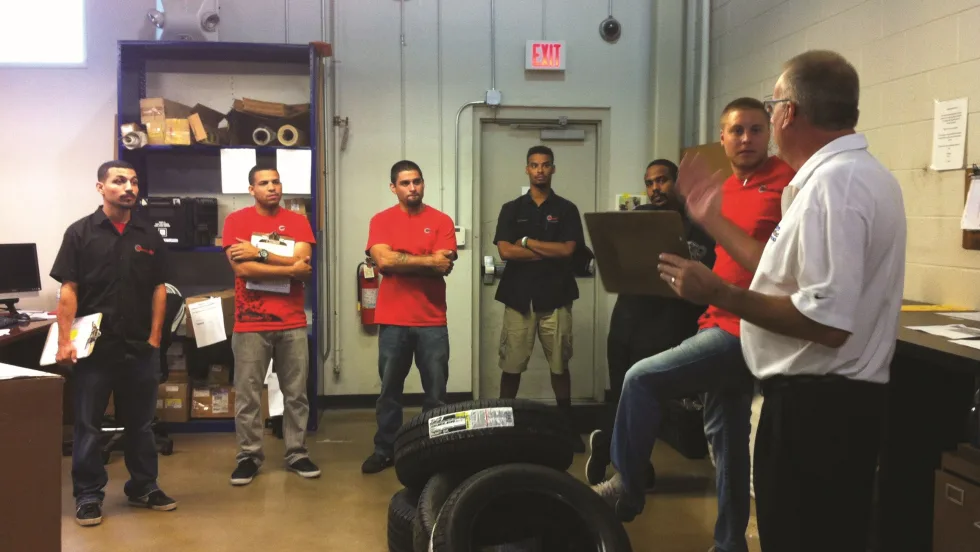
Developing Budget-Friendly Driver Safety Programs
From driver training and safety meetings to one-on-one coaching and incentive programs, several small fleets share how they have developed a safety culture with their drivers using low- to no-cost resources.
Read More →
Boosting Last-Mile Fleet Uptime, Safety, and Value with AI Vehicle Inspections
AI-powered inspections are transforming last-mile fleets by replacing manual checks with highly accurate automated scans that detect defects in seconds. By giving fleet operations visibility into the daily condition of their vehicles, you can identify trends over the vehicle’s lifecycle that enable improved procurement decisions, route management, driver training and accountability.
Read More →

Five Ways Seat Belts Help Prevent Injuries
There are five ways seat belts protect occupants from injuries, according to the Tennessee Department of Safety and Homeland Security.
Read More →
Basic Tracking vs Next Generation Fleet Technology
Fleet software is getting more sophisticated and effective than ever, tying big data models together to transform maintenance, safety, and the value of your existing tech stack. Fleet technology upgrades are undoubtedly an investment, but updated technology can offer a much higher return. Read how upgrading your fleet technology can increase the return on your investment.
Read More →
It’s here: The 2026 Fleet Technology Trends Report
What does AI mean for fleets? Get the answer — and learn other top tech trends.
Read More →
Small Fleets, Big Impact: How Independent Drivers Power Wreaths Across America
Check out how small fleets and independent drivers power Wreaths Across America each December and why their impact matters more than ever.
Read More →
VMS Survey Finds 65% of Small Fleet Managers Run Operations Alone
A new VMS survey shows small fleet managers are stretched thin, with most handling operations solo and eager to adopt digital tools for relief.
Read More →
Tips for Driving Safely on Halloween Night
This video features a reminder from the Connecticut Department of Transportation (DOT) and the Connecticut Police Chiefs Association, urging drivers to prioritize safety this Halloween.
Read More →
AI, Access, and Uptime: VMS’s Next Chapter with David Prusinski
VMS’s new Co-CEO, David Prusinski, shares how an AI-first approach will give small fleets and repair shops the tools to compete like big players.
Read More →