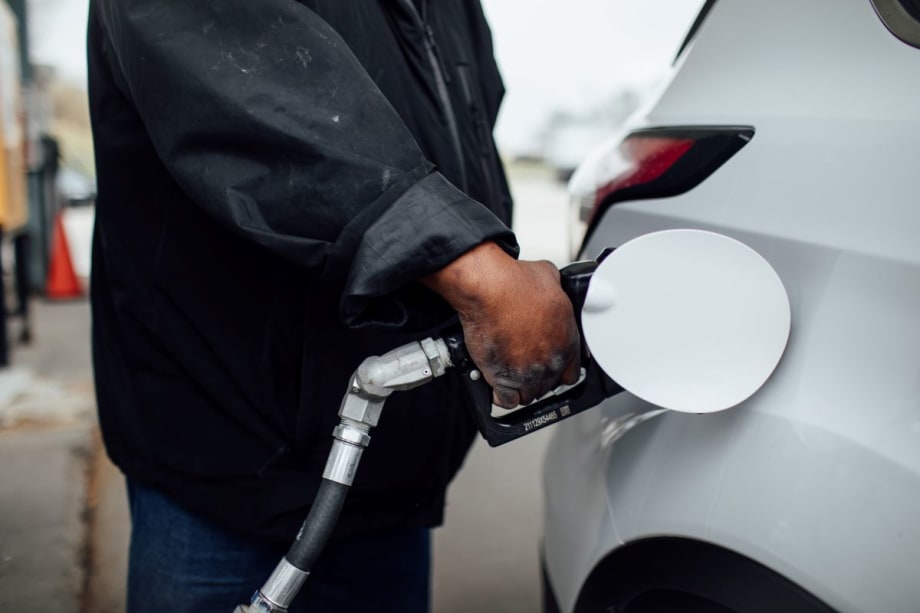
Understanding how to collect fuel data and from where, as well as its role in fleet reporting, can give you better control over fleet-wide fuel spending while providing insights into potential problem areas.
by Rachael Plant, Fleetio
July 14, 2022
Address issues and save money by consolidating your fleet's data in real-time with fleet management software.
Photo: Fleetio
5 min to read
Breaking Down Data
Fleet management software (FMS) and solutions work in conjunction to give users powerful insights into the health and operation of their fleet. As more software integrations become available — including finance, human resources and other organization-wide integrations — so does the potential to get bogged down in data. Understanding Fleet Data: Fuel breaks down the different types of fleet data you can glean from FMS and other solutions to give fleet managers a better understanding of:
Ad Loading...
What data is collected from what source
How collected data interacts to provide in-depth insights for proactive actions
How to apply insights practically to improve fleet operations
Ad Loading...
There are several ways you can collect fuel data, and your options depend largely on what fleet solutions you’re using and how they interact.
Leveraging Spreadsheet Data
Manual fuel tracking is one of the cheapest methods of managing fuel. You can build your own spreadsheet or customize a free template to capture such data as vehicle and driver ID, odometer reading, date and time of purchase, cost per unit and the number of units purchased, location and vendor. The downside to manual tracking is that the potential for human error is greater when keying in crucial information, leading to incomplete or inaccurate data. Additionally, you have to rely on all your drivers to bring you their fuel receipts at the end of the day, and some receipts may get lost in the shuffle.
Automated methods for fuel tracking, such as fuel cards, telematics, and FMS, allow you to use your data more efficiently than if you were to manually collect it.
Manual fuel tracking may be a cheap method for managing fuel but that comes with the downside of potential human error.
Photo: Fleetio
Leveraging Fuel Card Data
Fuel cards offer many benefits for fleets, and a big one is the amount of data they collect automatically. When your drivers visit the pump, they’re typically prompted to key in their driver ID and the vehicle’s odometer reading, while the transaction itself captures the number of gallons or liters pumped and cost per unit, fuel grade, location, and date and time of fueling. You can use these data points to monitor:
Fuel economy: You can use odometer readings and the number of gallons or liters purchased to track a vehicle’s fuel consumption over time. When tracking fuel consumption, it’s good practice to establish the vehicle’s baseline fuel economy for comparison. By comparing a vehicle’s baseline fuel economy against its consumption, you can determine how closely it’s performing to expectations. If the vehicle’s fuel economy drops below baseline, you may have an issue that needs addressing.
Fuel card misuse: Fueling location and time of fueling data keeps you apprised of where and when your drivers are filling up, allowing you to see if any drivers are using their fuel card at inappropriate times or locations. Number of gallons or liters purchased additionally helps reduce potential theft. If anyone is using the card to purchase larger quantities of fuel than their assigned vehicle can hold, that’s a red flag.
Ad Loading...
While fuel cards alone provide a good amount of data, integrating your fuel card into your telematics or FMS allows for automated data collection and consolidates that data with other information you may be tracking to provide a more complete picture of your fleet’s fuel use.
Leveraging Telematics and FMS
When integrated with FMS, odometer readings from fuel card transactions automatically populate and the software will flag incorrect odometer inputs so you can quickly address issues and catch mistakes before they ruin your data. This also helps keep your fleet in line with preventive maintenance (PM) schedules. Another integration feature is automated notifications, such as fuel capacity and missing GPS location alerts. Fuel card data pulled into telematics and/or FMS can provide the following:
Route tracking: Knowing the best routes for your drivers plays a key role in reducing fuel use. Some telematics solutions offer route optimization suggestions to help you keep unnecessary fuel spend low. You can also compare fuel spend per route to determine which routes are costliest and whether action needs to be taken.
True vs. operational idle time: Tracking true idle time can not only help you decrease it, thus decreasing unnecessary fuel use, but it can also tell you when and where drivers are spending the most time along their routes, allowing you to catch potential issues. Tracking operational idle time can give you a better understanding of active time at jobsites, as well as fuel expense for job types, helping with both scheduling and billing.
Diagnostic trouble codes (DTCs): Whether it’s a faulty O2 sensor, worn timing components or just a loose fuel cap, monitoring DTCs related to fuel economy can help you determine and correct asset issues early to keep your fleet operating efficiently (and keep fuel costs low).
Fuel economy and consumption: Tracking fuel economy over the life of a fleet asset gives you better insight to calculate its optimal replacement window. As mentioned above, comparing a vehicle’s fuel consumption to its baseline fuel economy can help you determine if there is an issue in need of correction.
Fueling location: You can use fueling location data to determine if drivers are fueling up outside their routes. There may be cases when a driver goes an extra mile or two for cheaper fuel, in which case you can pull in route data to see if the extra distance is worth the savings at the pump.
Integrating fuel data with telematics and FMS provides data consolidation for improved insights, while offering the added benefits of automating easy to read reports and providing a customizable dashboard so you can ensure all the information you need is right at your fingertips. But more than that, consolidating your fuel data into FMS allows you to look at every aspect of fleet related to fuel use, including maintenance and total cost of ownership (TCO). TCO is a significant data point for fleets, as it informs on productivity as well as replacement and procurement needs.
When consolidating your fleet’s data in FMS, you can better break down each fuel-related expense to discern the culprit of inflated spending, whether it be driver behavior, mechanical, theft and/or misuse, or the asset simply being a lemon. Because all of these data points are automatically updated and input in real time into FMS, you can address any issues immediately, saving money in the long run.
Ad Loading...
To learn more about fuel-related data, including how telematics services provide this data in real time through GPS tracking and on-board diagnostics, check out Understanding Fleet Data: Fuel.
About the Author: Rachael Plant is a content marketing specialist for Fleetio, a fleet management software that helps organizations track, analyze and improve their fleet operations.
From driver training and safety meetings to one-on-one coaching and incentive programs, several small fleets share how they have developed a safety culture with their drivers using low- to no-cost resources.
AI-powered inspections are transforming last-mile fleets by replacing manual checks with highly accurate automated scans that detect defects in seconds. By giving fleet operations visibility into the daily condition of their vehicles, you can identify trends over the vehicle’s lifecycle that enable improved procurement decisions, route management, driver training and accountability.
This video features a reminder from the Connecticut Department of Transportation (DOT) and the Connecticut Police Chiefs Association, urging drivers to prioritize safety this Halloween.