




Trump's EPA Expands Review of Obama's Mileage Rules
The Trump administration is reopening a federal review of Obama-era fuel economy rules covering the 2022 to 2025 model years, and expanding the review to include the 2021 model year signed into law in 2012.

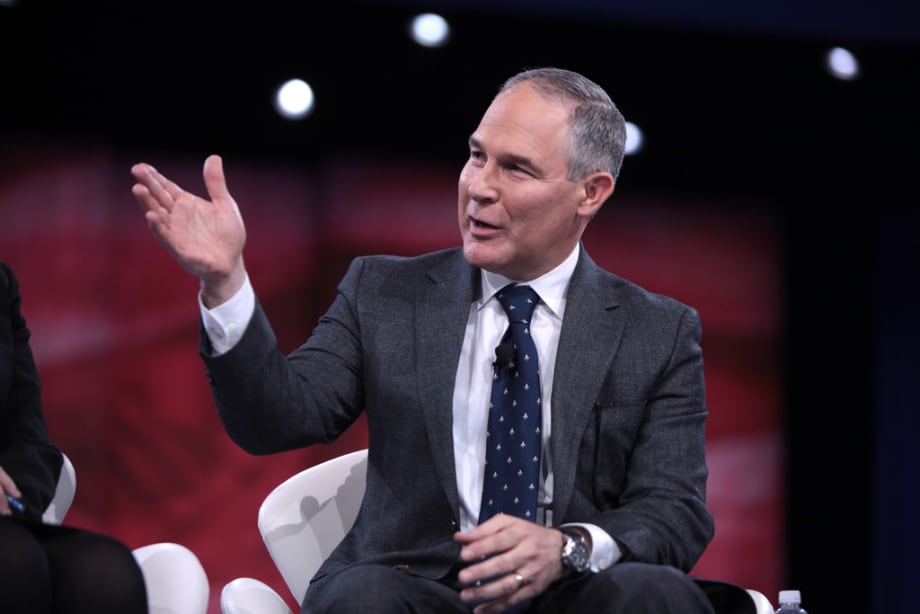
Photo of Scott Pruitt via Gage Skidmore/Flickr.
Photo of Scott Pruitt via Gage Skidmore/Flickr.
The Trump administration is reopening a federal review of Obama-era fuel economy rules covering the 2022 to 2025 model years, and expanding the review to include the 2021 model year signed into law in 2012.
The Environmental Protection Agency has reopened its midterm review that was finalized in the waning days of the Obama administration, the agency announced Thursday. The National Highway Traffic Safety Administration has also said it will reconsider civil penalties for automakers that are unable to meet the Corporate Average Fuel Economy standards.
The moves allow the agencies to begin taking public comment on the matter. The agency would begin accepting comments on the 2021 model year, by which automakers to meet a combined average of 41 miles per gallon under current rules.
The agencies will accept comments for 45 days on model years beyond 2020.
"We are moving forward with an open and robust review of emissions standards, consistent with the timeframe provided in our regulations," said EPA Administrator Scott Pruitt. "We encourage the public to submit the best-available and most up-to-date information, so that we can get back on track with what the regulation actually requires of the agency. Finally, we are working with DOT to ensure that our standards are ultimately aligned."
The move may have a limited impact in California, which was granted a federal waiver under the Clean Air Act to set and maintain its own more stringent emissions rules. The California Air Resources Board hasn't released a statement about the move.
A possible loosening of the rules could abate price increases of new vehicles that have been driven by engineering choices such as light-weighting and emission-control software. One estimate puts the cost of those initiatives as $2,000 per vehicle, reports the Detroit News.
The review comes amid an environment of low fuel prices and increasing popularity of larger vehicles such as trucks and SUVs. Whatever decision is ultimately made will likely filter down to commercial fleets, said Dan Hannan, executive director of product and services for Merchants Fleet Management.

Hannan
"The review of the standards leaves the window open for replacement of those standards and they may go down," Hannan said. "If the targets stay in place or rise, OEMs need to continue focus on developing smaller lighter vehicles. For some service fleets this has resulted in shorter life cycles due to wear and tear of the application. I could see the targets being lowered, which could reintroduce larger vehicle options. The cargo van and light truck sector has seen a great deal of movement in this area. Clearly fuel consumption and the vehicles cap cost can shift accordingly."
Consumer groups criticized the move as wasteful and ineffectual. Jack Gillis, the Consumer Federation of America's director of public affairs, called the move "a colossal waste of money" during a conference call with reporters. Gillis said 85% of new vehicles meet current standards.
Shannon Baker-Branstetter, policy counsel of Consumers Union, said the current standards are "good for consumers and reasonable for the automakers." She also said the review isn't necessary.
"By reopening the midterm review, EPA is bringing up questions that have already been answered," she said. "The standards to 2025 are reasonable and achievable."
The standards apply to light-duty vehicles that weigh less than 8,500 pounds, which would apply to some Class 3 trucks. Most cargo vans would be required to meet the standards.
In a related move, on July 12, NHTSA published a notice in the Federal Register that it would reconsider civil penalties against automakers who can't meet the standards.
Originally posted on Automotive Fleet
More Operations
Family Ties Inside the Fleet Families Building Careers Across Generations
Three fleet families share what it really takes to work together, learn across generations, and keep business from following them home.
Read More →
Shades of Fleet Call for Voices: Fleet's Hidden Heroes
Fleet’s hidden heroes are often the ones keeping everything moving behind the scenes. September’s Shades of Fleet is looking for dispatchers, coordinators, parts specialists, and other support pros to share their stories.
Read More →
Truck Centers, Inc. Celebrates National Truck Driver Appreciation Week with $1,000 Fuel Card Giveaways
During National Truck Driver Appreciation Week, Truck Centers, Inc. is offering customers a chance to fuel up for free. Customers at all Truck Centers locations can enter to win one of four $1,000 fuel cards from Sept. 14 - 18.
Read More →
Fleet Guides, AI Time-Savers, Truck Tariffs & Fuel Strategy Lead the News
This week’s Truck Chat Cheat Sheet covers new fleet vehicle guides, practical AI use cases, U.S.-Canada truck production, mixed-energy strategy, and more.
Read More →
What Fleet Employers Are Missing When Hiring Veterans
What if some of the strongest candidates for fleet are already out there, but their experience is written in a language our industry does not always recognize?
Read More →
Automotive Fleet Opens 2026 Personal Use Survey for Commercial Fleet Managers
Less than two weeks left! Commercial and corporate fleet managers are invited to share how their organizations handle company vehicle personal-use policies, charges, and driver eligibility.
Read More →
What Resilient Fleets Do Differently When Conditions Change
Fleet resilience is about more than reacting to disruption. Lauren Fletcher talks with AP Fleet’s Alex Coveney about flexibility, planning, scaling, and what helps fleets adapt when business conditions shift.
Read More →
If We Want the Next Generation in Automotive, We Have to Give Them a Reason to Care
The automotive industry talks constantly about its workforce shortage. But before we can recruit the next generation, we may need to do a better job giving kids a reason to care about automotive in the first place.
Read More →
Ram ProMaster City Under $40K, Truck Tariffs, and AI Maintenance Lead the News
A sub-$40K commercial van, tariff questions, AI-powered maintenance, and a new EV production strategy headline this week’s Truck Chat Cheat Sheet.
Read More →
Bob Adamsky Shares the Fleet Lessons You Usually Learn the Hard Way
After more than 30 years in fleet, Arrow International’s Bob Adamsky has learned that the job is about far more than vehicles. He shares the lessons he wishes every fleet manager could learn a little earlier.
Read More →