




Trucks Vs. Cars
Trucks have long been perceived in the wrong when involved in accidents with cars, though recent studies show this isn't true. The federal government is reapportioning funds to focus on car violations.
Passenger cars are often seen as the victims when involved in a crash with a big truck. But the focus may be starting to shift toward cars, according to a January 19 story in The Kansas City Star. Congress last summer agreed to free up some of the money used for truck safety enforcement to use on cars. The federal government gives states roughly $141 million to use for traffic enforcement for commercial motor vehicles. Until now, the states have been limited to using that money for commercial vehicle enforcement, which includes driver and vehicle inspections as well as traditional traffic patrols on the highway. Trucks are involved in a disproportionate share of all crash fatalities nationwide, the Star report says. The annual death toll from crashes involving trucks — 5,190 in 2004 — is equal to a major airline crash every week, notes the Citizens for Reliable and Safe Highways, which says on its Web site that the trucking industry is plagued by safety issues. The trucking industry, however, claims that most crashes involving trucks are caused by other vehicles. A study of 109 wrecks in Kansas from 1994 to 1998 showed trucks were at fault about 28 percent of the time, said Capt. Dan Meyer, coordinator of the Kansas Highway Patrol’s motor carrier safety program. Similar percentages have been reported in Washington and Wisconsin. Last year, the state of Washington received $600,000 from the federal government to develop a test program. Troopers riding in passenger seats of decoy trucks snared cars that were speeding, repeatedly changing lanes, cutting off trucks or tailgating. About 4,700 tickets or warnings were issued during two enforcement waves in July and September. About 86 percent of those citations were handed out to cars. The trucking industry estimated that it could make about $10 million available to step up enforcement for drivers who refuse to safely co-exist on the highway. “By and large, people realize that driving around a truck they need to drive differently,” said Jonna VanDyk, spokeswoman for the Washington Traffic Safety Commission in the Star report. “But it’s just not real high on their radar.” Why are trucks always perceived to be in the wrong? Trucks are much more visible. A big truck accident is often severe. When people drive by they naturally assume it was the truck’s fault. The big truck is guilty until proven innocent, truckers say. Truckers complain that car drivers underestimate the risk of driving unsafely around big trucks. Car drivers, they say, don’t always understand that it can take the length of a football field for a truck to stop safely. KEEPING SAFE AROUND BIG RIGS ¦ Don't linger in a truck's blind spots and avoid driving to close. ¦ Avoid passing large vehicles on the right side. ¦ Always signal intentions ahead of time. ¦ When passing, look for the whole front of the truck in your rear-view mirror before pulling in front. Don’t slow down. ¦ Maintain at least a 4-second following distance behind a large vehicle. An average passenger car traveling at 55 miles per hour takes about 130 to 140 feet to stop. A fully loaded truck can take 400 feet to stop. —Source: Wisconsin Department of Transportation
More Small Fleet


Developing Budget-Friendly Driver Safety Programs
From driver training and safety meetings to one-on-one coaching and incentive programs, several small fleets share how they have developed a safety culture with their drivers using low- to no-cost resources.
Read More →
Boosting Last-Mile Fleet Uptime, Safety, and Value with AI Vehicle Inspections
AI-powered inspections are transforming last-mile fleets by replacing manual checks with highly accurate automated scans that detect defects in seconds. By giving fleet operations visibility into the daily condition of their vehicles, you can identify trends over the vehicle’s lifecycle that enable improved procurement decisions, route management, driver training and accountability.
Read More →
Five Ways Seat Belts Help Prevent Injuries
There are five ways seat belts protect occupants from injuries, according to the Tennessee Department of Safety and Homeland Security.
Read More →
It’s here: The 2026 Fleet Technology Trends Report
What does AI mean for fleets? Get the answer — and learn other top tech trends.
Read More →
Small Fleets, Big Impact: How Independent Drivers Power Wreaths Across America
Check out how small fleets and independent drivers power Wreaths Across America each December and why their impact matters more than ever.
Read More →
VMS Survey Finds 65% of Small Fleet Managers Run Operations Alone
A new VMS survey shows small fleet managers are stretched thin, with most handling operations solo and eager to adopt digital tools for relief.
Read More →
Tips for Driving Safely on Halloween Night
This video features a reminder from the Connecticut Department of Transportation (DOT) and the Connecticut Police Chiefs Association, urging drivers to prioritize safety this Halloween.
Read More →
AI, Access, and Uptime: VMS’s Next Chapter with David Prusinski
VMS’s new Co-CEO, David Prusinski, shares how an AI-first approach will give small fleets and repair shops the tools to compete like big players.
Read More →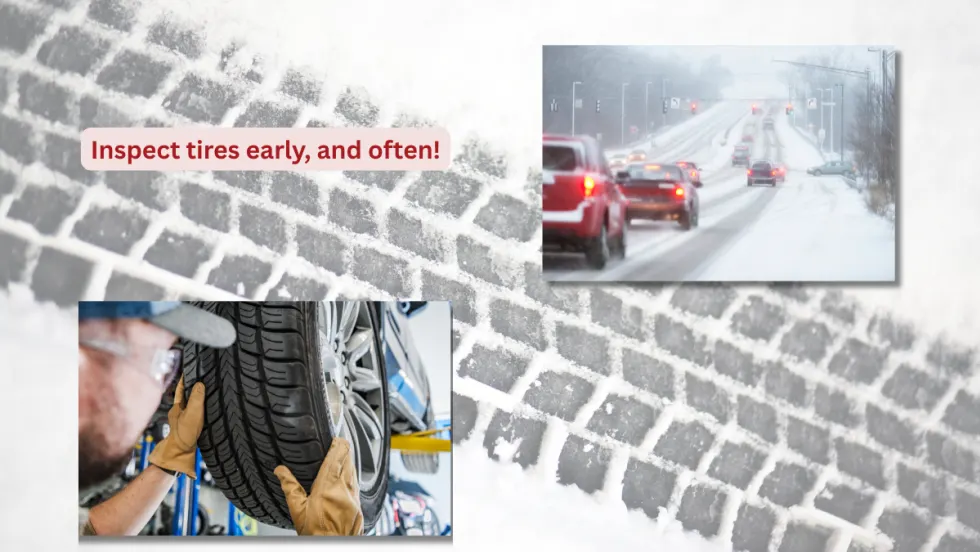
Fleet Managers Share Winter Prep Tips: It's Never Too Early!
Three fleets share best practices to prep vehicles for winter and prevent downtime when the cold sets in.
Read More →