




Trend: DWI Locks on Cars
While interlocks are now in use to varying degrees in more than 40 states, New Mexico will be the first to require its broad use.
New Mexico Governor Bill Richardson signed into law earlier this month a bill that requires all convicted drunken drivers—nearly 13,000 annually in the state—to get DWI interlocks installed on their cars, according to an Associated Press report. Drivers breathe into the interlock device before starting their cars. If an alcohol level above a preset limit is detected, the interlock prevents the engine from starting. While interlocks are now in use to varying degrees in more than 40 states, New Mexico will be the first to require such broad use, the AP report says. The new law mandates interlocks for one year for a first conviction, two years for a second and three years for a third. For four convictions or more, the interlock stays on for life, with appeals at five-year intervals, according to the AP report. A bill in New York state would require new cars to be equipped with ignition interlocks, according to a New York Daily News story on April 14. A companion measure would require all convicted drunk drivers to have the devices in their cars. Arizona bill HB1240 would allow convicted drunk drivers to keep their licenses only if they have an ignition interlock installed on their cars, according to an Arizona Republic story on March 20. The bill passed the Senate 29-1 and is up for vote in the House of Representatives, according to the report. New remedies to prevent drunk driving come as episodes are on the rise. A University of Chicago study to be published in next month's issue of the American Journal of Preventive Medicine says that from 1993 to 1997 the estimated annual number of episodes of alcohol-impaired driving declined from 123 million to 116 million. But from 1997 to 1999, however, the number increased 37 percent, from 116 million to 159 million, and it stayed at that increased rate as recently as 2002, the report says.
More Small Fleet


Developing Budget-Friendly Driver Safety Programs
From driver training and safety meetings to one-on-one coaching and incentive programs, several small fleets share how they have developed a safety culture with their drivers using low- to no-cost resources.
Read More →
Boosting Last-Mile Fleet Uptime, Safety, and Value with AI Vehicle Inspections
AI-powered inspections are transforming last-mile fleets by replacing manual checks with highly accurate automated scans that detect defects in seconds. By giving fleet operations visibility into the daily condition of their vehicles, you can identify trends over the vehicle’s lifecycle that enable improved procurement decisions, route management, driver training and accountability.
Read More →
Five Ways Seat Belts Help Prevent Injuries
There are five ways seat belts protect occupants from injuries, according to the Tennessee Department of Safety and Homeland Security.
Read More →
It’s here: The 2026 Fleet Technology Trends Report
What does AI mean for fleets? Get the answer — and learn other top tech trends.
Read More →
Small Fleets, Big Impact: How Independent Drivers Power Wreaths Across America
Check out how small fleets and independent drivers power Wreaths Across America each December and why their impact matters more than ever.
Read More →
VMS Survey Finds 65% of Small Fleet Managers Run Operations Alone
A new VMS survey shows small fleet managers are stretched thin, with most handling operations solo and eager to adopt digital tools for relief.
Read More →
Tips for Driving Safely on Halloween Night
This video features a reminder from the Connecticut Department of Transportation (DOT) and the Connecticut Police Chiefs Association, urging drivers to prioritize safety this Halloween.
Read More →
AI, Access, and Uptime: VMS’s Next Chapter with David Prusinski
VMS’s new Co-CEO, David Prusinski, shares how an AI-first approach will give small fleets and repair shops the tools to compete like big players.
Read More →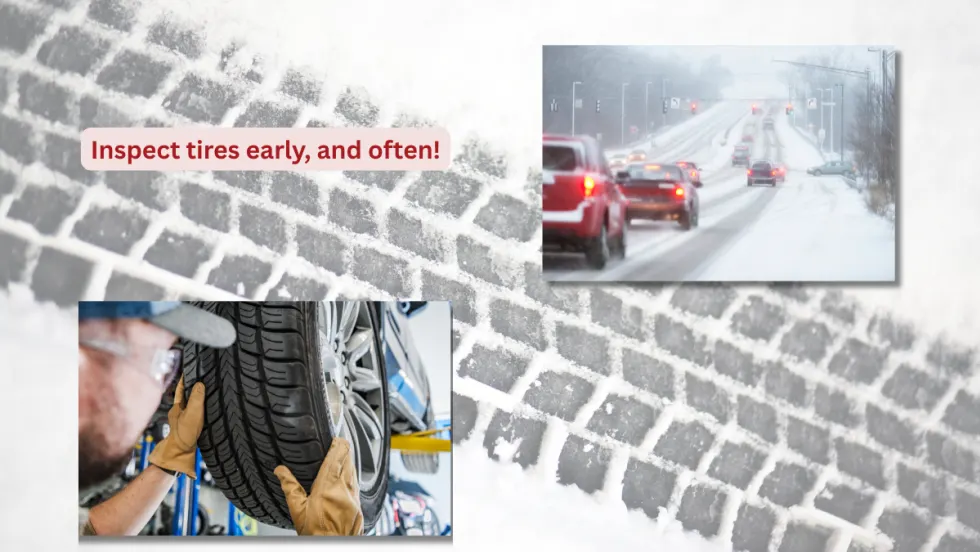
Fleet Managers Share Winter Prep Tips: It's Never Too Early!
Three fleets share best practices to prep vehicles for winter and prevent downtime when the cold sets in.
Read More →