




Related: Video: Toyota Accelerates Automatic Braking to 2017
Toyota to Update Active Safety Tech by Mid-2018
Toyota’s second generation of its Safety Sense package will start rolling out as standard equipment on certain Toyota vehicles beginning in mid-2018.
by Staff
November 30, 2017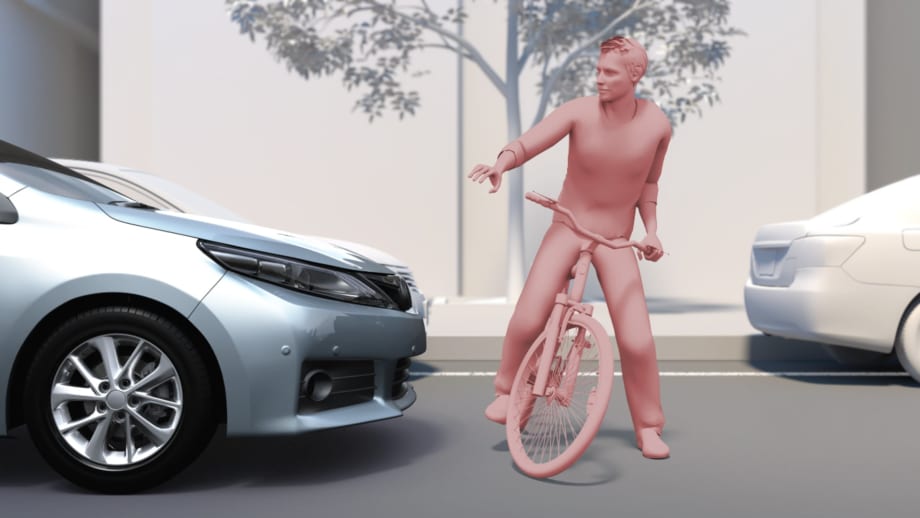
The second generation of the Toyota Safety Sense package will feature an updated pre-collision system that can help detect a collision with a bicyclist in front of the vehicle during the day. Photo courtesy of Toyota.
2 min to read
The second generation of the Toyota Safety Sense package will feature an updated pre-collision system that can help detect a collision with a bicyclist in front of the vehicle during the day. Photo courtesy of Toyota.
Toyota Motor North America Inc. has announced that the second generation of its Toyota Safety Sense (TSS) package of active safety features will begin rolling out as standard equipment on certain Toyota vehicles beginning in mid-2018.
The updated safety package will add new technologies and capabilities that enhance protection for drivers, passengers, and others who share the road.
“At Toyota, we are committed to making high-level driver assistance systems more widely available and even more affordable across a broader range of our vehicles,” said Chris Nielsen, executive vice president of product support and chief quality officer of Toyota Motor North America. “The second generation of Toyota Safety Sense takes our industry-leading suite of safety technologies to the next level, delivering new advanced and intuitive protections that are another step toward a future without traffic injuries or fatalities.”
As with the first generation TSS, the upgraded system is designed to support driver awareness, decision making, and vehicle operation over a range of speeds under certain conditions. Packaged together into an integrated system, it helps to address three areas of accident protection: preventing or mitigating frontal collisions, keeping drivers within their lanes, and enhancing road safety during nighttime driving.
The second generation TSS has been expanded to help improve driver situational awareness while providing additional protections for a pedestrian or bicyclist in front of the vehicle. According to Toyota, here are the new or updated technologies:
- Pre-Collision System (updated): Enhanced deceleration capabilities and the ability to help detect a collision with a pedestrian in front of the vehicle during the day and at night and bicyclist in front of the vehicle during the day.
- Lane Departure Alert (updated): Enhanced with “road edge detection” to increase the vehicle’s ability to help drivers stay in their lane.
- Road Sign Assist (new): Designed to display road sign information in an easy-to-understand format on the dashboard meter display and head-up display if equipped. The vehicle’s onboard camera can detect and recognize certain common road signs in the U.S., Japan, and Europe (road sign type varies by market).
- Lane Tracing Assist (new): Provides steering support to help the driver keep the vehicle centered in its lane when Dynamic Radar Cruise Control is in operation.
- Full-Speed Range Dynamic Radar Cruise Control (updated): Enhanced forward recognition and acceleration/deceleration performance across a wide range of speeds. (Full-Speed Range Dynamic Radar Cruise Control isn’t available on vehicles equipped with manual transmissions.)
Originally posted on Automotive Fleet
More Small Fleet


Developing Budget-Friendly Driver Safety Programs
From driver training and safety meetings to one-on-one coaching and incentive programs, several small fleets share how they have developed a safety culture with their drivers using low- to no-cost resources.
Read More →
Sponsored•March 9, 2026
Boosting Last-Mile Fleet Uptime, Safety, and Value with AI Vehicle Inspections
AI-powered inspections are transforming last-mile fleets by replacing manual checks with highly accurate automated scans that detect defects in seconds. By giving fleet operations visibility into the daily condition of their vehicles, you can identify trends over the vehicle’s lifecycle that enable improved procurement decisions, route management, driver training and accountability.
Read More →
Five Ways Seat Belts Help Prevent Injuries
There are five ways seat belts protect occupants from injuries, according to the Tennessee Department of Safety and Homeland Security.
Read More →
Sponsored•January 14, 2026
It’s here: The 2026 Fleet Technology Trends Report
What does AI mean for fleets? Get the answer — and learn other top tech trends.
Read More →
Small Fleets, Big Impact: How Independent Drivers Power Wreaths Across America
Check out how small fleets and independent drivers power Wreaths Across America each December and why their impact matters more than ever.
Read More →
VMS Survey Finds 65% of Small Fleet Managers Run Operations Alone
A new VMS survey shows small fleet managers are stretched thin, with most handling operations solo and eager to adopt digital tools for relief.
Read More →
Tips for Driving Safely on Halloween Night
This video features a reminder from the Connecticut Department of Transportation (DOT) and the Connecticut Police Chiefs Association, urging drivers to prioritize safety this Halloween.
Read More →
AI, Access, and Uptime: VMS’s Next Chapter with David Prusinski
VMS’s new Co-CEO, David Prusinski, shares how an AI-first approach will give small fleets and repair shops the tools to compete like big players.
Read More →
Fleet Managers Share Winter Prep Tips: It's Never Too Early!
Three fleets share best practices to prep vehicles for winter and prevent downtime when the cold sets in.
Read More →