




Survey Finds Americans' Love Affair With Their Cars Remains Strong
In a consumer survey conducted by RoperASW for LoJack Corp., which specializes in wireless stolen vehicle recovery technology, has found that Americans' love affair with the automobile is unabated. This remains true despite environmental concerns, rising fuel prices and difficult economic times. The majority of American car owners (58 percent) say their car provides them with joy and more than one-third (37 percent) say it provides them with a means of escape. American consumers are also concerned about their cars' security, and about recovering their vehicle in the event that it is stolen. At the same time, two-thirds believe that the security of their vehicle is out of their control and the majority would consider having their vehicle stolen to be a hardship. Financial concerns are only part of the story when it comes to consumers' reactions to vehicle theft. While 62 percent of car owners surveyed believe that vehicle theft presents a financial hardship, 50 percent cited emotional hardship as a likely result of having their car stolen. These figures highlight the close relationship that the American consumer enjoys with his or her car. "Despite rising gas prices, increased concern about the economy and security concerns, Americans still love their cars," said Donna Driscoll, vice president of global marketing for LoJack Corp. "By providing a means of escape or an opportunity to define their owners, our cars continue to be an important part of the American way of life. Consumers want to be sure that they have done everything that they can to protect their vehicles, and to ensure that they are recovered should they be stolen." In addition to their cars, consumers worry about losing the things they keep in their cars. Vehicle registration (93 percent), music CDs and cassettes (76 percent), tools (58 percent) and sports equipment (27 percent) topped the list of things consumers regularly keep in their cars. Many respondents also felt that recovering the contents of the vehicle would be as important as recovering the vehicle itself, in the event of theft. "Clearly, our research indicates that vehicle theft imposes more than just an inconvenience to the American consumer," Driscoll said. "It results in a variety of losses, including time, valuables left in the vehicle and the costs associated with repairing damage. As a result, facilitating the rapid recovery of stole vehicles is the best way to minimize the impact. This continues to be an important issue for consumers, especially as recent FBI statistics show that property crime -- and auto theft in particular -- is on the rise." How the LoJack System Works The patented LoJack System includes a small wireless radio-frequency transceiver that is hidden in the vehicle at the time of purchase. Each LoJack unit is registered to the vehicle identification number. Once a stolen vehicle is reported to the police, the vehicle identification number is matched to the LoJack unit by state law enforcement computers. After the match, the LoJack system is activated by police, emitting silent radio signals from a small radio transceiver. Law enforcement vehicles and helicopters equipped with LoJack follow these signals to recover the stolen vehicle. Police using LoJack have recovered more than 50,000 vehicles and one billion dollars in assets in the United States. About LoJack LoJack Corp. specializes in stolen vehicle recovery technology. In the United States, its stolen vehicle recovery system, utilized by law enforcement agencies, has maintained more than a 90 percent successful recovery rate during the 16 years it has been available to the consumer. The LoJack System operates coast-to-coast in 20 states and the District of Columbia, representing the areas of the country with the greatest population density, highest number of new vehicle sales and greatest incidence of vehicle theft. In addition, LoJack is operated by law enforcement and security organizations in more than 20 countries in Europe, Africa, Asia and the Western Hemisphere. For more information, visit www.lojack.com.
More Small Fleet


Developing Budget-Friendly Driver Safety Programs
From driver training and safety meetings to one-on-one coaching and incentive programs, several small fleets share how they have developed a safety culture with their drivers using low- to no-cost resources.
Read More →
Boosting Last-Mile Fleet Uptime, Safety, and Value with AI Vehicle Inspections
AI-powered inspections are transforming last-mile fleets by replacing manual checks with highly accurate automated scans that detect defects in seconds. By giving fleet operations visibility into the daily condition of their vehicles, you can identify trends over the vehicle’s lifecycle that enable improved procurement decisions, route management, driver training and accountability.
Read More →
Five Ways Seat Belts Help Prevent Injuries
There are five ways seat belts protect occupants from injuries, according to the Tennessee Department of Safety and Homeland Security.
Read More →
It’s here: The 2026 Fleet Technology Trends Report
What does AI mean for fleets? Get the answer — and learn other top tech trends.
Read More →
Small Fleets, Big Impact: How Independent Drivers Power Wreaths Across America
Check out how small fleets and independent drivers power Wreaths Across America each December and why their impact matters more than ever.
Read More →
VMS Survey Finds 65% of Small Fleet Managers Run Operations Alone
A new VMS survey shows small fleet managers are stretched thin, with most handling operations solo and eager to adopt digital tools for relief.
Read More →
Tips for Driving Safely on Halloween Night
This video features a reminder from the Connecticut Department of Transportation (DOT) and the Connecticut Police Chiefs Association, urging drivers to prioritize safety this Halloween.
Read More →
AI, Access, and Uptime: VMS’s Next Chapter with David Prusinski
VMS’s new Co-CEO, David Prusinski, shares how an AI-first approach will give small fleets and repair shops the tools to compete like big players.
Read More →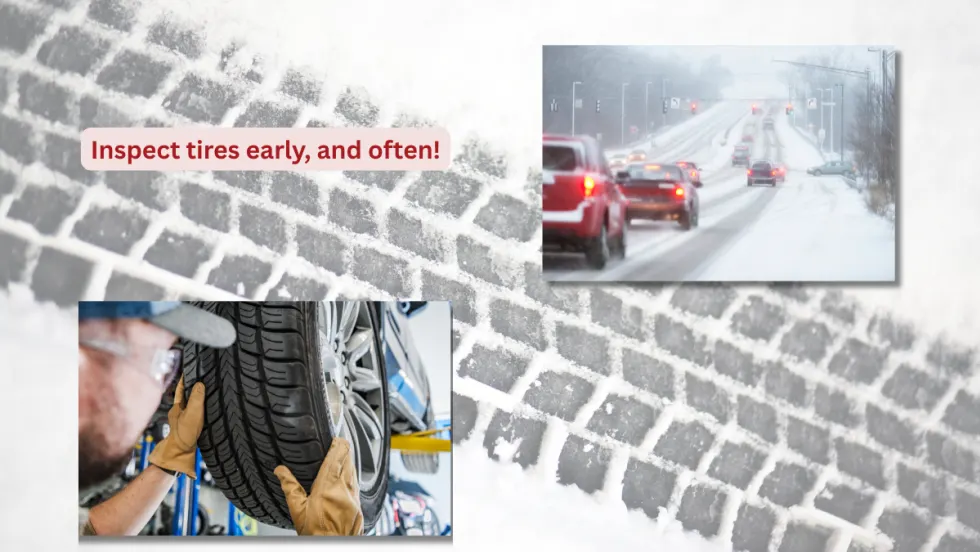
Fleet Managers Share Winter Prep Tips: It's Never Too Early!
Three fleets share best practices to prep vehicles for winter and prevent downtime when the cold sets in.
Read More →