




Study Shows States With Most Uninsured Motorists
MALVERN, PA - Across the United States, chances are roughly one in seven that a driver is uninsured, according to new estimates from the Insurance Research Council (IRC).
MALVERN, PA - Across the United States, chances are roughly one in seven that a driver is uninsured, according to new estimates from the Insurance Research Council (IRC).
The estimated percentage of uninsured motorists declined four straight years before rising to 14.3 percent in 2008 and dropping to 13.8 percent in 2009. The economic downturn is thought to be a major factor in the brief increase.
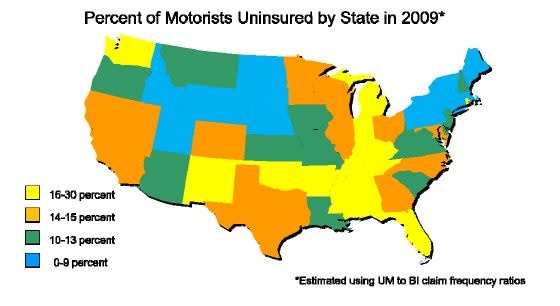
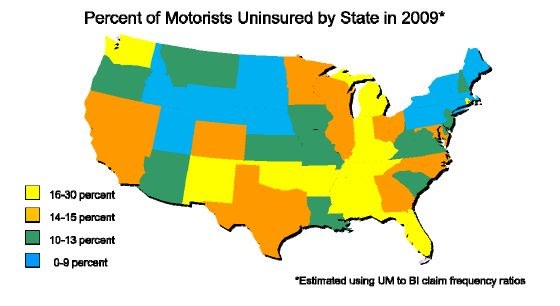
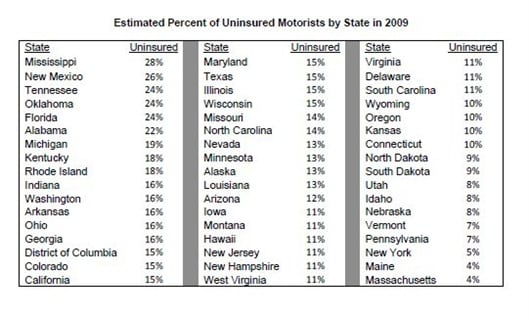
In 2009, the five states with the highest uninsured driver estimates were Mississippi (28 percent), New Mexico (26 percent), Tennessee (24 percent), Oklahoma (24 percent), and Florida (24 percent). The five states with the lowest uninsured driver estimates were Massachusetts (4.5 percent), Maine (4.5 percent), New York (5 percent), Pennsylvania (7 percent), and Vermont (7 percent).
“The leveling trend in the percentage of uninsured motorists is an unfortunate consequence of the economic downturn and illustrates how virtually everyone is affected by recent economic developments," said Elizabeth A. Sprinkel, senior vice president of the IRC. “Despite laws in many states requiring drivers to maintain insurance, about one in seven motorists remain uninsured. This forces responsible drivers who carry insurance to bear the burden of paying for injuries caused by drivers who carry no insurance at all.”
In a new study, Uninsured Motorists, 2011 Edition, IRC estimates the percentage of uninsured drivers countrywide and in individual states for 2008 and 2009. The IRC estimates are based on the ratio of uninsured motorist (UM) insurance claim frequency to bodily injury (BI) claim frequency. UM claims are made by individuals who are injured in accidents caused by uninsured drivers. BI claims are made by individuals injured in accidents caused by insured drivers. The magnitude of the uninsured motorist problem varies from state to state.
In a previous report, the IRC anticipated a trend reversal in the countrywide estimate of the percentage of uninsured motorists, citing a strong historical relationship between the national unemployment rate and the national UM to BI ratio. The strength of the historical relationship appears to have diminished slightly with the inclusion of more recent data. Several possible reasons for this are discussed in the report.
The IRC study examines data collected from nine insurers, representing approximately 50 percent of the private passenger auto insurance market in the U.S.
Originally posted on Automotive Fleet
More Small Fleet


Developing Budget-Friendly Driver Safety Programs
From driver training and safety meetings to one-on-one coaching and incentive programs, several small fleets share how they have developed a safety culture with their drivers using low- to no-cost resources.
Read More →
Boosting Last-Mile Fleet Uptime, Safety, and Value with AI Vehicle Inspections
AI-powered inspections are transforming last-mile fleets by replacing manual checks with highly accurate automated scans that detect defects in seconds. By giving fleet operations visibility into the daily condition of their vehicles, you can identify trends over the vehicle’s lifecycle that enable improved procurement decisions, route management, driver training and accountability.
Read More →
Five Ways Seat Belts Help Prevent Injuries
There are five ways seat belts protect occupants from injuries, according to the Tennessee Department of Safety and Homeland Security.
Read More →
It’s here: The 2026 Fleet Technology Trends Report
What does AI mean for fleets? Get the answer — and learn other top tech trends.
Read More →
Small Fleets, Big Impact: How Independent Drivers Power Wreaths Across America
Check out how small fleets and independent drivers power Wreaths Across America each December and why their impact matters more than ever.
Read More →
VMS Survey Finds 65% of Small Fleet Managers Run Operations Alone
A new VMS survey shows small fleet managers are stretched thin, with most handling operations solo and eager to adopt digital tools for relief.
Read More →
Tips for Driving Safely on Halloween Night
This video features a reminder from the Connecticut Department of Transportation (DOT) and the Connecticut Police Chiefs Association, urging drivers to prioritize safety this Halloween.
Read More →
AI, Access, and Uptime: VMS’s Next Chapter with David Prusinski
VMS’s new Co-CEO, David Prusinski, shares how an AI-first approach will give small fleets and repair shops the tools to compete like big players.
Read More →
Fleet Managers Share Winter Prep Tips: It's Never Too Early!
Three fleets share best practices to prep vehicles for winter and prevent downtime when the cold sets in.
Read More →