




Skimpy Crash Reports Hindering Prevention Efforts
A National Safety Council review of state motor vehicle crash report forms reveals their shortcomings in collecting critical data needed for crash prevention efforts.
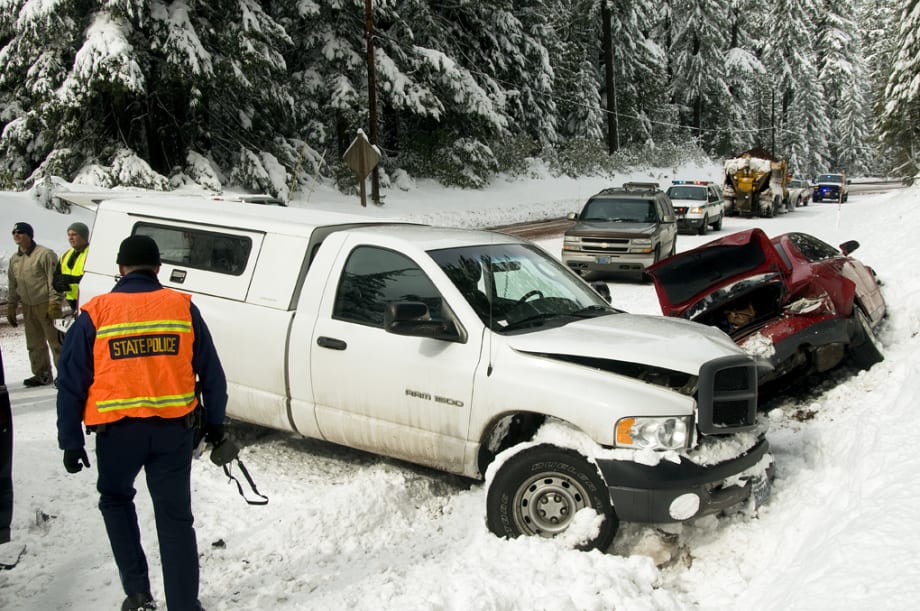
Crash report forms from all 50 states lack sufficient fields or codes for law enforcement to record all critical data, according to NSC. Photo courtesy of the Oregon Department of Transportation via Wikimedia Commons.
Crash report forms from all 50 states lack sufficient fields or codes for law enforcement to record all critical data, according to NSC. Photo courtesy of the Oregon Department of Transportation via Wikimedia Commons.
A National Safety Council review of motor vehicle crash reports from across the U.S. concluded that no state fully captures critical data needed to address and understand the rise in roadway fatalities.
Crash reports from all 50 states lack fields or codes for law enforcement to record the level of driver fatigue at the time of a crash, according to the National Safety Council. What’s more, 26 state report forms lack fields to indicate the incidence of texting, and 32 states lack fields to record hands-free cell phone use. Additionally, 32 states lack fields to identify specific types of drug use, including marijuana, when drugs are detected.
The exclusion of these fields limits the ability to effectively address these problems, the National Safety Council said in a released statement about the review results.
States are also failing to capture information about violations of teen driver restrictions (35 states) and the use of advanced driver assistance technologies (50 states) and infotainment systems (47 states).
The review findings are summarized in the new National Safety Council report, Undercounted is Underinvested: How incomplete crash reports impact efforts to save lives, released during Distracted Driving Awareness Month.
“The road to zero deaths is paved with potholes,” said Deborah A.P. Hersman, president and CEO of the National Safety Council. “Someone is seriously injured on our roads every 8 seconds; someone is killed every 15 minutes. In too many cases, we are gathering the ‘what’ but not the ‘why’ and better data will enable us to make better decisions.”
Preliminary estimates from the National Safety Council indicate as many as 40,000 people died in car crashes in 2016. That represents a 6% increase over 2015 and a 14% increase over 2014 — the most dramatic two-year escalation since 1964. Without a clear understanding of the scope of the problem, regulations, laws and policies cannot be more effective, according to the council.
The National Safety Council identified 23 specific crash factors that should be captured on crash reports. While no state is capturing data for all 23 fields, Kansas and Wisconsin lead the nation by including fields and codes on reports for 14 of the factors identified as critical. Maryland, Kentucky and Nebraska each are capturing just five of the 23 factors.
Six states — Arizona, California, Colorado, Maine, New York and Virginia — do not provide fields or codes for police to indicate alcohol impairment at low levels, even though fatal crashes involving drivers with low BACs are not uncommon. Of the eight states that have decriminalized recreational marijuana use, only four states — Alaska, California, Oregon and Washington — include fields and codes to record positive marijuana results from drug tests.
The National Safety Council is calling on the traffic safety community to take several actions to ensure better data collection. These recommendations include filling out crash reports electronically, updating forms more frequently to record factors such as fatigue and driver use of new technologies, adopting an investigatory approach to crashes, and using electronic data recorders to collect data such as performance information on any advanced driver assistance system in the vehicle.
A full list of recommendations can be found at nsc.org/crashreport.
Originally posted on Automotive Fleet
More Small Fleet


Developing Budget-Friendly Driver Safety Programs
From driver training and safety meetings to one-on-one coaching and incentive programs, several small fleets share how they have developed a safety culture with their drivers using low- to no-cost resources.
Read More →
Boosting Last-Mile Fleet Uptime, Safety, and Value with AI Vehicle Inspections
AI-powered inspections are transforming last-mile fleets by replacing manual checks with highly accurate automated scans that detect defects in seconds. By giving fleet operations visibility into the daily condition of their vehicles, you can identify trends over the vehicle’s lifecycle that enable improved procurement decisions, route management, driver training and accountability.
Read More →
Five Ways Seat Belts Help Prevent Injuries
There are five ways seat belts protect occupants from injuries, according to the Tennessee Department of Safety and Homeland Security.
Read More →
It’s here: The 2026 Fleet Technology Trends Report
What does AI mean for fleets? Get the answer — and learn other top tech trends.
Read More →
Small Fleets, Big Impact: How Independent Drivers Power Wreaths Across America
Check out how small fleets and independent drivers power Wreaths Across America each December and why their impact matters more than ever.
Read More →
VMS Survey Finds 65% of Small Fleet Managers Run Operations Alone
A new VMS survey shows small fleet managers are stretched thin, with most handling operations solo and eager to adopt digital tools for relief.
Read More →
Tips for Driving Safely on Halloween Night
This video features a reminder from the Connecticut Department of Transportation (DOT) and the Connecticut Police Chiefs Association, urging drivers to prioritize safety this Halloween.
Read More →
AI, Access, and Uptime: VMS’s Next Chapter with David Prusinski
VMS’s new Co-CEO, David Prusinski, shares how an AI-first approach will give small fleets and repair shops the tools to compete like big players.
Read More →
Fleet Managers Share Winter Prep Tips: It's Never Too Early!
Three fleets share best practices to prep vehicles for winter and prevent downtime when the cold sets in.
Read More →