




Shell: New Engine Oil Categories Making the Grade
A new generation of engine oils is in the North American market, passing a battery of tests developed for specific engine brands. But the work of convincing buyers about the related features and benefits of CK-4 and FA-4 oils continues.
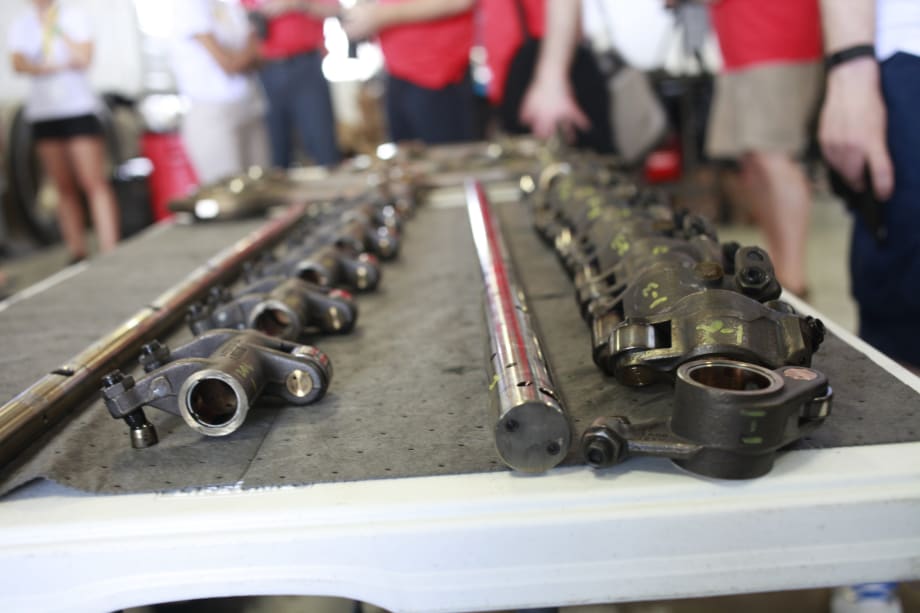
Since 2011 the company has amassed 60 million test miles on CK-4 formulations, and 50 million miles of tests involving the High Temperature High Shear (HTHS) formulas required by FA-4 specifications. Photo: Shell
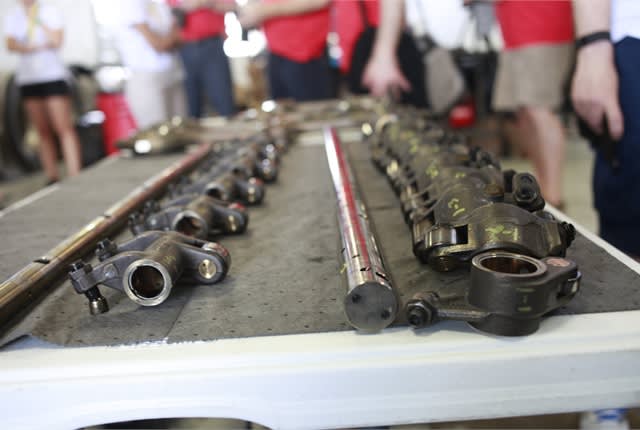
Since 2011 the company has amassed 60 million test miles on CK-4 formulations, and 50 million miles of tests involving the High Temperature High Shear (HTHS) formulas required by FA-4 specifications.Photo: Shell
SANTA BARBARA, CA – A new generation of engine oils is in the North American market, passing a battery of tests developed for specific engine brands. But the work of convincing buyers about related features and benefits continues.
The transition from CJ-4 to CK-4 and fuel-efficient FA-4 categories has essentially been seamless, said Dan Arcy, Shell Lubricants’ global OEM technical manager, during a media briefing in California this week. The new formulas, which went by PC-11 during the development process, were officially released in December. The chemistry was driven by ongoing calls for longer drain intervals, better fuel economy, lower emissions, and increasing horsepower.
And these are hardly the engine oils that have flowed through pumps in years gone by.
Oxidation stability had to improve to handle higher under-hood temperatures. When oil oxidizes, it becomes acidic and thickens, Arcy explained. At the very least, that shortens potential oil drain intervals.
Tighter controls on aeration are especially welcome in off-highway applications, where trucks traveling up and down hills tend to suck air into the oil pump, breaking up the all-important layers of lubricant. Shear stability, meanwhile, had to improve to help keep oils from shearing out of grade into lower viscosities.
At this point, he said, manufacturers are all recommending CK-4 engine oils, and many have also increased maximum drain intervals in conjunctino with the new oil, Arcy said. “There’s some caveats" when extending those drains, he noted. "There’s fuel economy requirements. There’s idle requirements.”
Cummins has increased standard drain intervals up to 50,000 miles with CK-4 or FA-4 formulas compared to the 40,000 miles with the CJ-4 that came before them, and will boost intervals up to 80,000 miles with its OilGuard Program. Detroit Diesel has pushed intervals up to 75,000 miles compared to the 50,000 miles with CJ-4. Navistar drains are up to 60,000 miles compared to the 40,000 miles with CJ-4, and pushes to 70,000 miles in approved cases. Paccar drains are up to 75,000 miles with CK-4 formulas, while Volvo and Mack drains are at 55,000 miles with CK-4.
Paccar, Volvo and Mack are the last holdouts in embracing the fuel-efficient formulas, although Arcy expects that could change in 2018. Cummins only allows FA-4 in the 2017 X15, while Detroit Diesels can use it back as far as EPA 2010 models. Navistar offers it as a factory fill on its new A26 engines.
Off-highway applications are not using FA-4 yet either, although Arcy notes that these sectors have a history of lagging behind their on-highway counterparts when it comes to adopting new oils. The fuel-efficient oils are not yet recommended for diesel pickups, either.
Any rollout and approval takes time, but markets around the world are undeniably shifting to fuel-efficient oils. From North American to Europe, users are shifting from 10W-30 to 5W-30 as the grade of choice.
Engine manufacturers have also been able to introduce updated tests that the oil formulations must pass to ensure specific requirements are being met. They've also updated the engines and components on which tests are based. Some of the equipment used to test earlier oil formulas was getting increasingly hard to come by.
Cummins introduced the CES 20086 and CES 20087 tests for its engines, Detroit Diesel has the DFS 93K222 and DFS 93K223 to measure protection against issues like liner scuffing, and there’s also the Volvo VDS-4.5/Mack EO-S-4.5.
One of the most noteworthy of the new testing requirements came from Ford, which only months before the rollout of the new oil category asked for phosphorous levels to be capped at 1,000 parts per million -– measured in a specification known as WSS-M2C171-F1 -– because of valvetrain wear noticed in its 6.7L engines. Those engines are also found in applications up to Class 7 and even the lower end of Class 8.
“Phosphorous is just one of the components that can be used as an anti-wear component,” Arcy explained. In Europe, maximum limits have been set at 800 parts per million. But the Ford engine, which features 32 push rods, is relatively complex, Arcy says.
The engine tests alone aren't the only way the new oils continue to be tested. Shell itself has stressed that it is field testing the new oils in 350 vehicles.
“It’s real-world experience. You can’t beat that in terms of determining performance,” said Matthew Urbanak, heavy duty engine oil project leader. Since 2011 the company has amassed 60 million test miles on CK-4 formulations, and 50 million miles of tests involving the High Temperature High Shear (HTHS) formulas required by FA-4 specifications. Fourteen engines running on CK-4 prototypes have been torn down, along with 19 engines running FA-4.
“We’re not seeing the wear concern. We’re able to formulate these products and meet comparable wear protection we see with CK-4,” Urbanak said.
Unwanted levels of soot, lead and oil consumption are all dropping. In the process, Total Base Number (TBN) and Total Acid Number (TAN) measures are becoming less relevant, Urbanak explained. “We’re not seeing strong acids in the oil anymore.”
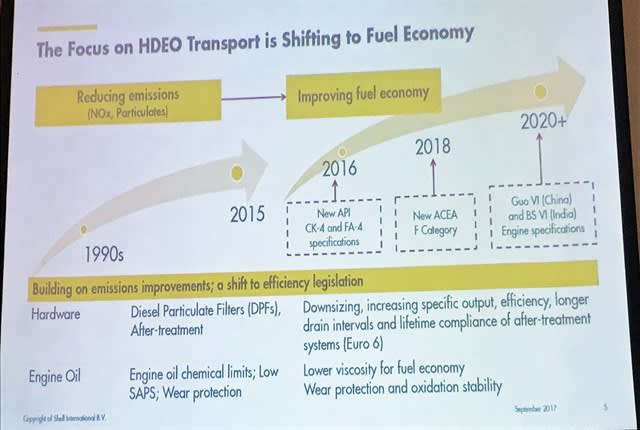
Shell's Jason Brown explaines to reports that fuel economy is becoming the big driver in heavy-duty engine oils.Photo: John G. Smith
Then there are the potential fuel economy gains being realized with FA-4 oils. Shell, says Jason Brown, global technology manager for heavy-duty engine oils, is proving those benefits in real-world tests that reflect all driving conditions.
Measuring real fuel economy gains is no small task, however. “You’ve got to take real-world cycles,” Brown said. The World Harmonized Stationary Cycle is like on-highway driving. The World Harmonized Transient Cycle (Cold Start) reflects urban driving in cold-start conditions, sometimes cooling the engine below 0 Fahrenheit. And the World Harmonized Transient Cycle reflects urban driving in average temperature conditions to reflect stop-and-go driving like a UPS truck.
Shell is currently running a third-party fuel economy trial in Germany. It will run one in Texas, and has completed another test series in China. “We’re talking about different OEMs, different engines, different operating conditions,” Brown said.
Shifting from a CK-4 10W-30 to an FA-4 10W-30 will boost fuel economy about 0.5%. A 5W30 FA-4 performs 3.19% better than a 10W-40 in combined urban and highway driving cycles, Shell added.
The push for oils to support improved fuel economy is not about to end anytime soon, either.
“This is going to remain a big, big topic going forward,” Brown said of the push to reduce greenhouse gases. “It’s about those engines running more efficiently, it’s about getting them to run more effectively.”
This article appears via a content-sharing agrement with the award-winning Canadian trucking magazine Today's Trucking.
Originally posted on Automotive Fleet
More Maintenance
Les Schwab Expands Commercial Tire Footprint Into Arizona
Les Schwab Tires has expanded into Arizona with two commercial tire locations in Phoenix and Tucson, strengthening its fleet service footprint in the Southwest.
Read More →
Volvo Trucks’ 'Lock and Leave' Software Updates Go Live Across North America
Unattended over-the-air software updates are now available in Volvo trucks across the U.S. and Canada. The new capability lets trucks stay current with the latest software without interrupting operations or requiring a dealership visit.
Read More →
Why Technician Appreciation Can’t Be a Once-a-Year Thought
For fleets trying to keep skilled technicians, recognition cannot begin and end with Technician Appreciation Week. Learn what year-round appreciation really looks like and why the everyday technician experience matters just as much as pay when fleets are trying to keep good people.
Read More →
How Faster Driver Reporting Can Keep Small Truck Problems Small
When minor damage, warning lights, or equipment issues are reported late, small problems can quickly become bigger maintenance headaches. Conversational AI can help shorten the path from what a driver notices in the field to the person who can act on it.
Read More →
BendPak’s Ranger Wheel Service Equipment Achieves North American Safety Certification
BendPak’s full line of Ranger tire changers and wheel balancers has been ETL certified to UL and CSA standards to improve operator safety.
Read More →
Isuzu & U.S. Department of Labor Celebrate Milestone for Veterans Apprenticeship Program
The Isuzu Veterans Apprenticeship Program (IVAP) signing ceremony highlighted Isuzu’s long-term commitment to veterans, Isuzu dealers, and the skilled workforce supporting its customers and the commercial transportation industry.
Read More →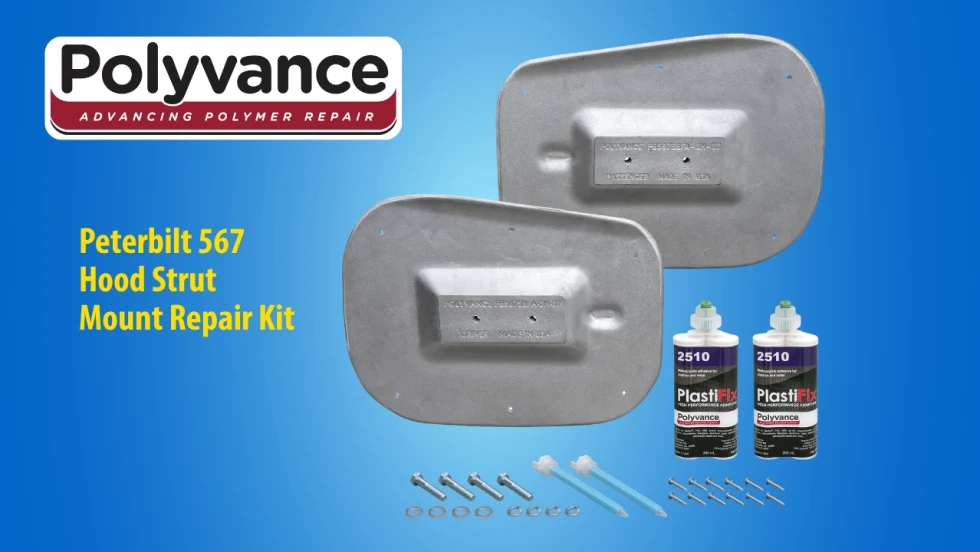
Polyvance Introduces New Peterbilt 567 Hood Strut Mount Repair Kit
Polyvance has launched a repair solution for Peterbilt 567 hood struts, helping truck owners and repair facilities avoid costly hood replacements.
Read More →
Cox Automotive Celebrates Technical Excellence at 2026 Top Tech Finals
The top technicians from Cox Fleet and Manheim tested their skills in Nashville, Tennessee, at Cox Automotive’s 2026 Top Tech Finals. The overall winners will advance to compete at the American Trucking Association’s TMC SuperTech competition.
Read More →
Grote Industries Appoints Vice President of North American Operations
Grote Industries has appointed Patrick Smith as vice president of North American operations as it celebrates 125 years of innovation and manufacturing excellence. He has more than 20 years of manufacturing leadership experience.
Read More →
Winter Fleet Prep: Expert Tips to Keep Vehicles Running Smoothly
Cold weather can expose weak batteries, tires, fuel systems, and maintenance gaps fast. Use this winter fleet checklist to prepare trucks and drivers before temperatures drop.
Read More →