




Senate "Defies Reason" By Rejecting Improved Light Truck Fuel Economy, Says Environmental Group
With transportation accounting for over 60 percent of America's oil consumption, it defies reason for the senate to reject higher fuel economy standards for light trucks less than two months after voting overwhelmingly to save a million barrels of oil a day by 2013, the Alliance to Save Energy said on July 29. The alliance is a coalition of business, government, environmental, and consumer leaders who promote the efficient use of energy worldwide to benefit consumers, the environment, economy, and national security. In mid-June, the senate adopted the oil-saving amendment to its energy bill by a landmark vote of 99-1. The measure directs the president to save at least one million barrels of oil a day by 2013. Yet on July 29, the senate voted 32-65 against an amendment by Senator Richard Durbin (a Democrat from Illinois) to increase fuel economy standards to 40 miles per gallon by 2015. "The senate has taken an unfortunate wrong turn on the road to a balanced and sensible national energy policy, which should be built on a foundation of energy efficiency," Alliance to Save Energy acting co-president Mark Hopkins said. "This amendment would have compelled automakers to take the available technologies off the shelf and put them into our cars and light trucks," Hopkins said. "In a turn for the worse, senators then supported, 66-30, an amendment by senators. Carl Levin (Democrat, Michigan) and Christopher Bond (Republican, Missouri) which fails to require any update in the antiquated fuel economy standards, now at a 23-year low. According to the Detroit News, the Levin-Bond amendment would give regulators at the National Highway Traffic Safety Administration 30 months to issue new Corporate Average Fuel Economy standards. The Detroit News noted that the Levin-Bond legislation would also allocate $50 million to the Department of Energy to research and develop gasoline-electric hybrid technology and would also direct the department to accelerate efforts to increase the viability of clean diesel engines. The plan in addition calls for the federal government to purchase fuel-efficient hybrids and alternative fuel vehicles for its fleets, the paper added. The Detroit News said the senate is still expected to vote on one more CAFE amendment offered by Senator Dianne Feinstein (Democrat, California), possibly on July 30, which would require SUVs and other light trucks to achieve the same fuel economy standard as cars, 27.5 mpg. Senators will debate contentious amendments on global warming, power plant pollution and electricity deregulation later this week and, after passing the bill, will have to negotiate with the House of Representatives, which passed a competing energy plan earlier this year, the paper added, noting that, last year, the two chambers failed to reconcile their differences on competing energy bills. This year, however, the Detroit News said, both bodies are ruled by Republicans, and President Bush is making completion of the plan a major legislative priority.
More Small Fleet

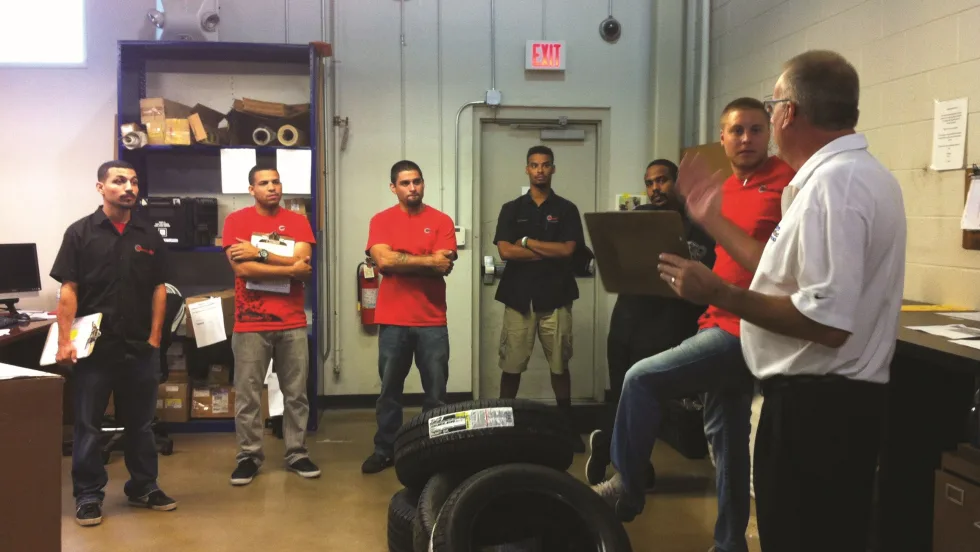
Developing Budget-Friendly Driver Safety Programs
From driver training and safety meetings to one-on-one coaching and incentive programs, several small fleets share how they have developed a safety culture with their drivers using low- to no-cost resources.
Read More →
Boosting Last-Mile Fleet Uptime, Safety, and Value with AI Vehicle Inspections
AI-powered inspections are transforming last-mile fleets by replacing manual checks with highly accurate automated scans that detect defects in seconds. By giving fleet operations visibility into the daily condition of their vehicles, you can identify trends over the vehicle’s lifecycle that enable improved procurement decisions, route management, driver training and accountability.
Read More →

Five Ways Seat Belts Help Prevent Injuries
There are five ways seat belts protect occupants from injuries, according to the Tennessee Department of Safety and Homeland Security.
Read More →
Basic Tracking vs Next Generation Fleet Technology
Fleet software is getting more sophisticated and effective than ever, tying big data models together to transform maintenance, safety, and the value of your existing tech stack. Fleet technology upgrades are undoubtedly an investment, but updated technology can offer a much higher return. Read how upgrading your fleet technology can increase the return on your investment.
Read More →
It’s here: The 2026 Fleet Technology Trends Report
What does AI mean for fleets? Get the answer — and learn other top tech trends.
Read More →
Small Fleets, Big Impact: How Independent Drivers Power Wreaths Across America
Check out how small fleets and independent drivers power Wreaths Across America each December and why their impact matters more than ever.
Read More →
VMS Survey Finds 65% of Small Fleet Managers Run Operations Alone
A new VMS survey shows small fleet managers are stretched thin, with most handling operations solo and eager to adopt digital tools for relief.
Read More →
Tips for Driving Safely on Halloween Night
This video features a reminder from the Connecticut Department of Transportation (DOT) and the Connecticut Police Chiefs Association, urging drivers to prioritize safety this Halloween.
Read More →
AI, Access, and Uptime: VMS’s Next Chapter with David Prusinski
VMS’s new Co-CEO, David Prusinski, shares how an AI-first approach will give small fleets and repair shops the tools to compete like big players.
Read More →