




Senate Bill Addresses Safety Recall Completion Rates
To qualify for legal registration by a state DMV, a vehicle would have to complete all designated safety recall repairs.
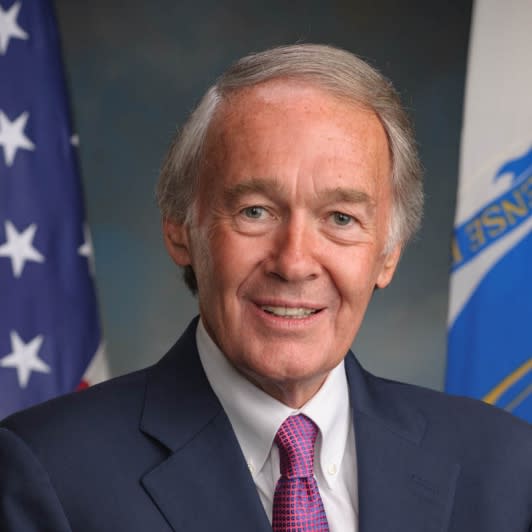
Photo of Sen. Edward Markey by U.S. Senate via Wikimedia Commons.

Photo of Sen. Edward Markey by U.S. Senate via Wikimedia Commons.
A newly introduced U.S. Senate bill would require completion of all relevant safety recall repairs to qualify a vehicle for legal registration in a state.
State agencies responsible for motor vehicle registration would verify compliance using the recall database maintained by the National Highway Traffic Safety Administration. A search of a vehicle’s VIN would indicate whether the vehicle was up-to-date with all safety recall remedies.
The bill, introduced by senators Edward Markey (D-Mass.) and Richard Blumenthal (D-Conn.) is aimed at improving the nation’s vehicle recall completion rates. To download the bill, click here.
Studies estimate that only 65 percent of recalled vehicles get fixed within the first 18 months of being recalled, and one in every seven vehicles on American roadways – upwards of 34 million cars and trucks – has an unfixed recall problem, according to Markey’s office.
Completion rates for older vehicles are particularly low. One reason why is because automakers don’t always have accurate contact information for a vehicle’s current owner. Involving state DMVs could also improve recall notification rates.
“This legislation represents the three R’s of automotive safety: recall, repair, register,” Markey said. “We need to inform all vehicle owners of open safety recalls and ensure repairs get made quickly so our roads are kept safe. The RECALL Act will help prevent any more avoidable deaths from unrepaired recalls.”
Markey is a member of the Senate Commerce, Science and Transportation Committee.
Last year, approximately 64 million vehicles were recalled in the U.S. The recalls addressed a range of defects, including those affecting some GM ignition switches and Takata air bags.
“Unrepaired safety defects endanger everyone on America’s roadways,” Blumenthal said. “Important recall notices can get bogged down with legalese, and busy consumers can miss a lifesaving update. This legislation provides a common-sense avenue to ensure every driver is reminded and encouraged to make the necessary repairs and keep unsafe cars off the roads.”
The legislation has drawn strong support from Honda North America and such organizations as Advocates for Highway and Auto Safety as well as the Center for Auto Safety.
Originally posted on Automotive Fleet
More Small Fleet


Developing Budget-Friendly Driver Safety Programs
From driver training and safety meetings to one-on-one coaching and incentive programs, several small fleets share how they have developed a safety culture with their drivers using low- to no-cost resources.
Read More →
Boosting Last-Mile Fleet Uptime, Safety, and Value with AI Vehicle Inspections
AI-powered inspections are transforming last-mile fleets by replacing manual checks with highly accurate automated scans that detect defects in seconds. By giving fleet operations visibility into the daily condition of their vehicles, you can identify trends over the vehicle’s lifecycle that enable improved procurement decisions, route management, driver training and accountability.
Read More →
Five Ways Seat Belts Help Prevent Injuries
There are five ways seat belts protect occupants from injuries, according to the Tennessee Department of Safety and Homeland Security.
Read More →
It’s here: The 2026 Fleet Technology Trends Report
What does AI mean for fleets? Get the answer — and learn other top tech trends.
Read More →
Small Fleets, Big Impact: How Independent Drivers Power Wreaths Across America
Check out how small fleets and independent drivers power Wreaths Across America each December and why their impact matters more than ever.
Read More →
VMS Survey Finds 65% of Small Fleet Managers Run Operations Alone
A new VMS survey shows small fleet managers are stretched thin, with most handling operations solo and eager to adopt digital tools for relief.
Read More →
Tips for Driving Safely on Halloween Night
This video features a reminder from the Connecticut Department of Transportation (DOT) and the Connecticut Police Chiefs Association, urging drivers to prioritize safety this Halloween.
Read More →
AI, Access, and Uptime: VMS’s Next Chapter with David Prusinski
VMS’s new Co-CEO, David Prusinski, shares how an AI-first approach will give small fleets and repair shops the tools to compete like big players.
Read More →
Fleet Managers Share Winter Prep Tips: It's Never Too Early!
Three fleets share best practices to prep vehicles for winter and prevent downtime when the cold sets in.
Read More →