




Seattle University Students Help Optimize Weight for Kenworth
During the truck spec’ing process fleets want to know the impact that changing specs can have on overall weight.

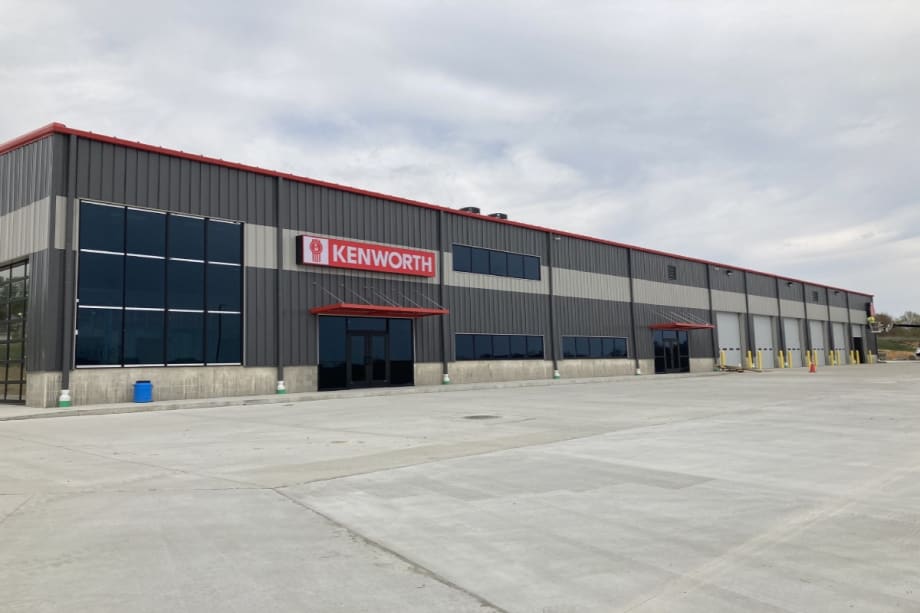
Trimming weight from the truck, productivity and fuel efficiency are ingredients for success in the trucking industry.
Photo: Kenworth Truck Company
Undergraduate seniors in computer science at Seattle University worked with Kenworth Truck Company to use artificial intelligence to calculate final truck build weights.
Trimming weight from the truck, productivity, and fuel efficiency are ingredients for success in the trucking industry. During the truck spec’ing process, fleets want to know the impact that changing specs can have on overall weight.
“We often have large customers that have regional preferences for truck specs. They might run in a mountainous area, so they’ll spec a bigger engine and different transmission – maybe even a different sleeper, “ said Reid Nabarrete, Kenworth’s assistant chief engineer. “Then, another terminal might run the Midwest – where they don’t need as much horsepower and require different specs. We know the main weight difference between major components, but when spec’d, they have a cascading impact on all the subcomponents. That’s when the challenge begins in calculating weight.”
These calculations typically mean hours of work to calculate weights for Nabarrete and the Kenworth engineering team. They are able to do with an accuracy of close to plus or minus 2%. The company has been looking at the idea of using Artificial Intelligence (AI) for several years to speed the process and close the accuracy gap.
Computer science students from Seattle U worked with Kenworth on real-world “senior” projects for more than 30 years. Senior year mechanical and electrical engineering students from the school’s computer science department are involved in “capstone” projects with local companies. The projects enable students to use their knowledge to work in a year-long class to create something that can be commercially produced.
The students built upon what worked and what didn’t work from other Seattle U students who took a run at using AI for Kenworth’s “weight optimization” a few years back.
“The current team learned from the past, and during their school year were able to develop code, as well as AI learning code, to figure out weight from the thousands of trucks Kenworth built every year. With so many options that Kenworth offers to customers, there was a lot of data to process,” said Nabarrete.
The students returned with predictive modeling, based on AI, that was “incredibly accurate,” according to Nabarrete.
“When we audited their predictions, we found they were within 1 percent of our manual calculations. And, those were consistent calculations. So, a customer with a ‘standard’ truck weighing in at 16,000 pounds for example, could give us a list of spec changes, and the students could come within 160 pounds of the actual true build weight. And they could do it in minutes, not hours,” Nabarrete said.
The Seattle U students have now graduated.
Another group of mechanical engineers, under Kenworth engineer Stan DeLizo’s leadership, were looking ahead to the future and exploring how to predict and compensate for handling while driving while the Seattle U students were working on weight,
“This project was especially challenging since the four students couldn’t collaborate in person – they had to interact via Zoom meetings,” DeLizo said. “We had a unique challenge for them, and they came through with a scale model prototype that could easily be translated into a full-scale Kenworth….and that’s where we will go next with their findings.”
DeLizo has been working with Seattle U students for 10 years on projects.
“This is all new to them, so they look at all the options out there – using new technology and thinking outside the box,” DeLizo said. “In our project, they had a budget for equipment and set out to find sensors and cameras that would serve as the base for data input.”
The project’s goal was to reflect how a professional driver handles turns.
“Humans see, anticipate and have an understanding of road conditions – if the road is slippery, or if there is gravel or something on the road ahead, they’ll make adjustments when cornering,” said DeLizo. “We’re trying to do that same thing through optical sensors surrounding the vehicle and trailer. Those sensors use image recognition and edge detection to inform the system of the truck’s actual location on the turn-path. Then, through mathematical modeling, which uses the vehicle’s known attributes, we’re able to predict the minimum radius turn path in each direction.”
The project allows a Kenworth truck to automatically navigate a corner, or turn, safely.
Upon completion of a 1/10th scale model, equipped with sensors and cameras, the students provided an actual demo in front of Kenworth engineers.
“To say we were very satisfied with their results and efforts would be an understatement,” DeLizo said “What these students came up with is almost ready for bolting onto a full-size truck.”
More Vehicle Research
2026 Ram 1500 Tradesman Put to a Real-World Fleet Test
A few days behind the wheel of a 2026 Ram 1500 Tradesman turned into a test of visibility, parking, work-ready features, and even severe-weather driving.
Read More →
Isuzu N-Series Gas Fleet Guide: Specs, Capability and 2027 Model-Year Updates
Explore Isuzu Truck North America’s N-Series Gas fleet specs, engine performance, GVWR and payload capability, configurations, chassis dimensions, work-focused features, and 2027 model-year information.
Read More →
Chevrolet Silverado 1500 Fleet Guide Specs Capability and 2027 Model-Year Updates
The next-generation 2027 Chevrolet Silverado 1500 brings new V-8 engines, updated technology, expanded safety features, and a fleet-focused Work Truck. Here’s what commercial fleets need to know so far.
Read More →
Ram ProMaster City Fleet Guide Specs Cargo Capacity and 2027 Updates
Work Truck’s Ram ProMaster City Fleet Guide tracks the latest specifications, cargo capability, configurations, fleet technology, pricing, and model-year updates for Ram’s mid-size commercial van.
Read More →
Ford F-150 Fleet Guide Specs Capability and 2026 Model-Year Updates
Explore 2026 Ford F-150 fleet specs, engines, towing and payload capability, configurations, work features, technology, and model-year updates.
Read More →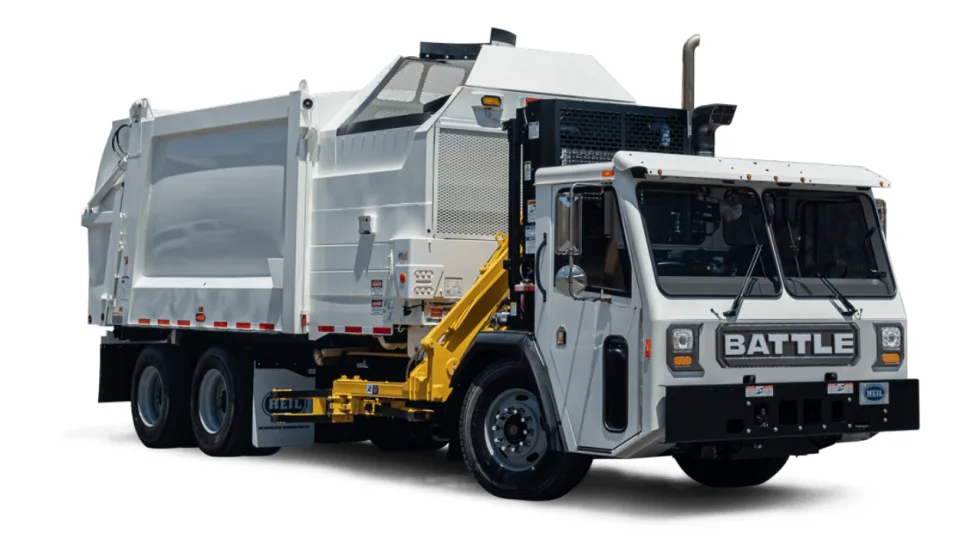
TCI Now Sells & Supports Battle Motors’ Vocational Trucks
Midwest truck dealer Truck Centers, Inc. (TCI) has expanded its transportation solutions with sales and service support for Battle Motors’ heavy-duty vocational trucks at locations in locations in Indiana, Illinois, and Missouri
Read More →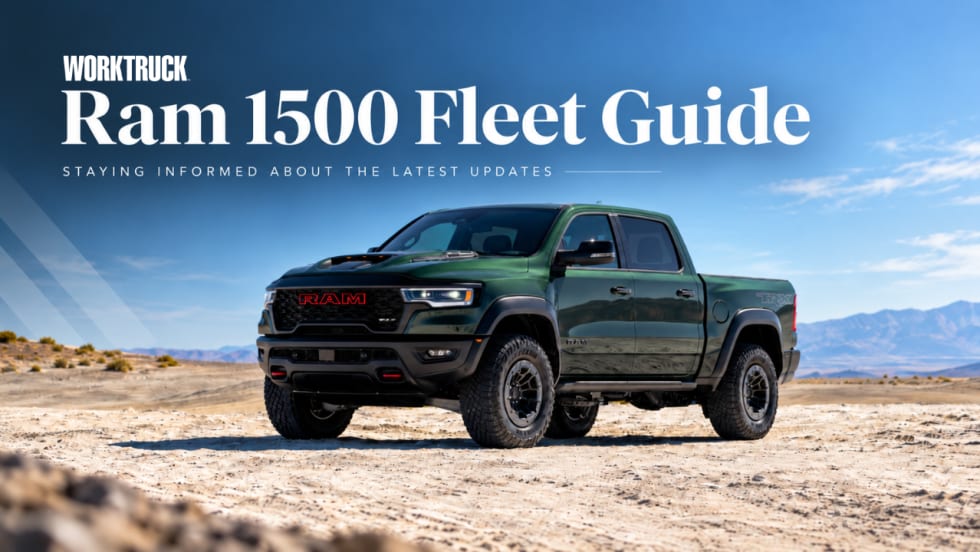
Ram 1500 Fleet Guide Specs, Capability and 2027 Model-Year Updates
Explore always up-to-date Ram 1500 fleet specs, engines, towing and payload capability, configurations, technology, pricing updates, and model-year changes.
Read More →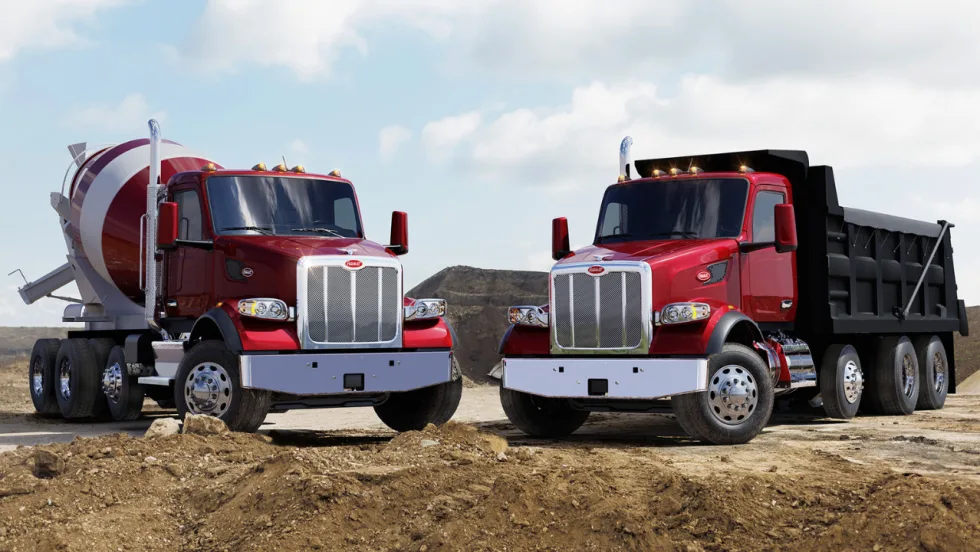
Peterbilt Trucks Equipped with Paccar TX-18 Pro Boost Efficiency for Maryland Fleet
Patuxent Companies is replacing aging trucks with the Peterbilt Model 567 and Model 589, specified with the Paccar TX-18 Pro 18-speed automated transmissions, and is reporting an 8% to 10% improvement in fuel economy.
Read More →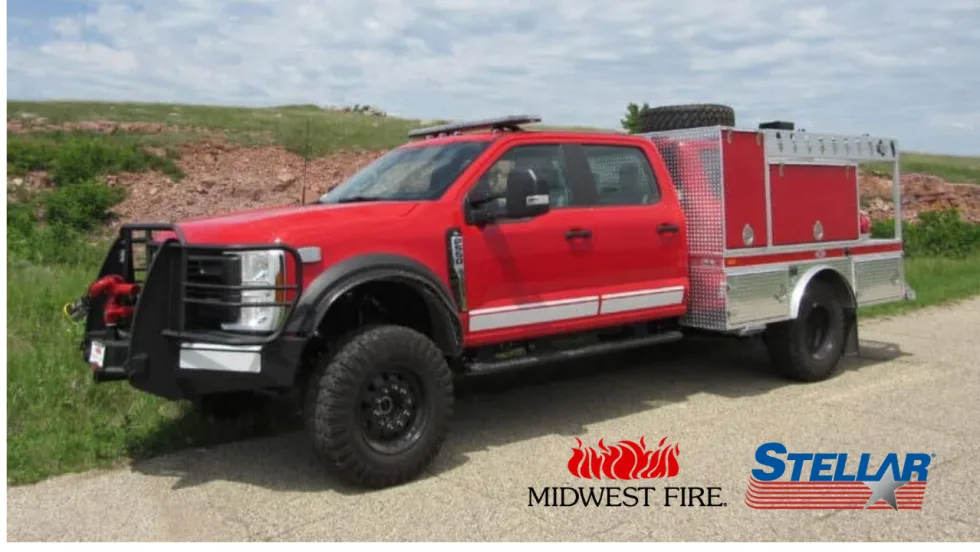
Stellar Expands into Fire Apparatus Market with Acquisition of Midwest Fire
Stellar Industries has acquired Midwest Fire, a custom fire apparatus manufacturer headquartered in Luverne, Minnesota, with nearly four decades of specialized apparatus experience.
Read More →
Recalls You Need to Know About in August 2026
If you have Altec, Chrysler, Ford, Heil, General Motors, International, Mack Trucks, Paccar, Rivian, Royal Truck, Toyota, US Truck Body, or Volvo Trucks vehicles in your fleet, you should check these important recalls issued by the National Highway Safety Administration.
Read More →