




Scania Leads European Research Project on Vehicle Platooning
Scania will take the lead role in a three-year European research project to develop a system for implementing truck platooning on roads.
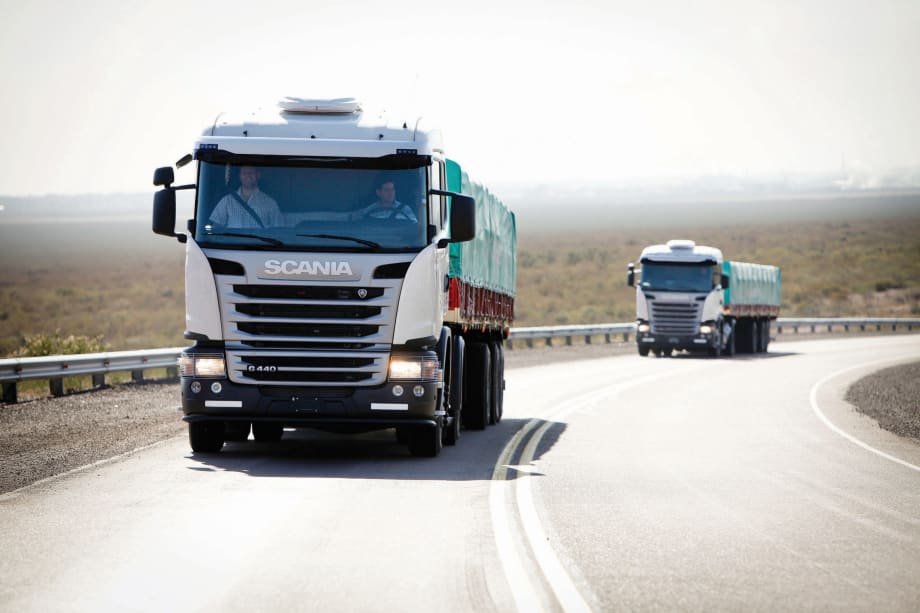
Scania will take a lead role in researching truck platooning in Europe.

Scania will take a lead role in researching truck platooning in Europe.
Scania will take the lead role in a three-year European research project to develop a system for implementing truck platooning on roads. Introducing platooning on European roads can significantly contribute towards reducing the carbon footprint of trucks, according to the company. The European Union has set a goal of reducing greenhouse gases by 20 percent by 2020. Heavy vehicles currently account for 17 percent of total CO2 emissions.
Through the EUR 5.4 m. COMPANION research project, of which EUR 3.4 m. is funded by the EU’s Seventh Framework Programme, the partners will identify means of implementing the platooning concept in practice in daily transport operations. The project also includes Volkswagen Group Research, Stockholm’s Royal Institute of Technology, (KTH), Oldenburger Institut für Informatik (OFFIS) in Germany, IDIADA Automotive Technology in Spain, Science [&]Corporation (S[&]T) in the Netherlands, and the Spanish haulage company Transportes Cerezuela.
The benefits of reduced aerodynamic drag are well-established, according to Scania. Over the past two years, Scania has implemented platooning concepts in its own transport operations and has shown that fuel savings of up to five percent can be achieved through reduced drag.
Depending on the transport assignment, haulage companies will be able to identify the optimal routes to save fuel. Through an integrated system, drivers will receive information on where they can join and leave platoons. This integrated information system will clearly describe available alternatives, taking into account such variables as weather conditions, the traffic situation and delivery schedules as well as the weight and speed of the truck combination.
The project will pay particular attention to how information is presented to drivers regarding where they can join and leave platoons. Since the driver is ultimately responsible for his or her vehicle, information will be designed to facilitate decision-making with tips on increasing or decreasing speed, for example. Moreover, the technical and safety aspects of platooning will be examined further, according to Scania.
The project will also propose common EU regulations permitting shorter distances between trucks in the platoon. The shorter the distance, the greater the fuel saving that can be achieved. However, this would require vehicles to be interconnected through wireless communication systems. With Spanish companies IDIADA and Transportes Cerezuela as partners, the aim is to test the entire system on Spanish roads during the autumn of 2016, according to Scania.
Originally posted on Automotive Fleet
More Small Fleet


Developing Budget-Friendly Driver Safety Programs
From driver training and safety meetings to one-on-one coaching and incentive programs, several small fleets share how they have developed a safety culture with their drivers using low- to no-cost resources.
Read More →
Boosting Last-Mile Fleet Uptime, Safety, and Value with AI Vehicle Inspections
AI-powered inspections are transforming last-mile fleets by replacing manual checks with highly accurate automated scans that detect defects in seconds. By giving fleet operations visibility into the daily condition of their vehicles, you can identify trends over the vehicle’s lifecycle that enable improved procurement decisions, route management, driver training and accountability.
Read More →
Five Ways Seat Belts Help Prevent Injuries
There are five ways seat belts protect occupants from injuries, according to the Tennessee Department of Safety and Homeland Security.
Read More →
It’s here: The 2026 Fleet Technology Trends Report
What does AI mean for fleets? Get the answer — and learn other top tech trends.
Read More →
Small Fleets, Big Impact: How Independent Drivers Power Wreaths Across America
Check out how small fleets and independent drivers power Wreaths Across America each December and why their impact matters more than ever.
Read More →
VMS Survey Finds 65% of Small Fleet Managers Run Operations Alone
A new VMS survey shows small fleet managers are stretched thin, with most handling operations solo and eager to adopt digital tools for relief.
Read More →
Tips for Driving Safely on Halloween Night
This video features a reminder from the Connecticut Department of Transportation (DOT) and the Connecticut Police Chiefs Association, urging drivers to prioritize safety this Halloween.
Read More →
AI, Access, and Uptime: VMS’s Next Chapter with David Prusinski
VMS’s new Co-CEO, David Prusinski, shares how an AI-first approach will give small fleets and repair shops the tools to compete like big players.
Read More →
Fleet Managers Share Winter Prep Tips: It's Never Too Early!
Three fleets share best practices to prep vehicles for winter and prevent downtime when the cold sets in.
Read More →