




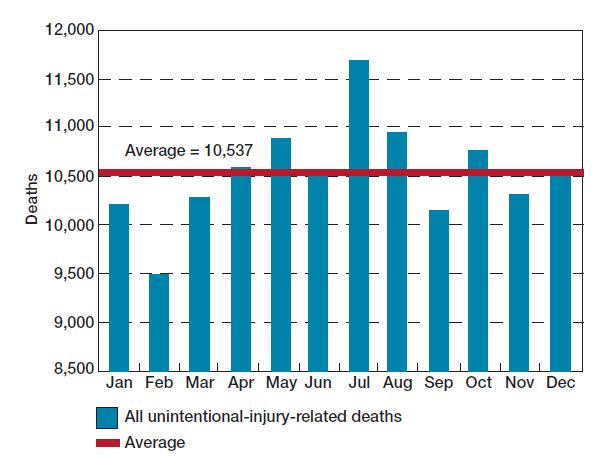
Safety Council Cautions Public About July
Calling July the deadliest month of the year, the National Safety Council offers advice to help keep all of us safer – both on the job and during summertime family vacations.
Infographic courtesy of National Safety Council.
Infographic courtesy of National Safety Council.
The Fourth of July weekend may be over, but that doesn’t mean it’s time for everyone to let their guard down, according to the National Safety Council, which said July is typically the deadliest month of the year.
The fatality increase in July is largely driven by upticks in fatal car crashes, drownings and extreme temperatures, NSC said.
"Sun, sand and vacation selfies mark July as the peak of summer," said Deborah A.P. Hersman, the council's president and CEO. "Making safe choices can ensure July is the best month of the year, not the most deadly."
The council offers these tips to stay safe this month. You may want to pass the advice along to fleet drivers as a friendly reminder.
Avoid speeding, using cell phones and driving under the influence. In 2011, 3,417 people were killed in car crashes in July. Crashes involving speeding and alcohol are highest in the summer, and cell phone use increases crash risk fourfold -- even when using a hands-free device.
Place children in age-appropriate car seats. If you are flying, buy a ticket for children ages 2 and younger and place them in an FAA-approved child seat. Do not hold young children on your lap during a flight.
Learn about your vehicle’s safety systems and how to use them. MyCarDoesWhat can help drivers understand features such as adaptive cruise control, blind spot warning systems and backup cameras.
Do not operate a boat while drinking or without a boater’s license.
Make sure children use floatation devices and everyone in your group knows how to swim. In 2011, 759 individuals drowned in July.
Stay hydrated and avoid being outside for long periods of time in the extreme heat. In 2011, 270 people were killed in July because of extreme temperatures.
In 2013, 44 kids died from heatstroke because they were left in hot cars. Never leave a child unattended in a vehicle.
Originally posted on Automotive Fleet
More Small Fleet


Developing Budget-Friendly Driver Safety Programs
From driver training and safety meetings to one-on-one coaching and incentive programs, several small fleets share how they have developed a safety culture with their drivers using low- to no-cost resources.
Read More →
Boosting Last-Mile Fleet Uptime, Safety, and Value with AI Vehicle Inspections
AI-powered inspections are transforming last-mile fleets by replacing manual checks with highly accurate automated scans that detect defects in seconds. By giving fleet operations visibility into the daily condition of their vehicles, you can identify trends over the vehicle’s lifecycle that enable improved procurement decisions, route management, driver training and accountability.
Read More →
Five Ways Seat Belts Help Prevent Injuries
There are five ways seat belts protect occupants from injuries, according to the Tennessee Department of Safety and Homeland Security.
Read More →
It’s here: The 2026 Fleet Technology Trends Report
What does AI mean for fleets? Get the answer — and learn other top tech trends.
Read More →
Small Fleets, Big Impact: How Independent Drivers Power Wreaths Across America
Check out how small fleets and independent drivers power Wreaths Across America each December and why their impact matters more than ever.
Read More →
VMS Survey Finds 65% of Small Fleet Managers Run Operations Alone
A new VMS survey shows small fleet managers are stretched thin, with most handling operations solo and eager to adopt digital tools for relief.
Read More →
Tips for Driving Safely on Halloween Night
This video features a reminder from the Connecticut Department of Transportation (DOT) and the Connecticut Police Chiefs Association, urging drivers to prioritize safety this Halloween.
Read More →
AI, Access, and Uptime: VMS’s Next Chapter with David Prusinski
VMS’s new Co-CEO, David Prusinski, shares how an AI-first approach will give small fleets and repair shops the tools to compete like big players.
Read More →
Fleet Managers Share Winter Prep Tips: It's Never Too Early!
Three fleets share best practices to prep vehicles for winter and prevent downtime when the cold sets in.
Read More →