




Roundabouts Safer for Older Drivers, IIHS Says
This alternative to traditional intersections can mitigate a major cause of crashes among older drivers: inadequate surveillance.
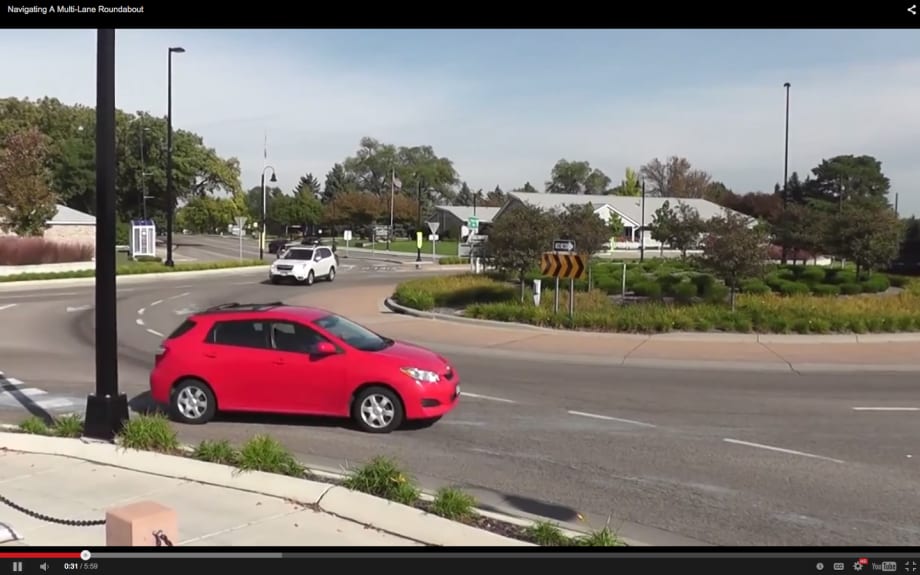
With more and more cities replacing some traditional intersections with roundabouts, one driver demographic is poised to reap more safety benefits from this trend: drivers age 70 and older.
Roundabouts eliminate some risks that older drivers struggle with.
A new study from the Insurance Institute for Highway Safety examined key factors that led to crashes among drivers age 70 and older, compared with those of drivers ages 35-54.
Researchers relied on crash data from the National Highway Traffic Safety Administration and a representative sample of more than 5,000 police-reported crashes resulting in injuries. The data underscored how driving error trends among older drivers differ sharply from those among middle-age drivers.
Among older drivers, the most common critical error was inadequate surveillance (33 percent), followed by misjudging the gap between vehicles or another vehicle’s speed, failure to obey traffic controls or other illegal maneuvers, medical events, and daydreaming (6 percent each), IIHS said. Older drivers proved to be much more likely to make mistakes linked to inadequate surveillance, along with gap or speed misjudgment, compared to middle-age drivers.
“Surveillance errors included looking but not seeing and failing to look,” IIHS noted in the organization’s latest status report. “Drivers 70 and older had the most trouble with the former. Among older drivers who made critical surveillance errors, 71 percent of their crashes were attributed to looking but not seeing another vehicle or failing to see a traffic control as opposed to failing to look, compared with 40 percent of middle-age drivers. Middle-age drivers were more likely to fail to look at all.”
These mistakes by older drivers were most prevalent while making left turns at intersections. About two-thirds of their inadequate surveillance mistakes and 77 percent of their gap or speed misjudgment errors occurred while they were turning left at an intersection.
Top Driver Factors in Crashes, by Driver Age
Ages 70+ | Ages 35-54 | |
Inadequate surveillance | 33% | 22% |
Gap/speed misjudgment | 6% | 3% |
Medical events | 6% | 4% |
Failure to obey traffic controls or other illegal maneuvers | 6% | 4% |
Daydreaming | 6% | 4% |
Source: IIHS
“Errors older drivers commonly make stem from the typical issues associated with aging,” explained Anne McCartt, a co-author of the study and IIHS senior vice president for research. “These include declines in cognitive, perceptual and physical abilities.”
For example, visual impairments among older drivers make them much more likely to have difficulty judging gaps between vehicles and gauging how fast other vehicles are traveling.
A roundabout’s tight-circle design forces drivers to slow down, and traffic flows in the same direction. The most dangerous types of crashes are eliminated, including right-angle, left-turn and head-on collisions.
Other IIHS research has concluded that when roundabouts replace traditional intersections, crashes decline about 40 percent. Collisions leading to injuries drop about 80 percent.
Unfortunately, older drivers often go out of their way to avoid roundabouts simply because they have less experience driving through roundabouts. Cities installing them need to make an effort to ease drivers’ anxiety over something new and thoroughly explain the safety benefits, especially to older drivers.
To view a video on navigating a two-lane roundabout, click on the photo above or click here.
Originally posted on Automotive Fleet
More Small Fleet


Developing Budget-Friendly Driver Safety Programs
From driver training and safety meetings to one-on-one coaching and incentive programs, several small fleets share how they have developed a safety culture with their drivers using low- to no-cost resources.
Read More →
Boosting Last-Mile Fleet Uptime, Safety, and Value with AI Vehicle Inspections
AI-powered inspections are transforming last-mile fleets by replacing manual checks with highly accurate automated scans that detect defects in seconds. By giving fleet operations visibility into the daily condition of their vehicles, you can identify trends over the vehicle’s lifecycle that enable improved procurement decisions, route management, driver training and accountability.
Read More →
Five Ways Seat Belts Help Prevent Injuries
There are five ways seat belts protect occupants from injuries, according to the Tennessee Department of Safety and Homeland Security.
Read More →
It’s here: The 2026 Fleet Technology Trends Report
What does AI mean for fleets? Get the answer — and learn other top tech trends.
Read More →
Small Fleets, Big Impact: How Independent Drivers Power Wreaths Across America
Check out how small fleets and independent drivers power Wreaths Across America each December and why their impact matters more than ever.
Read More →
VMS Survey Finds 65% of Small Fleet Managers Run Operations Alone
A new VMS survey shows small fleet managers are stretched thin, with most handling operations solo and eager to adopt digital tools for relief.
Read More →
Tips for Driving Safely on Halloween Night
This video features a reminder from the Connecticut Department of Transportation (DOT) and the Connecticut Police Chiefs Association, urging drivers to prioritize safety this Halloween.
Read More →
AI, Access, and Uptime: VMS’s Next Chapter with David Prusinski
VMS’s new Co-CEO, David Prusinski, shares how an AI-first approach will give small fleets and repair shops the tools to compete like big players.
Read More →
Fleet Managers Share Winter Prep Tips: It's Never Too Early!
Three fleets share best practices to prep vehicles for winter and prevent downtime when the cold sets in.
Read More →