




Roadway Safety Foundation Joins Call to 'Put the Brakes on Fatalities'
The Roadway Safety Foundation (RSF) on Oct. 10 challenged the nation to take a lesson from the safer road design standards of the U.S. Interstate Highway System and improve the safety of all American roadways. "Safety experts agree that 30 percent of all fatal crashes involve outmoded road designs," said RSF Trustee William D. Fay, speaking at the first annual "Put the Brakes on Fatalities Day" ceremony. "America must rededicate itself to making all U.S. roads safer. We should implement the safety improvements that have made the U.S. Interstate Highway System the safest road system in the world." Fay cited statistics demonstrating that more than 2.2 million Americans have lost their lives in roadway crashes over the past 50 years, 661,000 from outmoded road designs or roads that are carrying many times the traffic they were originally designed to carry. The superior safety design of the Interstate Highway System prevented 188,000 deaths and more than 12 million injuries from 1956-1996, according to a study conducted for the American Highway Users Alliance. The study concluded that nearly every Interstate design feature has a safety purpose: · Wider lanes and shoulders provide greater margins of safety for motorists, trucks, and disabled vehicles · Medians prevent head-on collisions · Gentle off-road slopes prevent roll-overs · Guardrails and clear spaces off-road prevent collisions with pillars and other fixed objects · Signs and pavement markings are more reflective, plentiful and informational. "Studies have shown that crash-related fatalities can be reduced significantly by employing these and other features such as dedicated turning lanes, installing rumble strips and removing ice and snow in a timely manner," Fay said. "Clearly, 661,000 preventable highway deaths is a national travesty. In the past 10 years alone, outmoded design features have contributed to the premature deaths of more than 114,000 men, women and children on our nation's roadways," Fay said. "Too many tears have been shed. Too many friends and relatives have grieved. Today, I call upon Congress to dedicate more highway user taxes to funding the improvements that will better protect the health and safety of America's motorists and truckers." Fay participated in the "Put the Brakes on Fatalities Day" with U.S. Transportation Secretary Norman Y. Mineta, Federal Highway Administrator Mary Peters, National Highway Traffic Safety Administrator Dr. Jeffrey Runge, members of Congress, and representatives of several transportation, safety and engineering groups. Together they signed a Memorandum of Understanding establishing Oct. 10 as a national commemorative day to promote a reduction in roadway crashes and fatalities. About the Roadway Safety Foundation The Roadway Safety Foundation is a 501(c)(3) nonprofit organization whose mission is to reduce the frequency and severity of motor vehicle crashes by improving the safety of U.S. highways and bridges. RSF is one of the few national organizations solely dedicated to reducing highway deaths and injuries by improving the physical characteristics of our roads. RSF's programs are funded from annual contributions, grants, and other donations received from private- and public-sector organizations. Research for and publication of the Roadway Safety Guide was made possible by a grant from the U.S. Department of Transportation's Federal Highway Administration.
More Small Fleet


Developing Budget-Friendly Driver Safety Programs
From driver training and safety meetings to one-on-one coaching and incentive programs, several small fleets share how they have developed a safety culture with their drivers using low- to no-cost resources.
Read More →
Boosting Last-Mile Fleet Uptime, Safety, and Value with AI Vehicle Inspections
AI-powered inspections are transforming last-mile fleets by replacing manual checks with highly accurate automated scans that detect defects in seconds. By giving fleet operations visibility into the daily condition of their vehicles, you can identify trends over the vehicle’s lifecycle that enable improved procurement decisions, route management, driver training and accountability.
Read More →
Five Ways Seat Belts Help Prevent Injuries
There are five ways seat belts protect occupants from injuries, according to the Tennessee Department of Safety and Homeland Security.
Read More →
It’s here: The 2026 Fleet Technology Trends Report
What does AI mean for fleets? Get the answer — and learn other top tech trends.
Read More →
Small Fleets, Big Impact: How Independent Drivers Power Wreaths Across America
Check out how small fleets and independent drivers power Wreaths Across America each December and why their impact matters more than ever.
Read More →
VMS Survey Finds 65% of Small Fleet Managers Run Operations Alone
A new VMS survey shows small fleet managers are stretched thin, with most handling operations solo and eager to adopt digital tools for relief.
Read More →
Tips for Driving Safely on Halloween Night
This video features a reminder from the Connecticut Department of Transportation (DOT) and the Connecticut Police Chiefs Association, urging drivers to prioritize safety this Halloween.
Read More →
AI, Access, and Uptime: VMS’s Next Chapter with David Prusinski
VMS’s new Co-CEO, David Prusinski, shares how an AI-first approach will give small fleets and repair shops the tools to compete like big players.
Read More →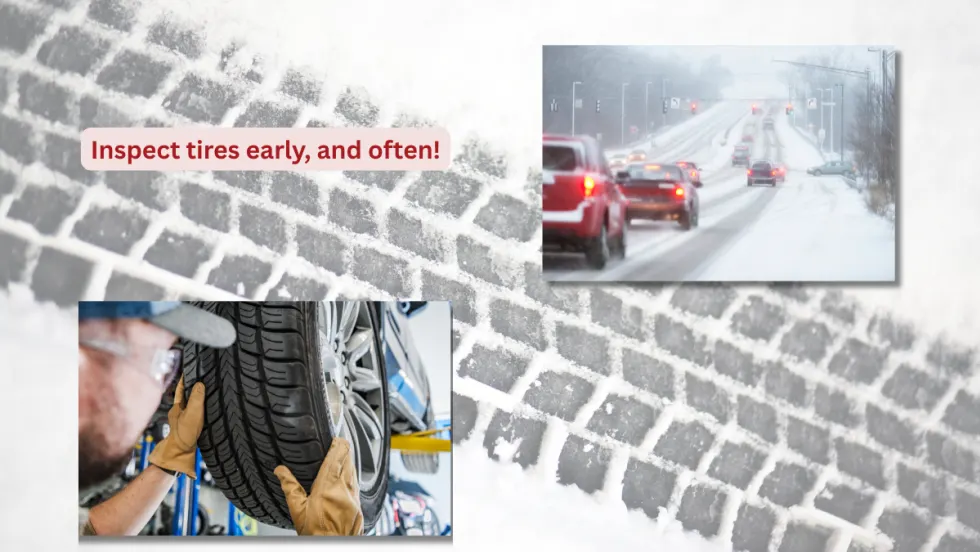
Fleet Managers Share Winter Prep Tips: It's Never Too Early!
Three fleets share best practices to prep vehicles for winter and prevent downtime when the cold sets in.
Read More →