




Reaction Time Twice as Slow When Texting According to New Study
Researchers at the Texas Transportation Institute (TTI) have found that it takes a driver twice as long to react when he or she is distracted by reading or sending a text message.
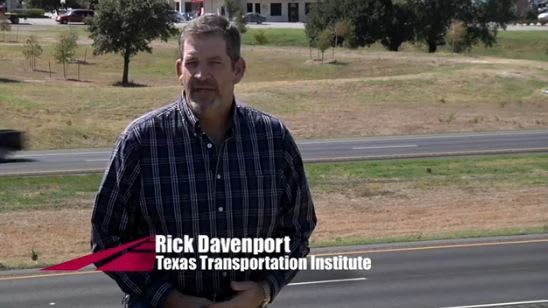
COLLEGE STATION, TEXAS – Researchers at the Texas Transportation Institute (TTI) have found that it takes a driver twice as long to react when he or she is distracted by reading or sending a text message.
The study consisted of three stages. First, participants typed a story of their choice (usually a simple fairy tale) and also read and answered questions related to another story, both on a smart phone in a laboratory setting. Second, each participant navigated a test-track course involving both an open section and a section lined by construction barrels. Drivers first drove the course without texting, then repeated both lab tasks separately while driving through the course again. Throughout the test-track exercise, each participant’s reaction time to a periodic flashing light was recorded.
Reaction times with no texting activity were typically between one and two seconds. Reaction times while texting were at least three to four seconds.
The study, sponsored by the Southwest Region University Transportation Center, was managed by Christine Yager, an associate transportation researcher in TTI’s Center for Transportation Safety. 42 drivers between the ages of 16 and 54 participated in the research.
Researchers also measured each driver’s ability to maintain proper lane position and a constant speed. They found drivers were less able to safely maintain their position in the driving lane when they were texting. Drivers swerved more frequently in the open sections of the course than in the section with barrels.
Drivers were also unable to maintain a constant speed while texting. They tended to slow down to reduce the demand from trying to manage multiple tasks. By slowing down, a driver gains more time to correct for driving errors (such as the tendency to swerve while texting). Speed variance was also greater for texting drivers than for non-texting drivers, according to TTI.
Federal statistics suggest that distracted driving contributes to as much as 20 percent of all fatal crashes, according to TTI. Cell phones constitute the primary source of driver distraction, TTI said federal statistics show. Researchers point to two numbers to illustrate the problem: an estimated 5 billion text messages are sent each day in the United States, and at least 20 percent of all drivers have admitted to texting while driving.
TTI also produced a video (shown below) that you can share with your drivers and colleagues.
Originally posted on Automotive Fleet
More Small Fleet


Developing Budget-Friendly Driver Safety Programs
From driver training and safety meetings to one-on-one coaching and incentive programs, several small fleets share how they have developed a safety culture with their drivers using low- to no-cost resources.
Read More →
Boosting Last-Mile Fleet Uptime, Safety, and Value with AI Vehicle Inspections
AI-powered inspections are transforming last-mile fleets by replacing manual checks with highly accurate automated scans that detect defects in seconds. By giving fleet operations visibility into the daily condition of their vehicles, you can identify trends over the vehicle’s lifecycle that enable improved procurement decisions, route management, driver training and accountability.
Read More →
Five Ways Seat Belts Help Prevent Injuries
There are five ways seat belts protect occupants from injuries, according to the Tennessee Department of Safety and Homeland Security.
Read More →
It’s here: The 2026 Fleet Technology Trends Report
What does AI mean for fleets? Get the answer — and learn other top tech trends.
Read More →
Small Fleets, Big Impact: How Independent Drivers Power Wreaths Across America
Check out how small fleets and independent drivers power Wreaths Across America each December and why their impact matters more than ever.
Read More →
VMS Survey Finds 65% of Small Fleet Managers Run Operations Alone
A new VMS survey shows small fleet managers are stretched thin, with most handling operations solo and eager to adopt digital tools for relief.
Read More →
Tips for Driving Safely on Halloween Night
This video features a reminder from the Connecticut Department of Transportation (DOT) and the Connecticut Police Chiefs Association, urging drivers to prioritize safety this Halloween.
Read More →
AI, Access, and Uptime: VMS’s Next Chapter with David Prusinski
VMS’s new Co-CEO, David Prusinski, shares how an AI-first approach will give small fleets and repair shops the tools to compete like big players.
Read More →
Fleet Managers Share Winter Prep Tips: It's Never Too Early!
Three fleets share best practices to prep vehicles for winter and prevent downtime when the cold sets in.
Read More →