




Pedestrian Fatalities Reach Record for Two Consecutive Years
The 5,984 pedestrians killed in motor vehicle accidents in 2017 represents a decrease of just one half of 1% of pedestrian fatalities in 2016, according to a new report from the Governor's Highway Safety Association (GHSA).
Graphic courtesy of GHSA.
Graphic courtesy of GHSA.
The 5,984 pedestrians killed in motor vehicle accidents in 2017 represents a decrease of just one half of 1% of pedestrian fatalities in 2016, according to a new report from the Governor's Highway Safety Association (GHSA).
It has been more than 25 years since the U.S. experienced this level of pedestrian fatalities, with 2017 marking a second consecutive year of record high numbers.
In a statement, The National Safety Council said it is discouraged by the new figures and is committed to working with GHSA and all members of the Road to Zero Coalition to reverse the negative trend.
The report, "Pedestrian Traffic Fatalities by State: 2017 Preliminary Data," is based on preliminary data provided by all 50 State Highway Safety Offices and the District of Columbia.
In the first half of 2017 compared with the same period in 2016, 23 states and the District of Columbia reported increases in pedestrian fatalities while 20 states had decreases and seven remained the same.
California ranked highest in fatalities, reporting 352 pedestrian deaths for the first half of 2017. Hawaii and Wyoming reported the fewest fatalities, reporting just one pedestrian death each.
Five states — California, Florida, Texas, New York, and Arizona — each reported more than 100 pedestrian deaths and also accounted for 43% of all pedestrian deaths during the first six months of 2017. The report notes that these states represent approximately 30% of the U.S. population, according to the 2017 U.S. Census.
Other noteworthy findings in the report concern lifestyle factors that may correlate to increased pedestrian fatalities due to impaired judgment and/or distracted behaviors. For example, the seven states (Alaska, Colorado, Maine, Massachusetts, Nevada, Oregon, Washington) and District of Columbia that legalized recreational use of marijuana between 2012 and 2016 reported a collective 16.4% increase in pedestrian deaths for the first six months of 2017 as compared to the same period in 2016. Conversely, all other states reported a collective 5.8% decrease in fatalities for the same comparison periods.
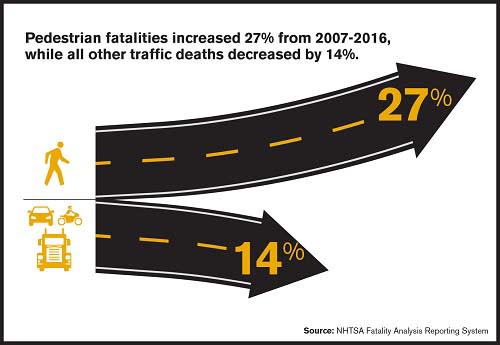
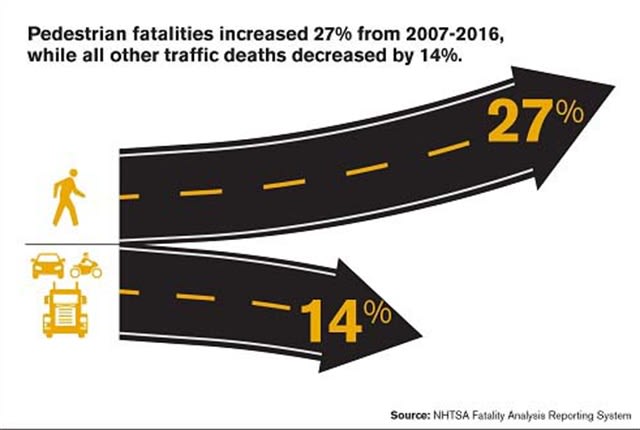
The report notes that the 2017 preliminary data is part of a larger trend in recent years that points to an alarming rise in pedestrian fatalities. Nationwide, pedestrian fatalities increased 27% from 2007 to 2016, while all other traffic fatalities over this period decreased by 14%. Moreover, the number of states with pedestrian fatality rates at or above two per 100,000 population more than doubled from seven in 2014 to 15 in 2016.
Read the full report here.
Originally posted on Automotive Fleet
More Small Fleet


Developing Budget-Friendly Driver Safety Programs
From driver training and safety meetings to one-on-one coaching and incentive programs, several small fleets share how they have developed a safety culture with their drivers using low- to no-cost resources.
Read More →
Boosting Last-Mile Fleet Uptime, Safety, and Value with AI Vehicle Inspections
AI-powered inspections are transforming last-mile fleets by replacing manual checks with highly accurate automated scans that detect defects in seconds. By giving fleet operations visibility into the daily condition of their vehicles, you can identify trends over the vehicle’s lifecycle that enable improved procurement decisions, route management, driver training and accountability.
Read More →
Five Ways Seat Belts Help Prevent Injuries
There are five ways seat belts protect occupants from injuries, according to the Tennessee Department of Safety and Homeland Security.
Read More →
It’s here: The 2026 Fleet Technology Trends Report
What does AI mean for fleets? Get the answer — and learn other top tech trends.
Read More →
Small Fleets, Big Impact: How Independent Drivers Power Wreaths Across America
Check out how small fleets and independent drivers power Wreaths Across America each December and why their impact matters more than ever.
Read More →
VMS Survey Finds 65% of Small Fleet Managers Run Operations Alone
A new VMS survey shows small fleet managers are stretched thin, with most handling operations solo and eager to adopt digital tools for relief.
Read More →
Tips for Driving Safely on Halloween Night
This video features a reminder from the Connecticut Department of Transportation (DOT) and the Connecticut Police Chiefs Association, urging drivers to prioritize safety this Halloween.
Read More →
AI, Access, and Uptime: VMS’s Next Chapter with David Prusinski
VMS’s new Co-CEO, David Prusinski, shares how an AI-first approach will give small fleets and repair shops the tools to compete like big players.
Read More →
Fleet Managers Share Winter Prep Tips: It's Never Too Early!
Three fleets share best practices to prep vehicles for winter and prevent downtime when the cold sets in.
Read More →