




Pedal Power: The Ultimate Alternative Fuel?
Some fleets are able to replace gas-powered vehicles with bicycles in certain situations. This latest form of rightsizing is putting money back into companies’ wallets and helping the environment at the same time.
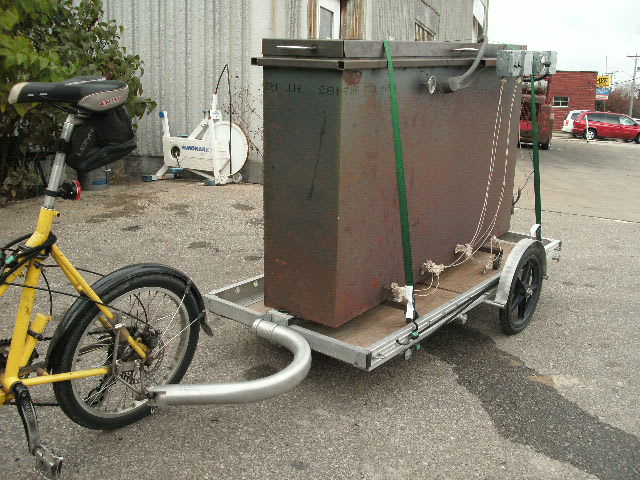
Bikes At Work uses a medium-sized trailer to transport this heavy duty oven across town for one of their customers.
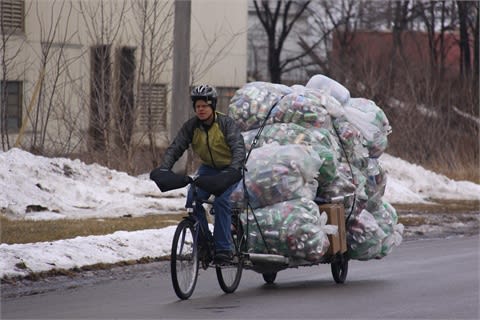
This Bikes at Work employee used the "Human Load Calculator," which analyzes his speed, body weight, the weight of the bike and trailer, and the grade at which he could climb in order to generate the maximum cargo weight he could carry.
By Brittni Rubin
In recent years, cities have been proactively alleviating congestion in heavily populated areas by creating bike-friendly streets and alleyways. Commercial fleets, delivery companies and courier services have been taking advantage, using bicycles in certain situations for tasks previously done by car or truck.
When Biking Makes Sense
When it doesn’t make sense to use a motor vehicle — such as for local or small-parcel deliveries — a bike or two could prove extremely handy.
Andrew Brown, founder and owner of PeakEx Towing & Transportation, recently purchased a fleet of bicycles for his business. After accumulating a consistent surplus of small-parcel deliveries, his routes were taking a long time to complete.
He bought bikes simply because he was tired of sitting in trucks day in and day out; however, he found that the monetary success pedal-powered vehicles brought his company was worth opening a second branch: PeakEx Bike Deliveries.
“Having bikes saved me more than $3,000 in gasoline this summer alone,” Brown said. “I’m satisfying my fleet’s needs in a different way, and saving money and energy in the process.”
Accessibility is also a key, since bikes can travel where no car or truck can. Their size and agility permit off-roading or taking shortcuts through alleyways.
Bicycles used in a business can help save on more than just fuel expenses. Bikes reduce wear and tear on an existing fleet and lower expenses such as vehicle licensing and registration, insurance, damage repairs and parking tickets.
According to Wenzday Jane, owner of Massachusetts bike delivery service Metro Pedal Power, some courier companies budget thousands of dollars a year just to pay back parking tickets.
In Brown’s experience cultivating customer satisfaction over the past few years, he finds that people now expect some degree of environmental efforts from the companies they do business with. Having a green delivery option gives companies an instant green stamp and a competitive edge over those who don’t.
In addition to attracting environmentally minded customers, green initiatives attract a specific type of employee as well. “Companies who do some of their work by bikes where they can instead of cars tend to be more fun, and interest young, vibrant, creative types who know a thing or two about energy conservation and are passionate about the environment,” Jane said. “That is a primary plus.”[PAGEBREAK]
James William Gregory, owner of Bikes At Work, a bike delivery service that also manufactures trailers and attachments for other bike-using companies, summed up the eco-friendly benefits: “Bikes are silent, space-efficient, require relatively few resources to make and are easily recycled. The only air pollution produced is the rider’s breath.”
And just as the health of the environment is improving with bikes, the driver’s health is too. Employees are encouraged to exercise and challenge their stamina on a regular basis when they are biking, according to Jane.
Bikes At Work uses a medium-sized trailer to transport this heavy duty oven across town for one of their customers.
How Bikes Are Used
Metro Pedal Power has been contracted by distributors, districts, wholesalers, universities and office supply stores like Staples and beyond to provide deliveries — both small and large — in their surrounding area.
With the transporting equipment like trailer attachments available, delivery bike can perform many of the same tasks as motor vehicles. For example, Bike At Work’s recyclable trailers are sizable and relatively light-weight. They make it possible to transport large packages or package quantities that bikes would not otherwise be able to handle.
The company also makes custom trailers or attachments in any shape or size for specific duties. With these trailers, a single person can transport something as heavy as a full-size washer and dryer in just one trip.
Bikes at Work has even invented a “Human Load Calculator” available on its website, which produces surprising results about how much weight one person can actually haul via bicycle. The calculator takes speed, rider’s weight, the weight of the bike and trailer, and the grade at which the rider will climb into consideration to generate an approximate cargo weight a person can carry.
The Cost Factor
Fleets have two options: They can buy the bikes and employ their own riders, or use a professional bike service. Many delivery bikers tend to work as subcontractors and can use their own bicycles, though Brown recommends providing them with company equipment so staff can circumvent maintenance issues in-house and ensure that riders are using the safest and fastest bicycles available.
Besides, month-to-month maintenance required for bicycles is straight-forward, making in-house maintenance fairly easy, which also saves tremendously on cost.
A bike and trailer costs less than 1/10 the cost of the least-expensive economy car. A good quality mountain or hybrid bike is priced somewhere between $400 and $1,000. Bike At Work’s largest trailer for hefty loads is priced at $570, while their smallest is priced around $400.
To read more small fleet profiles, click here to see a full list.
More Small Fleet


Developing Budget-Friendly Driver Safety Programs
From driver training and safety meetings to one-on-one coaching and incentive programs, several small fleets share how they have developed a safety culture with their drivers using low- to no-cost resources.
Read More →
Boosting Last-Mile Fleet Uptime, Safety, and Value with AI Vehicle Inspections
AI-powered inspections are transforming last-mile fleets by replacing manual checks with highly accurate automated scans that detect defects in seconds. By giving fleet operations visibility into the daily condition of their vehicles, you can identify trends over the vehicle’s lifecycle that enable improved procurement decisions, route management, driver training and accountability.
Read More →
Five Ways Seat Belts Help Prevent Injuries
There are five ways seat belts protect occupants from injuries, according to the Tennessee Department of Safety and Homeland Security.
Read More →
It’s here: The 2026 Fleet Technology Trends Report
What does AI mean for fleets? Get the answer — and learn other top tech trends.
Read More →
Small Fleets, Big Impact: How Independent Drivers Power Wreaths Across America
Check out how small fleets and independent drivers power Wreaths Across America each December and why their impact matters more than ever.
Read More →
VMS Survey Finds 65% of Small Fleet Managers Run Operations Alone
A new VMS survey shows small fleet managers are stretched thin, with most handling operations solo and eager to adopt digital tools for relief.
Read More →
Tips for Driving Safely on Halloween Night
This video features a reminder from the Connecticut Department of Transportation (DOT) and the Connecticut Police Chiefs Association, urging drivers to prioritize safety this Halloween.
Read More →
AI, Access, and Uptime: VMS’s Next Chapter with David Prusinski
VMS’s new Co-CEO, David Prusinski, shares how an AI-first approach will give small fleets and repair shops the tools to compete like big players.
Read More →
Fleet Managers Share Winter Prep Tips: It's Never Too Early!
Three fleets share best practices to prep vehicles for winter and prevent downtime when the cold sets in.
Read More →