




Pandemic Prompts New Distracted Driving Problems
In the era of COVID-19, constant dependence on devices for connection has extended to our cars.

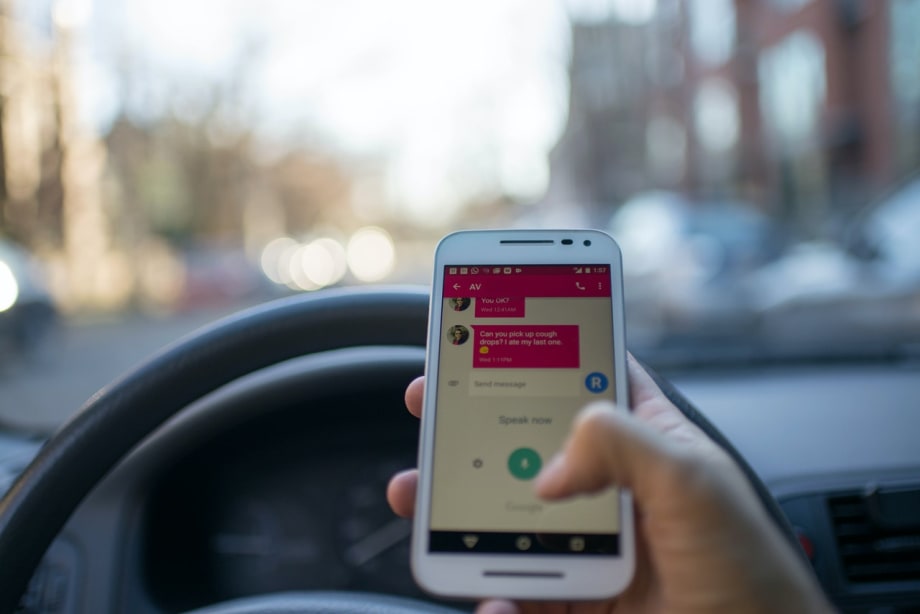
Drivers appear to be growing more tolerant with distracted driving — and living in a virtual world due to the pandemic may play a role in it.
Photo via Pexels/Roman Pohorecki.
In 2020 the average driver used their cell phone 18 times every 100 miles, which translates to once every 5.5 miles, according to a new report from Root Insurance.
Drivers appear to be growing more tolerant with distracted driving — and living in a virtual world due to the pandemic may play a role in it. Some 30% of motorists now believe they can be safe while using their mobile phone as compared to just 24% in 2020.
The report presents the dual findings of data drawn from a Root app drivers used in 2020 that detects phone use behind the wheel coupled with traditional survey results from more than 1,800 U.S. drivers in 2021.
Cell phone use is ubiquitous. Some 64% of motorists report checking their phone while driving. What’s more, the frequency at which drivers do so is climbing —with 53% saying they check their cell within 30 minutes as compared with just 42% who admitted the same in 2020.
As to what prompts them to check their phones, 55% say they do so while stopped at traffic lights and 22% report doing so while the vehicle is moving in slow traffic.
Effects of COVID-19
The Root report also explores how the pandemic has affected driving behaviors. The findings indicate that as people abruptly shifted to a virtual environment, their reliance on technology dramatically increased and caused most drivers to carry distracted behavior into their vehicles.
Some 68% of those surveyed say they more frequently use their phones to multitask, especially those identified as Gen Z (87%) and Millennial (88%). In the era of COVID-19, that constant dependence on devices for connection has extended to our cars.
Of those Americans who drive with a mobile device, 62% say the sound of a call or text makes them want to check their phones.
Another noteworthy finding was linked to our new reliance on Zoom, Facetime and other virtual meetings. An alarming 54% of people who drive after video chatting report they have trouble concentrating.
Finally, 41% of drivers who keep a mask in their cars say masks can be a distraction when driving.
Focus on States
The Root app also reveals where the least and most distracted drivers can be found. For the third consecutive year, Montana claimed the title of most focused driving state — with the least amount of distracted driving events captured by the app from drivers in Big Sky Country.
Other states that ranked in the top five for most focused driving include Oregon, Utah, North Dakota and Arizona.
Conversely, South Carolina ranks as the most distracted driving state followed by Maryland and Illinois.
While the Northeast region was composed of the fewest drivers analyzed and fewest miles driven, it led the nation in distracted driving events — with 28% more than the Western region.
The distracted driving study from Root Insurance is based on data obtained from drivers in 29 states who drove with the Root app for at least 30 miles. The app identifies and measures phone use behind the wheel by detecting any unusual movement or vibration patterns that indicate a driver’s cell use while the car is moving.
The report is based on an analysis of more than six billion miles driven by people who completed the Root test drive using the app in 2020.
The Root Insurance Distracted Driving Awareness Survey was conducted with 1,819 nationally representative U.S. drivers via email in March 2021.
Originally posted on Automotive Fleet
More Small Fleet


Developing Budget-Friendly Driver Safety Programs
From driver training and safety meetings to one-on-one coaching and incentive programs, several small fleets share how they have developed a safety culture with their drivers using low- to no-cost resources.
Read More →
Boosting Last-Mile Fleet Uptime, Safety, and Value with AI Vehicle Inspections
AI-powered inspections are transforming last-mile fleets by replacing manual checks with highly accurate automated scans that detect defects in seconds. By giving fleet operations visibility into the daily condition of their vehicles, you can identify trends over the vehicle’s lifecycle that enable improved procurement decisions, route management, driver training and accountability.
Read More →
Five Ways Seat Belts Help Prevent Injuries
There are five ways seat belts protect occupants from injuries, according to the Tennessee Department of Safety and Homeland Security.
Read More →
It’s here: The 2026 Fleet Technology Trends Report
What does AI mean for fleets? Get the answer — and learn other top tech trends.
Read More →
Small Fleets, Big Impact: How Independent Drivers Power Wreaths Across America
Check out how small fleets and independent drivers power Wreaths Across America each December and why their impact matters more than ever.
Read More →
VMS Survey Finds 65% of Small Fleet Managers Run Operations Alone
A new VMS survey shows small fleet managers are stretched thin, with most handling operations solo and eager to adopt digital tools for relief.
Read More →
Tips for Driving Safely on Halloween Night
This video features a reminder from the Connecticut Department of Transportation (DOT) and the Connecticut Police Chiefs Association, urging drivers to prioritize safety this Halloween.
Read More →
AI, Access, and Uptime: VMS’s Next Chapter with David Prusinski
VMS’s new Co-CEO, David Prusinski, shares how an AI-first approach will give small fleets and repair shops the tools to compete like big players.
Read More →
Fleet Managers Share Winter Prep Tips: It's Never Too Early!
Three fleets share best practices to prep vehicles for winter and prevent downtime when the cold sets in.
Read More →